In October 2021, I headed to Alsace for a 4-day cycling trip with my friend Mathilde from Stay Tunde for Life to discover the 3-Country Loop! This international cycle tourism route is about 200 km long (including 45 km in the Sundgau, or “South Alsace”), created in 1996, and offers a loop across France, Switzerland, and Germany (hence 3 countries!) on either side of the Rhine. It connects the cities of Mulhouse, Bad Bellingen, Lörrach, Basel, Arlesheim, and the Sundgau region. Quite a wonderful route, which I will describe in detail for you in this article!
Below, I offer you a brief description of our itinerary in chronological order, complete with my suggested stops along the way, ideas for things to visit, and, as always, my selection of great addresses along the route, of course!


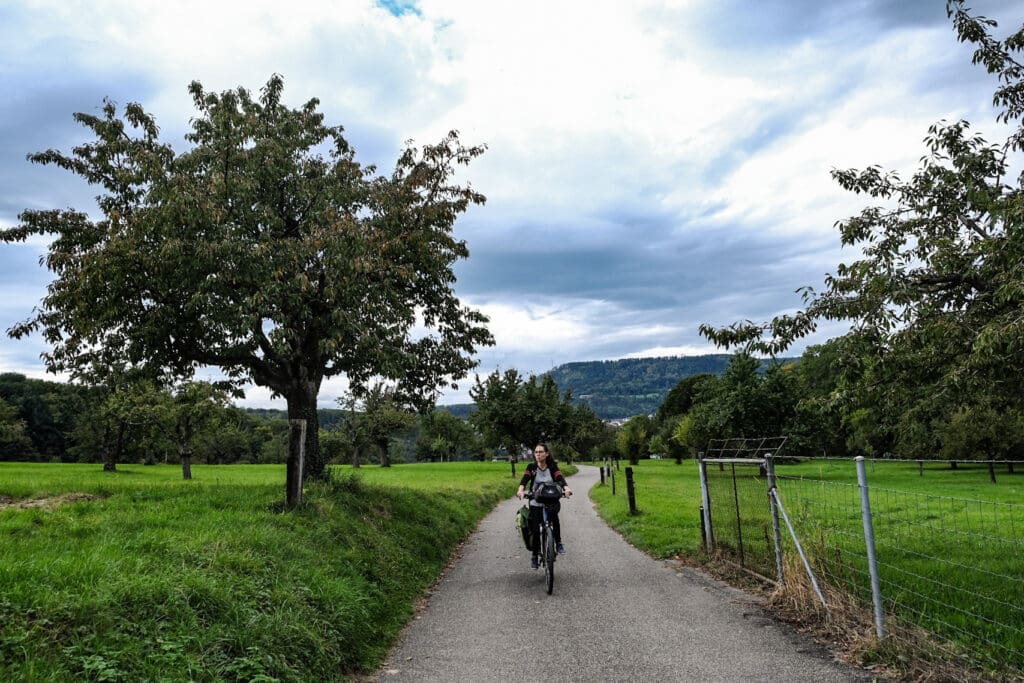


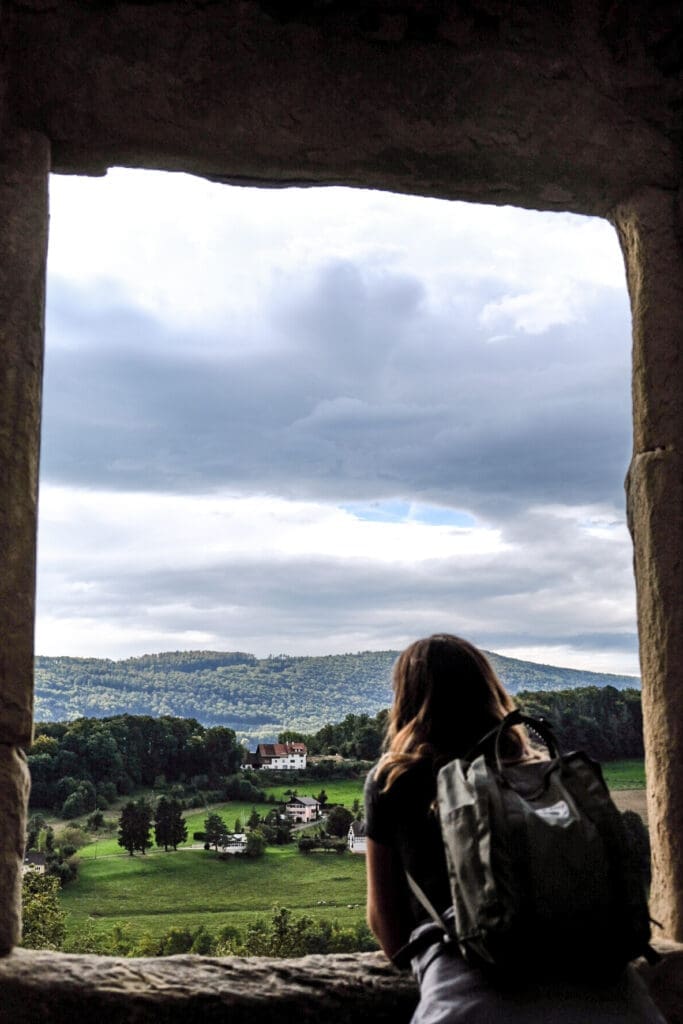
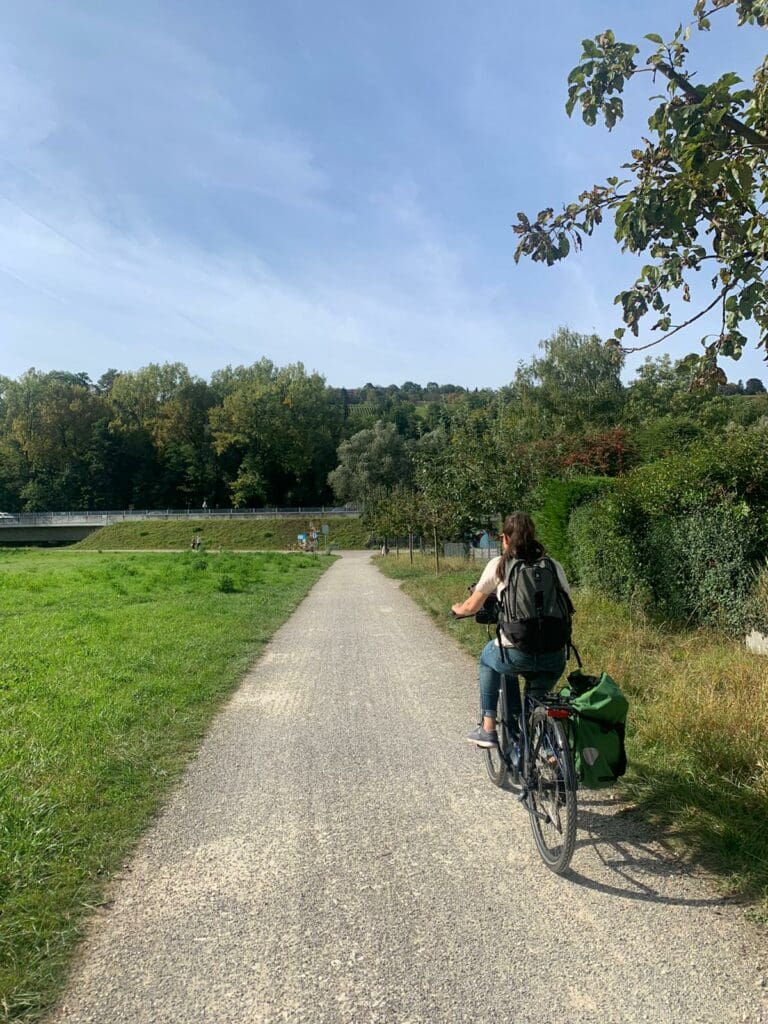

Table of Contents
Practical Information About the 3-Country Loop
We rented electric bikes for this 4-day itinerary from Trace Verte, and I must say that even with making heavy use of the bike’s motor assistance, you need to be fairly athletic to complete the route in 4 days. If you want to take more time to visit the sights and go at a relaxed pace, I’d say planning the trip over 5 days seems much more reasonable. Unless, of course, you are very sporty and don’t want to stop too much along the way—in that case, 3 to 4 days will suffice.
As for weather conditions, we were lucky to have wonderful weather during the first 3 days of our trip in October, and I certainly recommend doing this itinerary during the sunny days between April and October.
Equipment for e-bikes: we had panniers and small front bags on the bikes, which are essential for carrying the items we needed for the day (change of clothes and several layers; our mobile phones, which are very useful for following the route with the GPX Viewer app—GPX track downloadable from the Alsace à vélo website; our cameras; a water bottle; a few snacks in case of fatigue; and the e-bike batteries). As for our luggage, we were lucky enough to have it transported from one stage to the next every day.
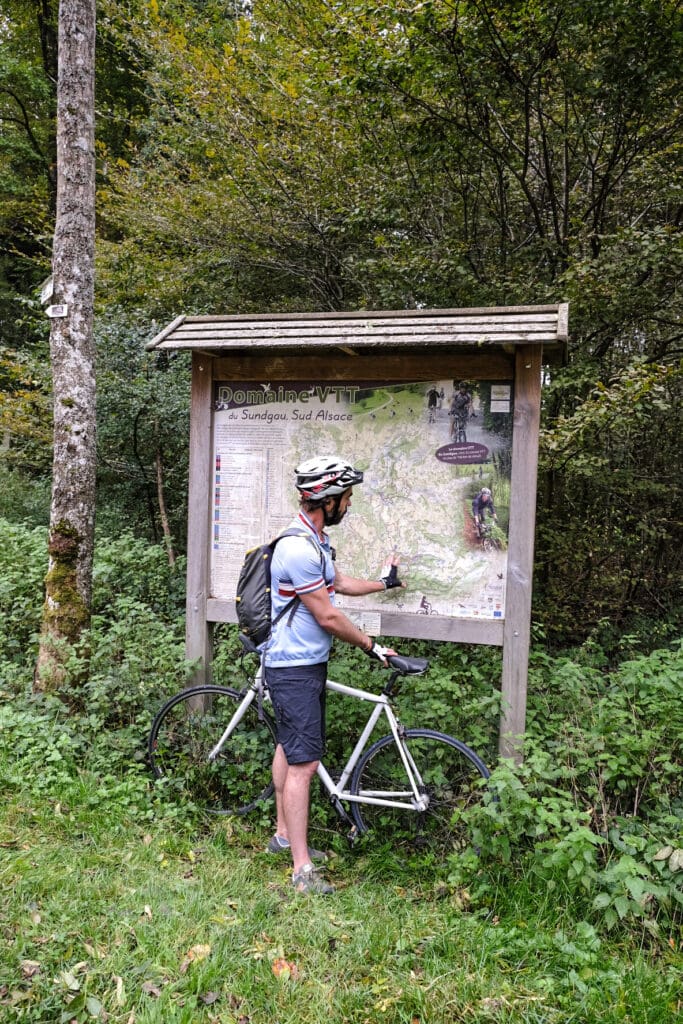
The Roads of the 3-Country Loop: overall, the route is easy (especially on an electric bike) and very comfortable, mostly on secure paths. You just have to follow the little sky-blue logo of the 3-Country Loop, “Dreiland Radweg”, also called the “three-country itinerary or circuit”, marked on signs along the route (sometimes the signs are a bit hidden, so I recommend paying close attention; you will certainly wander off course from time to time, which is why downloading the GPS route beforehand is essential).



Stage 1: Mulhouse (France)
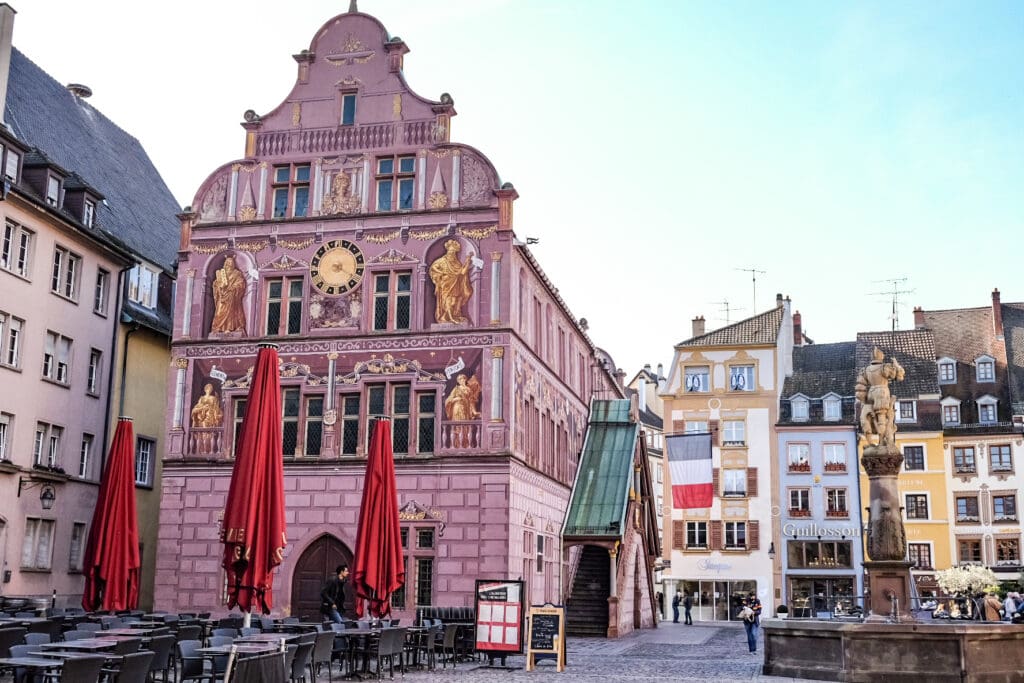
It had been a long time since I last visited this city in the Haut-Rhin, of which I held fond memories. Unfortunately, it was only a brief visit at the beginning and end of our journey, and I hope to write a more complete article about this Alsatian city very soon. There is actually a street art trail (for which a map is available at the Mulhouse Tourist Office) that looks really great to do.
Mulhouse was thus the starting and ending point of our 3-Country Loop. Below, I will simply suggest a spot for lunch and two bike ride ideas for your time in Mulhouse.




_
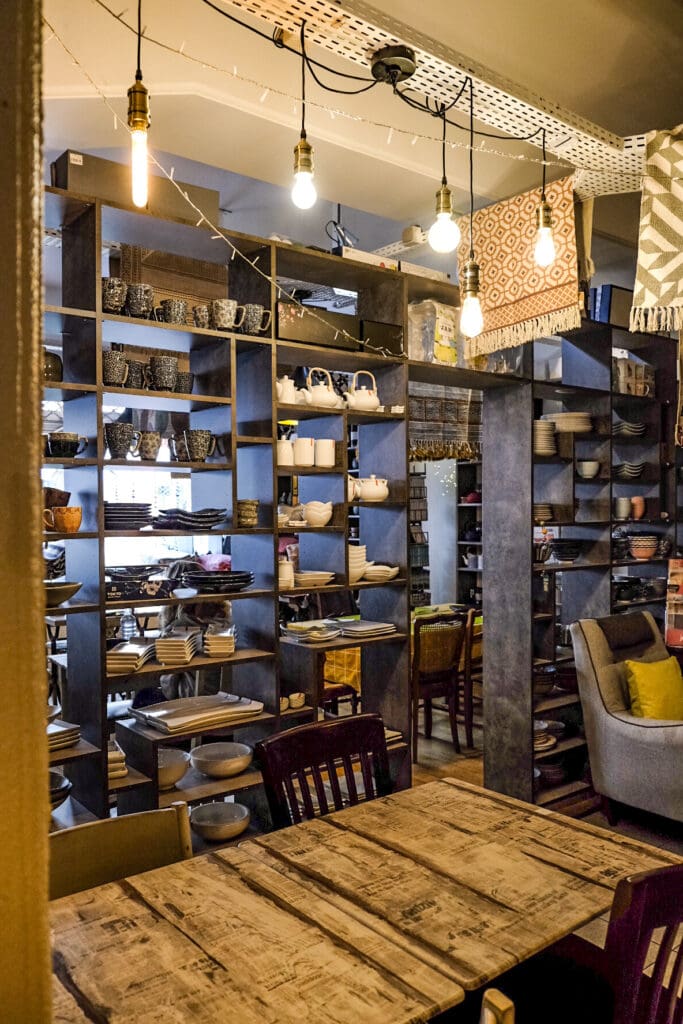
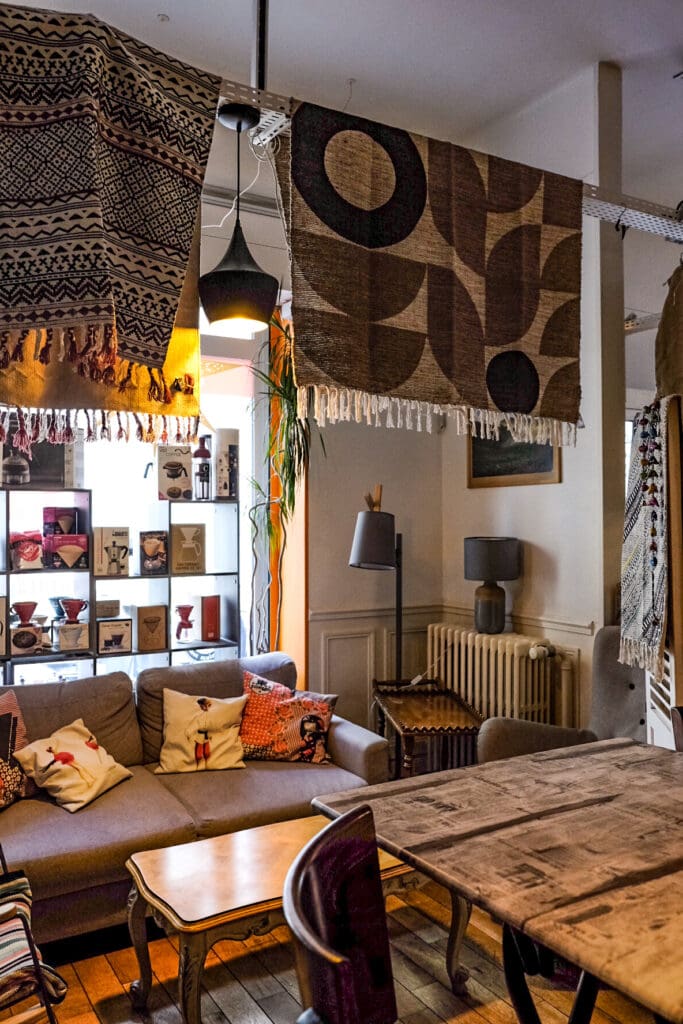
Where to have lunch in Mulhouse? Tilvist
This hybrid spot is both a boutique and a tea room, run by a woman full of energy and pep. The place is ideal for a relaxed lunch break or a weekend brunch. Plus, cultural, musical, and wellness events are regularly organized there.
To try: Stuffed pretzel (5 €); mixed salads (9 €); beers from a local artisanal microbrewery like Brasserie Sainte Cru (5 € for a 33cl bottle); praline cookie (1.50 €).



Tilvist
23 rue de la Moselle 68100 Mulhouse
open every day except Monday and Sunday
Lunch formula including choice of drink + main dish + dessert for 13.50 €
_
Take a guided bike tour with a greeter
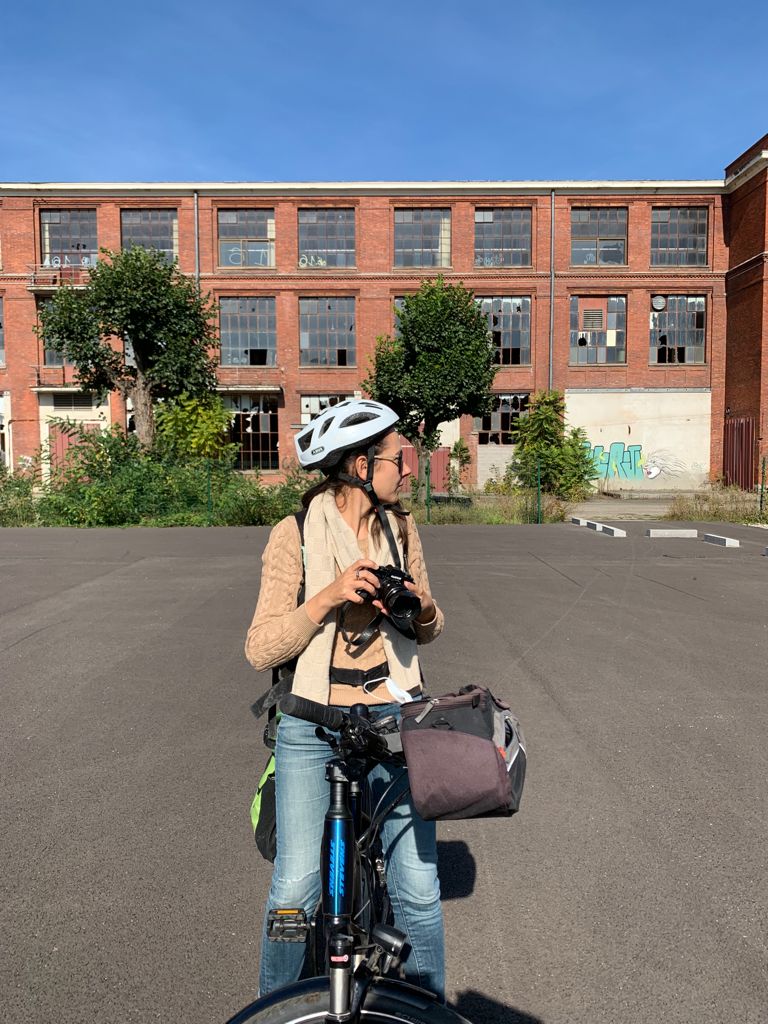
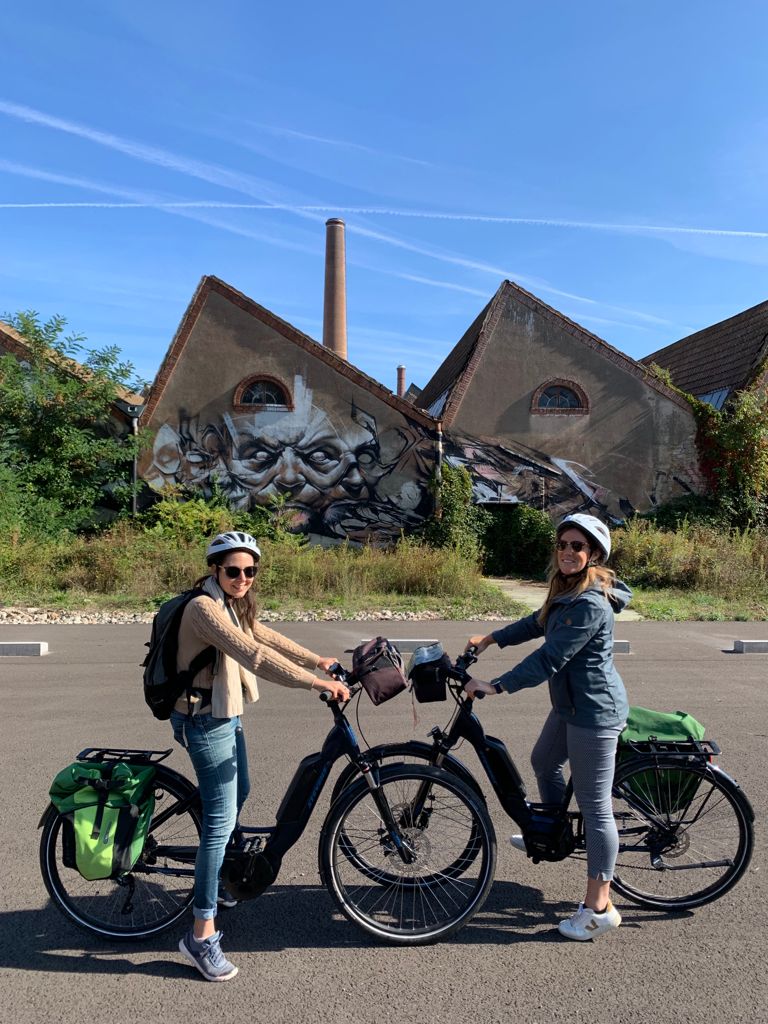
During our visit at the beginning of the trip, we went on a guided bike tour with Florent, a greeter (locals who introduce visitors to their city on a voluntary and free basis, which I’ve already told you about several times on the blog).
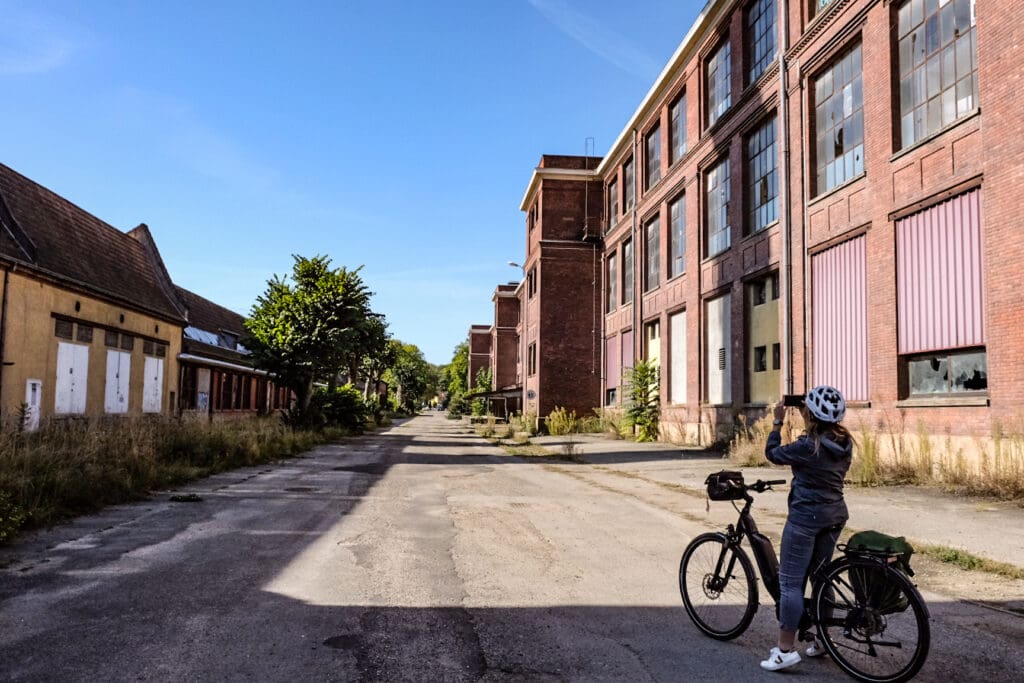
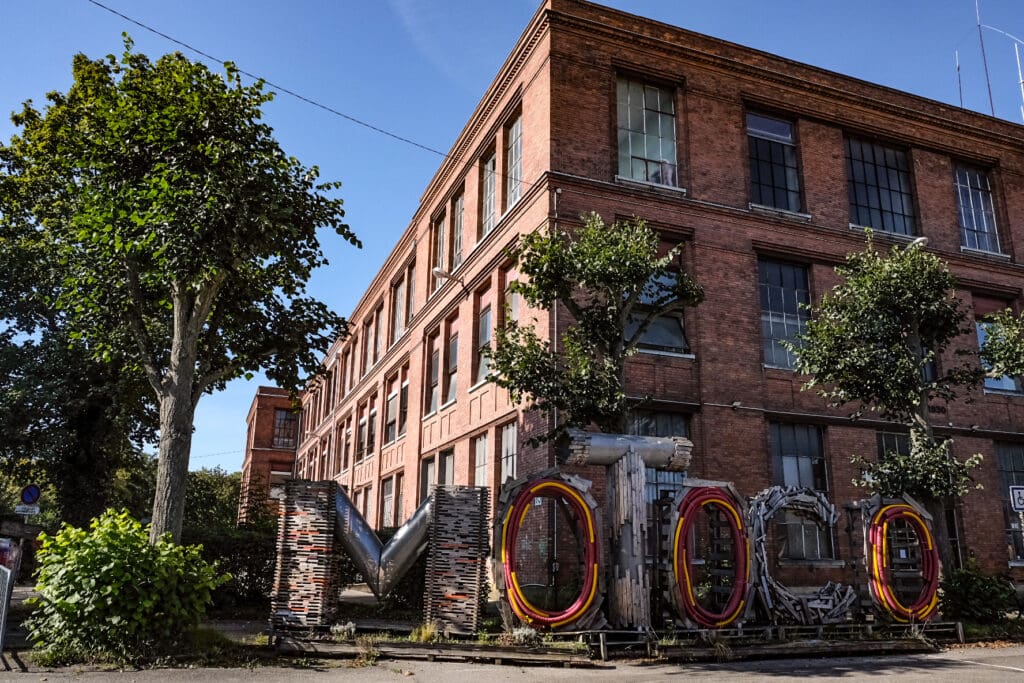
He took us into the city’s industrial district and past the former homes of textile printing workers to help us discover “his Mulhouse”. It was a great opportunity to understand the rich industrial past of the city of Mulhouse (with the former DMC factory, for example, which makes sewing thread and still employs about 200 people today). And being on a bike allowed us to quickly move away from the city center and visit these slightly more out-of-the-way spots that you rarely explore on foot.
We also discovered the workers’ city of Mulhouse, a neighborhood built for the city’s textile factory workers at the end of the 19th century. I also recommend checking out the Cité Manifeste, a complex of 61 housing units that reinterprets the philosophy and urban planning principles of the workers’ city through renowned architects to mark the 150th anniversary of the workers’ settlement.






_
To visit around Mulhouse: the Ottmarsheim Abbey Church
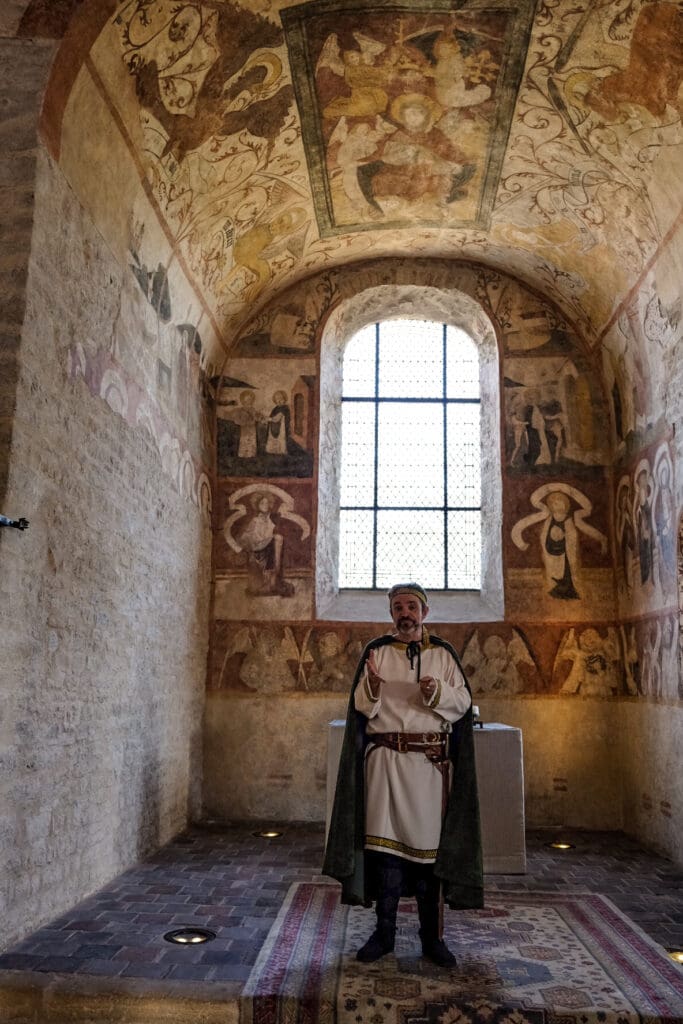
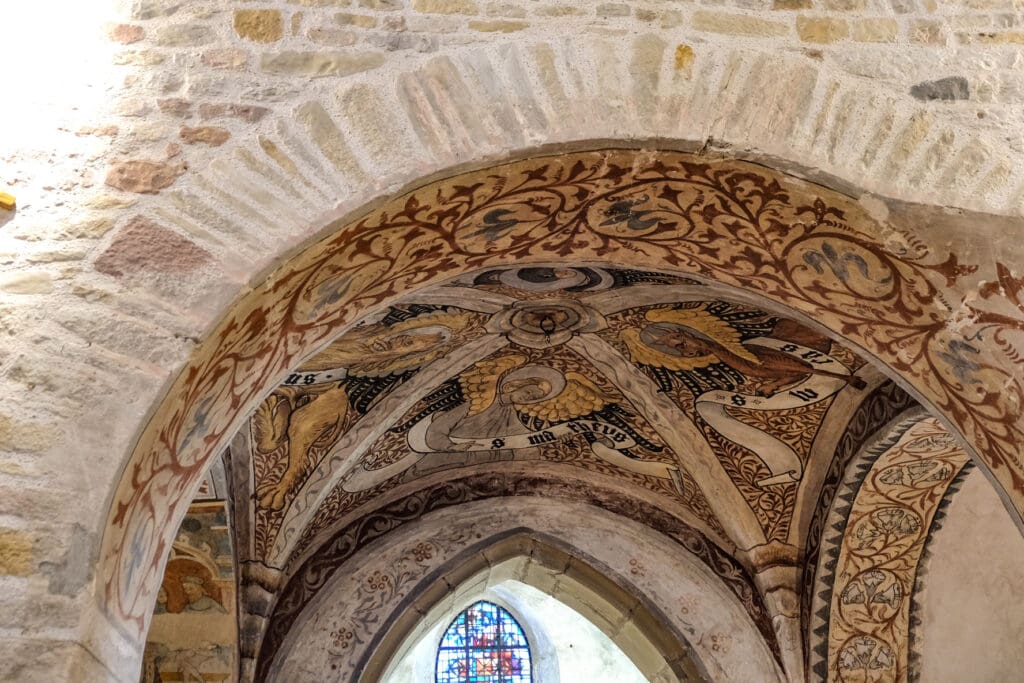
Located on the Romanesque Route of Alsace, the Saints Peter and Paul Church in Ottmarsheim is a jewel of 11th-century Romanesque architecture and is well worth a quick stop. Built between 1030 and 1040 by Rodolphe of Altenbourg, one of the founders of the Habsburg family, it is a copy of the Palatine Chapel in Aachen with its octagonal central plan. It can be visited notably through costumed theatrical guided tours that plunge us into the heart of the 11th century with the Count or Countess of Altenbourg.






Ottmarsheim Abbey Church
1 Rue du Couvent, 68490 Ottmarsheim
Free access every day from 8 AM to 6 PM
Prices for costumed theatrical guided tours (duration 1h, on weekends): 5 € adult / free for children under 12 (booking required)
More info on the Ottmarsheim town hall website
Accessible by bike via the 3-Country Loop (allow a good 1h30 of cycling from Mulhouse)
Stage 2: Bad Bellingen (Germany)
Along the road (and on our bikes!), we crossed the border effortlessly to find ourselves in Germany. Our first stop, following the Rhine, was the town of Bad Bellingen. This German municipality in Baden-Württemberg is located in the district of Freiburg, in the southern part of the Black Forest, and is mainly known for its thermal waters, which are particularly recommended for treating joint and back pain.
_
Where to relax in Bad Bellingen? The Balinea Thermal Baths
These baths, located in the heart of a wooded park, are a very popular relaxation spot for locals and visiting tourists alike. After a good day of cycling, I must admit that relaxing my muscles in the establishment’s hot springs was extremely soothing! Unfortunately, we couldn’t take many photos inside the thermal baths, as it is generally discouraged and frowned upon by other patrons.
On the agenda across the 1,000 m² aquatic area: a natural thermal water pool with temperatures ranging between 34 and 36°C; a sauna area; two large outdoor pools with currents, massaging loungers, etc.; a large lawn dotted with sun loungers; a “wellness world” area; and a fitness bar with food service.


Balinea Thermal Baths
Badstraße 14, 79415 Bad Bellingen
Prices: single ticket entry from Monday to Friday 16.50 € and 18 € on Saturdays, Sundays, and public holidays
The good deal: evening rate starting at 6 PM for 8.50 €
Link to the thermal baths website
_
Where to dine in Bad Bellingen? Hotel Markushof Restaurant
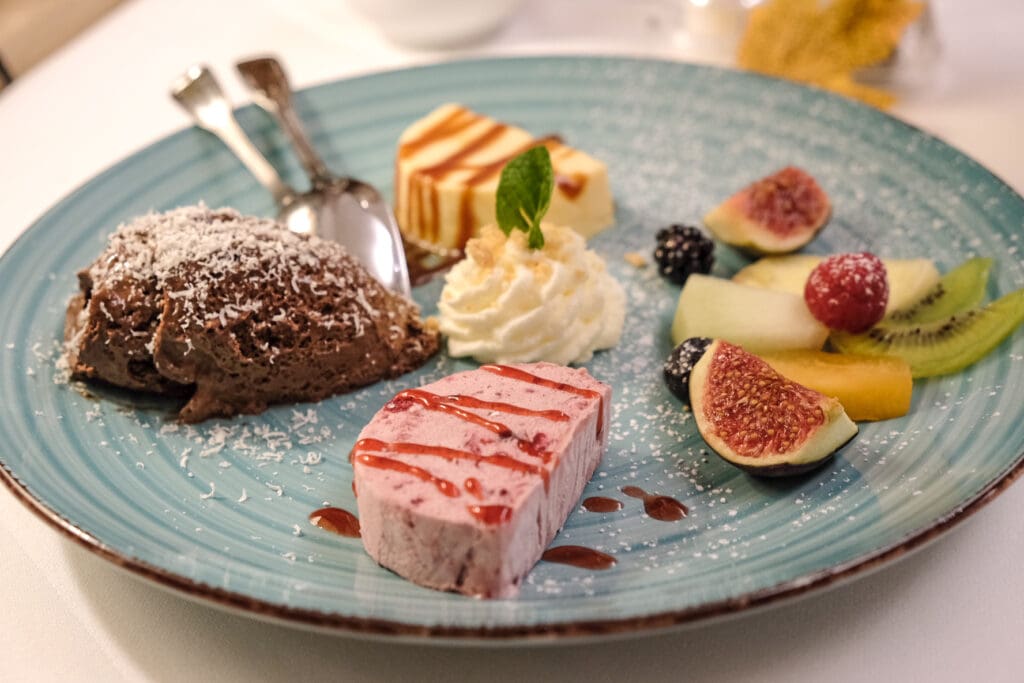
This 3-star hotel run by the Speck family also offers a quality restaurant in Bad Bellingen. We didn’t stay there, but we spent a wonderful gourmet evening there, ideal for discovering the region’s specialties.
Must-try: their delicious potato galette, which I went back for several times.



Restaurant de l’Hôtel Markushof
Badstraß6, 79415 Bad Bellingen
_
Where to stay in Bad Bellingen? Aparthotel Badblick (closed)
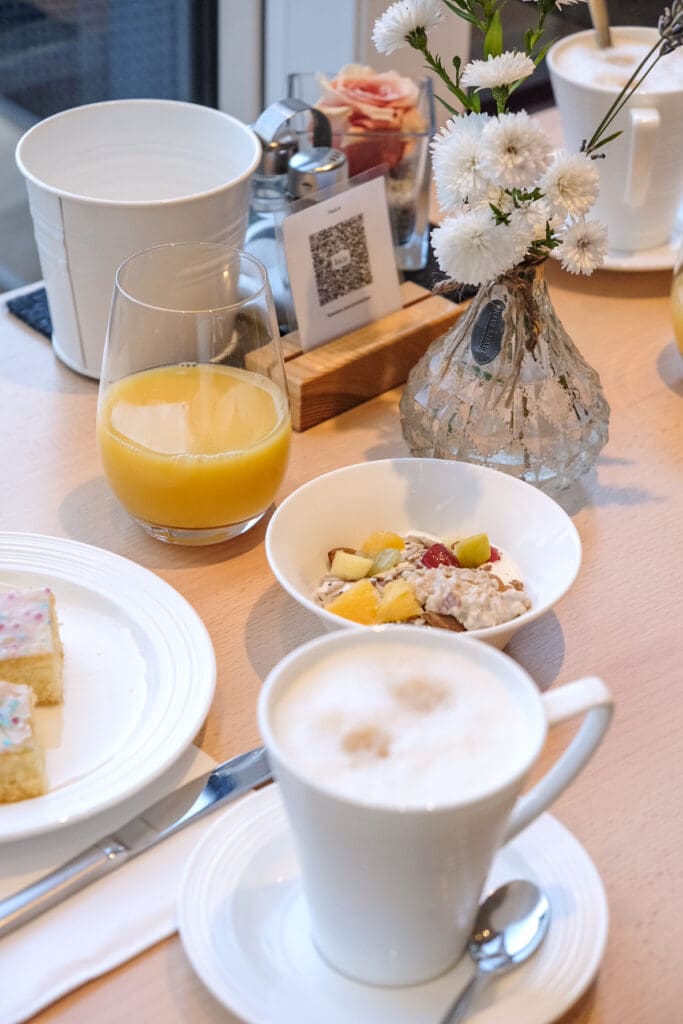
The Aparthotel Badblick is ideally located in Bad Bellingen, as you can easily walk to the Balinea thermal baths, which I mentioned earlier. This hotel is perfect for cyclists as it holds the “Bett und Bike” certification and features a secure bike garage!



Aparthotel Badblick (closed)
Rheinstraße 4, 79415 Bad Bellingen
Stage 3: Lörrach (Germany)
This southwestern city in Baden-Württemberg, located at the crossroads of three countries, is very commercial and culturally vibrant. It is also home to many textile industries, much like Mulhouse. We made a cultural bike stop here during the day to visit the Three Countries Museum and Rötteln Castle.
_
What to do in Lörrach? Visit the Three Countries Museum
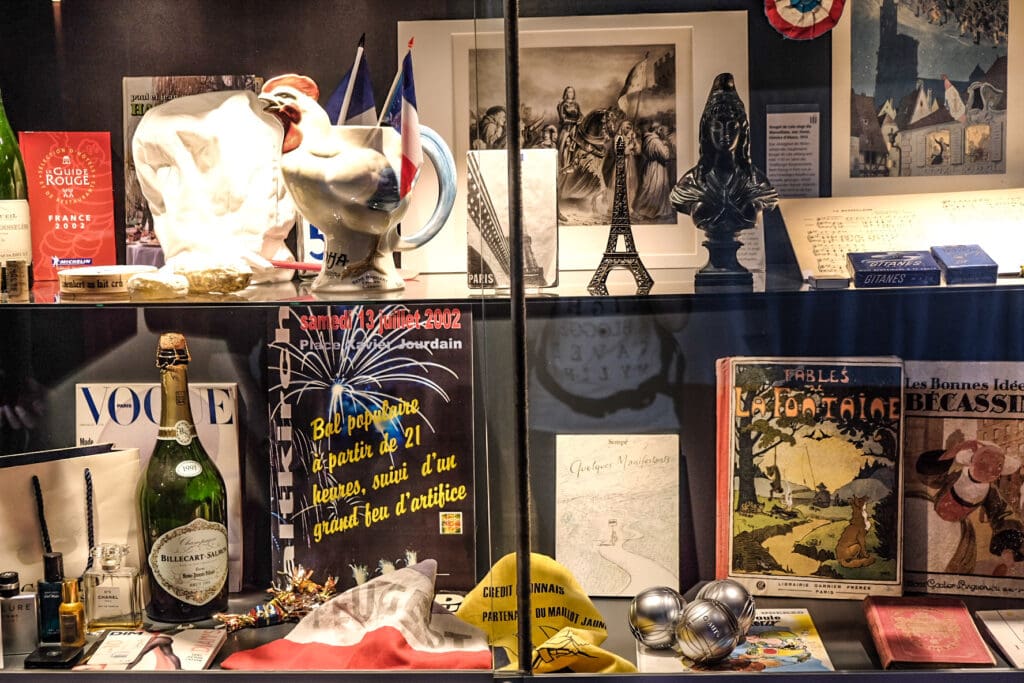
The Three Countries Museum, a multiple award-winner, is Europe’s only trinational museum. In addition to the exhibition on the Three Countries in German and French, it also hosts the central permanent exhibition on the present and past of the Upper Rhine Three-Border region. Furthermore, it hosts several temporary exhibitions every year. Finally, there is a room featuring an exhibition on the War of 1870, which explains the situation of Alsace when it became German again in 1871, then French in 1918/1919, and German once more during the Second World War.
I find visiting this museum extremely interesting for trying to understand the very unique situation of this composite region, and it also ties in perfectly with the 3 Countries Bike Loop.


Musée des trois pays
Basler Straße 143, 79540 Lörrach (two minutes from the market square)
Museum open Tuesday to Sunday from 11 AM to 6 PM
Prices: €3 adult / €1 reduced / free for children under 6
Link to the museum website
_
What to do in Lörrach? Visit Rötteln Castle
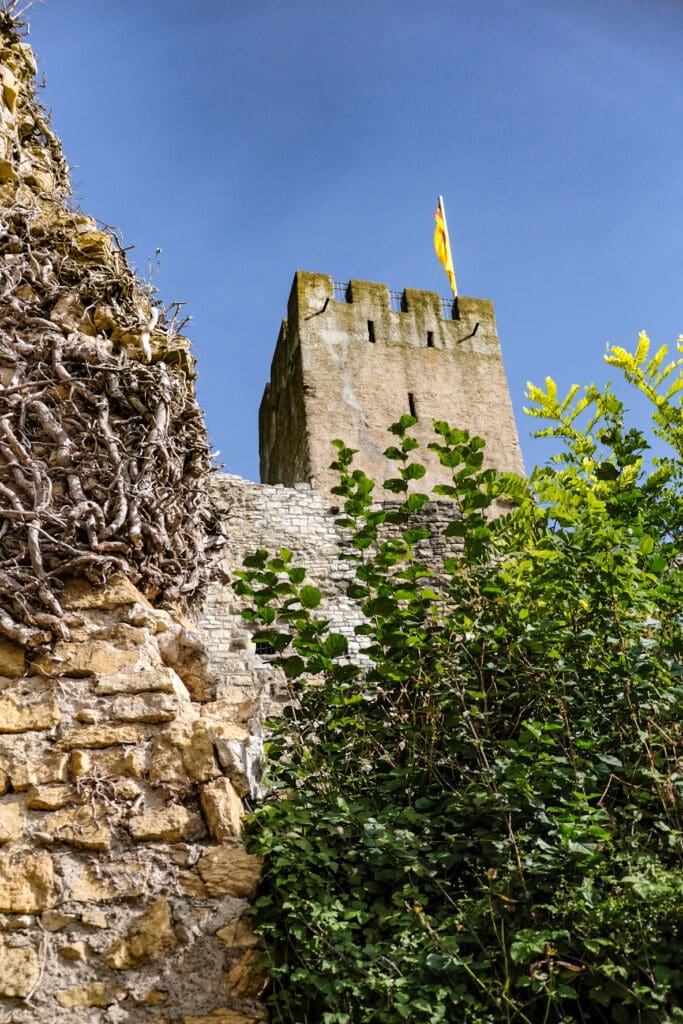
Rötteln Castle is one of the largest castle ruins in South Baden. Perched on a rocky spur overlooking Lörrach, it offers visitors an extraordinary view over Lörrach, the Rhine Valley, towards Basel, and all the way to the Alps. It is an absolute must-see stop if you are passing through the area. A small section of the castle requires an entrance fee (which we didn’t visit), but the majority of the site is completely free to access, which is very convenient. There is even a spot to park and secure your bike!




Château de Rötteln
Burg Rötteln, 79541 Lörrach
_
Where to have lunch in Lörrach? At Fräulein Burg
This address is the restaurant at Rötteln Castle that I just mentioned. On sunny days, it is very pleasant to have lunch on the establishment’s terrace, which offers a magnificent view of the surrounding area.
On the food front, it’s quite simple, but it’s a great opportunity to try some German specialties. Be careful not to make the same mistake we did and order an Alsatian “salad” thinking you’re opting for a balanced dish, because in reality, there are no vegetables in it at all! However, the entire menu is completely in German, so if you don’t speak German, it could be slightly problematic (thankfully, a friendly lady who spoke French helped us out…). It was also the chance for me to enjoy a “small” German beer.


Restaurant Fräulein Burg
Röttelnweiler 47, 79541 Lörrach
Stage 4: Basel (Switzerland)
After Germany, here we are in the loop’s 3rd country: Switzerland. We took a quick bike tour of the city of Basel, which I will tell you more about very soon in a much more detailed article, as I have since returned there for a weekend in the Swiss city.
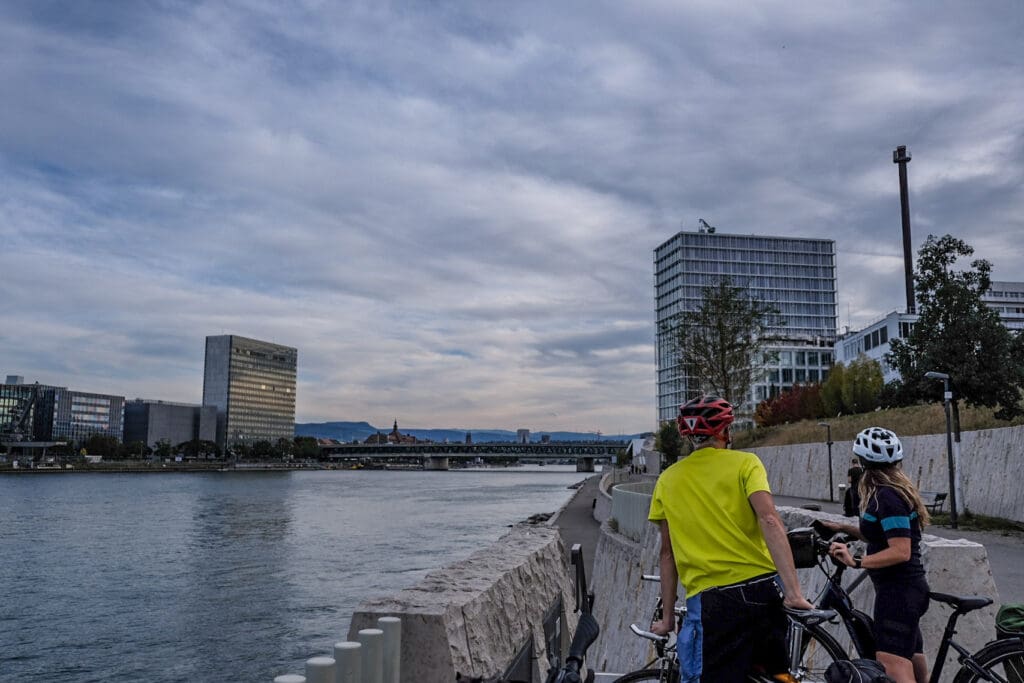
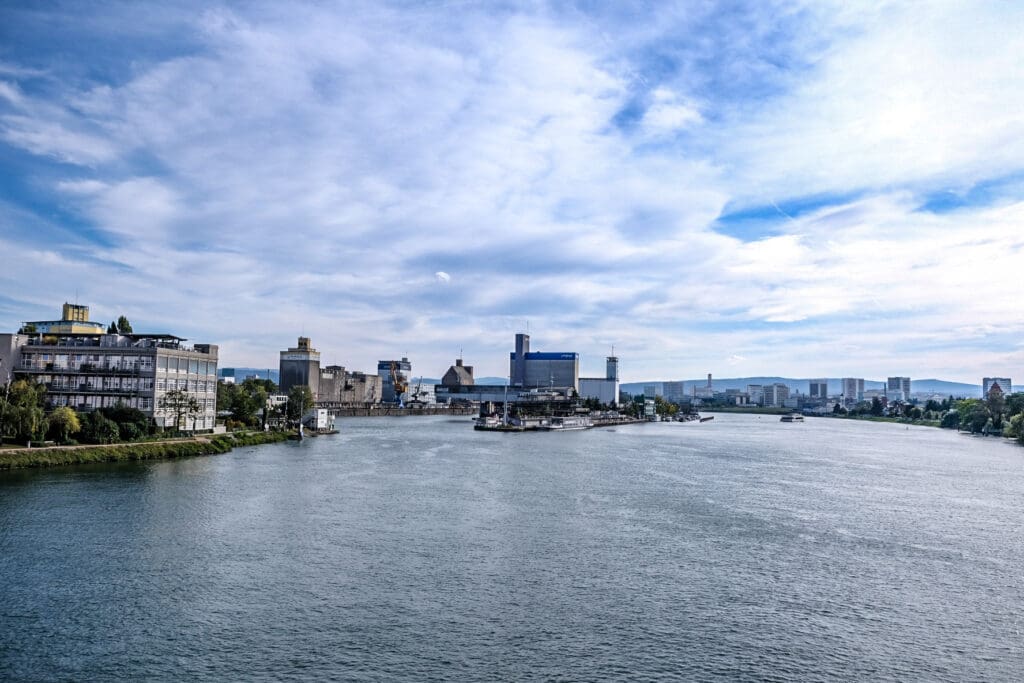
We made an essential quick stop at the Dreiländereck in Basel, a key historical site located at the crossroads of the 3 countries on the banks of the Rhine: France, Switzerland, and Germany. From there, you can admire the Three Countries Bridge (a symbol of the route) between Weil am Rhein (Germany) and Huningue (France). Be sure to also stop by the town hall, which surprises with its red facade and polychrome murals, and then you can explore Basel’s alleyways on foot, particularly the “Gerbergässlein” passage known for its street art. Don’t miss Barfüsseplatz, followed by the Tinguely Fountain—a famous work composed of animated mechanical sculptures—and finally, visit the Basel Minster (Basler Münster). From the terrace behind the cathedral, you’ll also enjoy a breathtaking view of the city’s rooftops and the river.
A few spots to photograph in Basel: the Three Countries Bridge, the banks of the Rhine, the Eaux Vives park, the port of Basel, the “Récup’Art” bars in Klybeck, the Tinguely Fountain, the Basel Minster, the Town Hall, and the Gerbergässlein street art mural.
Note for cyclists: certain areas of the city are pedestrian-only, especially the alleyways.



Stage 5: Arlesheim (Switzerland)
This charming traditional Swiss village is also located in Switzerland, about 10 km from Basel (which I just mentioned), in the canton of Basel-Landschaft.

_
Where to stay in Arlesheim? Hotel Gasthof zum Ochsen
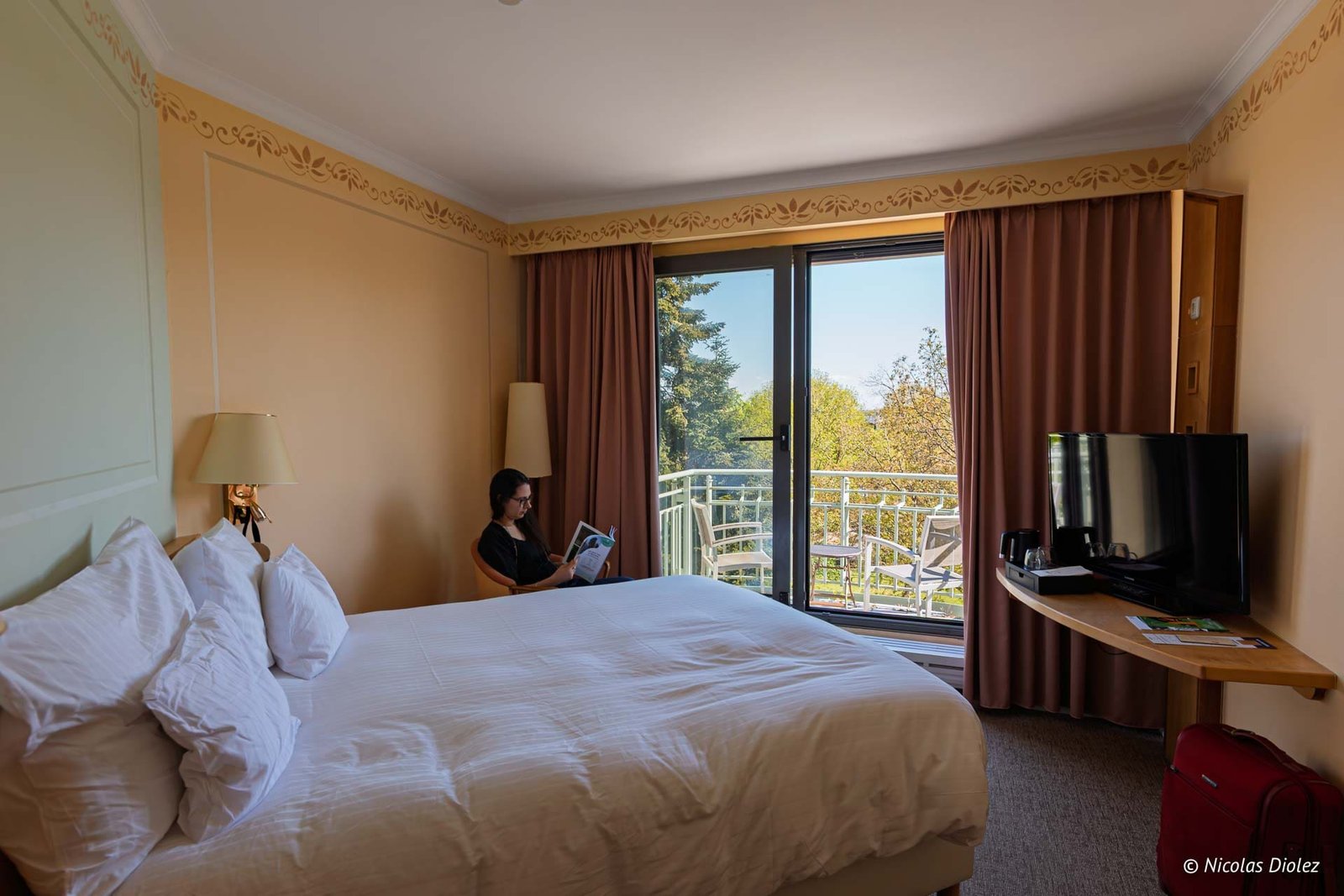
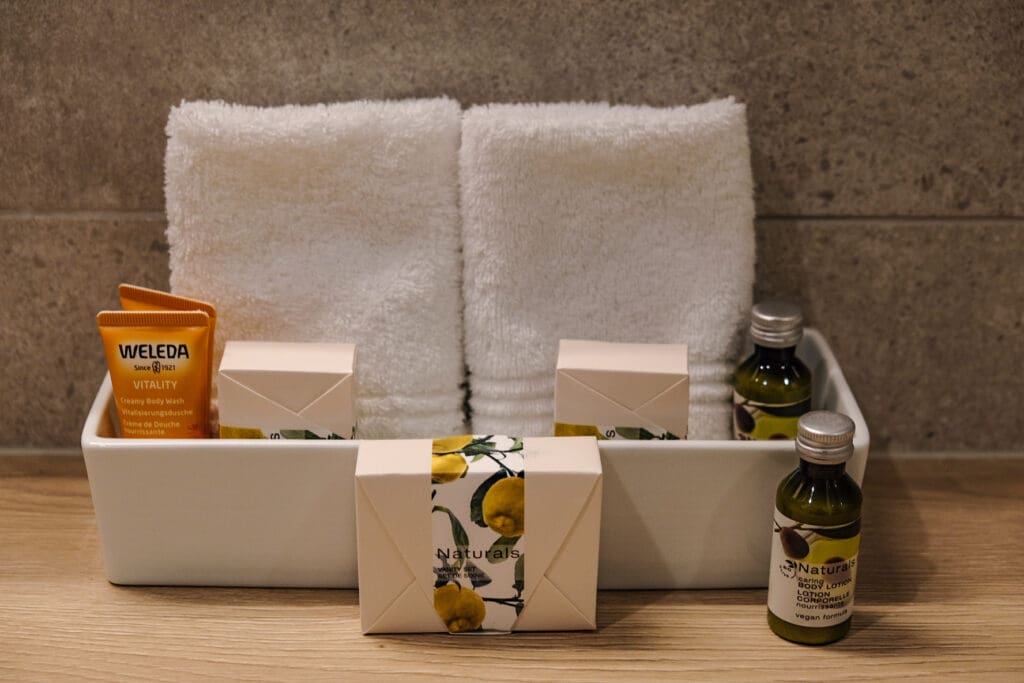
This 4-star hotel housed in a former traditional building welcomes cycle tourists with tailored amenities and is the first of its kind in Northwestern Switzerland. There is a special spot in the parking lot for bikes, including everything needed to plug in and charge your electric bike during your stay (which is extremely practical, I must admit). Mathilde and I stayed in a large double room with two extremely comfortable single beds. And the breakfast was also of very high quality, which is always an appreciated bonus.
The tip: for hotel guests, there is a refreshment station on every floor with free drinks available (beer from a Basel brewery, mineral water, Nespresso coffee, and tea), as well as fresh fruit.



Hôtel Gasthof zum Ochsen
Ermitagestrasse 16, 4144 Arlesheim
_
Where to have dinner in Arlesheim? Hotel Gasthof zum Ochsen restaurant
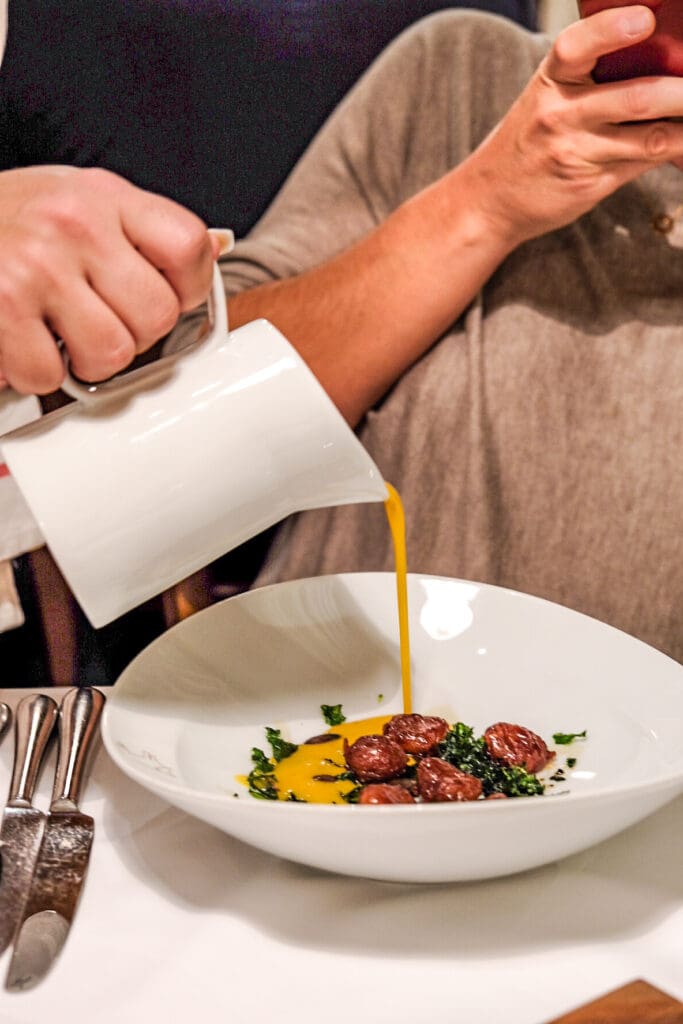
The hotel restaurant where we stayed is well-known around here for its meat specialties, featuring the finest cuts from their butcher shop carrying the famous “Jenzer Natura” quality label. Chef Dominic Meier offers dishes crafted from market-fresh and seasonal produce. It’s a spot highly appreciated by local foodies and wine lovers alike.
If you’re staying at the hotel, I strongly advise treating yourself by trying out this fine dining establishment to discover regional specialties as well as some great local wines!


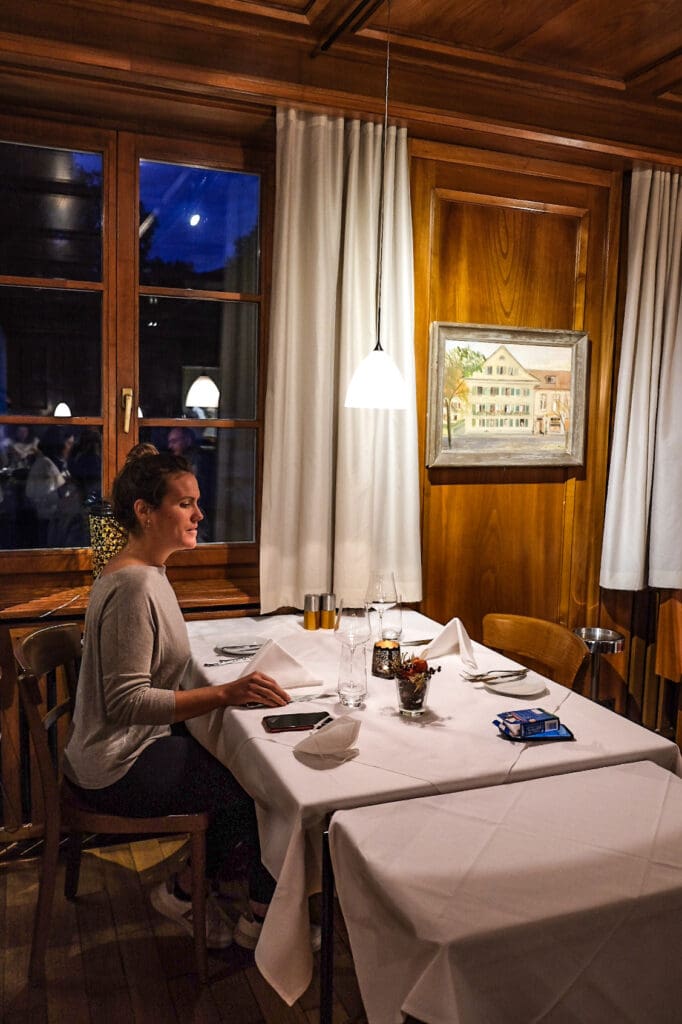


Restaurant de l’hôtel Gasthof zum Ochsen
The tip: the 28 CHF set lunch menu (Monday to Friday for lunch)
Prices: 3-course menu 78 CHF / 4-course menu 87 CHF / à la carte starters between 14 and 25 CHF / à la carte main dishes between 35 and 55 CHF
Stage 6: the Sundgau (Southern Alsace, France)
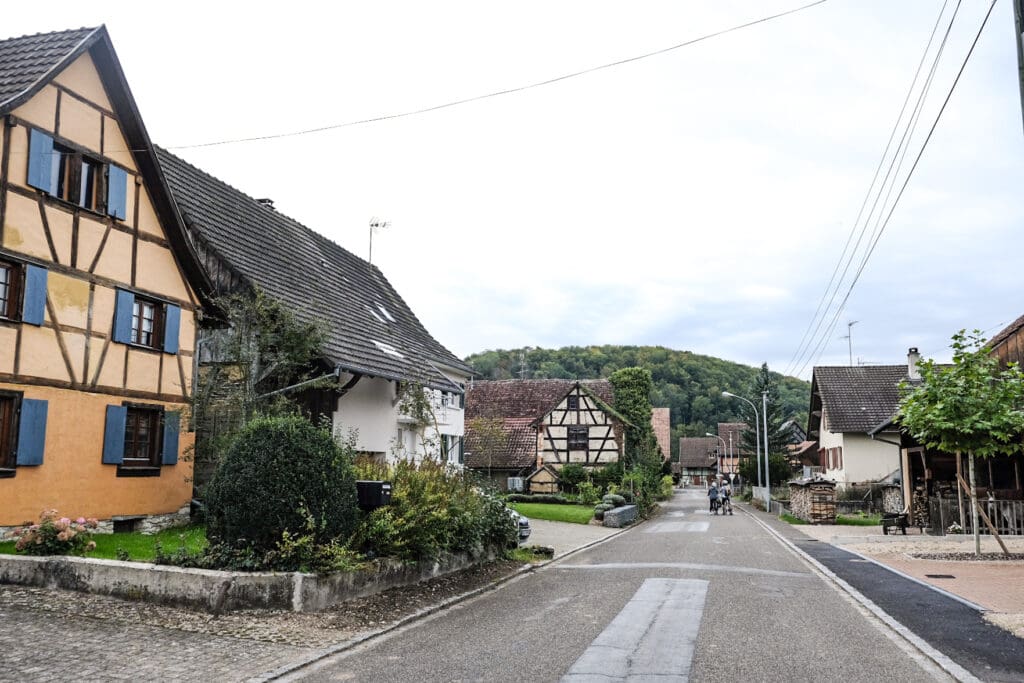
The “Sundgau” is a territory located in southern Alsace along a seismic fault line, distinguished by its beautiful half-timbered farmhouses, numerous ponds, magnificent landscapes, and authentic heritage. The culture of the Alsatian Jura is also very strong in this region.
During your bike ride through the Sundgau, I highly recommend visiting the region’s charming traditional villages. Below, I’ve shared a few ideas of places to discover! Unfortunately, we couldn’t enjoy them too much because it started pouring rain almost nonstop right around this part of the trip, so it wasn’t quite as ideal for sightseeing.
- Altkirch: This is the capital of the Sundgau, where you can explore the Sundgauvien Museum, as well as a walking trail featuring street art created on several building facades throughout the town, not to mention the exhibitions at the CRAC (Rhine Centre for Contemporary Art).
- Illtall: A new commune born from the merger of Oberdorf, Grentzingen, and Henflingen, featuring a row of beautiful, richly flowered half-timbered houses along its main street.
- Hirsingue: This small town of 2,700 inhabitants belongs to the exclusive club of 11 Alsatian communes that have been awarded 4 flowers. It is crossed by the small Felbach stream, where ducks are abundant. Its streets, shaded by lovely linden trees and adorned with beautiful half-timbered houses, are perfect for a pleasant, bucolic stroll. This is actually where we stayed during our time in this area, and below I’m sharing some great addresses in Hirsingue for sleeping and eating on-site.




_
Visit Landskron Castle
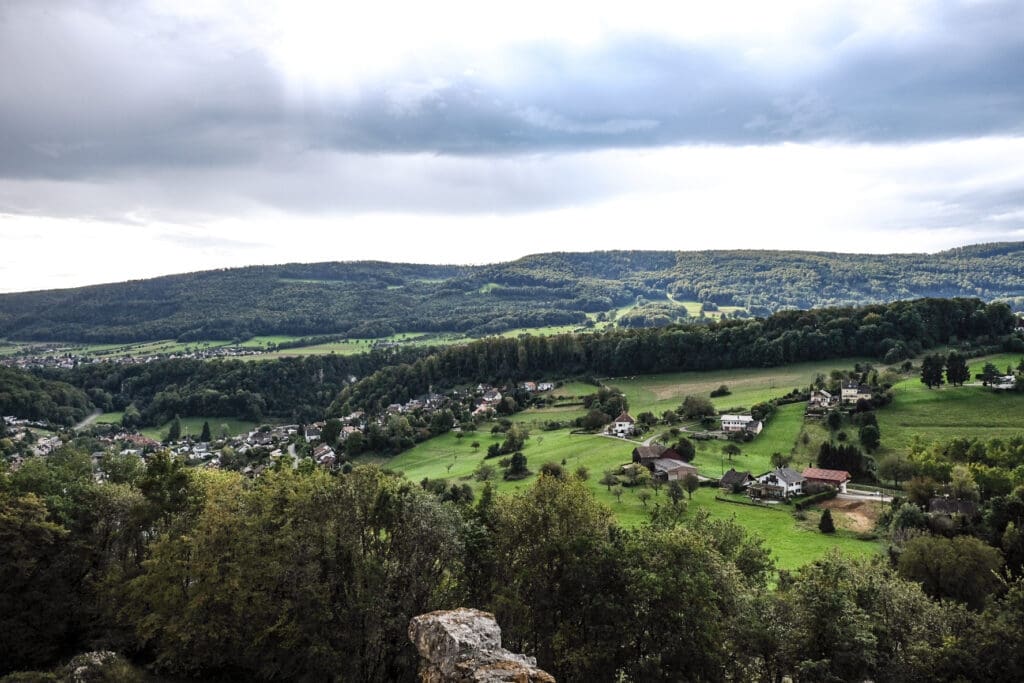
Perched in the Alsatian Jura, a stone’s throw from the village of Leymen and Switzerland, Landskron Castle overlooks the entire valley. It was transformed into a garrison according to Vauban‘s plans (1689), burned and bombed in 1817, and finally classified as a Historic Monument in 1923. There you can discover a 13th-century keep, towers, and the remnants of the chapel and well. Visiting the ruins of this castle makes for a lovely green stroll.
A quick heads-up for cyclists: the climb up to the castle is really steep, and even with the bikes’ electric assist, Mathilde and I really struggled! So if you want to make this climb without e-bikes, you definitely need to be in great shape!


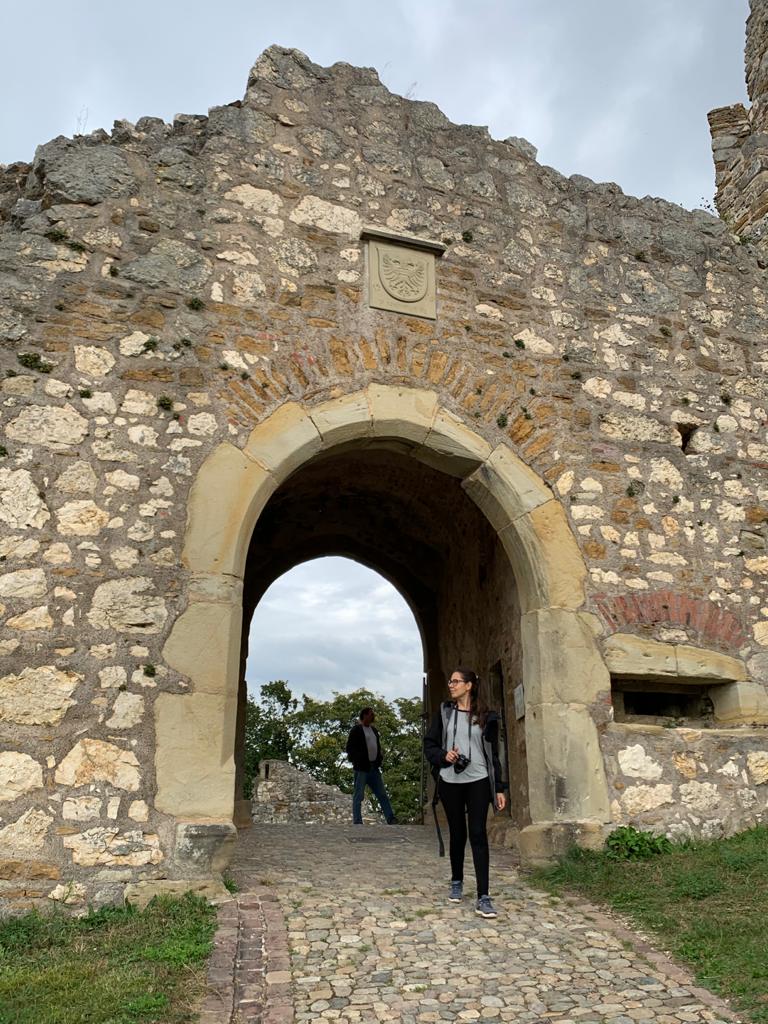
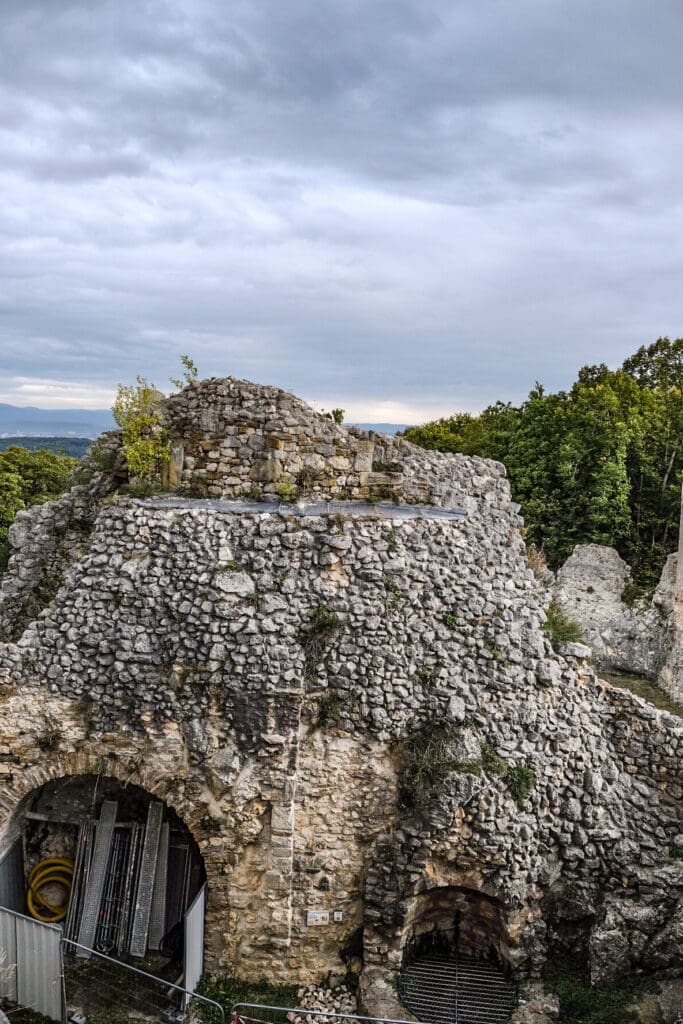


Landskron Castle
Access: After the train station, take Rue du Landskron, follow it to the intersection with Rue Annexe Tannwald where you turn left and head uphill toward Landskron
The tip: the castle ruins are freely and openly accessible to visitors
_
Visit the Oltingue Peasant Museum
This peasant museum was created in the 1960s by a priest who collected items from local residents with the goal of showcasing the disappearing rural world. The museum is housed in a 16th-century building that used to be an old inn and post-chaise station. Don’t hesitate to make a quick stop for a dive into the region’s rural authenticity.
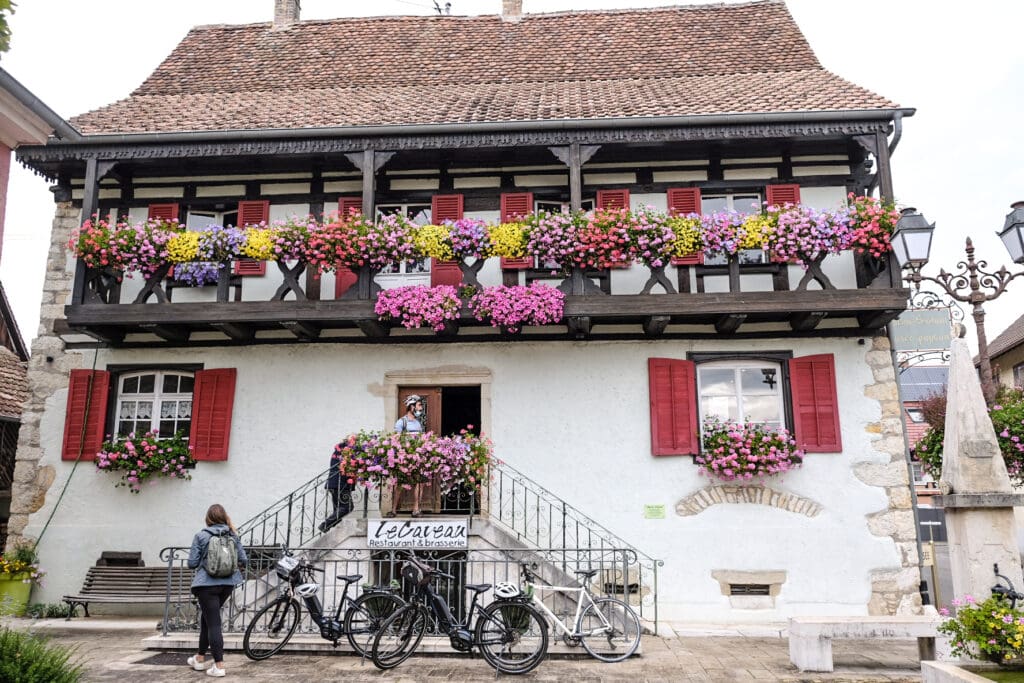


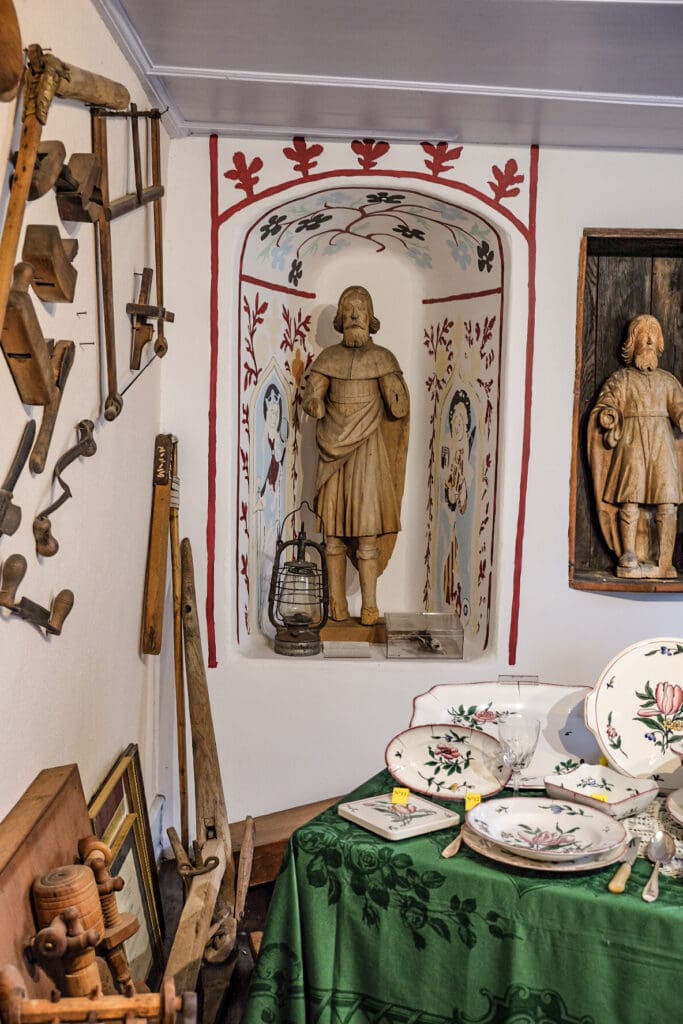


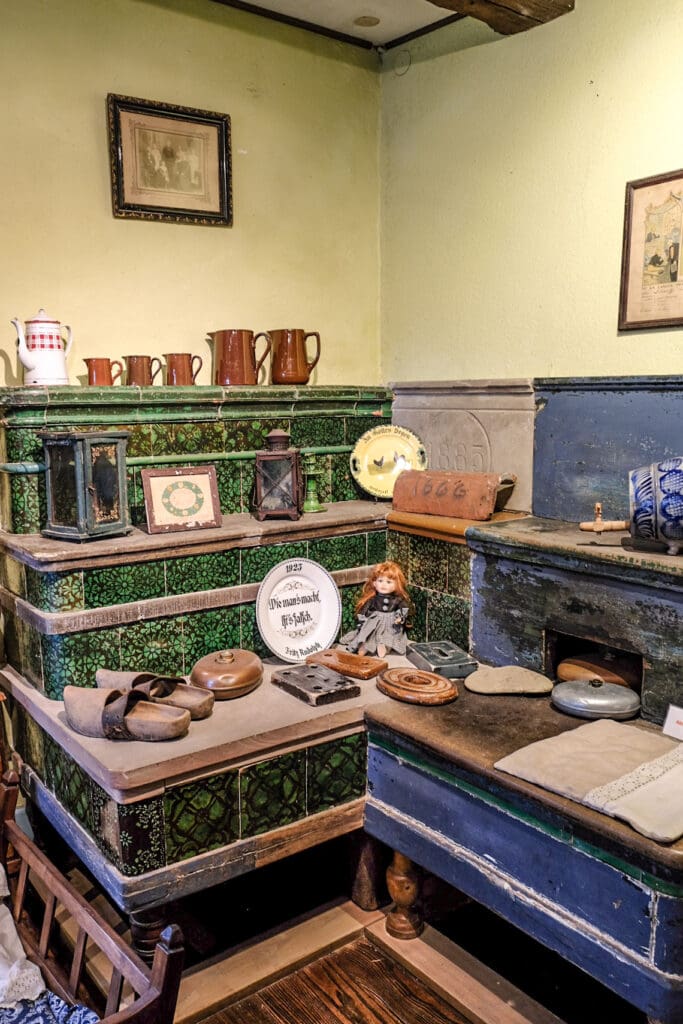
Oltingue Peasant Museum
10 Rue Principale, 68480 Oltingue
open Sundays from 2 PM to 5 PM from March 1 to November 15, and Tuesdays, Thursdays, Saturdays, and Sundays from 3 PM to 6 PM from June 15 to September 30
Price: €2.50 admission
_
Where to have lunch in Leymen? La Couronne d’Or
This restaurant is located in Leymen, making it the ideal spot for lunch after visiting Landskron Castle, for example. It features a very pleasant terrace for the summer (which was unfortunately closed when we passed by). The place offers fresh, seasonal produce, though in my opinion, it lacked a bit of local specialties.


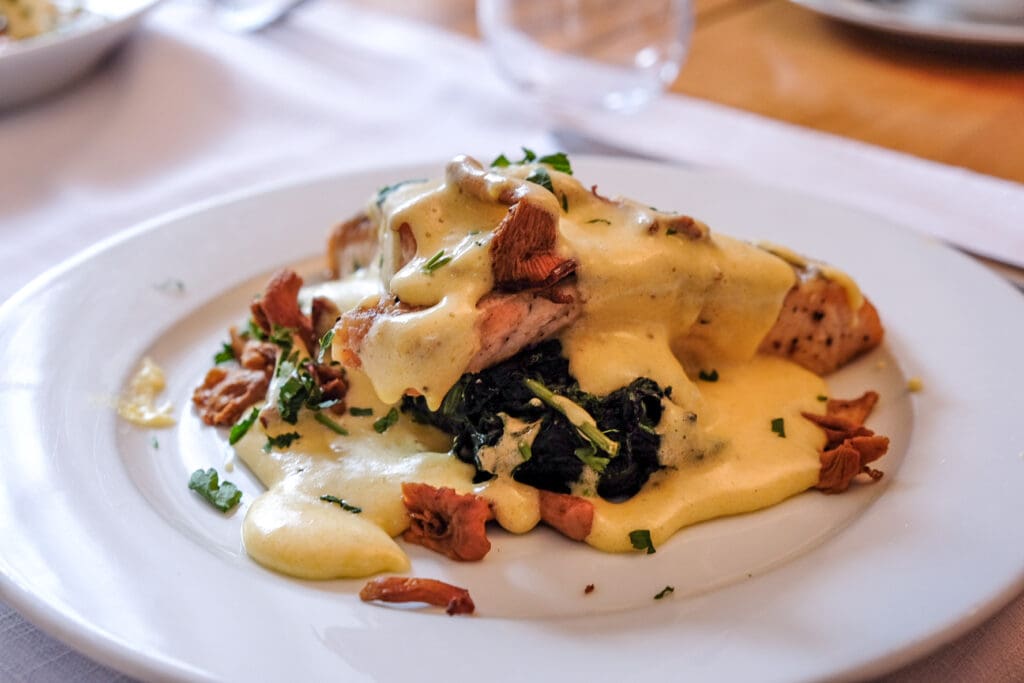

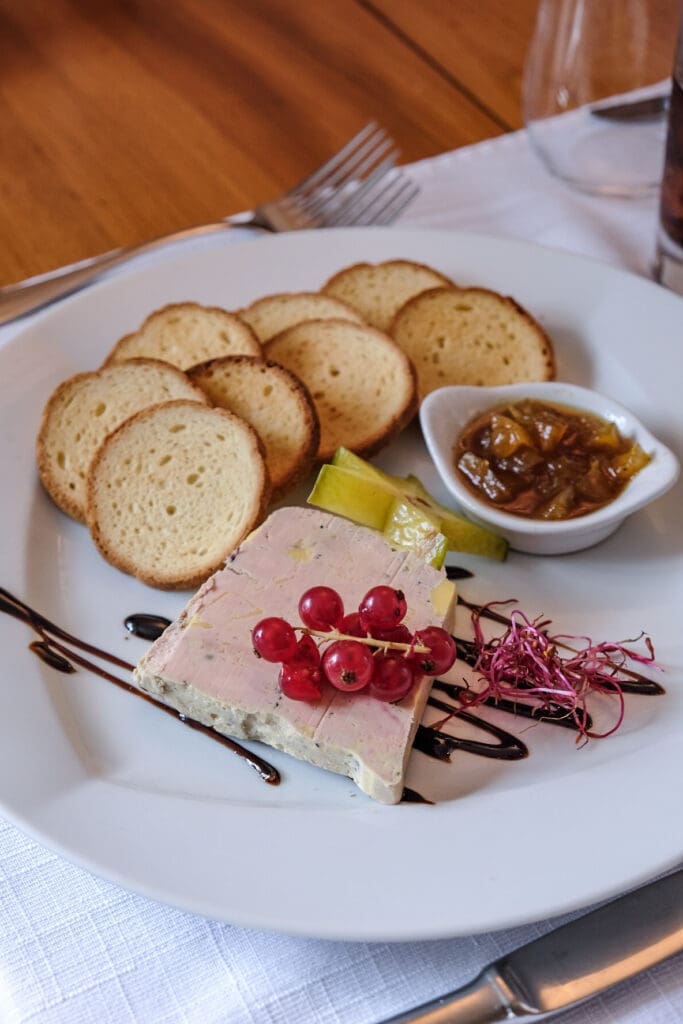


Restaurant La Couronne d’Or
10 rue principale, 68220 Leymen
Prices: starters between €4 and €16 / mains between €16 and €34
_
Where to stay in Hirsingue? Eichestuba B&B
This charming, recently renovated B&B is located in the small village of Hirsingue. For context, Eichestuba means “oak room” in Alsatian. We were welcomed very warmly by Marie-Ange and Didier Duchene, who host guests right in their home. I stayed in the Vignoble room.
The extra touch: if you are a wine lover like me, Didier also sells local wines if you want to discover the region’s vineyards, along with a few local artisan products!


Eichestuba B&B
28 rue Raoul Lang, 68560 Hirsingue
Rates: €52 for one person including breakfast / €60 for 2 people including breakfast
_
Where to dine in Hirsingue? Auberge des 3 Vallées
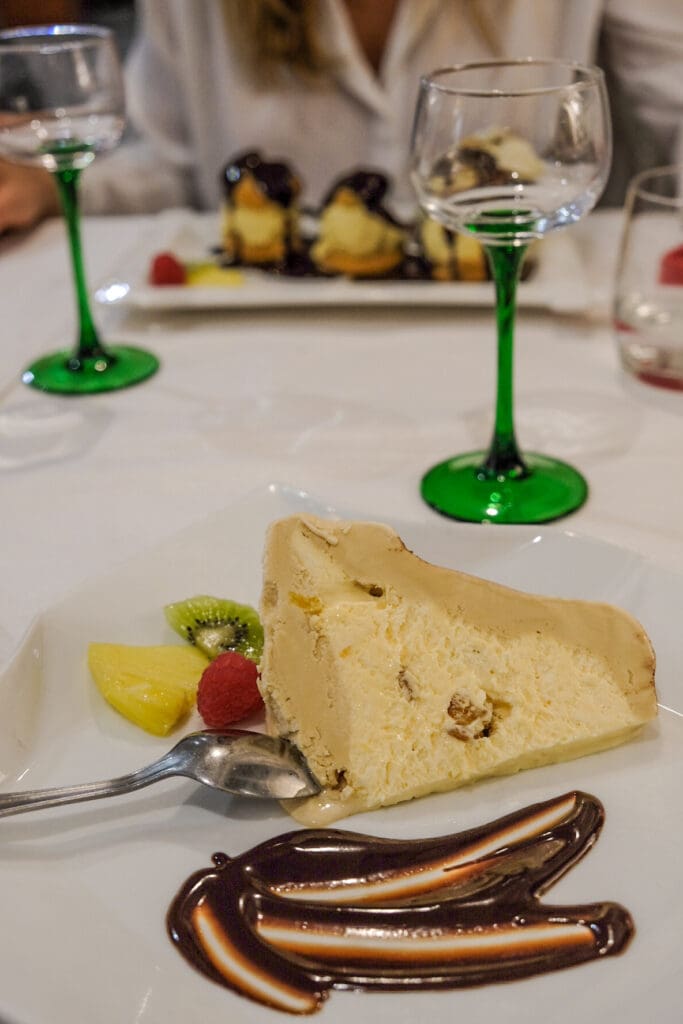
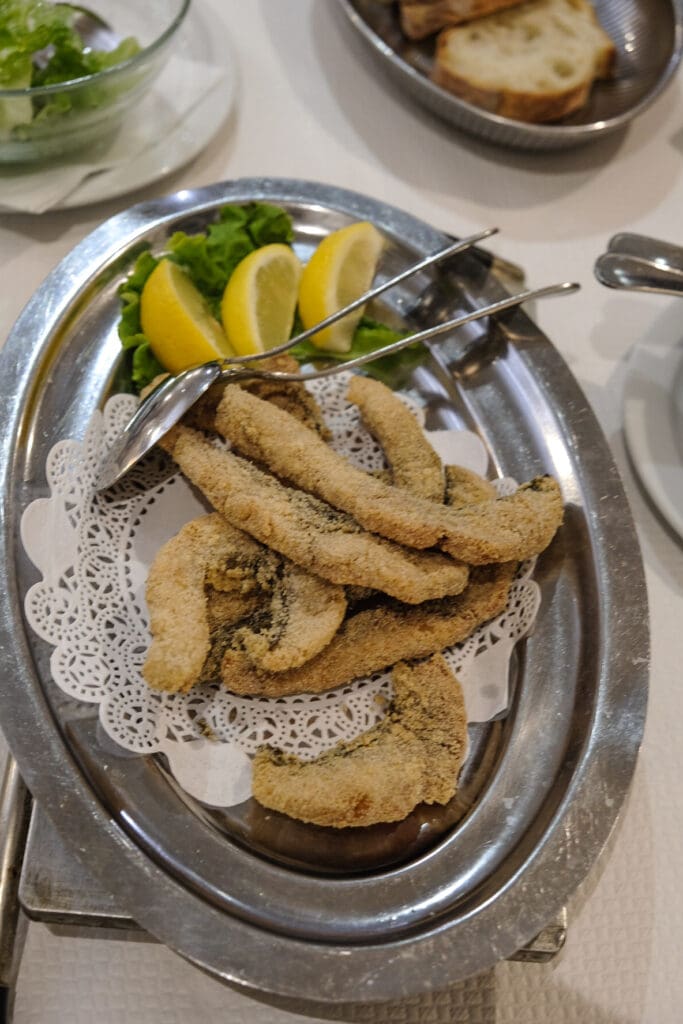
This small family-run inn managed by Annick and Pieter Harens is nestled in the village of Hirsingue, a 5-minute walk from the B&B I just mentioned above, making it the perfect place to grab a bite to eat if you’re staying there. The restaurant serves rich and varied local cuisine, and I particularly recommend trying the Sundgau specialty that I absolutely loved: the famous fried carp (a tip given to us at the B&B where we stayed: order the carp “filet” to avoid bones / €20.30). A regional must! For dessert, I also recommend the iced kougelhopf with Alsatian kirsch (€7.90).
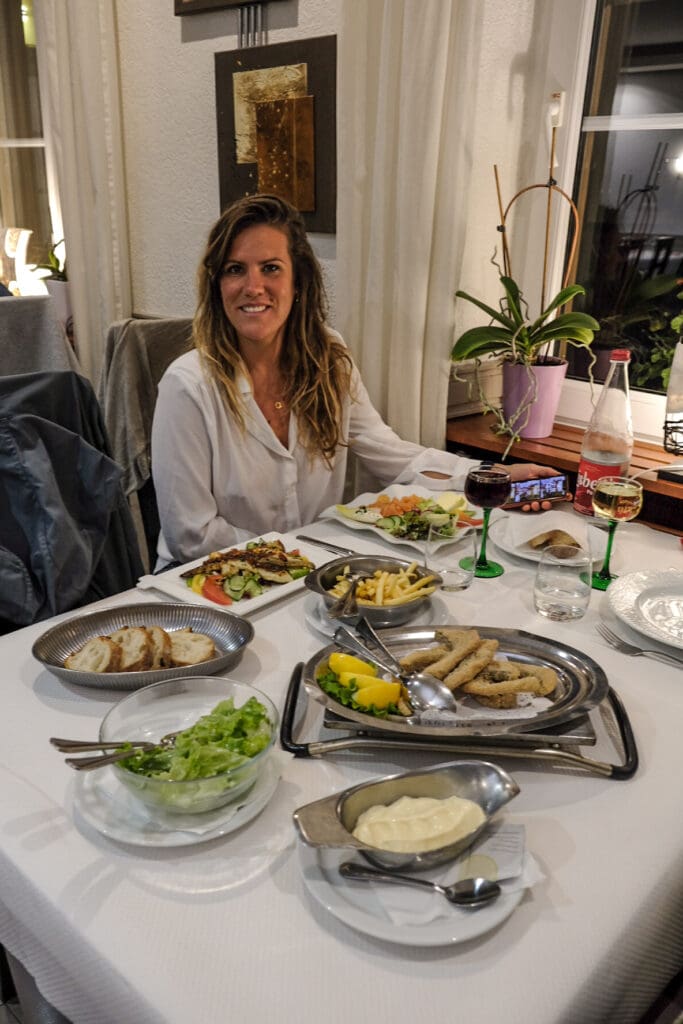


Auberge des 3 Vallées
16 rue d’Altkirch 68560 Hirsingue
Closed on: Monday evenings and Wednesdays
Prices: regional set menu at €32.30 / market set menu at €37.80
_
Thank you to the Alsace tourism board, Alsace à vélo, the Mulhouse tourism office, the Bad Belligen tourism office, the Pays de Saint-Louis tourism office, the Sundgau tourism office, and the aiRPur agency for this wonderful welcome. And a huge thank you as well to my wonderful travel companion, my Mathilde, for her good humor, her patience, and for looking out for me during the tricky moments (be sure to take a look at her article on this itinerary)!

I hope all of this has made you want to discover or rediscover Alsace and the 3 Countries Loop, and if you also have your own tips for this destination, don’t hesitate to share them in the comments!
Photo credits: Melle Bon Plan and Stay Tuned for Life
Photos are not royalty-free; photographer authorization is mandatory prior to any use