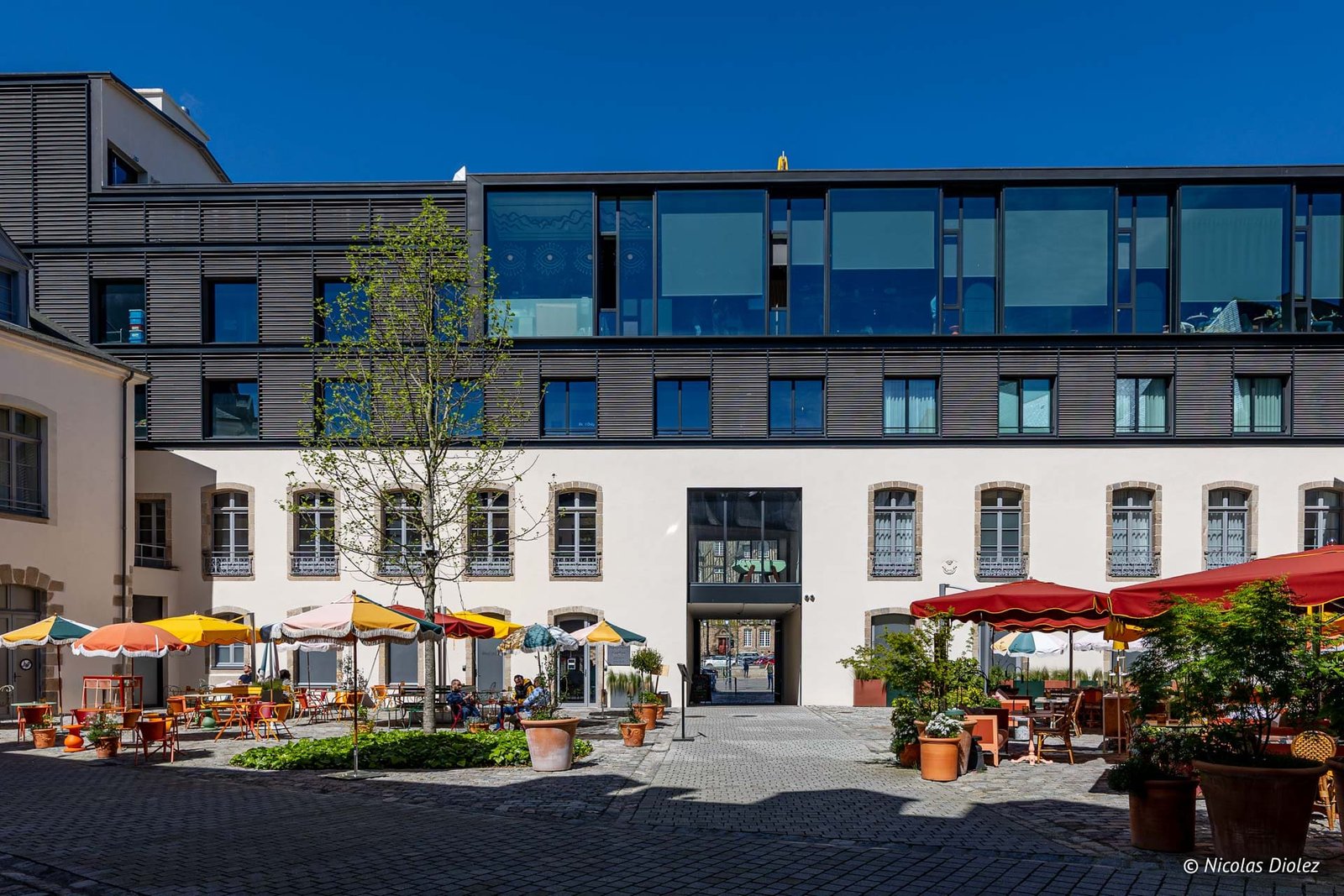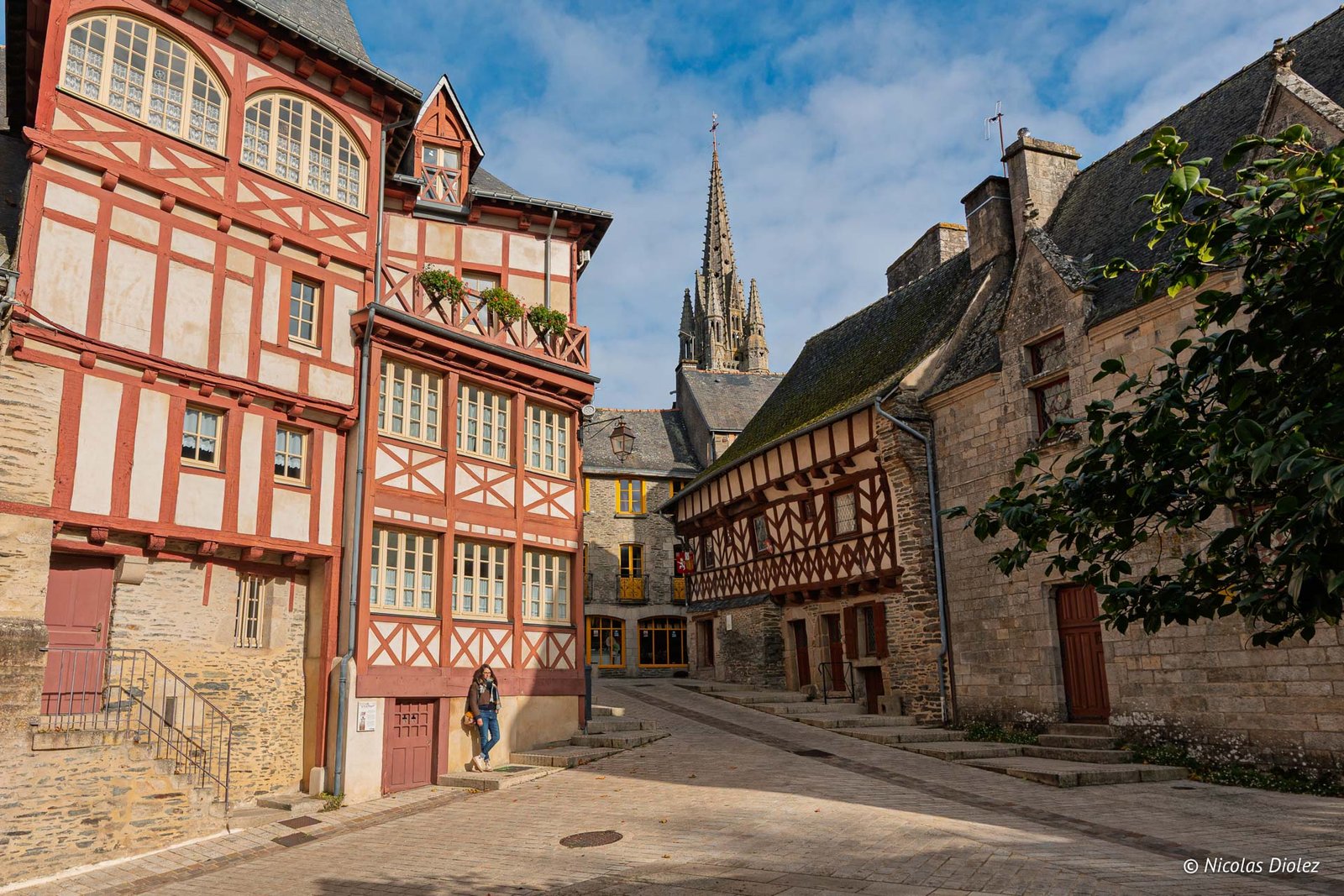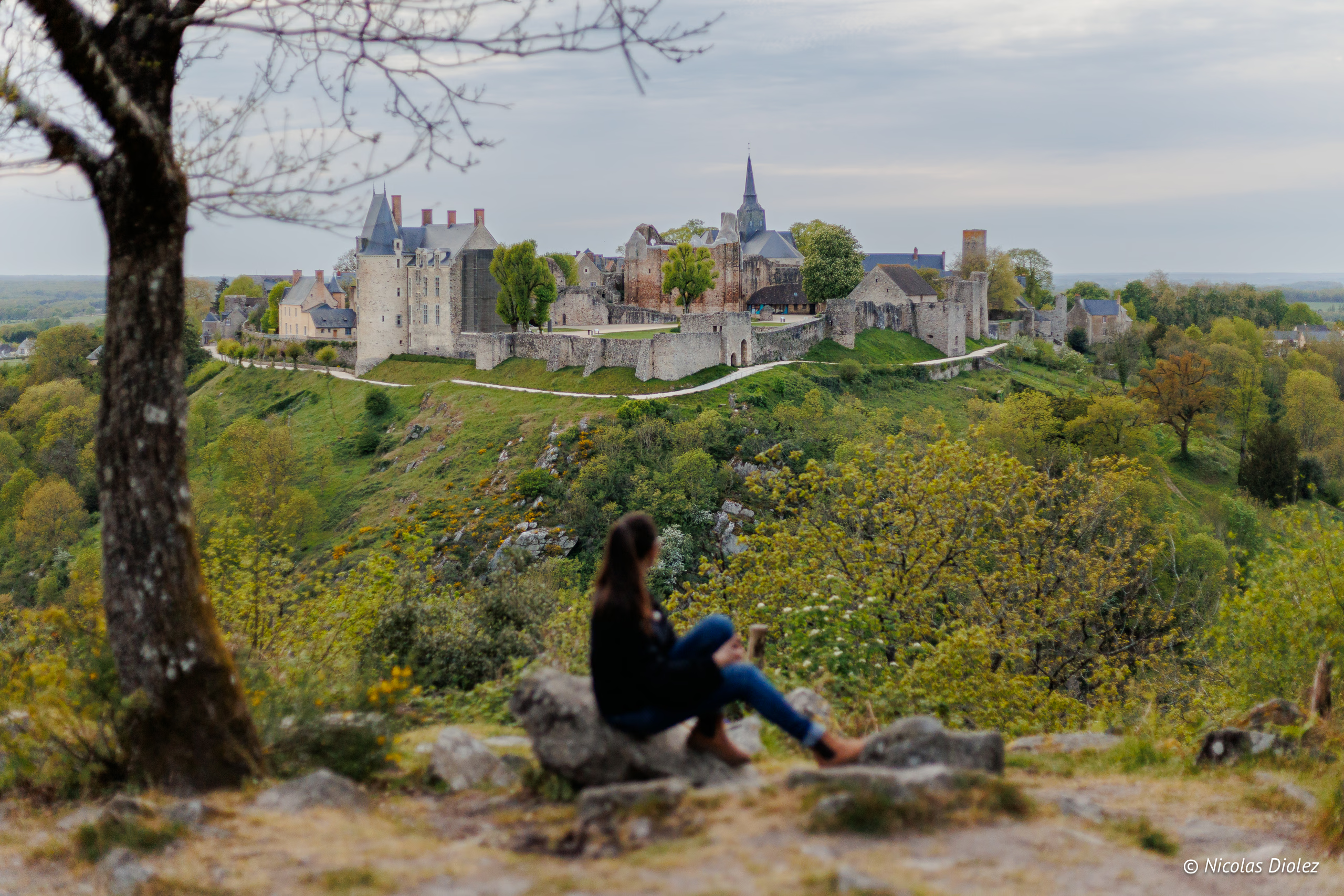
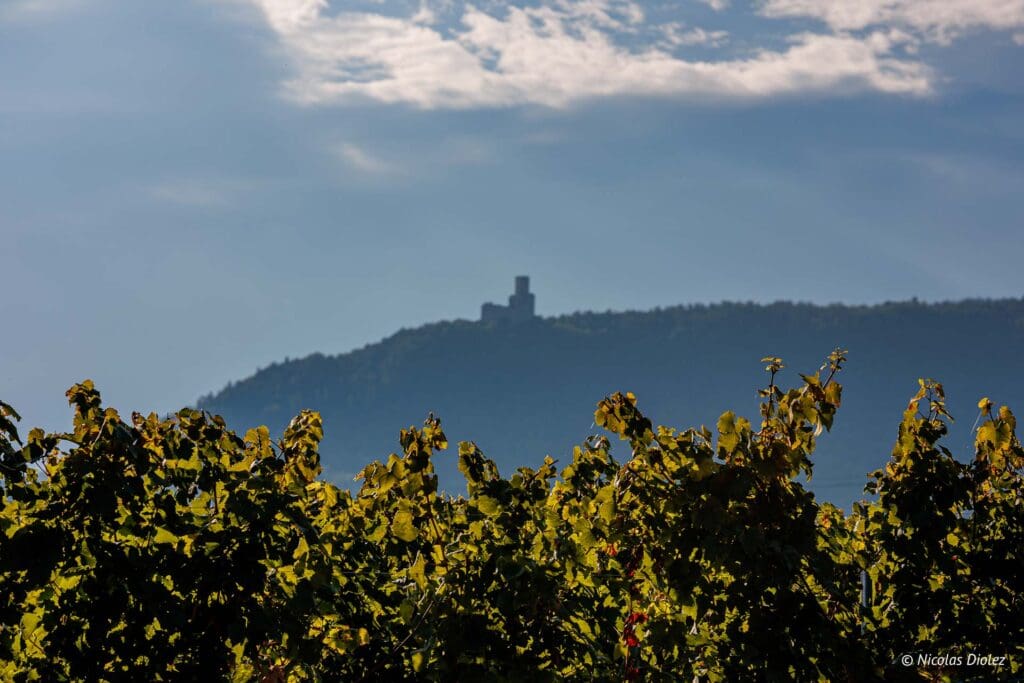
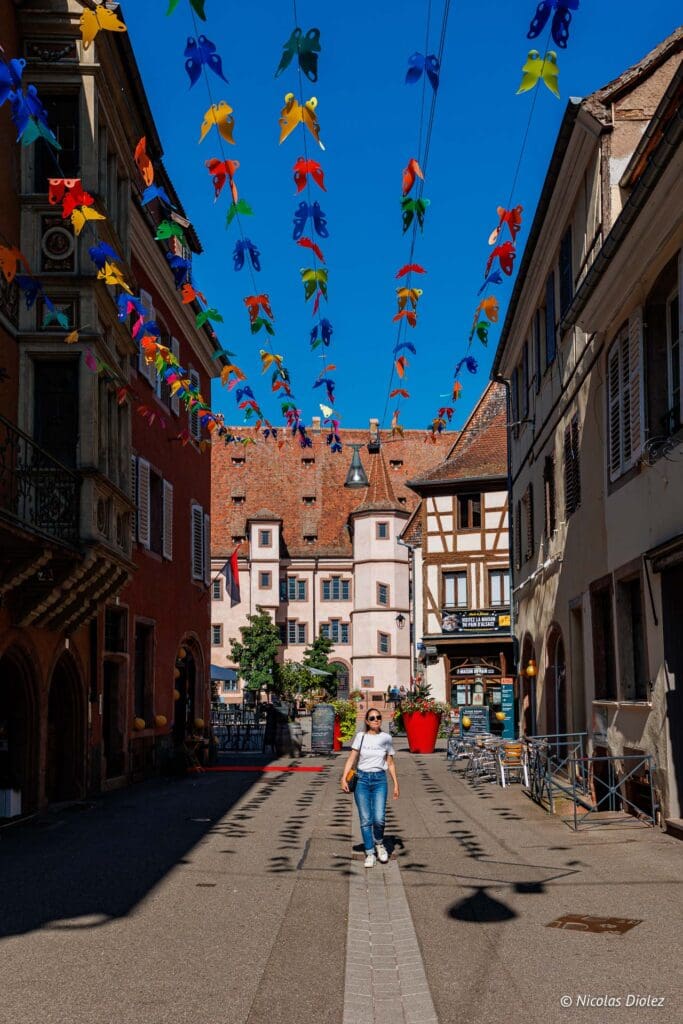
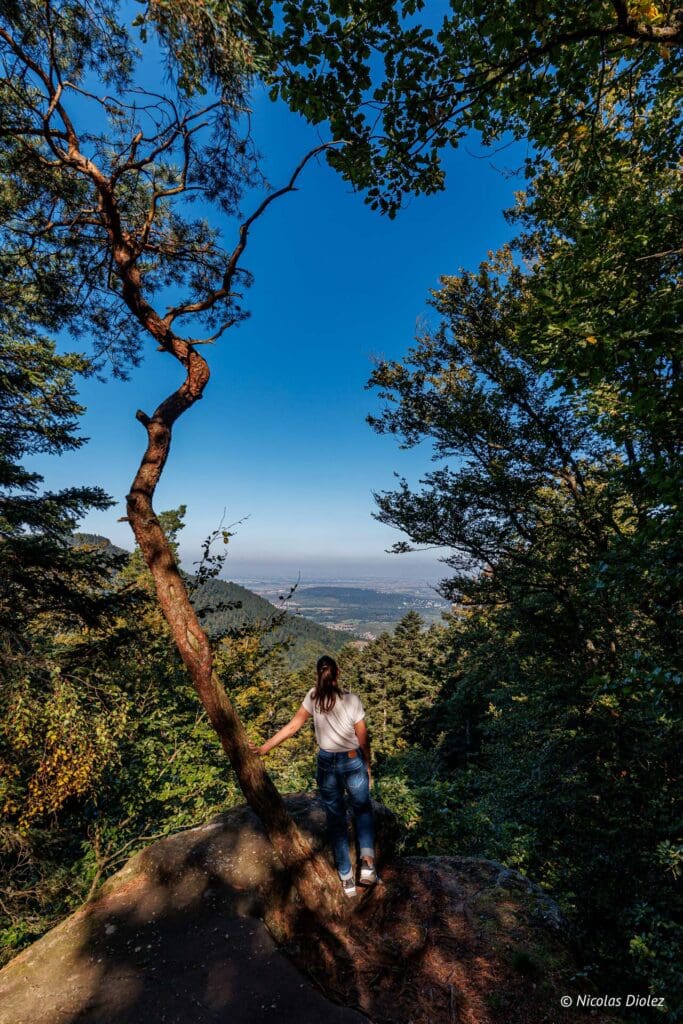
Alsace is a territory located in the far east of France (in the Grand-Est region) and also at the heart of Europe, being close to both Germany and Switzerland. The Alsace Wine Route stretches for approximately 170 km between Marlenheim and Thann, winding along a thousand-year-old vineyard. It passes through about 119 villages and covers just under 16,000 hectares of vines managed by 3,156 winegrowers. It is a magnificent territory that we had the opportunity to explore during an autumn getaway, blending wine tourism, culture, and gastronomy.
We went to discover this part of Alsace at the end of September 2024 with my favorite photographer. Below, as usual, I offer a small selection of things to do and see if you are coming for a stay in the region. It is also a very rich territory, especially concerning gastronomy and craftsmanship, and we were lucky enough to meet a few enthusiasts during our trip. In this article, you will find my usual selection of great addresses (accommodations, wine estates, gourmet shopping boutiques, and several restaurants) that we had the opportunity to test during our stay. These places often offer the chance to discover local products and regional specialties to taste if you are visiting Alsace.
Practical Information
- Getting there by train from Paris: TGV from Paris Est to Strasbourg (about 1h40), then regional train (TER) to Sélestat (20 minutes) / we left from Obernai (also via TER via Strasbourg)
Alsace Tourism Office
Table of Contents
Wine Tourism on the Alsace Wine Route
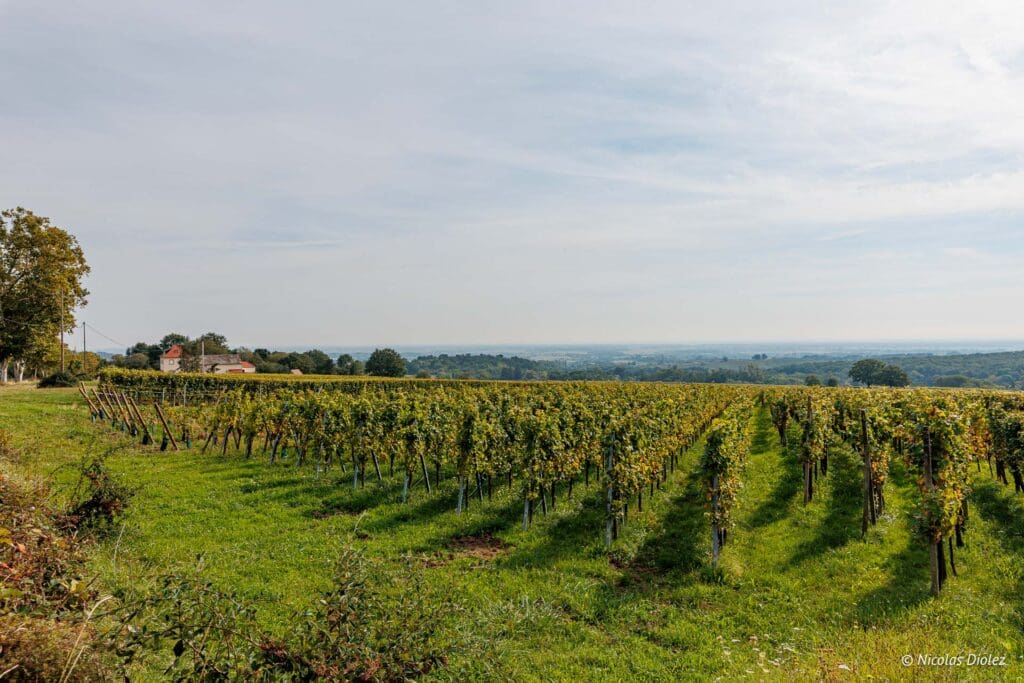
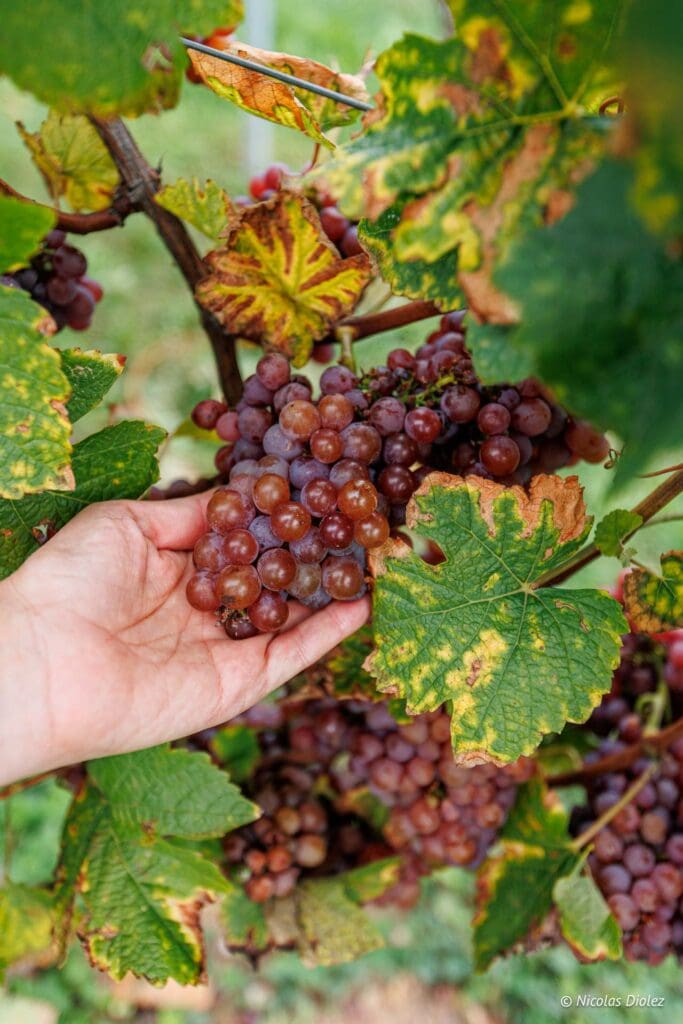
Alsace has over 17 distinct terroirs for its wines, offering an incredible diversity to discover. Its vineyard benefits from a sunny semi-continental climate, sheltered by the Vosges massif, which ensures it some of the lowest rainfall in France. Wine tourism is therefore a flagship activity for the region, with many estates opening their doors for visits and tastings. It is also the only French vineyard labeled Vignobles & Découvertes in its entirety and is the French cradle of biodynamic viticulture. Below, I offer a small selection of wine tourism activities that we had the opportunity to test during this stay.
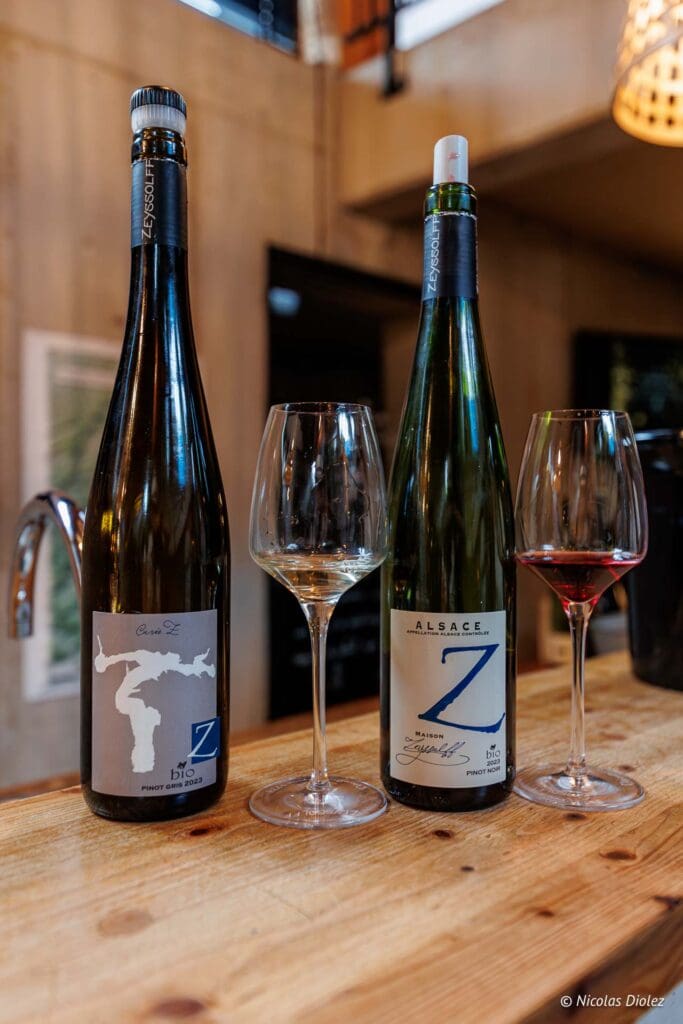
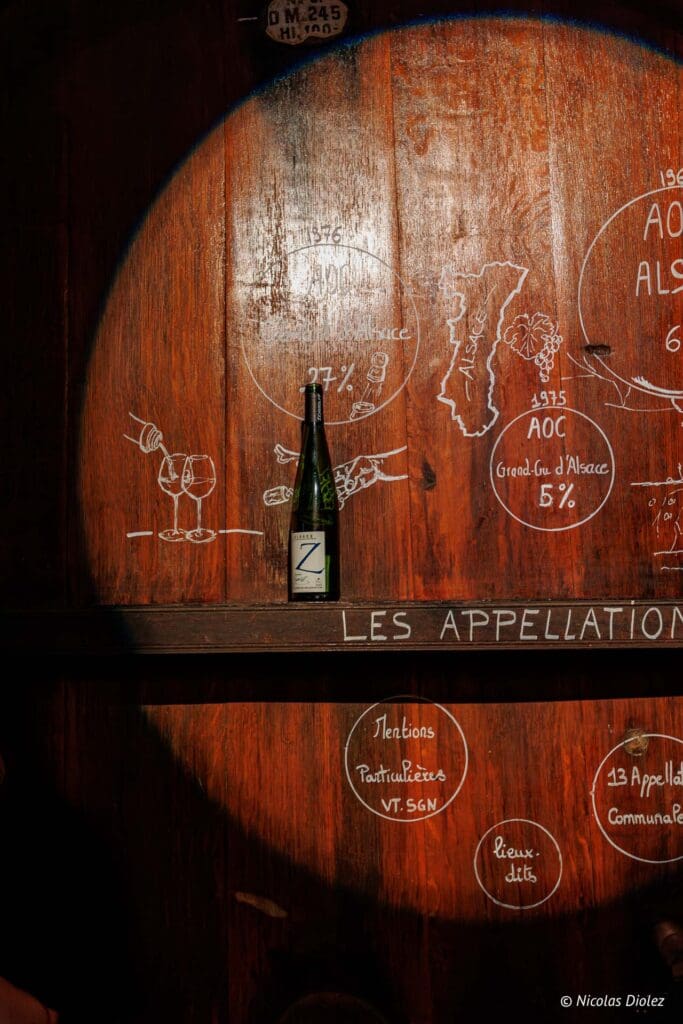
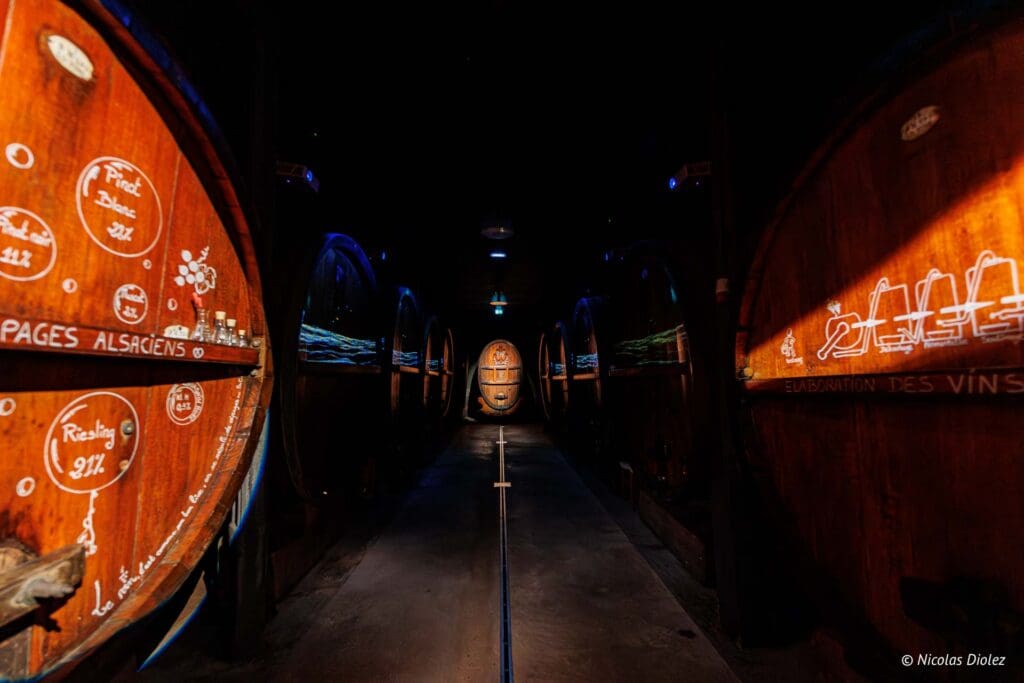
The 7 most famous Alsatian grape varieties, which give their names to the wines, are: Gewurztraminer (20% of production); Pinot Noir (11%); Sylvaner (6%); Pinot Gris (16%); Pinot Blanc (22%); Muscat (2%); and Riesling (21%). The main appellations are AOC Alsace (since 1962, 68% of production), which also comes in communal appellations, AOC Crémant d’Alsace (since 1976, 27% of production), and AOC Grand Cru d’Alsace (since 1975, 5% of production).
_
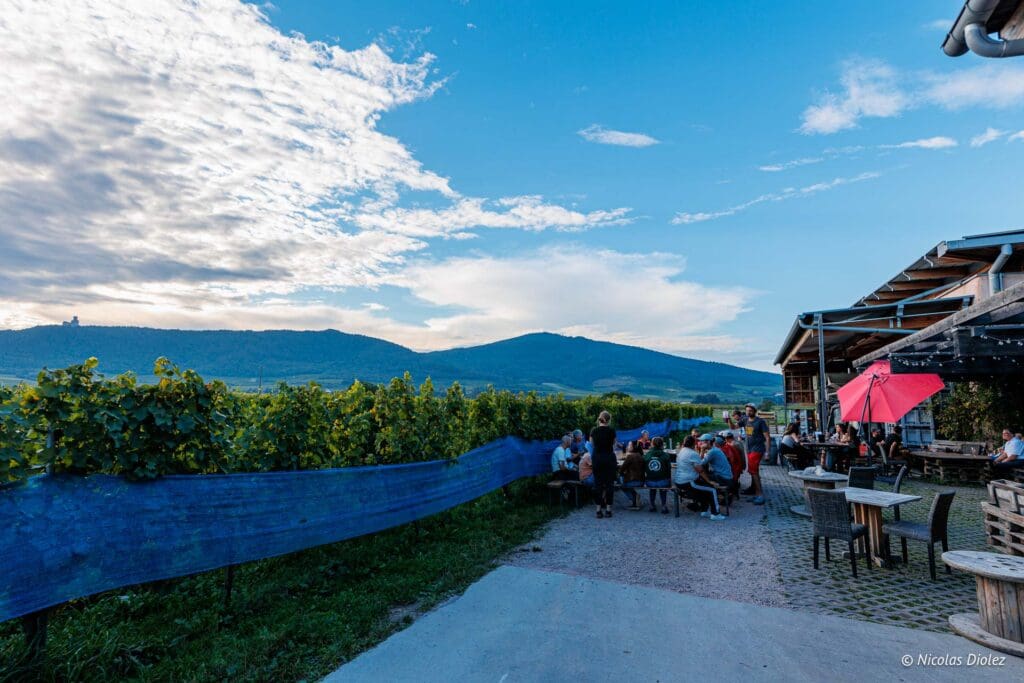
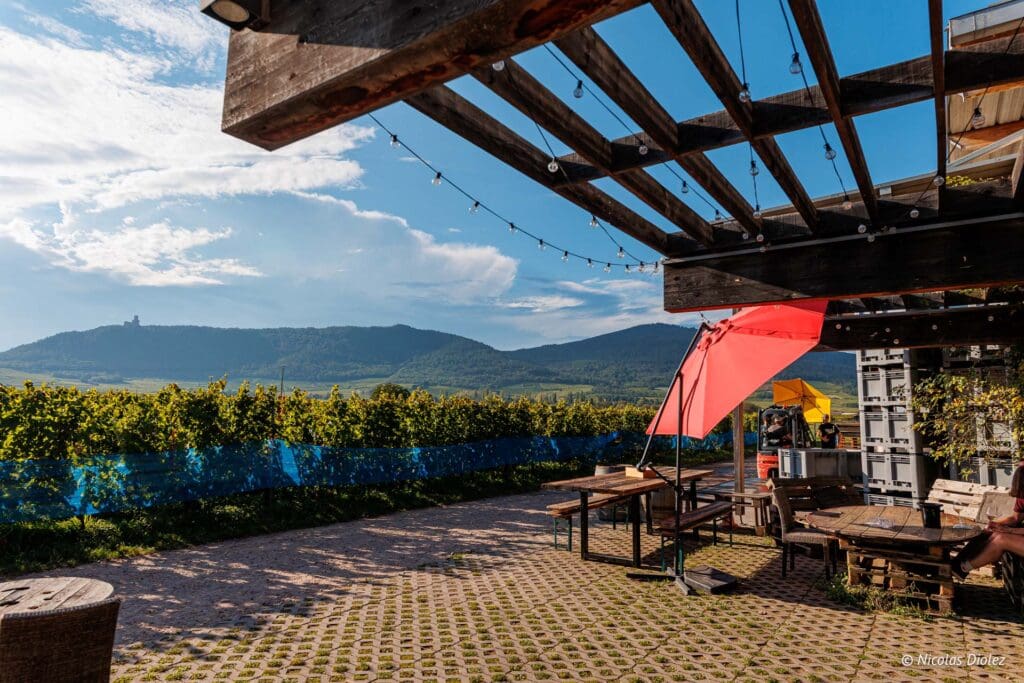
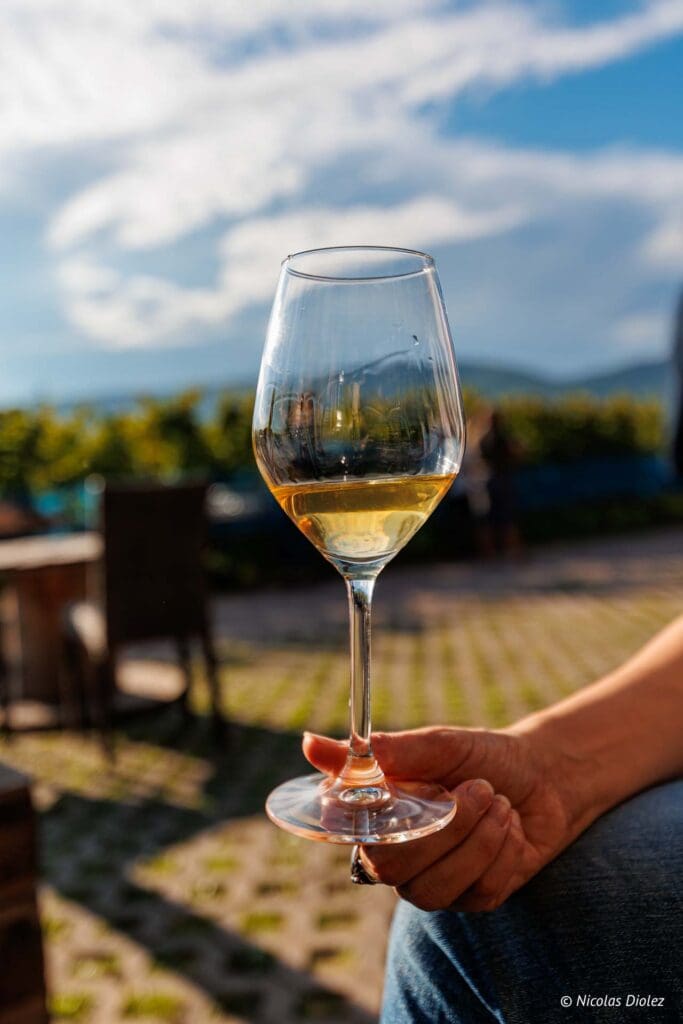
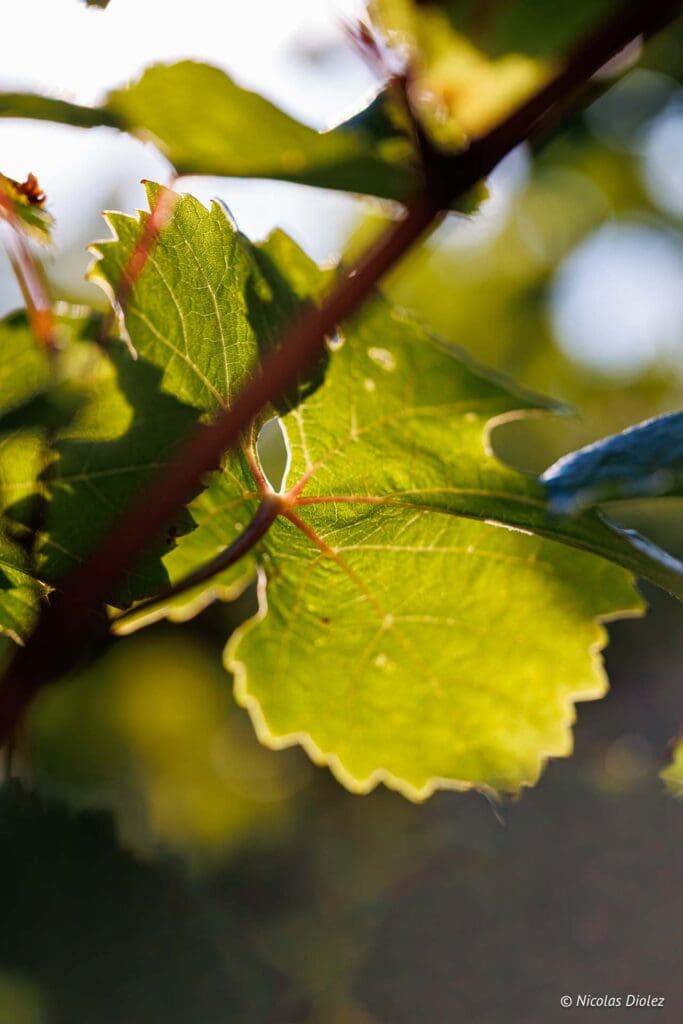
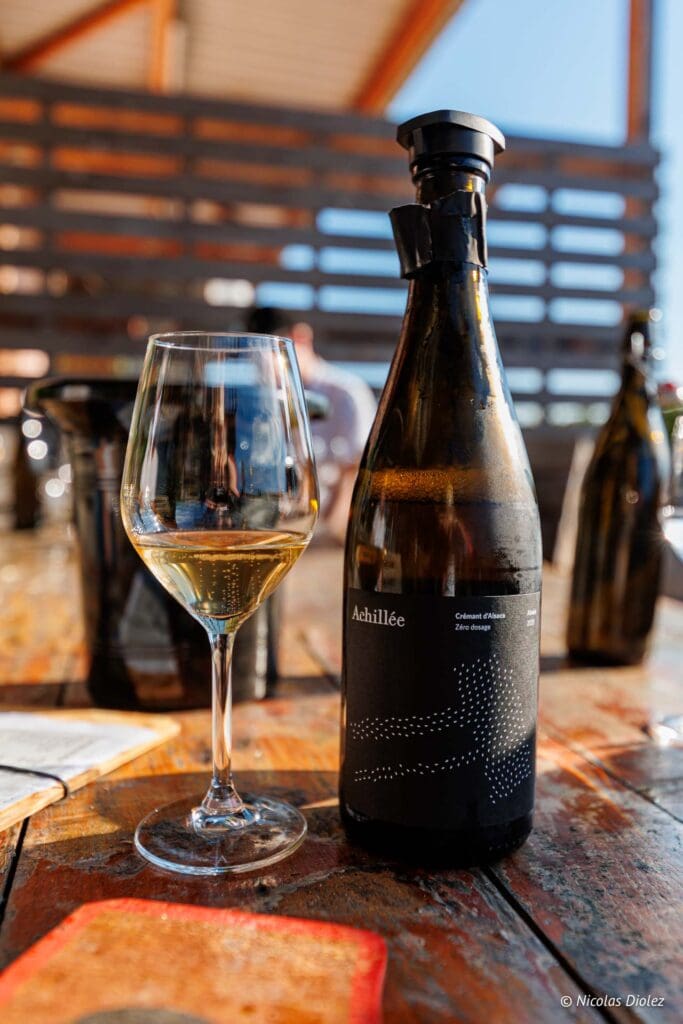
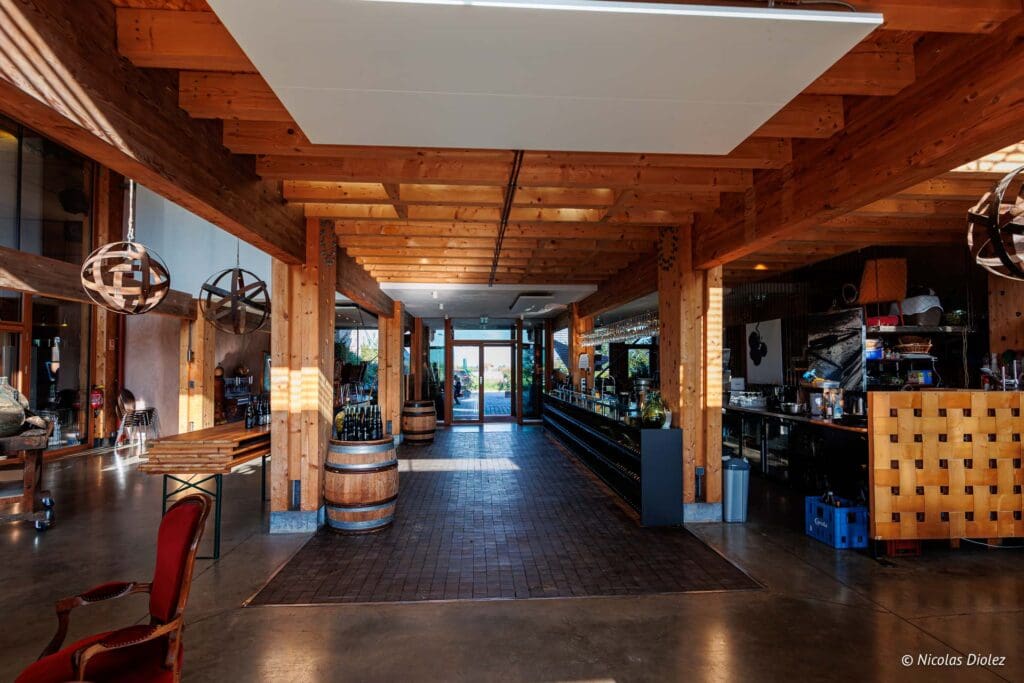
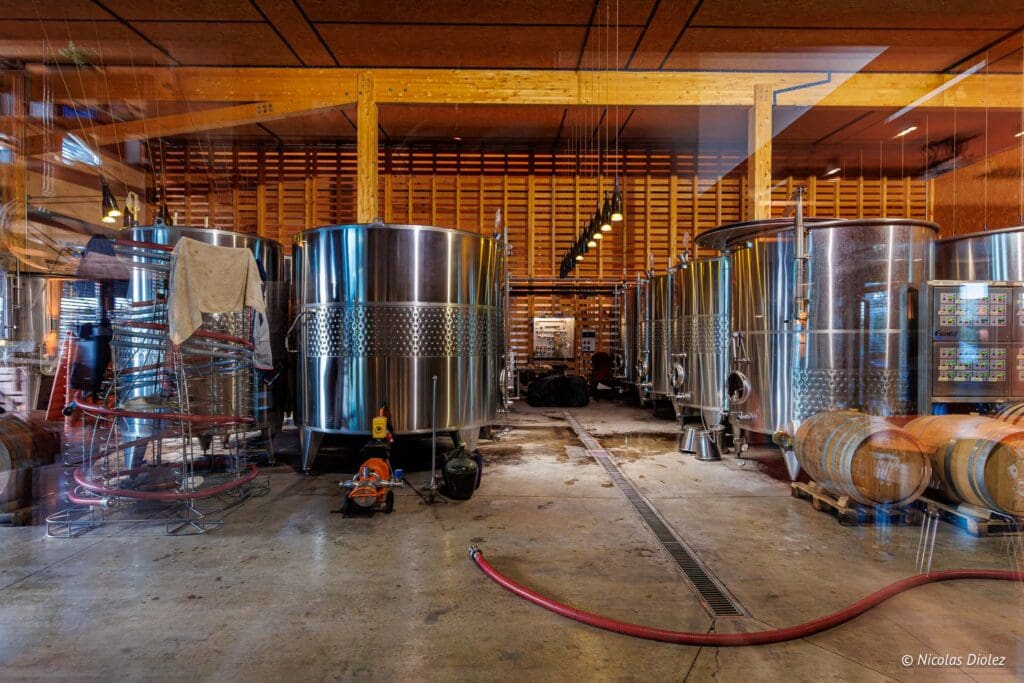
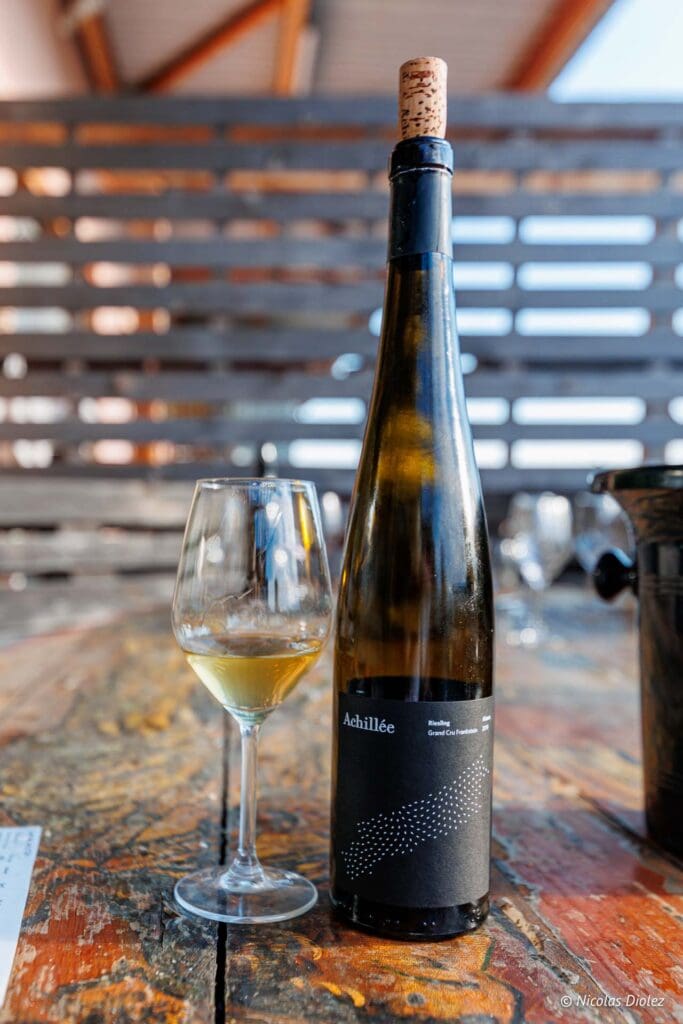
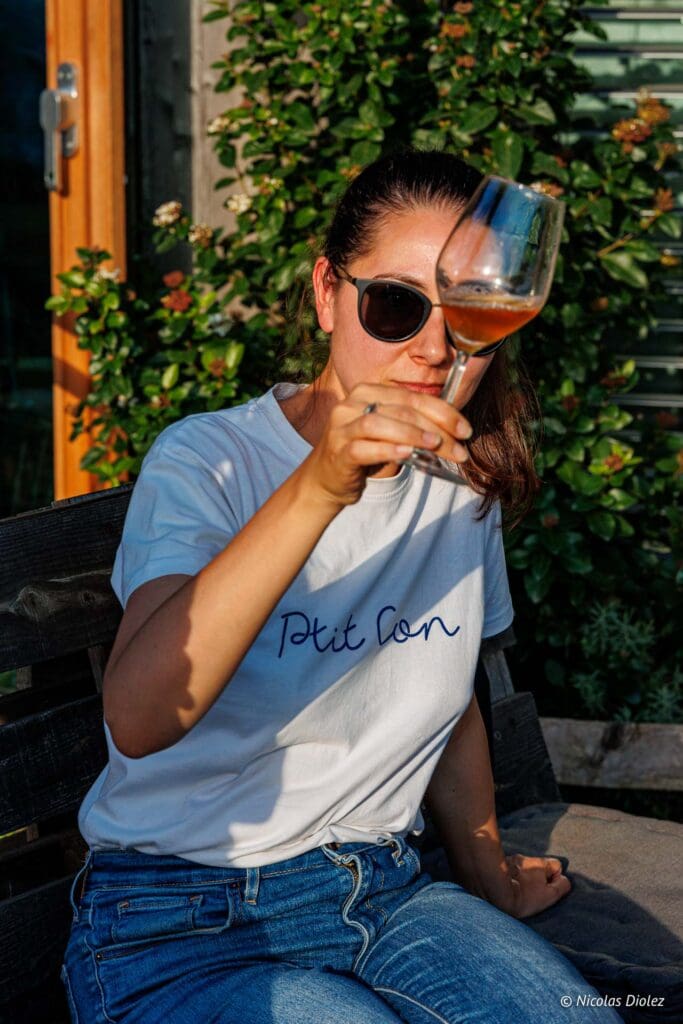
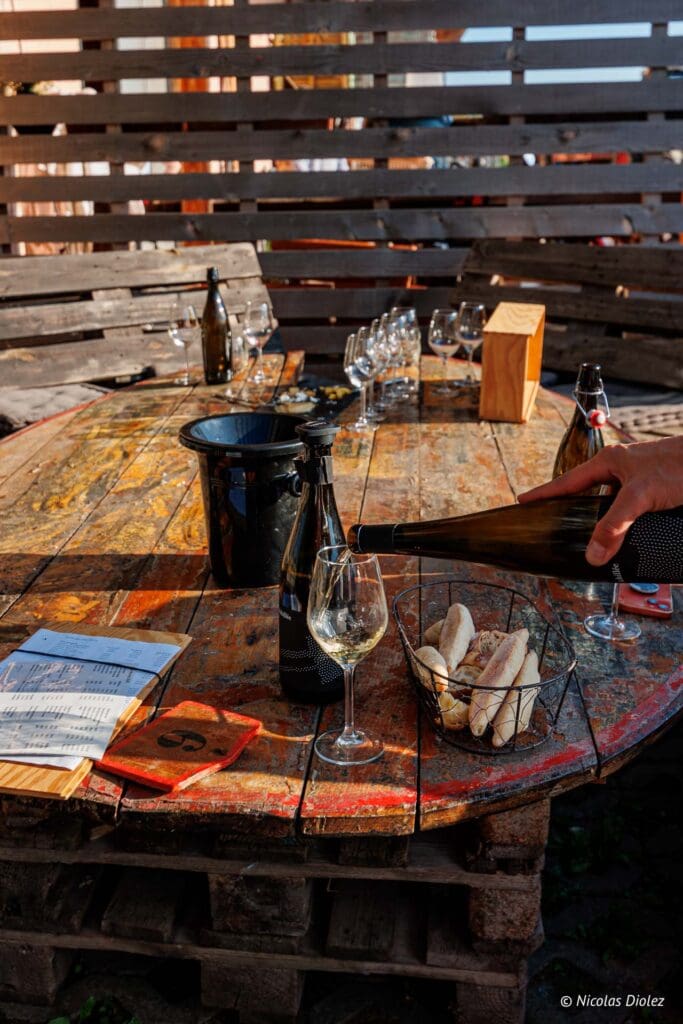
Have a winegrower’s aperitif at Domaine Achillée in Scherwiller
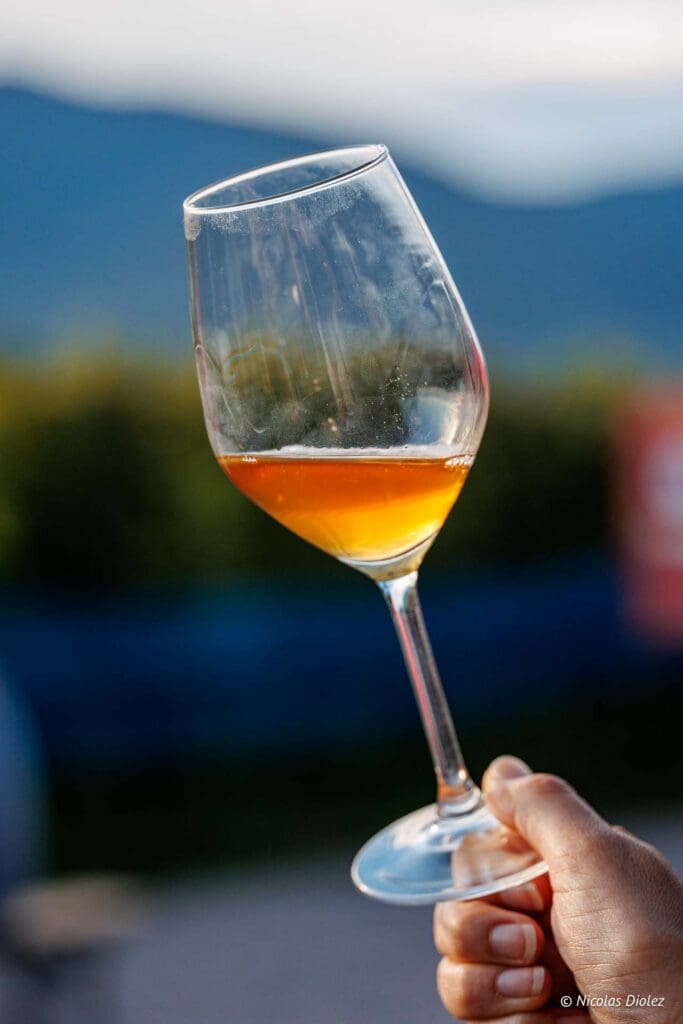
This family estate, a pioneer of biodynamics in Alsace, was taken over by the new generation, who have been making their own organic and natural wines since 2016. Housed in an impressive bioclimatic cellar made entirely of local wood and straw, the estate offers visits and tastings to discover their philosophy and authentic wines. We absolutely loved their products and the venue, which is a real gem if you are looking for a place with a relaxed atmosphere to chill. The spot is perfect for an aperitif with the late-day sun, a good glass of wine in hand, facing the vines.
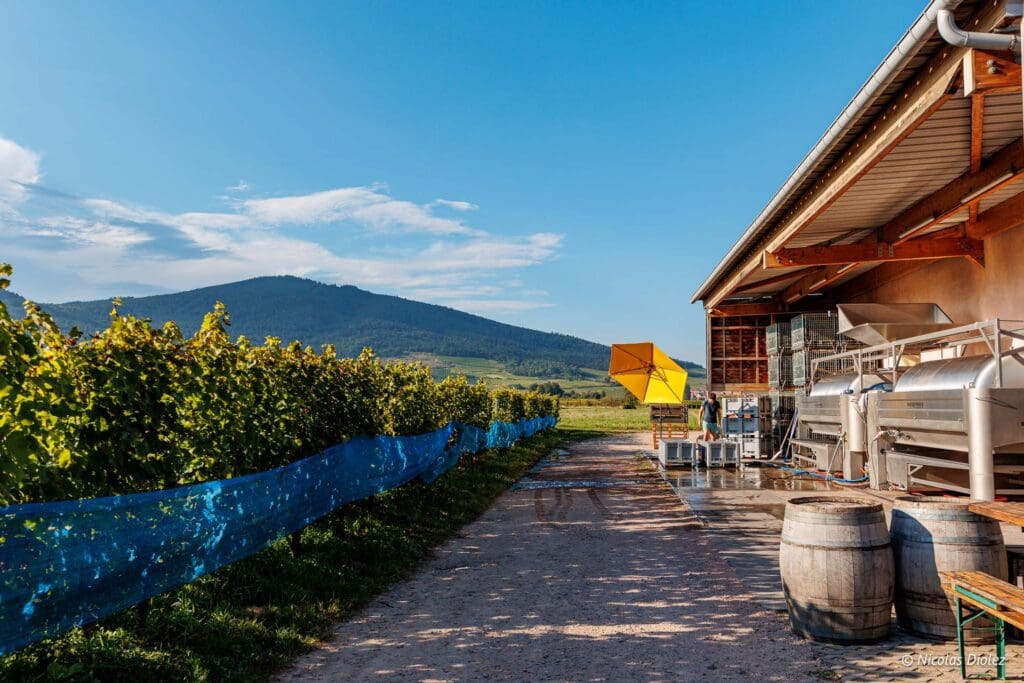
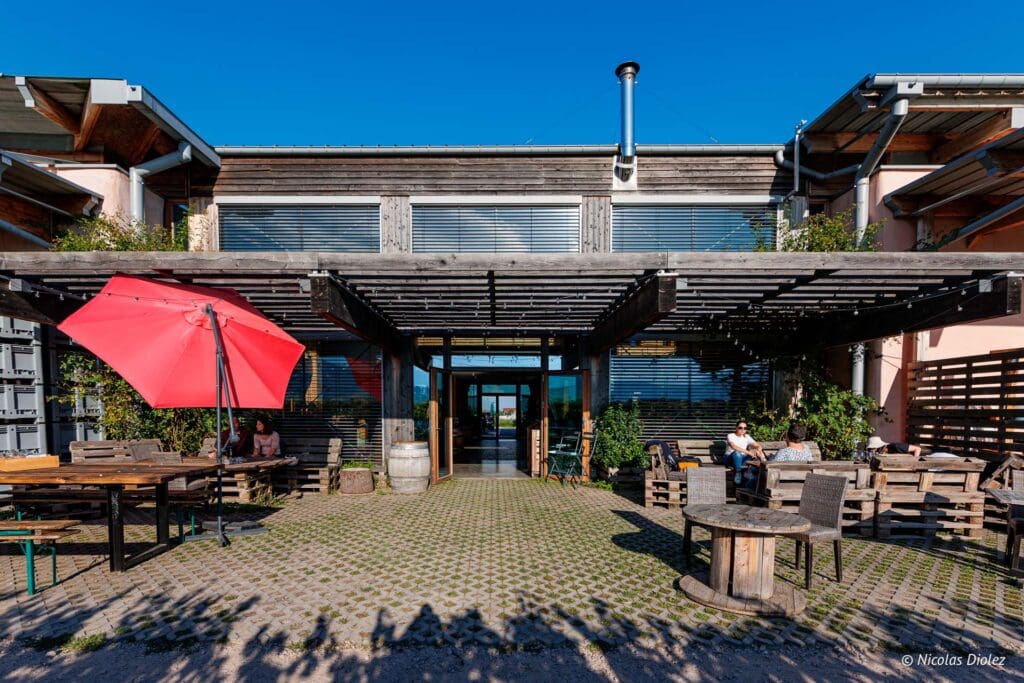
Domaine Achillée
50 Rue de Dambach, 67750 Scherwiller
Cellar open every day from 10 am to 7 pm
Pricing: Simple tasting is free (if purchasing a bottle, otherwise €9) / visit and tasting by reservation (€20 per person) / wine by the glass on-site on the terrace between €3 and €15
_
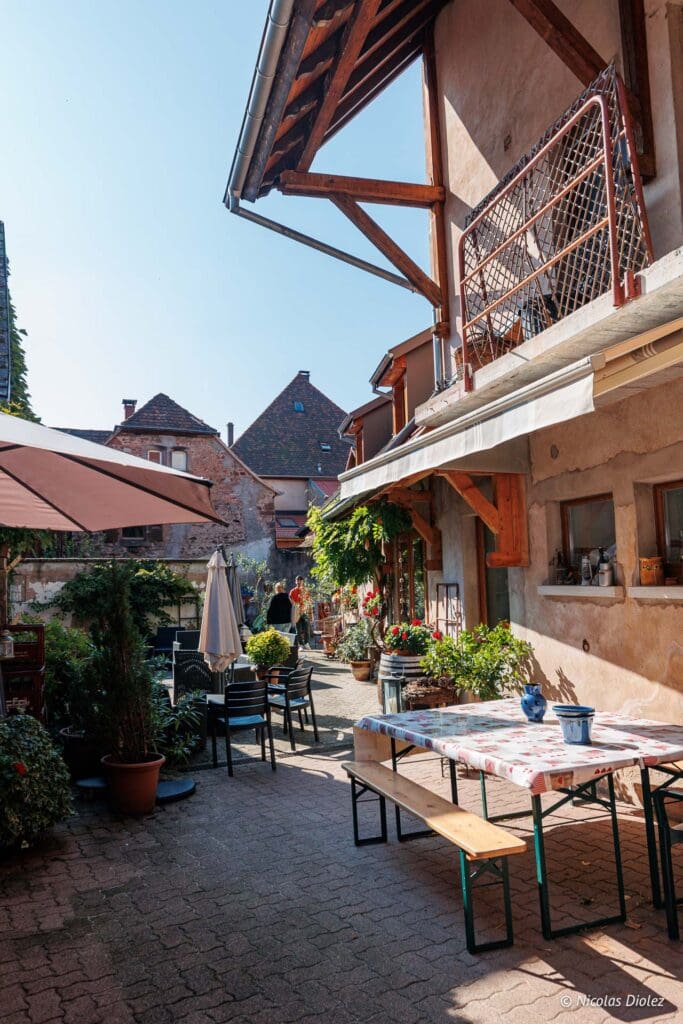
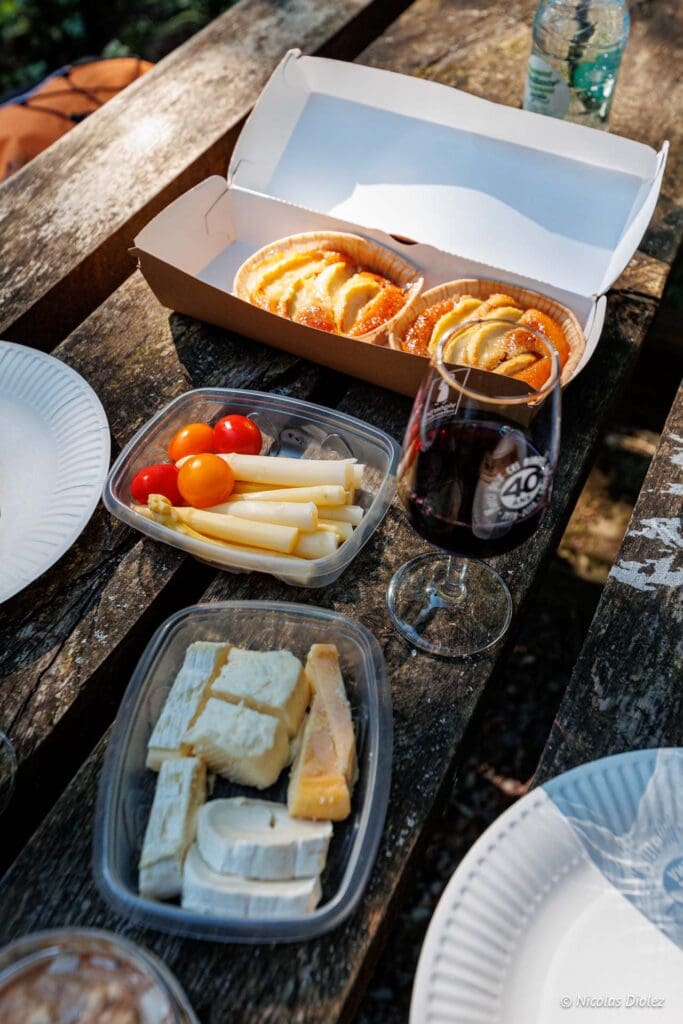
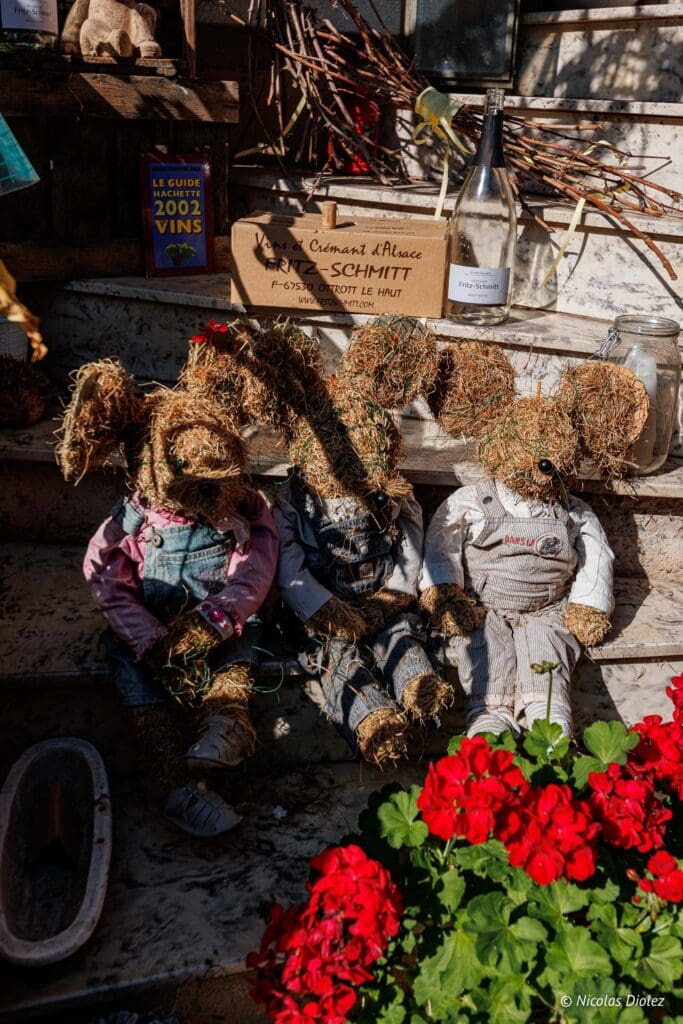
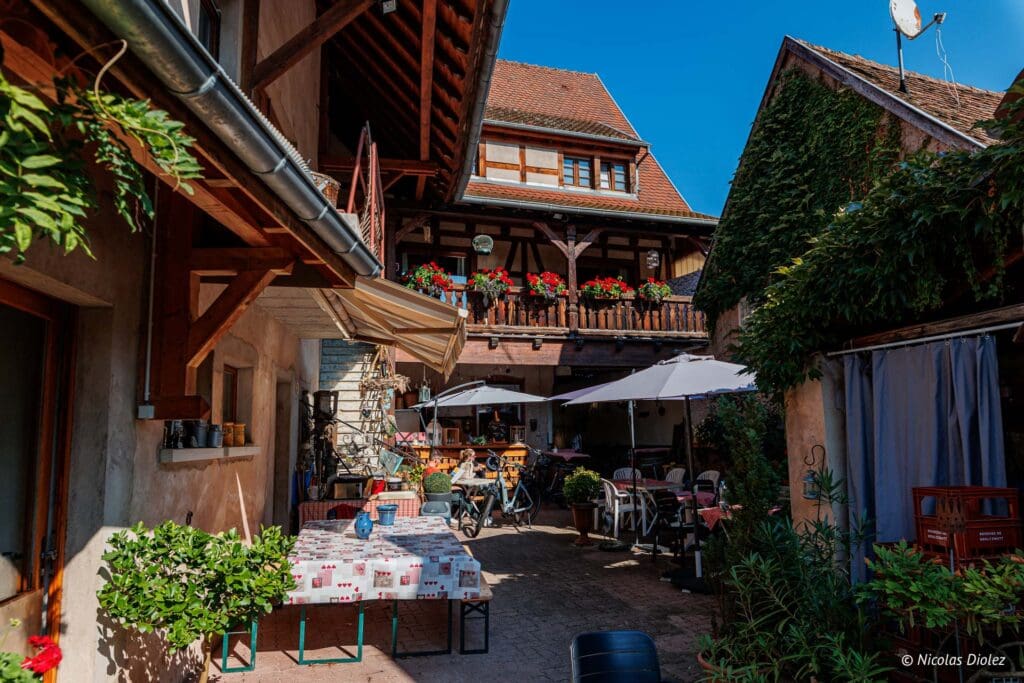
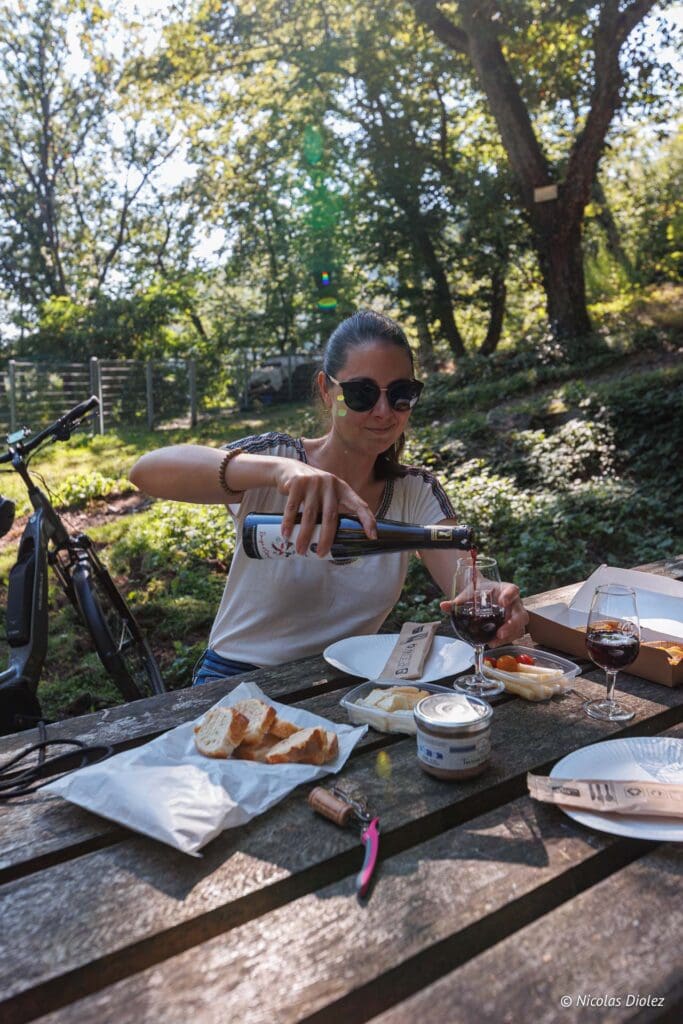
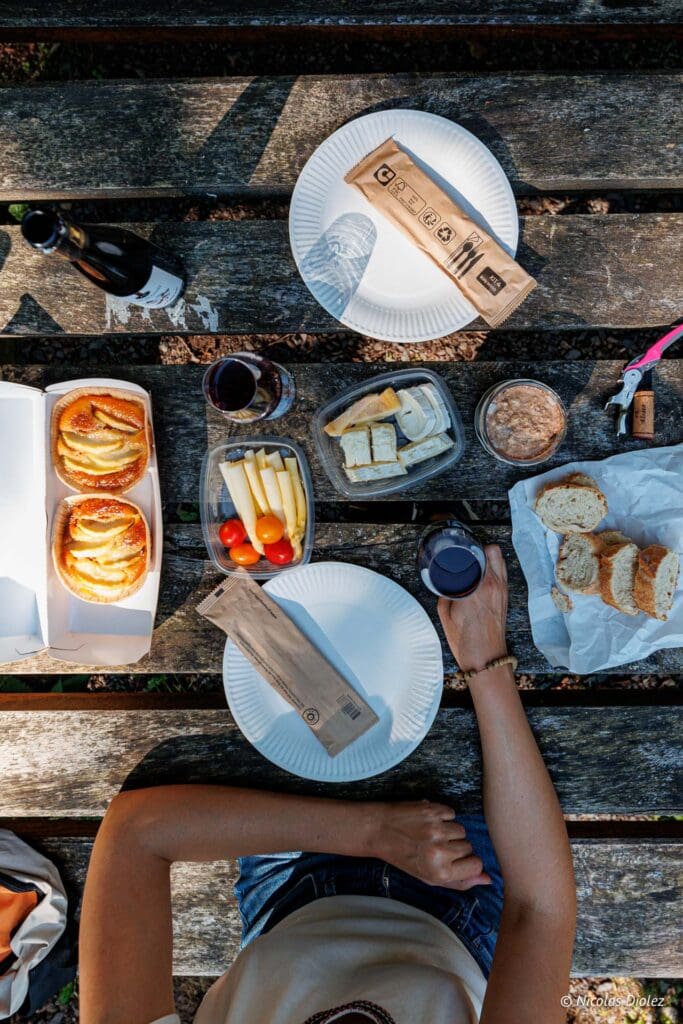
Bike & Picnic Formula at Domaine Fritz-Schmitt in Ottrott
The charming wine village of Ottrott is particularly famous for its red wine, the “Rouge d’Ottrott,” made from Pinot Noir, a rarity in Alsace where white wines dominate. Located on the Greenway route (which I will mention a little further down), it is a pleasant stop for a tasting break.
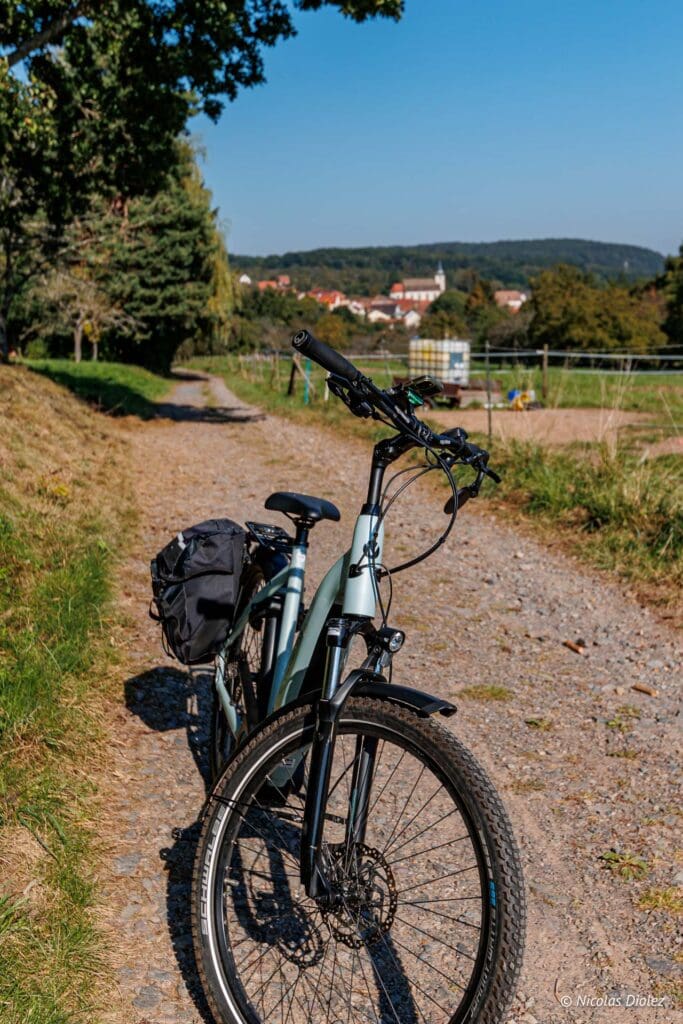
The Fritz-Schmitt family wine estate, located in the heart of the village of Ottrott, has existed for several generations and they have been Independent Winegrowers since 1993. It owns 18 hectares of vines, half of which are dedicated to the famous “Rouge d’Ottrott,” the local specialty. The estate also offers, in collaboration with the Mont Sainte-Odile tourism office, an original “croque-vélo” (bike & snack) formula: the office provides bike rentals (classic or electric) and the estate provides a filled picnic basket (to be picked up on-site) with local products, accompanied by a small bottle of their wine. The concept is quite nice for exploring the surroundings, but we personally found that the quality of the picnic food was a little light, especially if one is planning a nice bike ride…
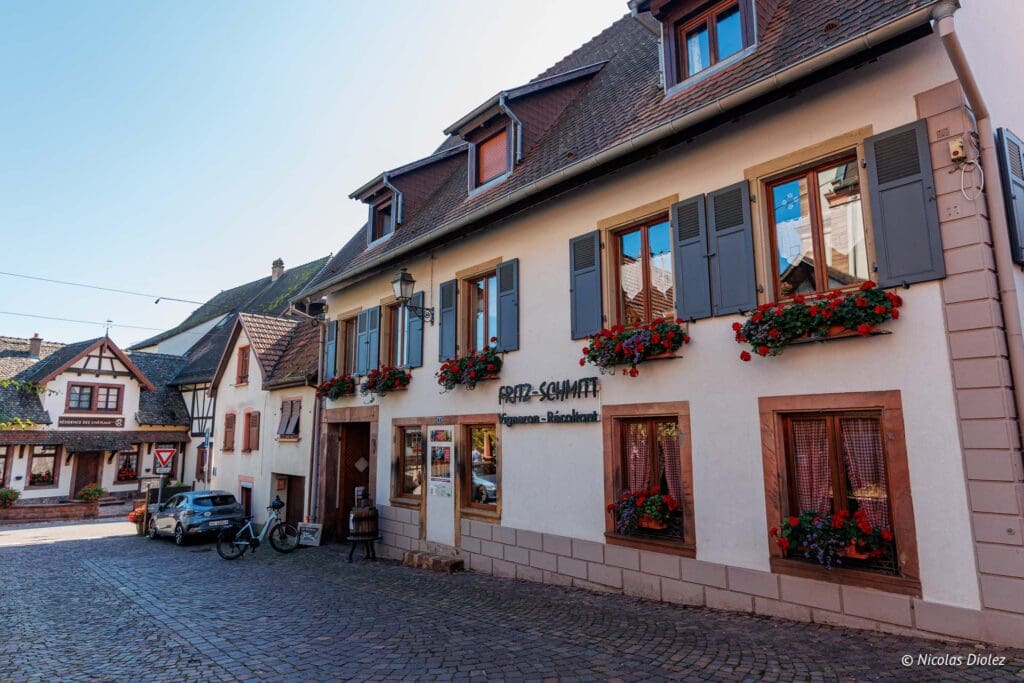
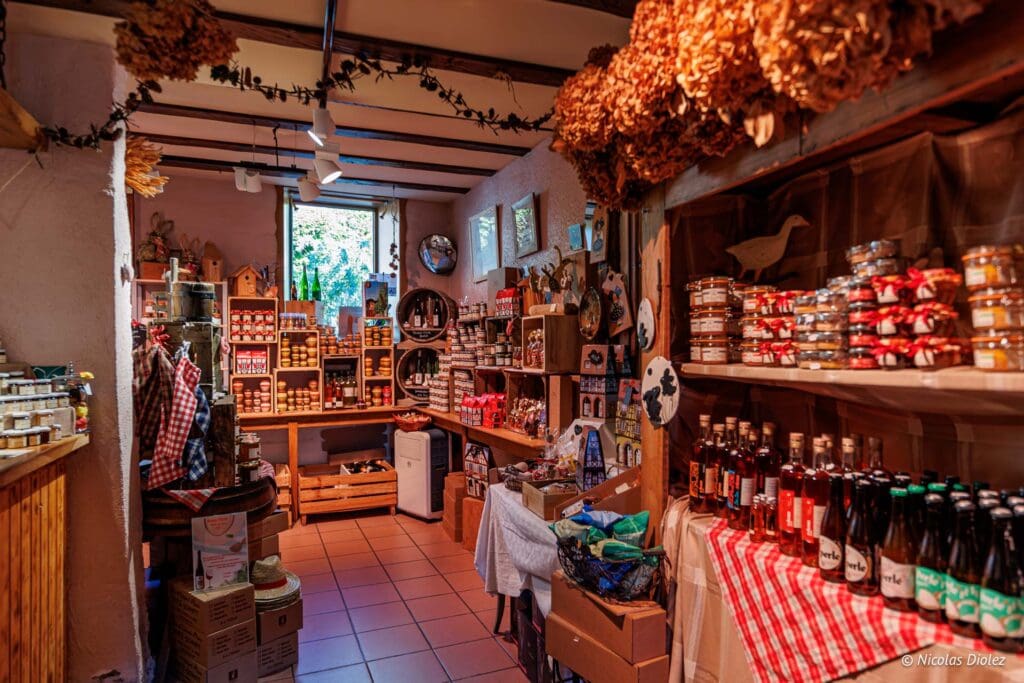
Domaine Fritz-Schmitt
1 rue des Châteaux 67530 Ottrott
Croque Vélo Price (one-day e-bike rental + picnic basket with local products and drinks): €38 per person (by reservation)
_
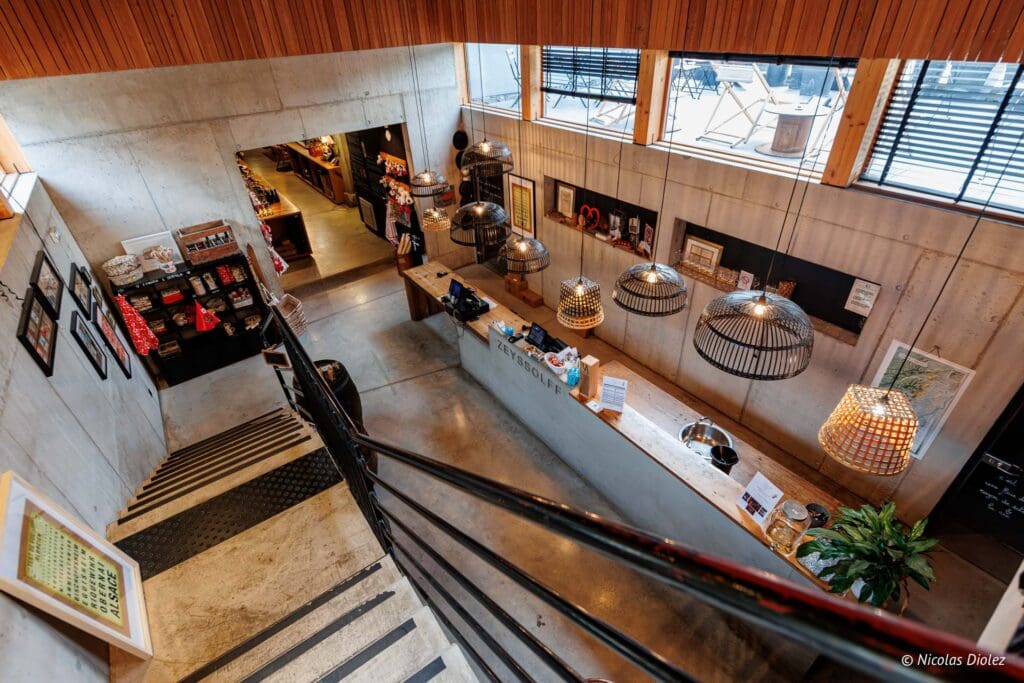
Take an immersive tour at Domaine Zeyssolff in Gertwiller
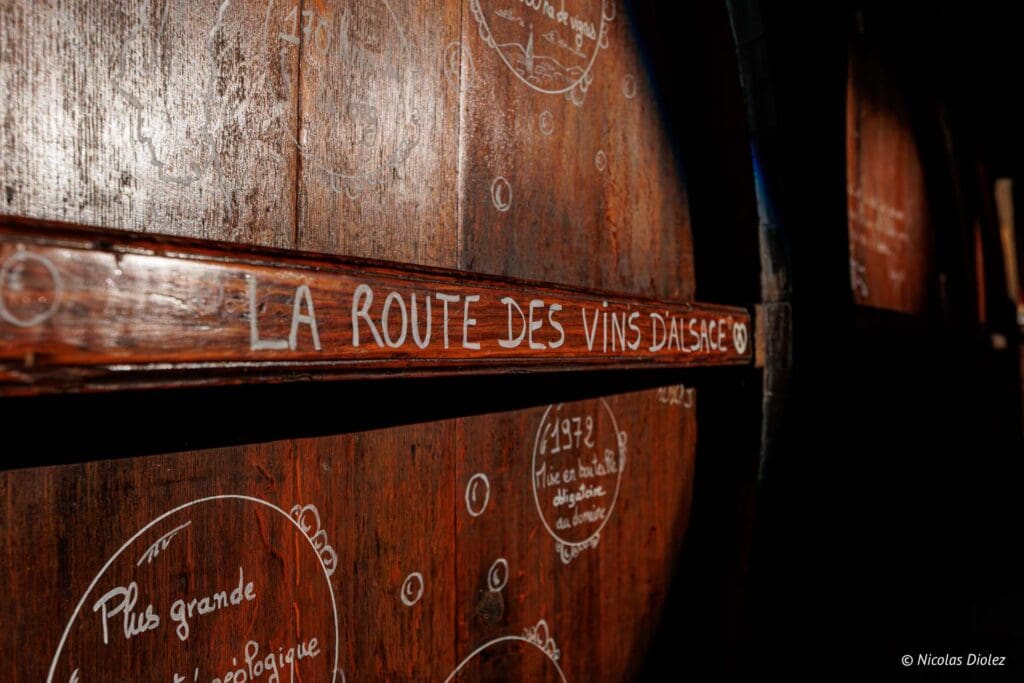
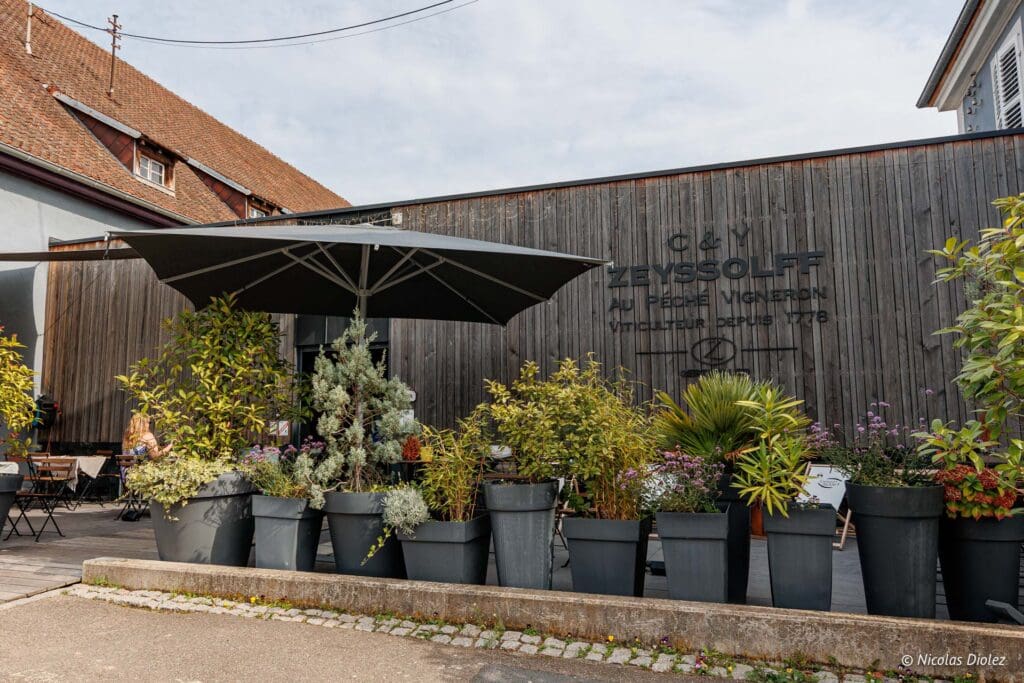
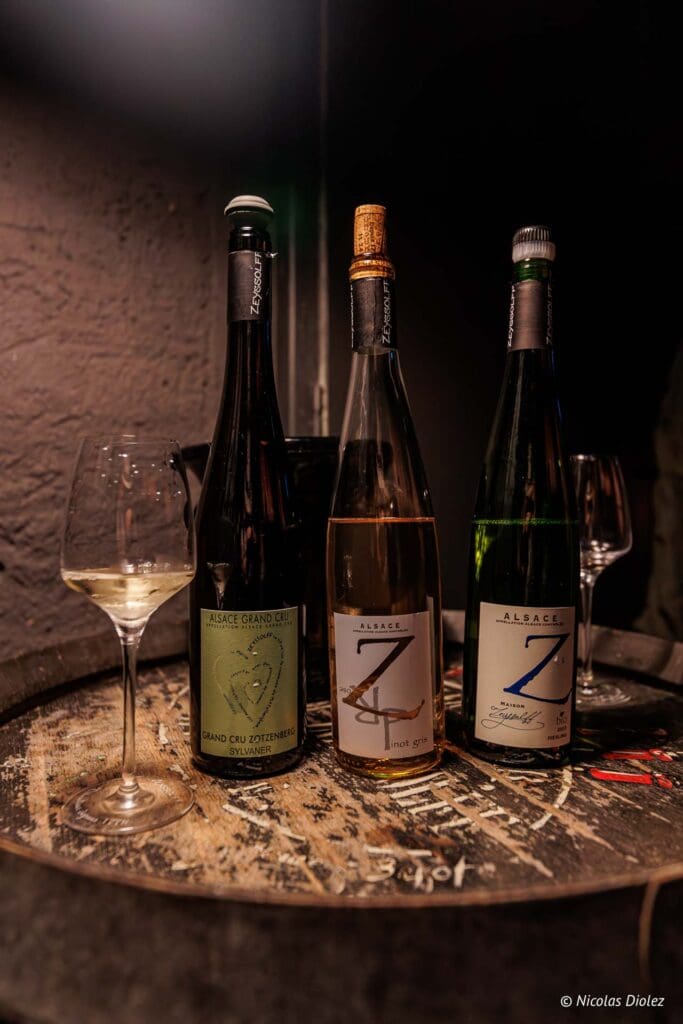
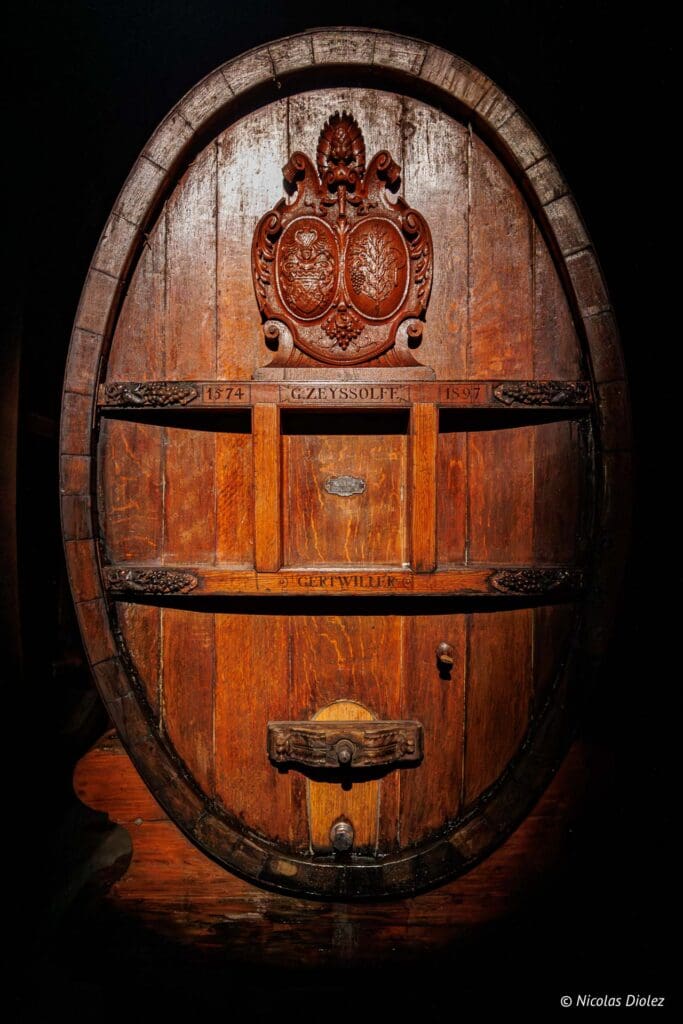
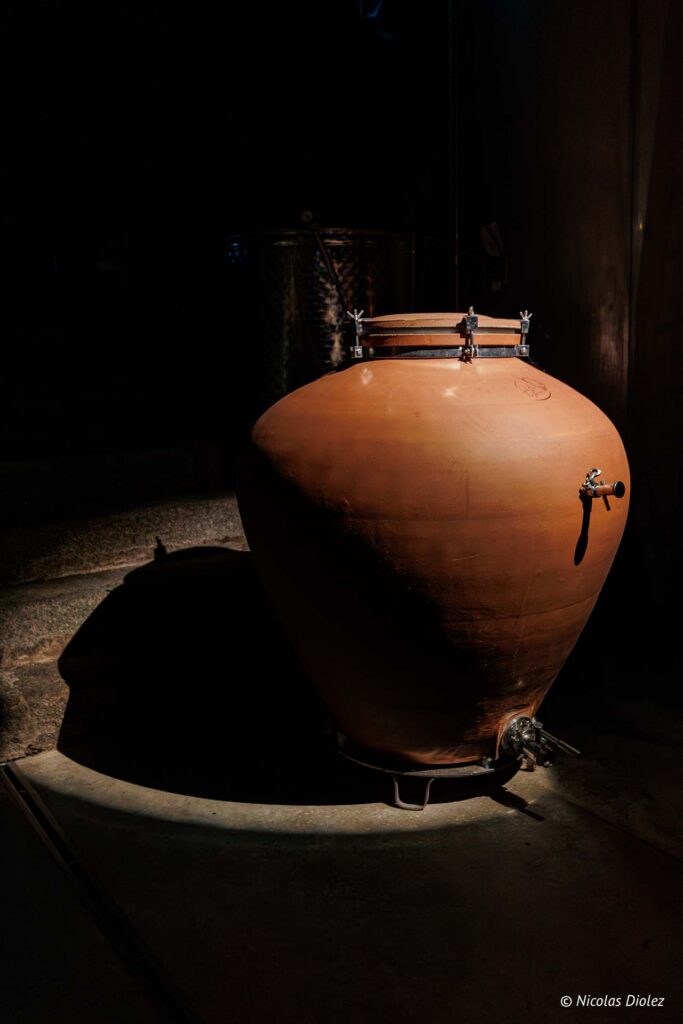
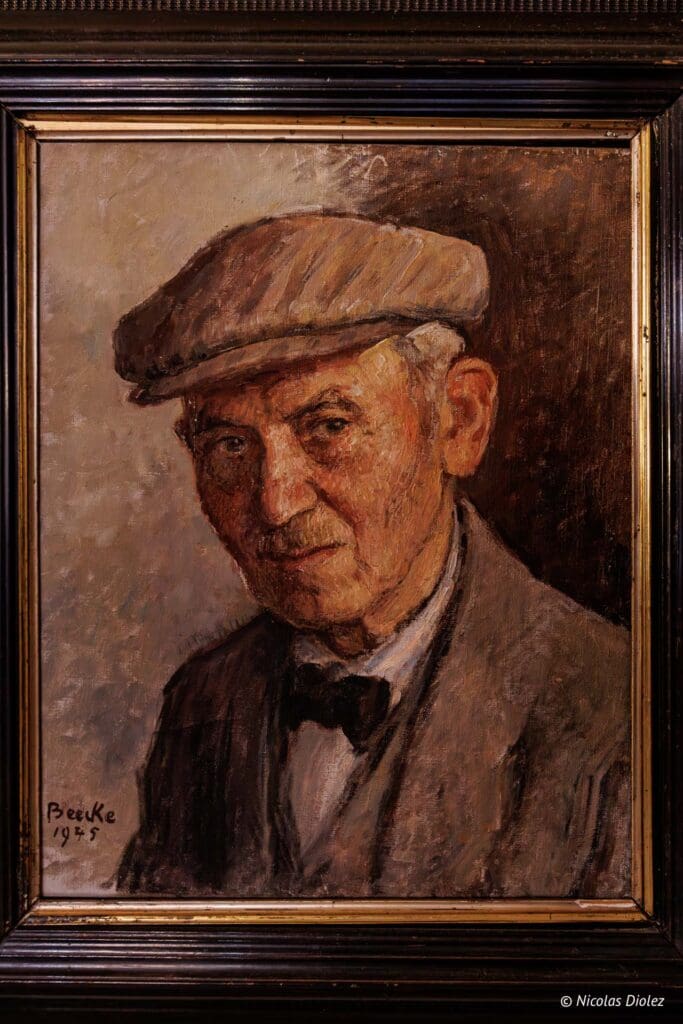
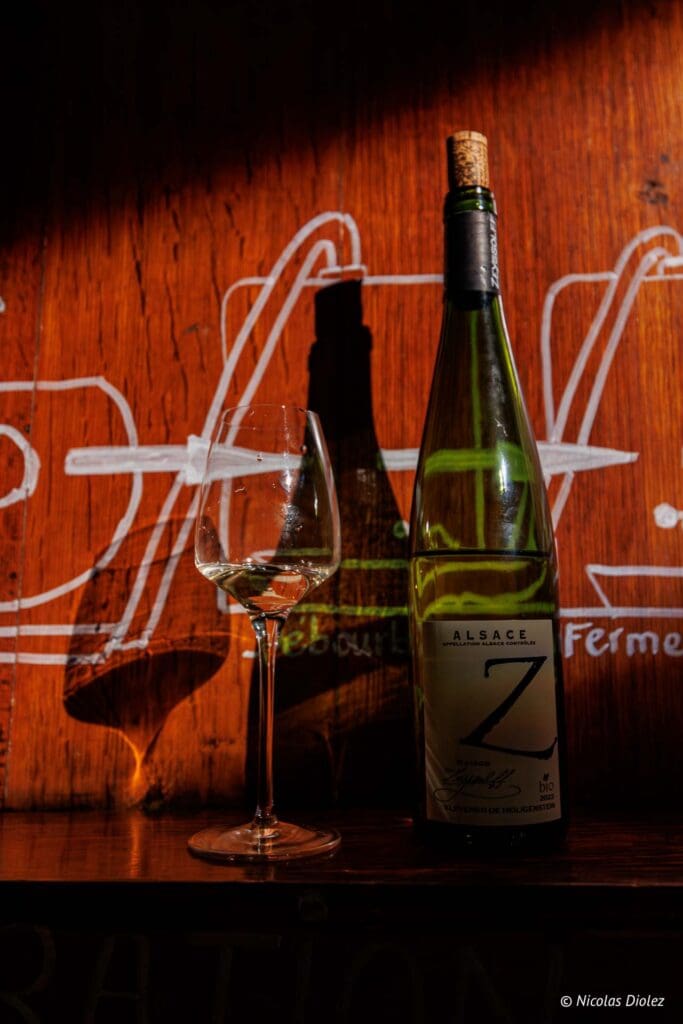
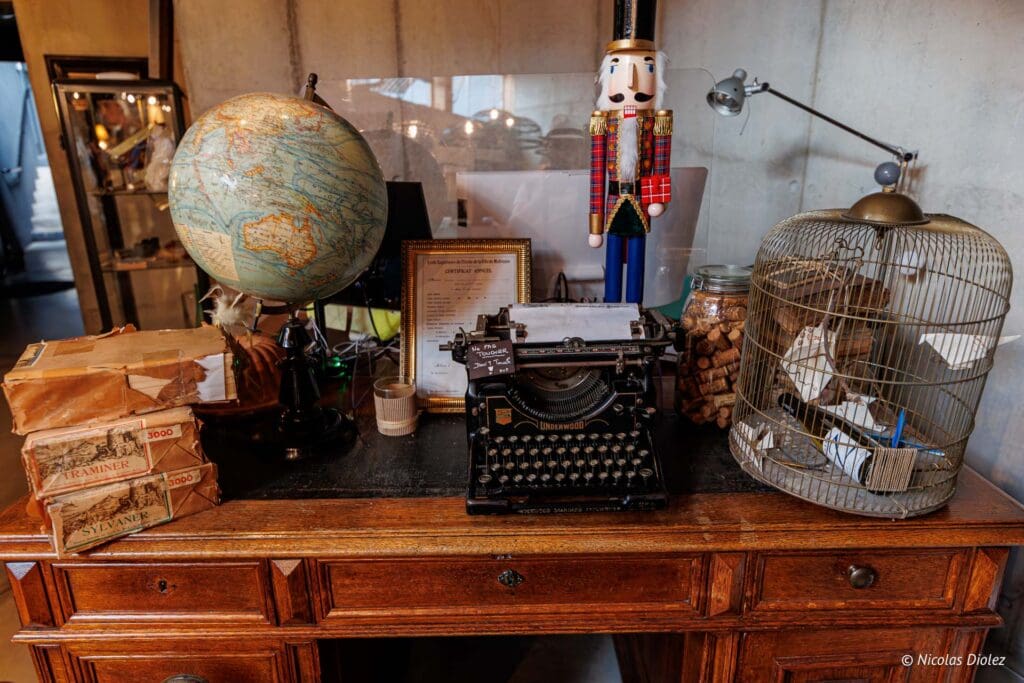
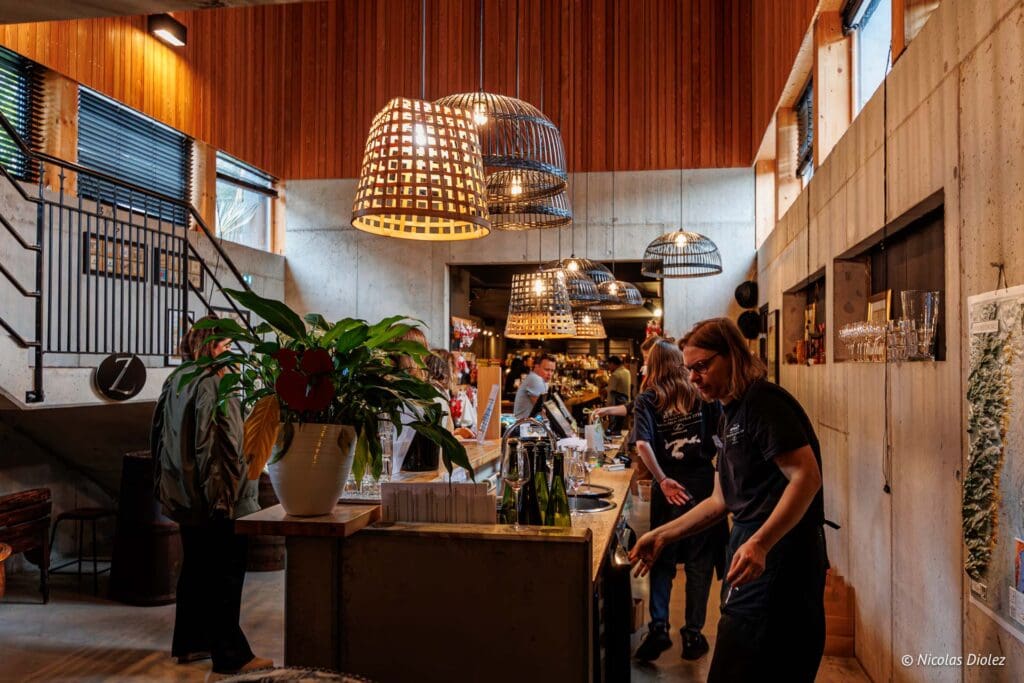
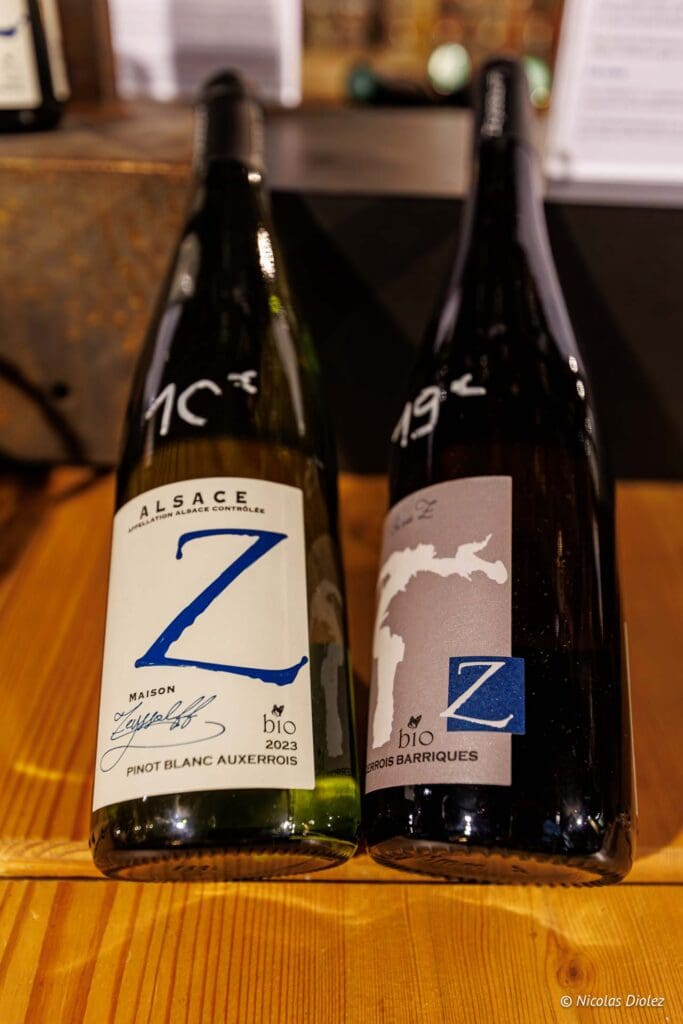
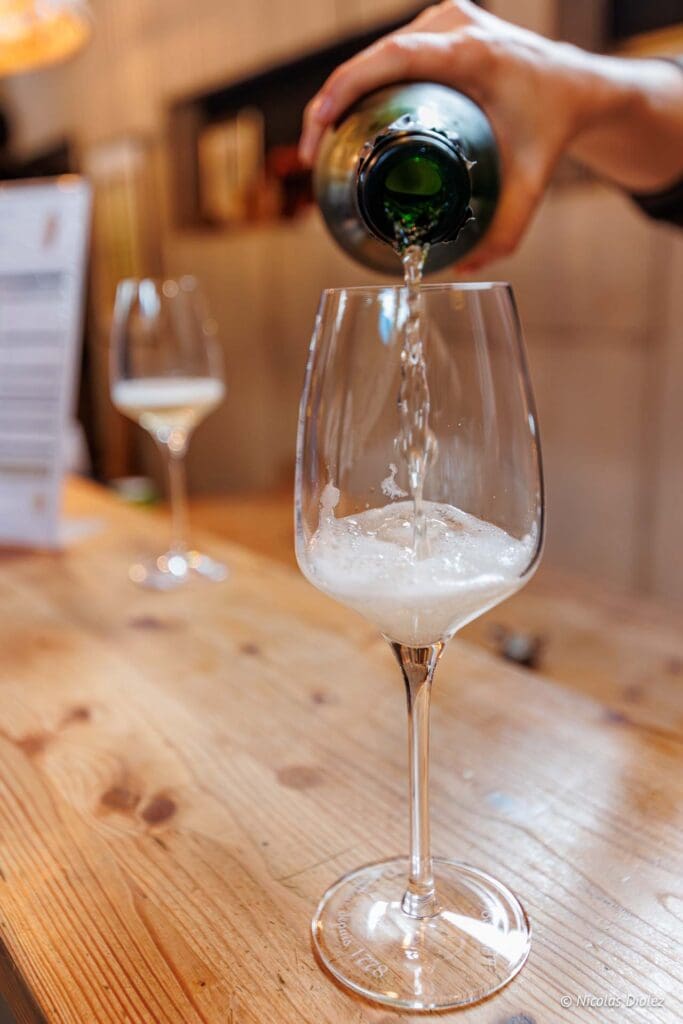
Gertwiller is known as the capital of gingerbread in Alsace (I will mention it a bit lower down), but it is also a charming wine village on the Wine Route. The family-run Domaine Zeyssolff, winegrowers since 1778, is an institution in Gertwiller. Specializing notably in Crémant d’Alsace produced using the traditional method, they offer a particularly successful wine tourism experience: an immersive tour of the cellar. Through a video scenography projected at 180° onto centuries-old oak barrels, you discover the family history, the work of the vineyard, and winemaking. The tour, available in French and English, ends with a guided tasting of several of the estate’s wines. A great experience that we highly recommend!
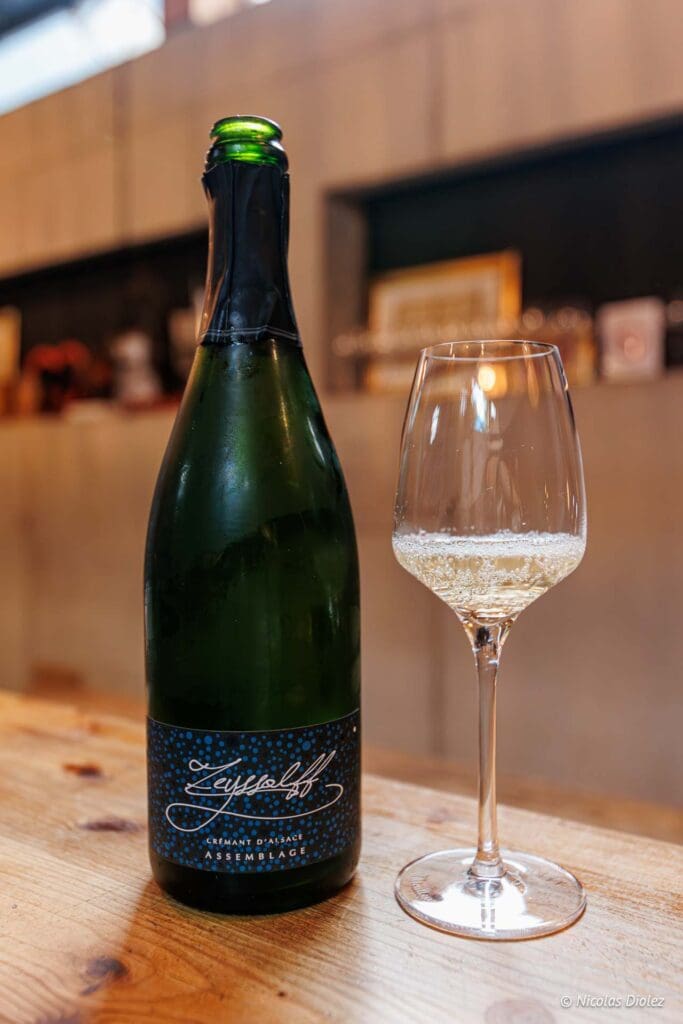
Domaine Zeyssolff
156 route de Strasbourg, 67140 Gertwiller
Price for the immersive tour + tasting (duration 1h30): €19 per person / free for under 18s
Tasting only (5-7 wines): €9 per person
Opening hours and reservations on their website
_
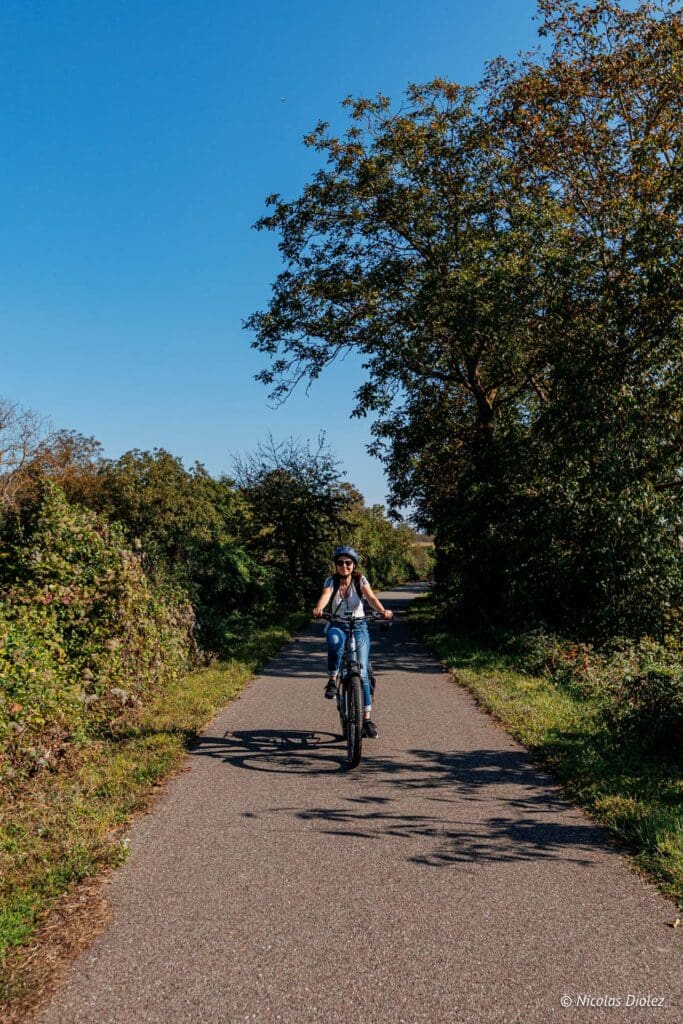
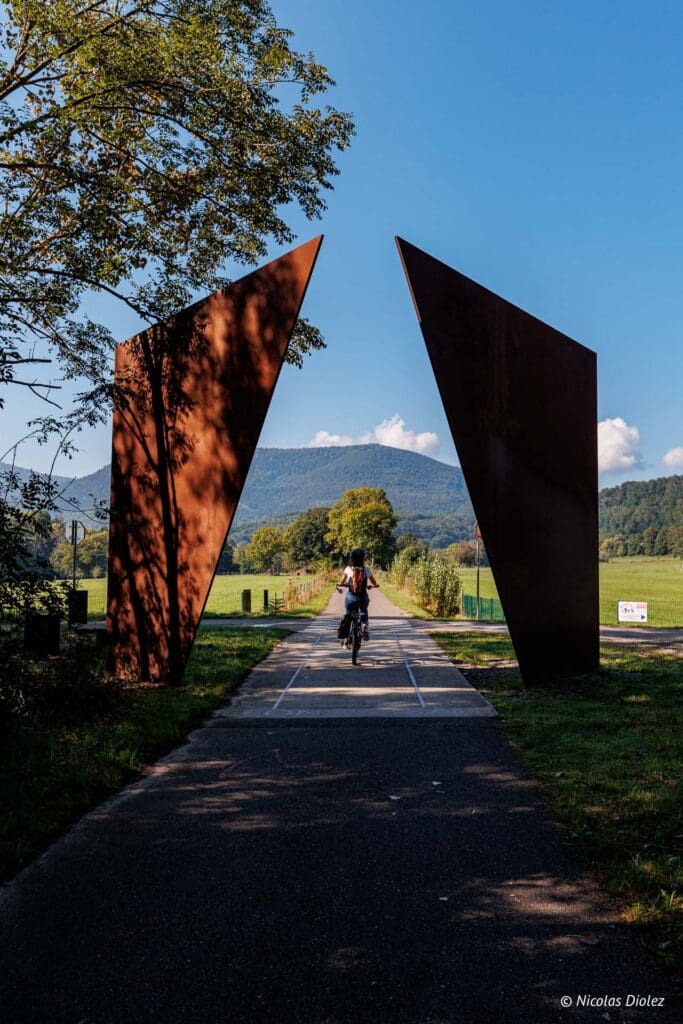
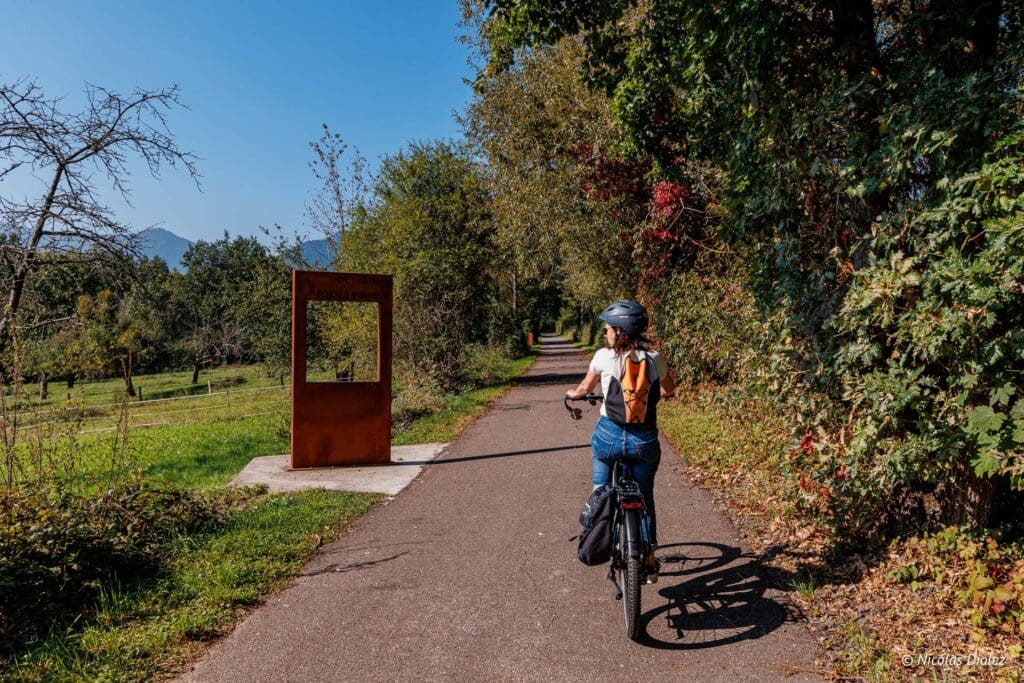
Explore the vineyard by bike following the “Portes Bonheur, the Path of Quarries” Greenway
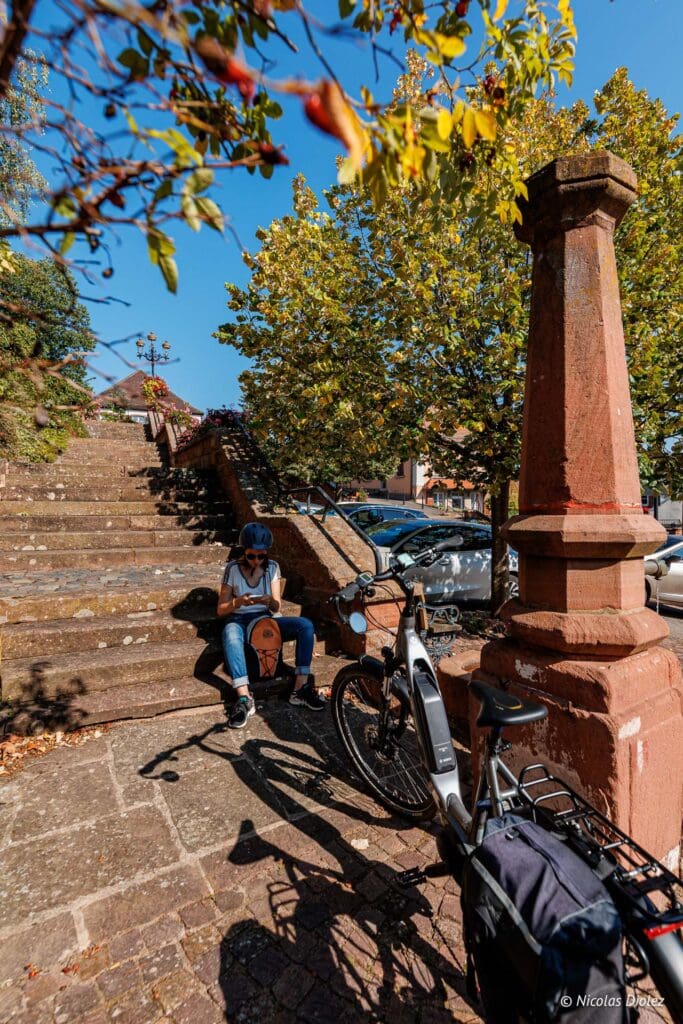
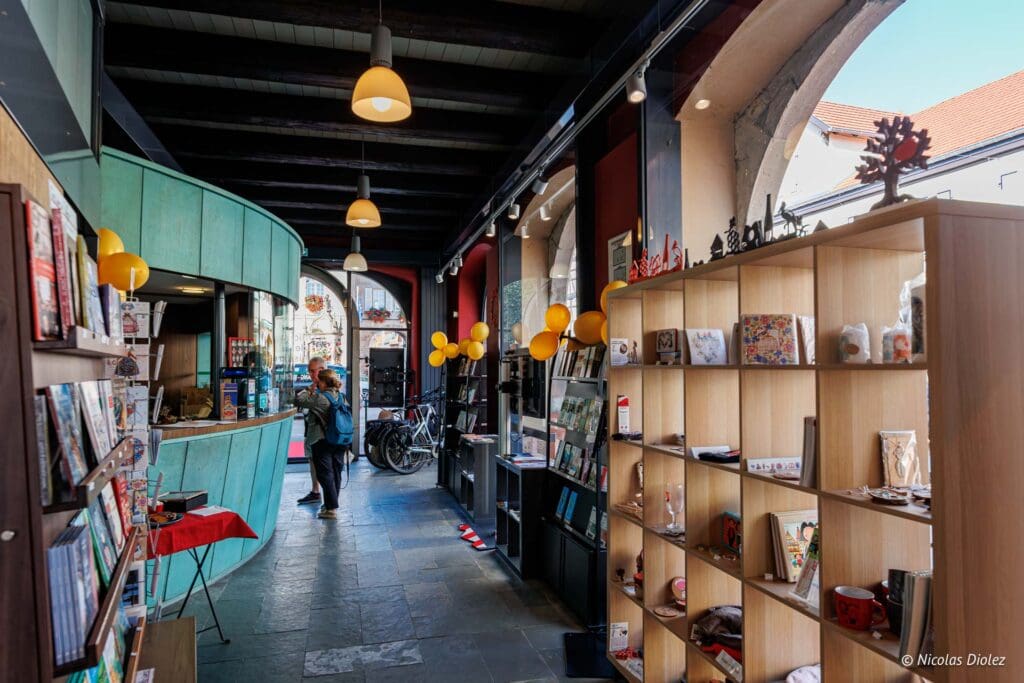
This greenway offers an 11km walk between Rosheim and Saint-Nabor, at the foot of Mont Saint-Odile (which I talk about in the next paragraph). We took it to do the Rosheim-Ottrott section by renting bikes at the Rosheim tourism office (rental possible between April and October), which holds the “accueil vélo” (bike welcome) brand. Built on the old railway line that connected Rosheim to Saint-Nabor (active between 1902 and 2002), it offers a “slow life” route ideal for walking or cycling, punctuated by fun and informative facilities about the surrounding history and nature, as well as art structures and totem sculptures.
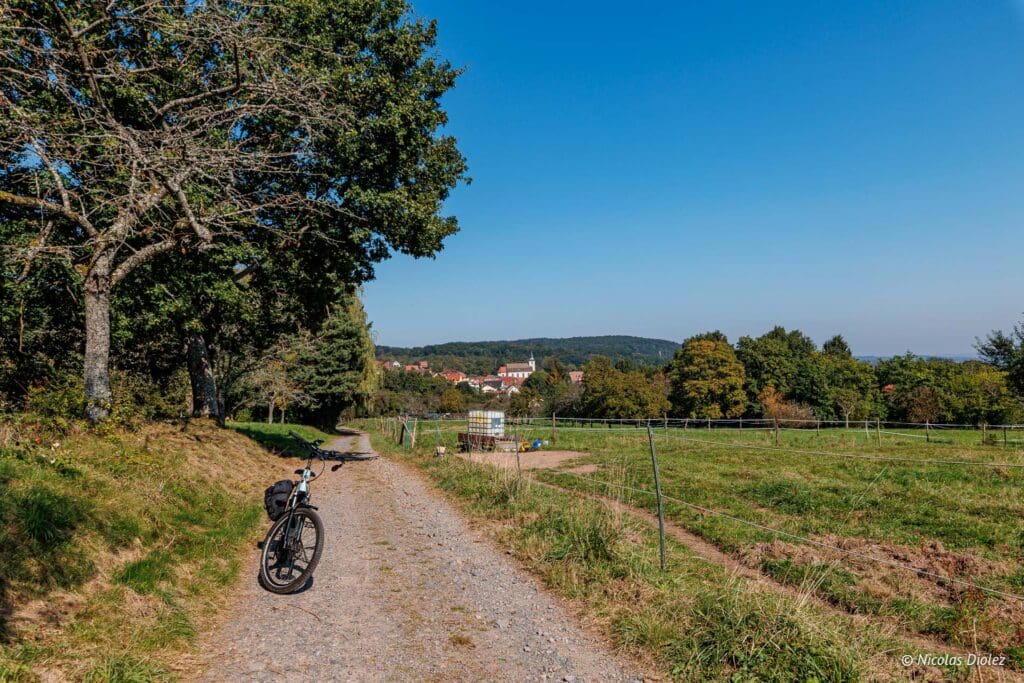
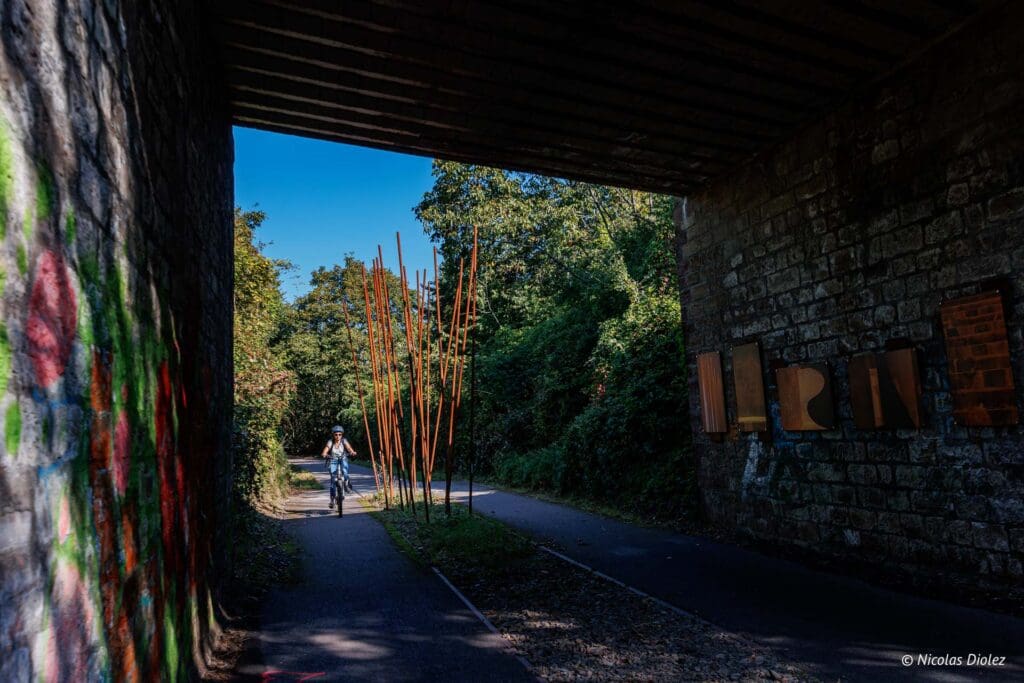
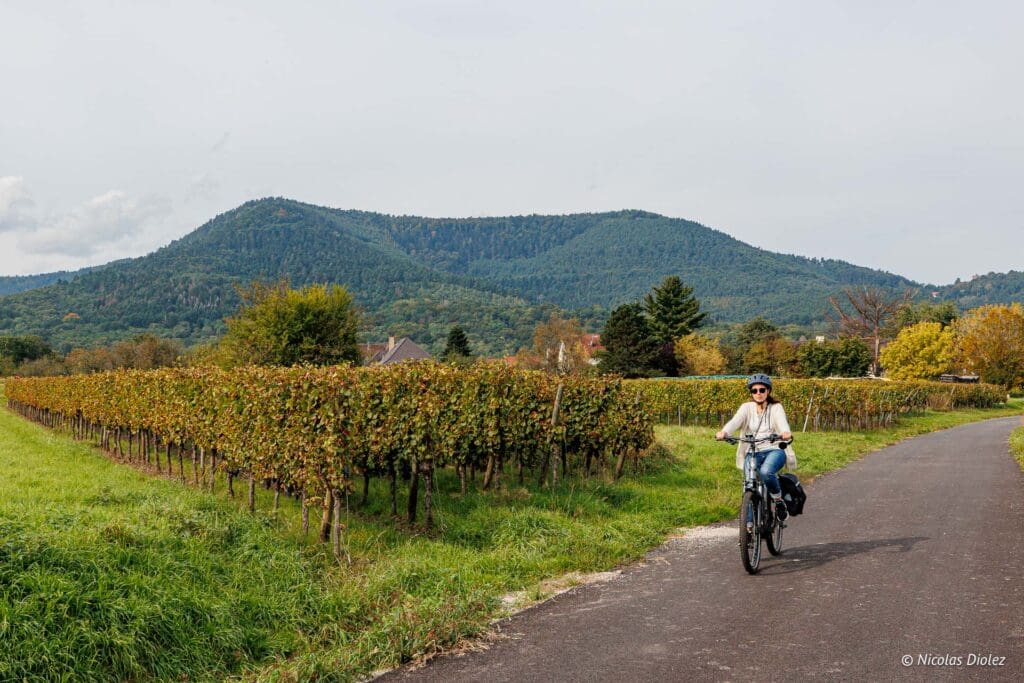
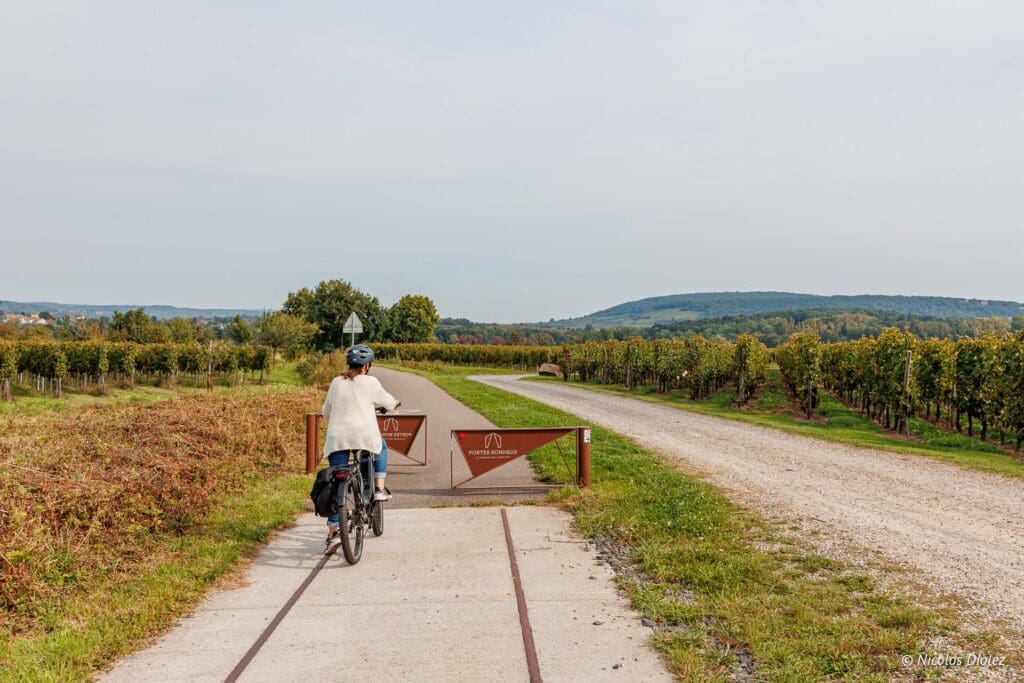
Portes Bonheur Greenway, the Path of Quarries
Departure possible from Rosheim or Saint-Nabor
Practical info: E-bike rentals available at the Rosheim Tourism Office (€25 for half a day / €35 for the full day)
Ideas for excursions/stops on the Alsace Wine Route
Below, I propose several ideas of stops where you can pause (from north to south) along the Alsace Wine Route, whether to visit, eat, or sleep.
_
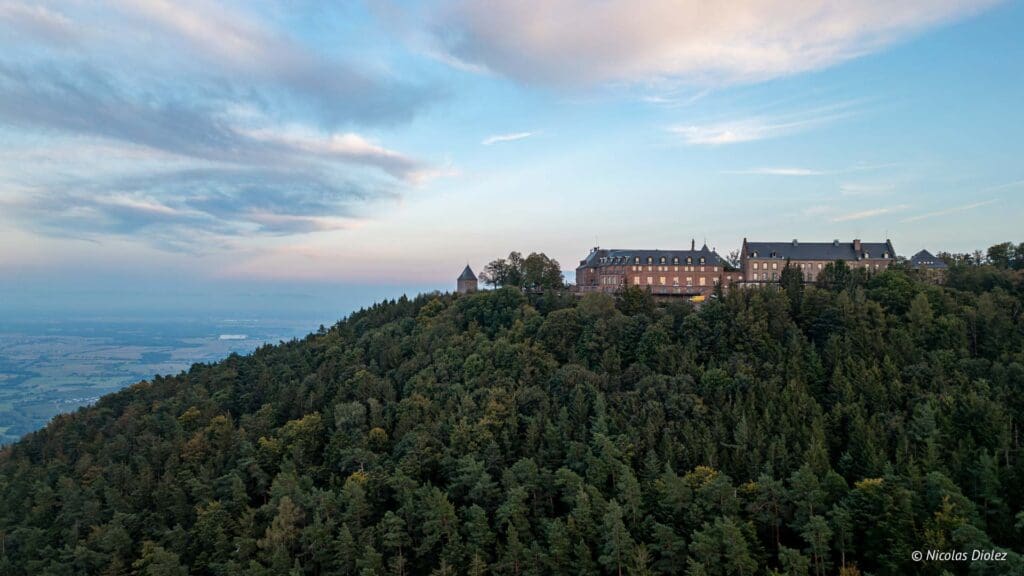
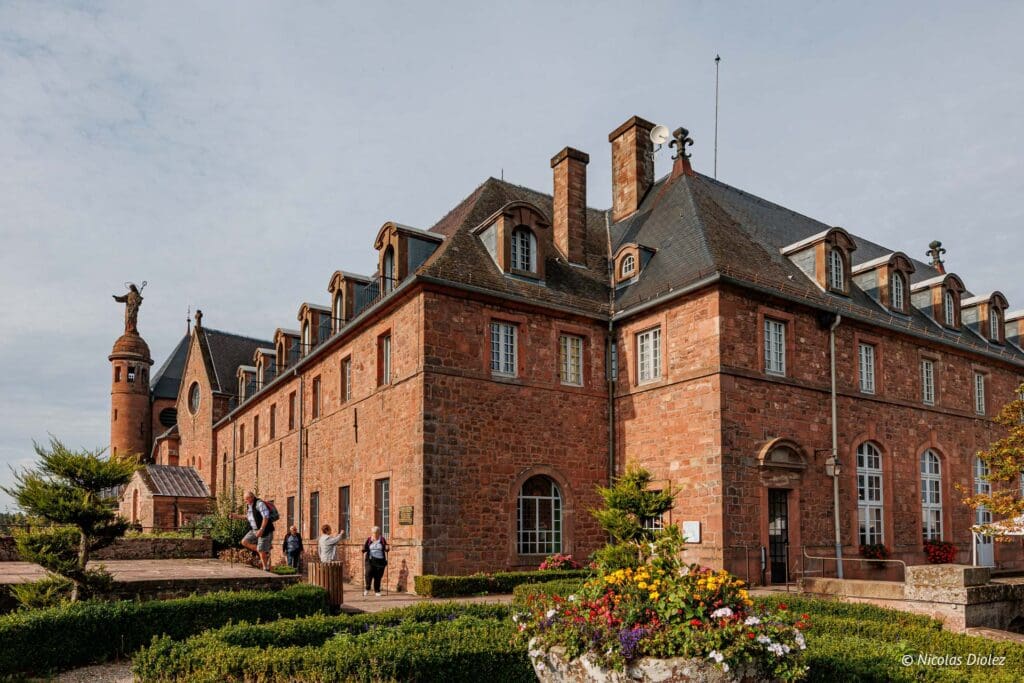
Mont Sainte-Odile
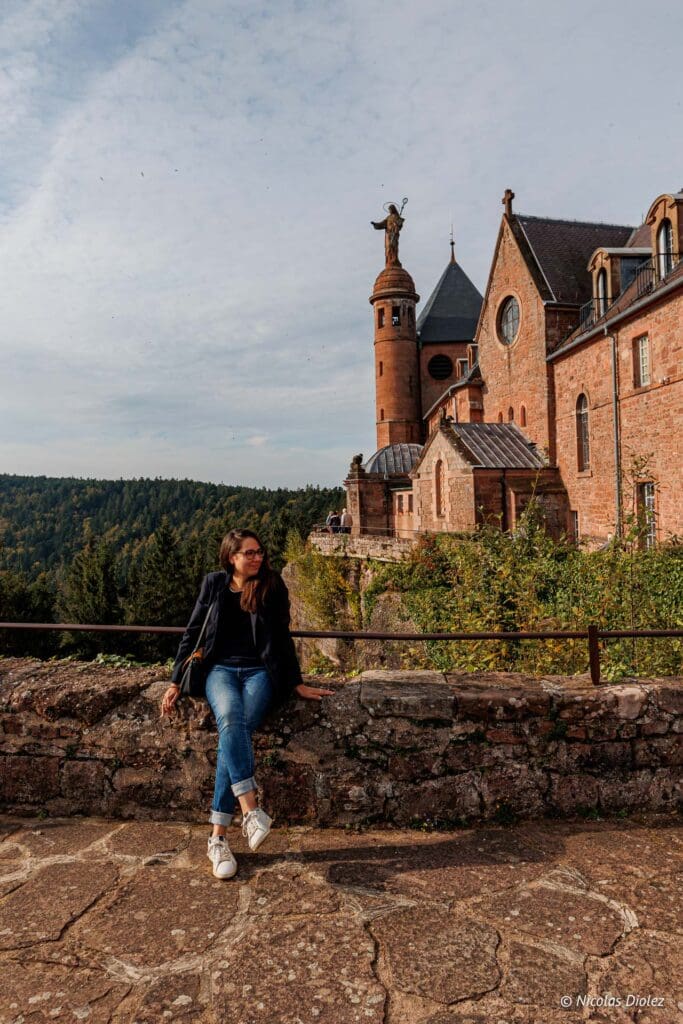
This high spiritual and historical site of Alsace overlooks the plain and offers exceptional panoramic views in the heart of a green and preserved natural environment. An ancient monastery founded by Saint Odile (who lived at the end of the 7th century and beginning of the 8th century), the patron saint of Alsace, it is now a major pilgrimage site, but also a major tourist site attracting many visitors for its history, its natural setting, and its hiking trails.
Mont Sainte-Odile Tourism Office
94 rue du Général de Gaulle 67560 Rosheim
_
Staying and eating at the Mont Saint-Odile Sanctuary
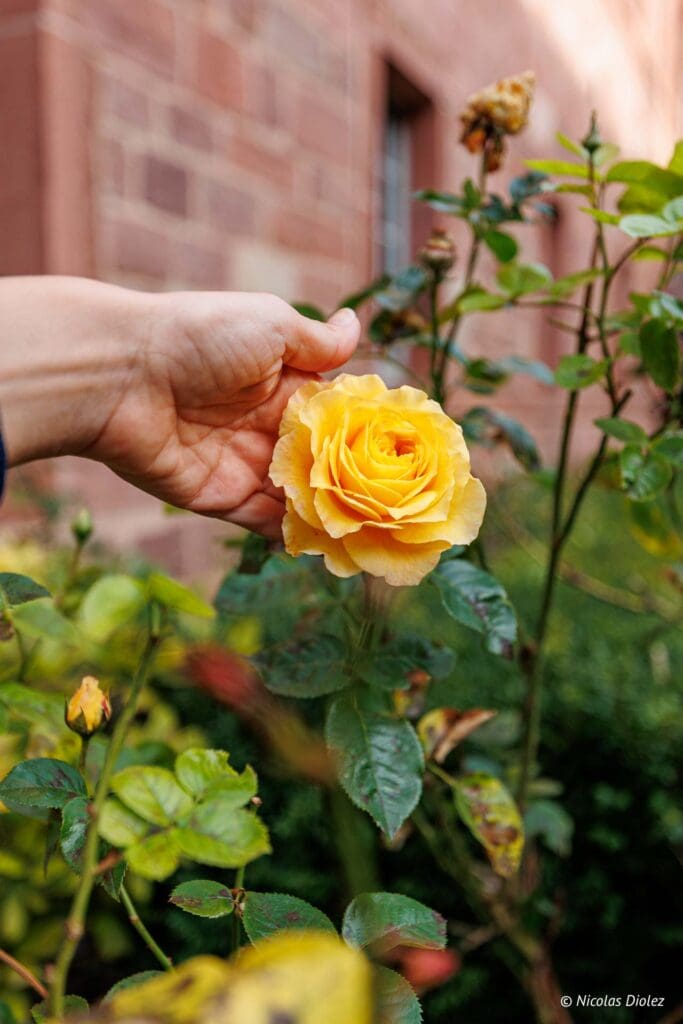
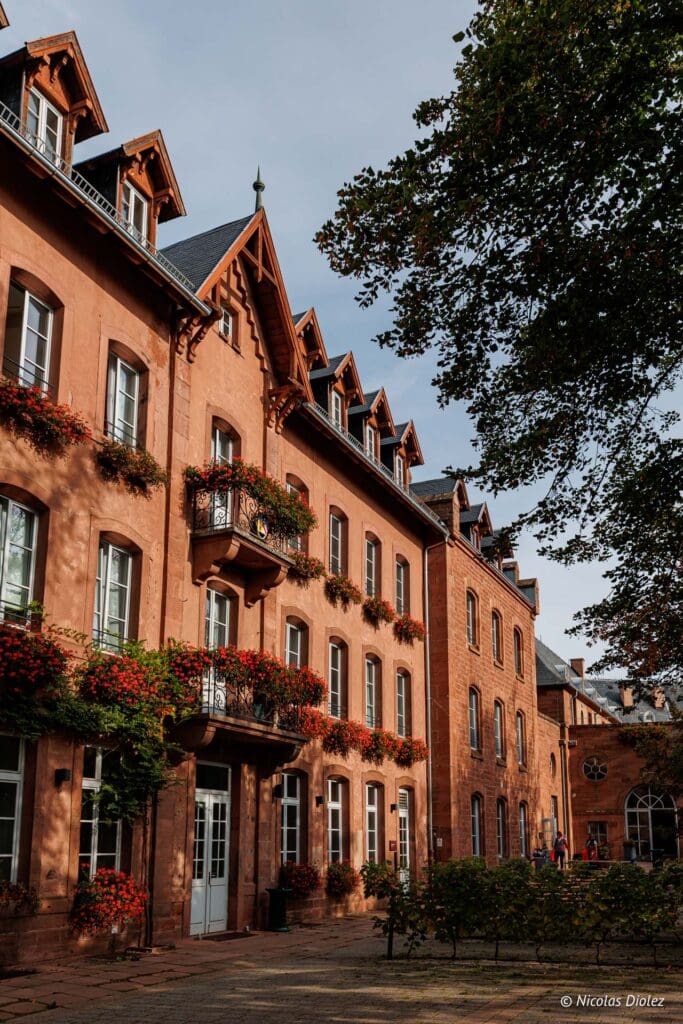
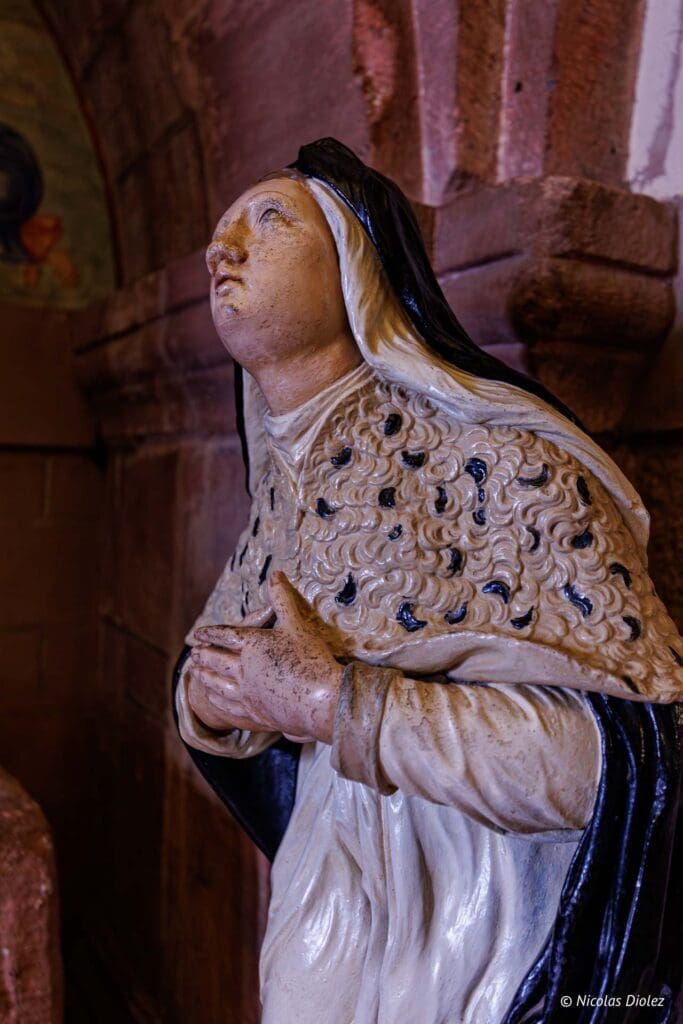
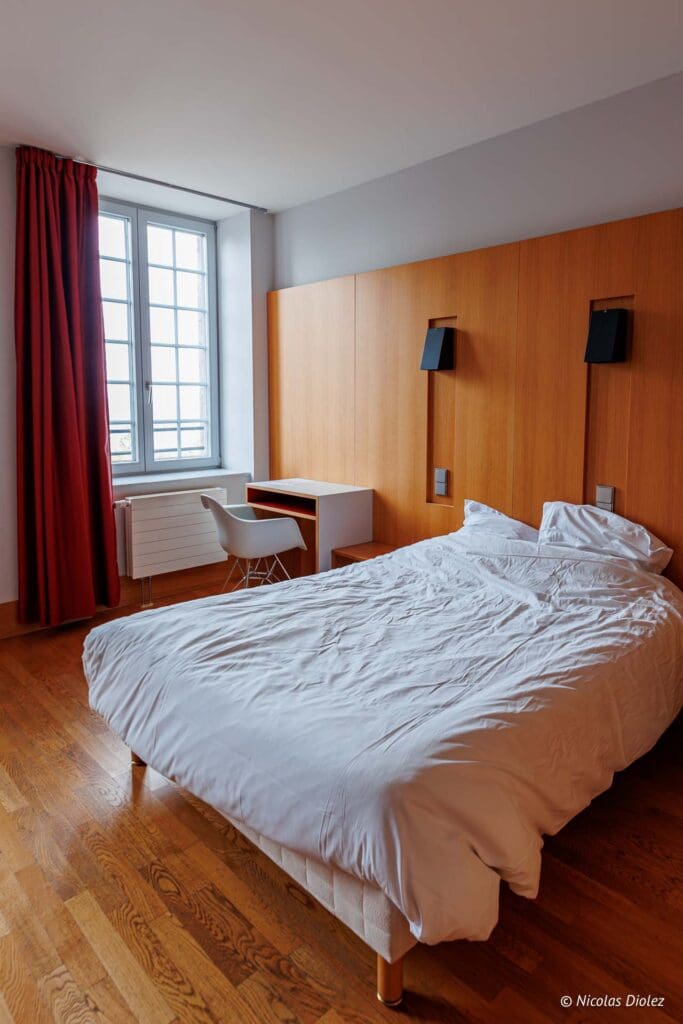
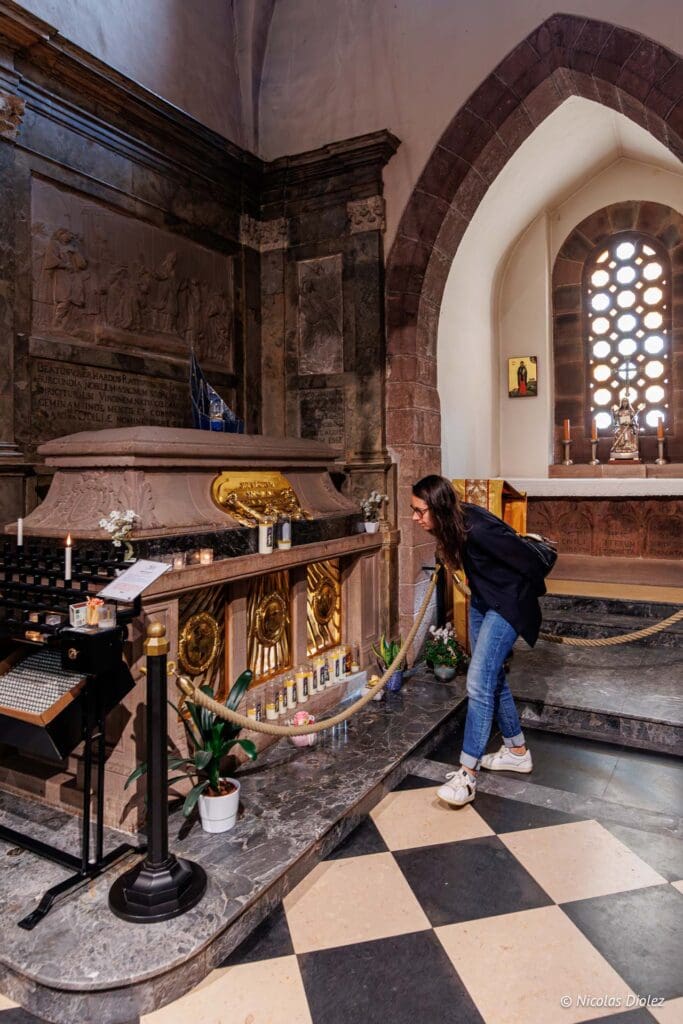
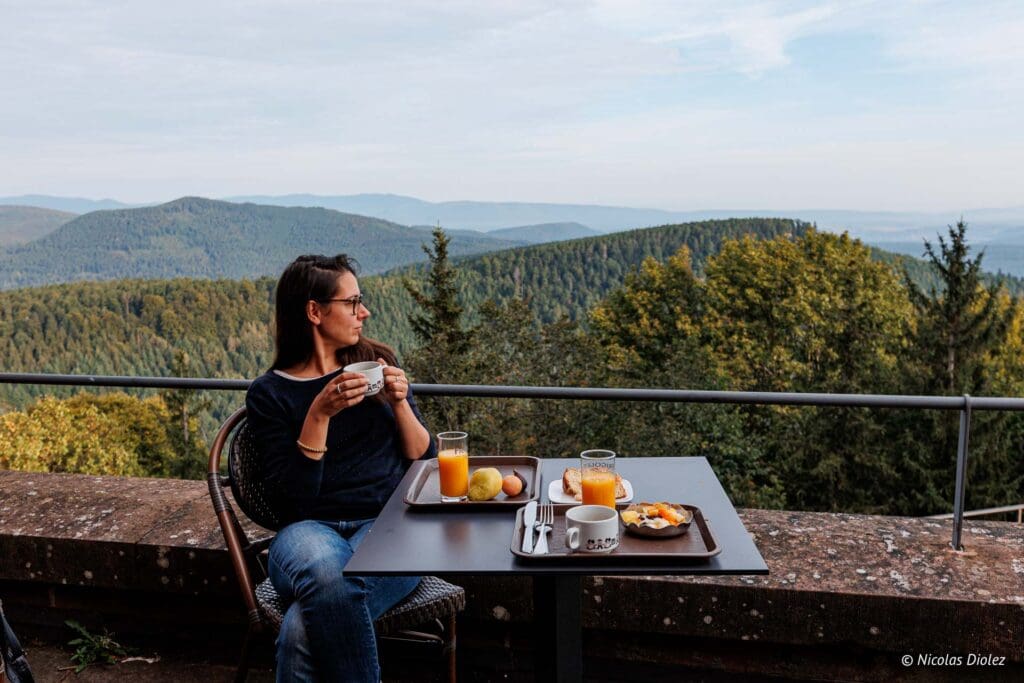
The sanctuary offers a 2-star hotel on-site (with 70 rooms), mainly intended for pilgrims but open to everyone. We stayed there (in room 113) and it is a unique experience to sleep in this place filled with history and spirituality. We found calm and serenity there. If you stay on-site, do not hesitate to take advantage of the quiet of the morning and evening to explore the site once the crowds of tourists have left. You can discover the basilica, the tomb chapel where the sarcophagus of Saint Odile is located, the cloister and its interior garden, as well as the panoramic terrace and the miraculous spring (accessible by stairs, about a 20-minute walk). Breakfast taken on the terrace with an incredible view over the valley, mountains, and the Alsace plain is a magical moment.
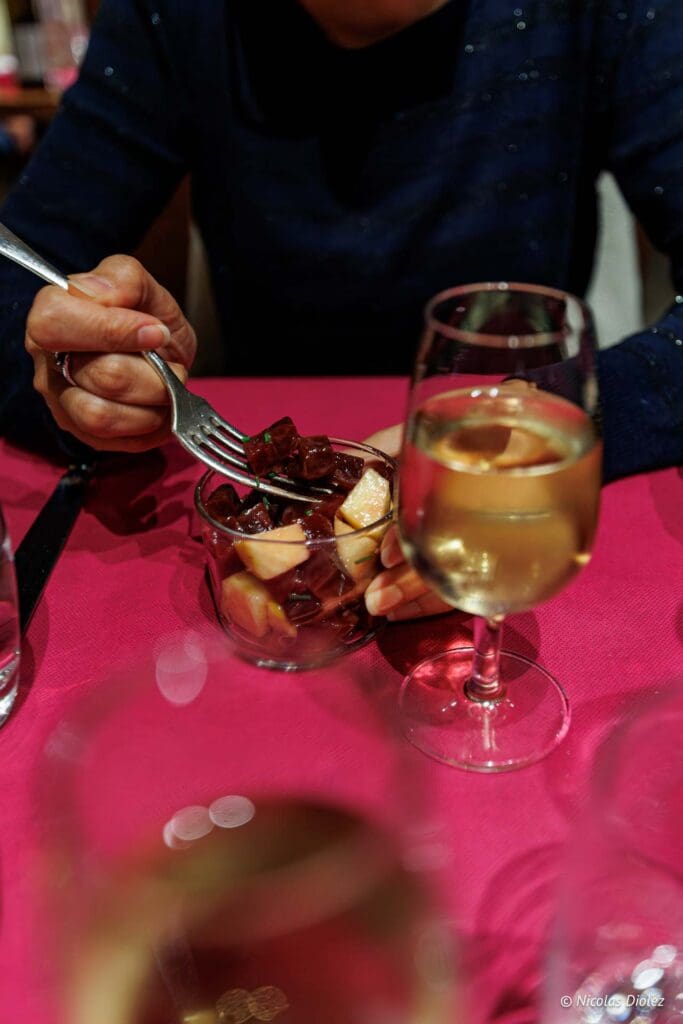
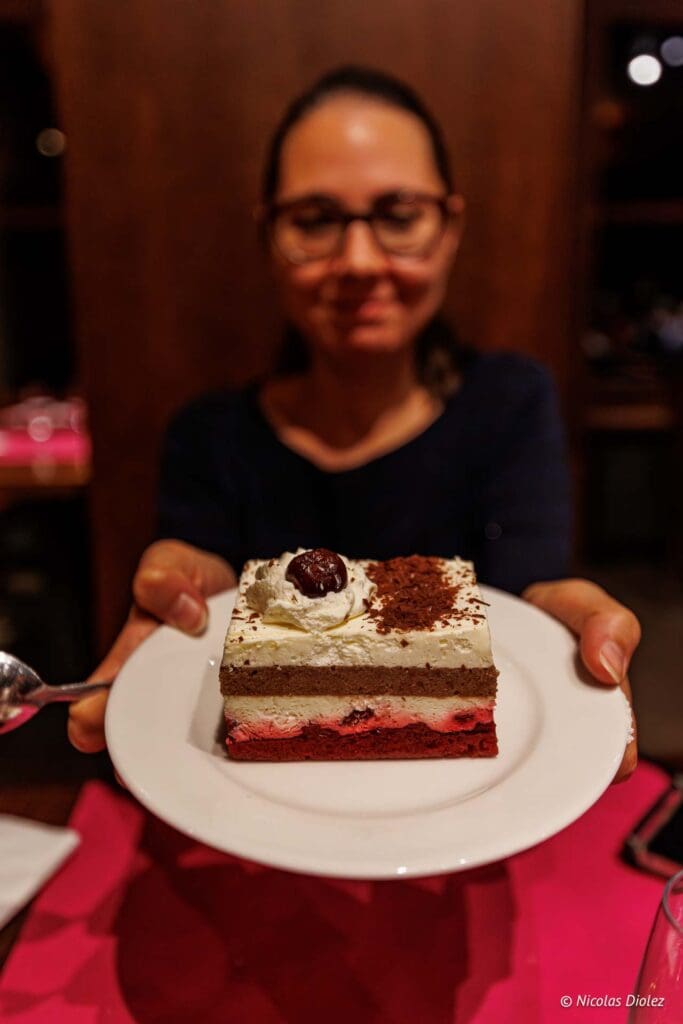
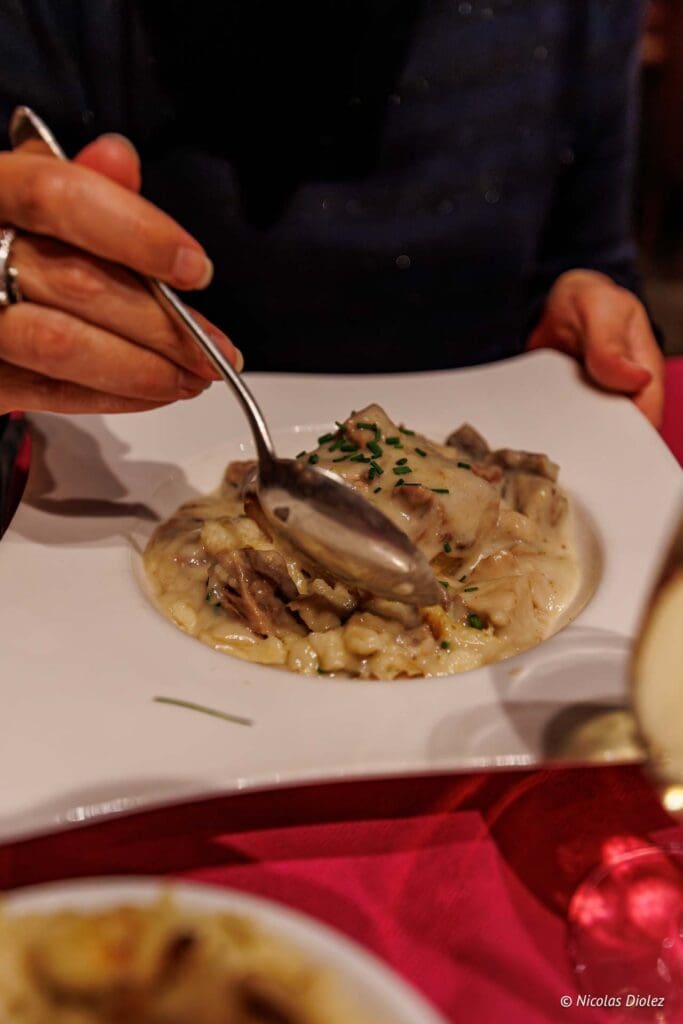
The Saint-Léon restaurant on-site offers traditional cuisine as well as local wines. We tested the evening set menu with half-board, which included: apple and beetroot verrine; grilled chicken thigh with rice and small vegetables; and Black Forest dessert. Outside of half-board, the menu offers dishes like the Mont queen bite and spaetzle (€19.90).
Mont Sainte-Odile Hotel and Restaurant ☆☆
Mont Sainte-Odile, 67530 Ottrott
Accommodation + half-board prices: between €136 and €161 for 2 people depending on the season
Restaurant prices (outside of half-board): appetizers between €8.70 and €19.90 / salads between €9.40 and €18.90 / main courses between €14.80 and €26.50 / desserts between €6.90 and €9.50
A little extra for cyclists: Mont Sainte-Odile has a Bosch fast-charging station to charge electric-assist bikes for free!
_
Go for a hike around Mont Saint-Odile: The Pagan Wall and/or Ottrott Castles
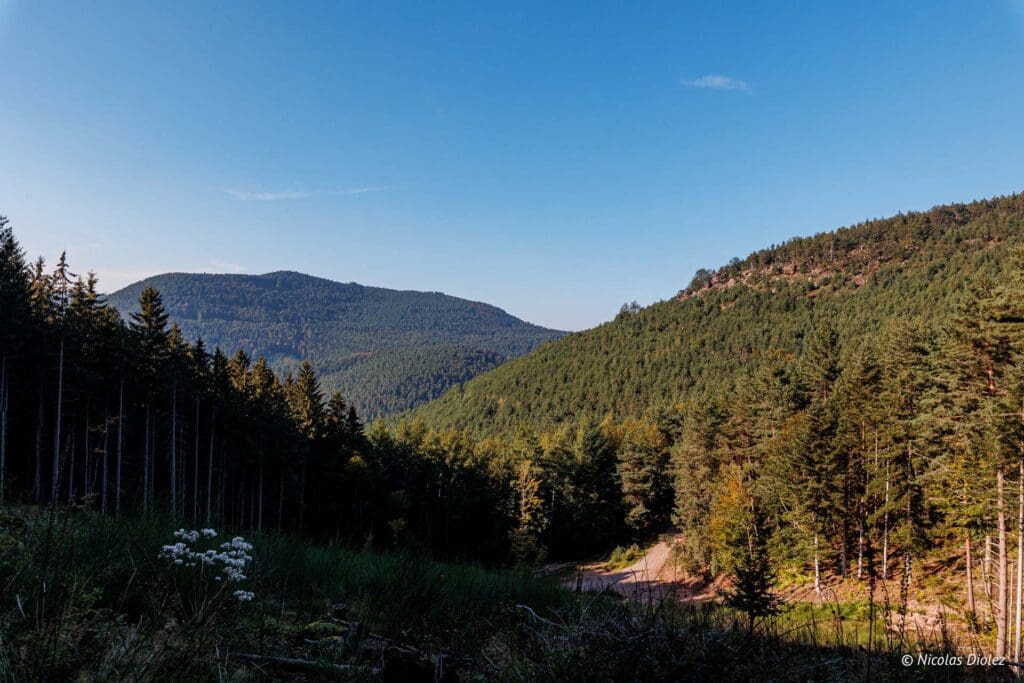
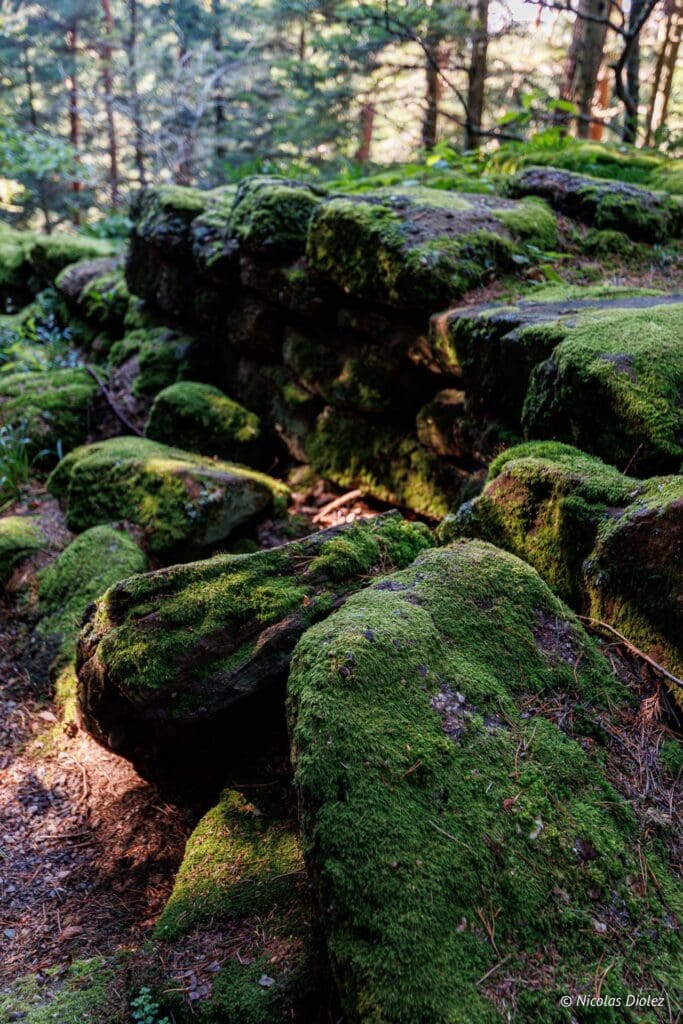
The surroundings of Mont Sainte-Odile are full of marked hiking trails for all levels. Not far from the Sanctuary, you can go discover the pagan wall, an enigmatic enclosure probably built by the Celts over more than 10 km, which encloses an area of 100 hectares around Mont Sainte-Odile. The wall, made of large stone blocks, is still 3 meters high and 2 meters thick in some places. To reach the ruins, follow the signs (very well done) by the Club Vosgien from the entrance of Mont Sainte-Odile.
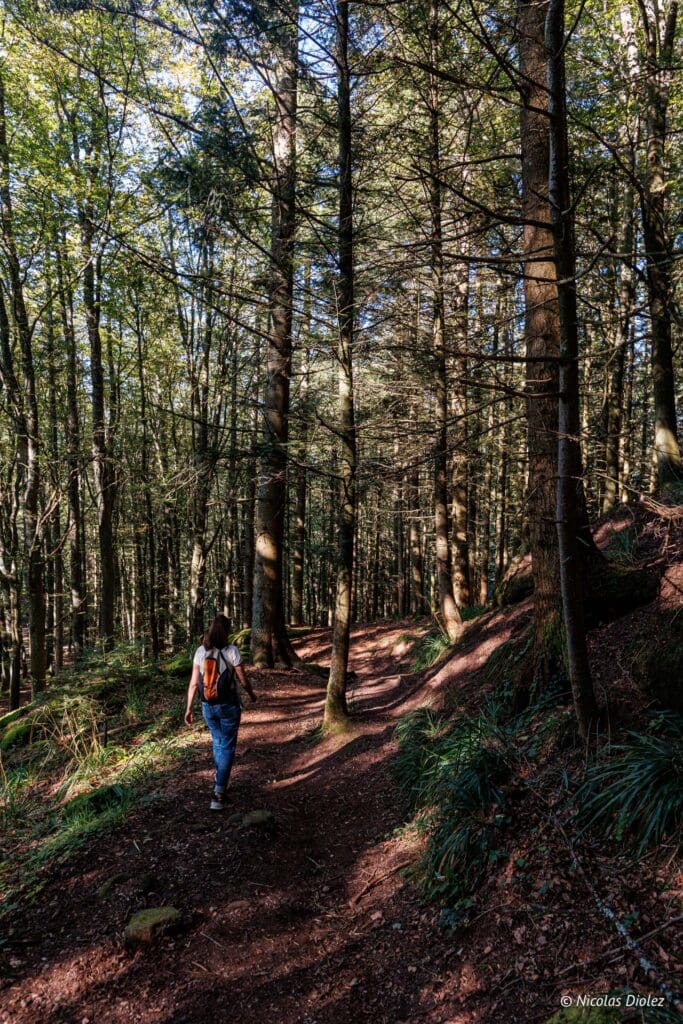
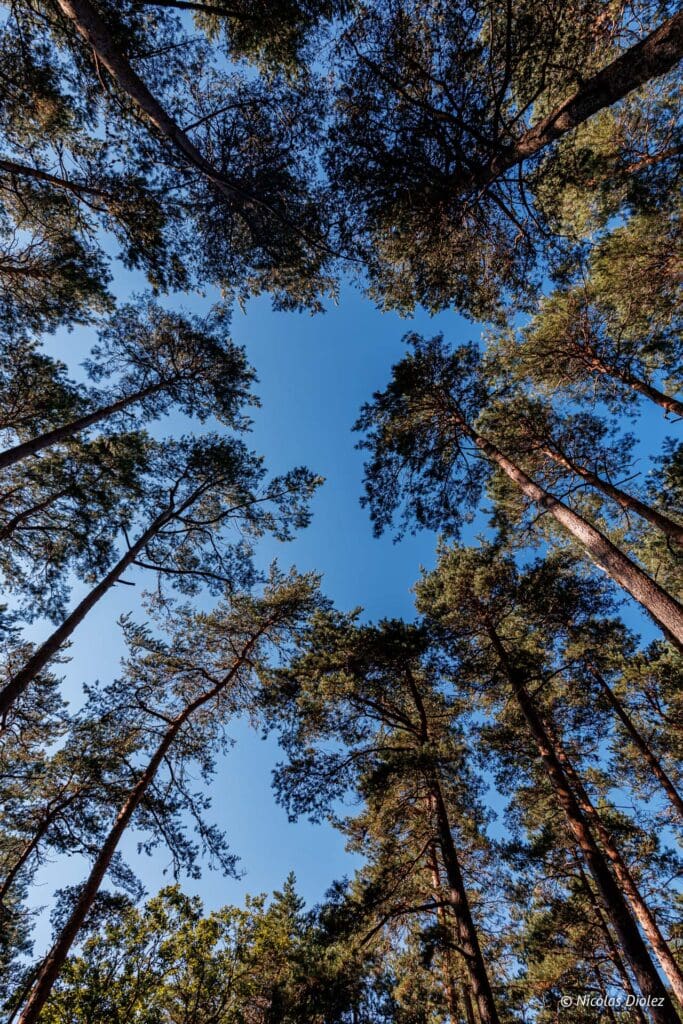
You can also do as we did, the hike that takes you to discover the magnificent ruins of the medieval castles of Ottrott, the Rathsamhausen castle, with its “keep-palace,” and that of Lutzelbourg, located only a few meters away. Both built at the same time in the 13th century, they were the subject of fierce rivalry between their owners. They are now being restored by a team of volunteers, who are on-site on Tuesdays and Saturdays if you want to meet them and learn more about these 2 fortified castles (for information, if you want to discover the castles without doing this hike, you can also access the sites by car).
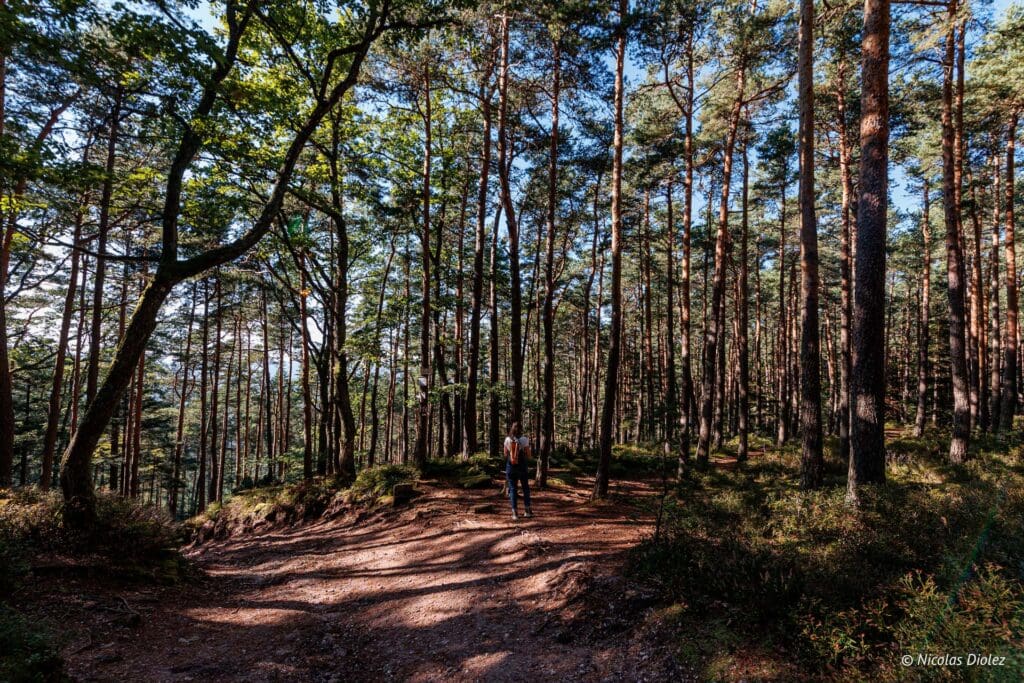
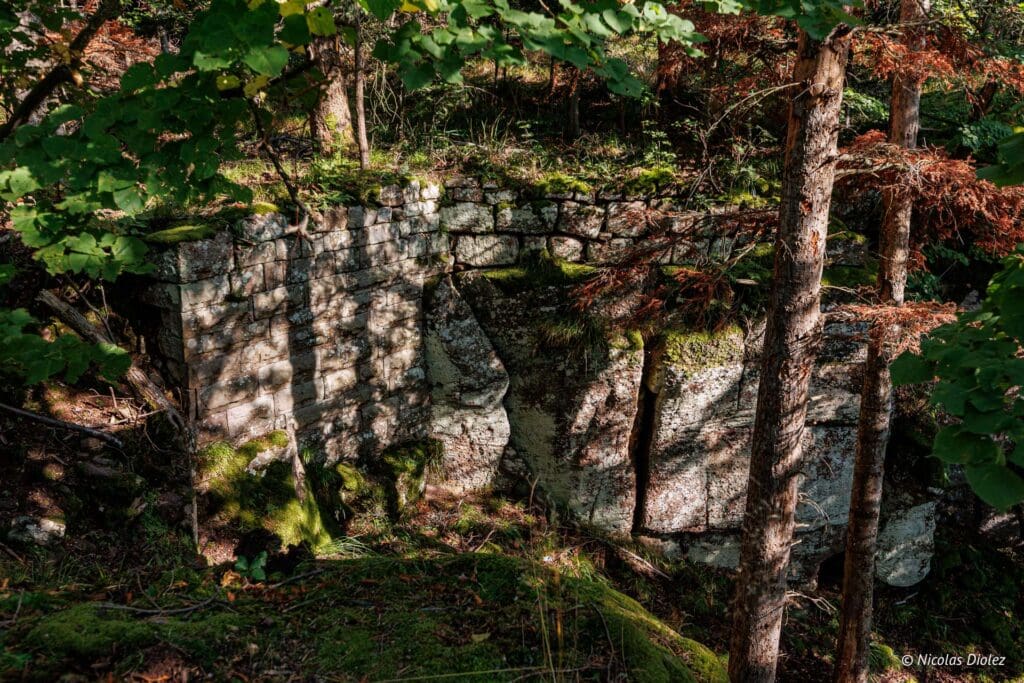
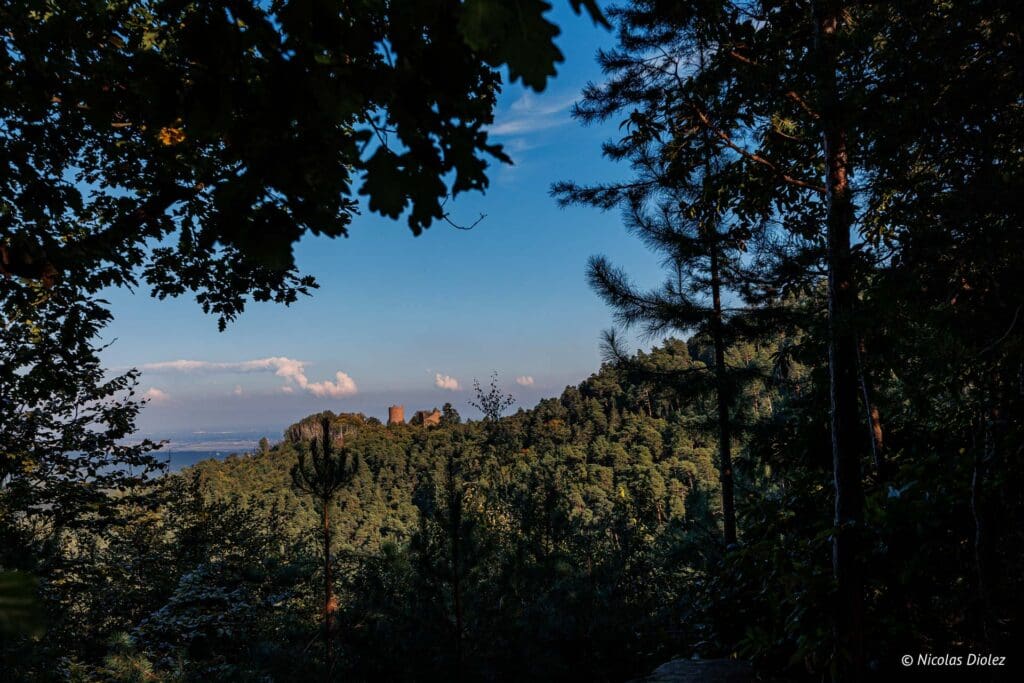
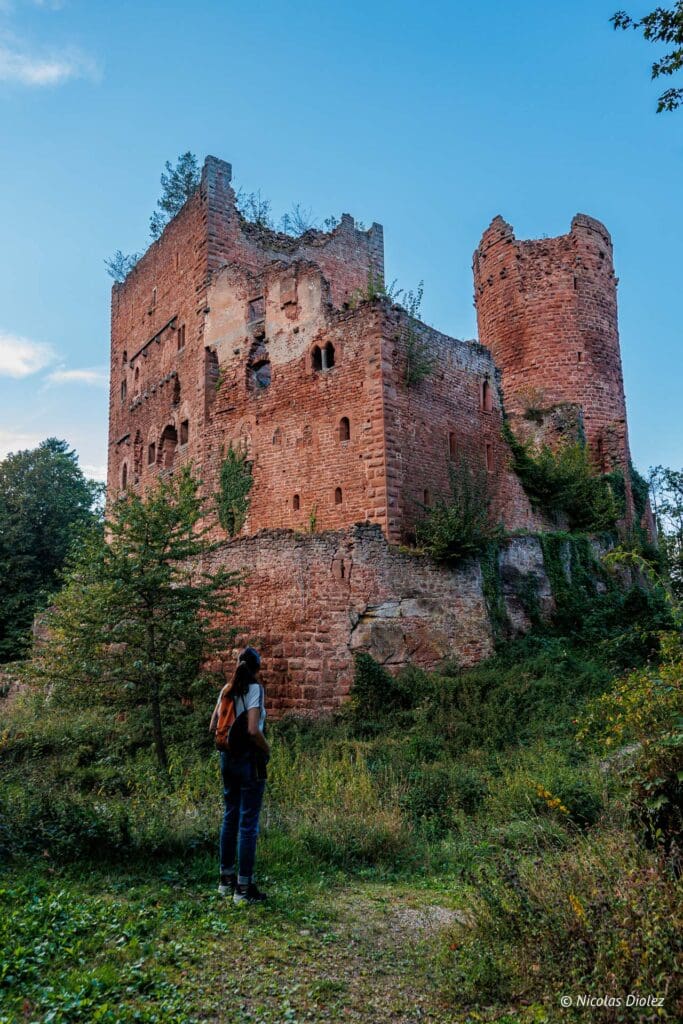
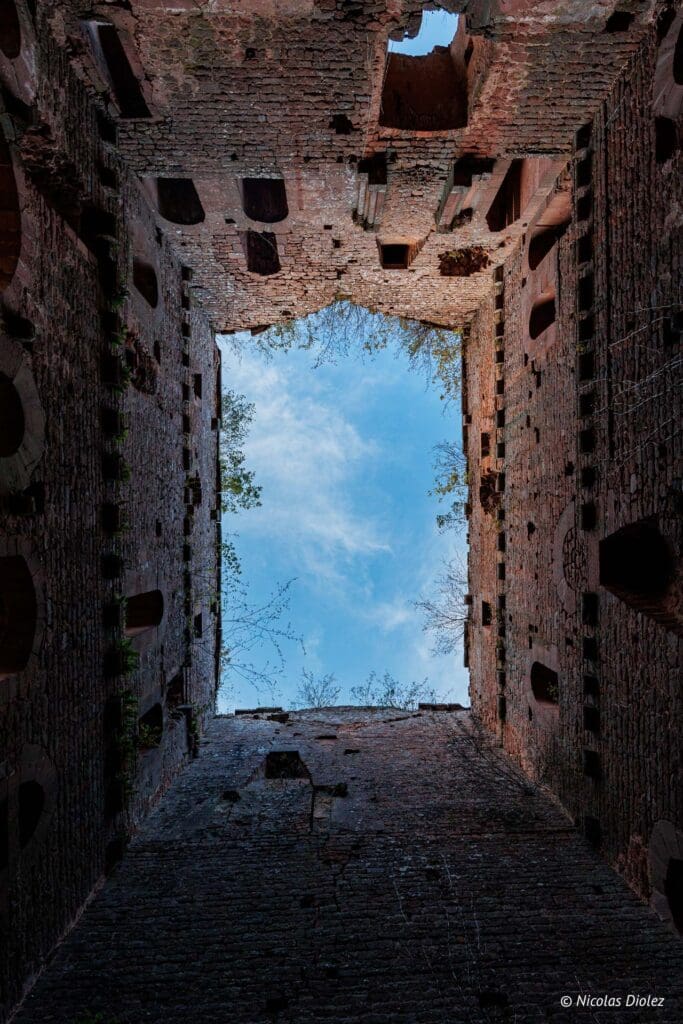
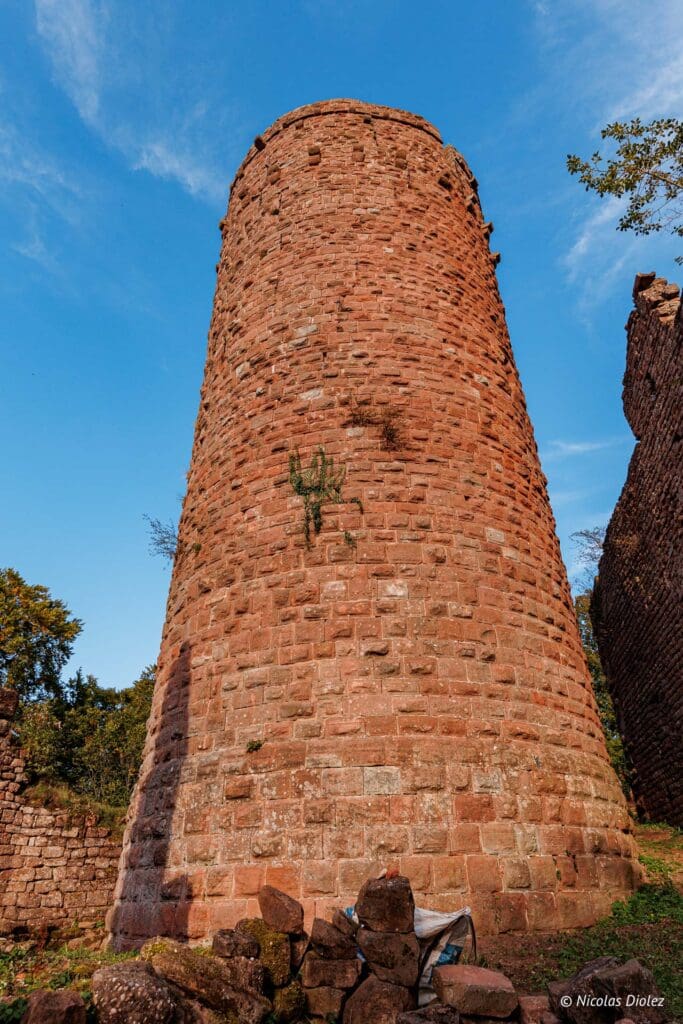
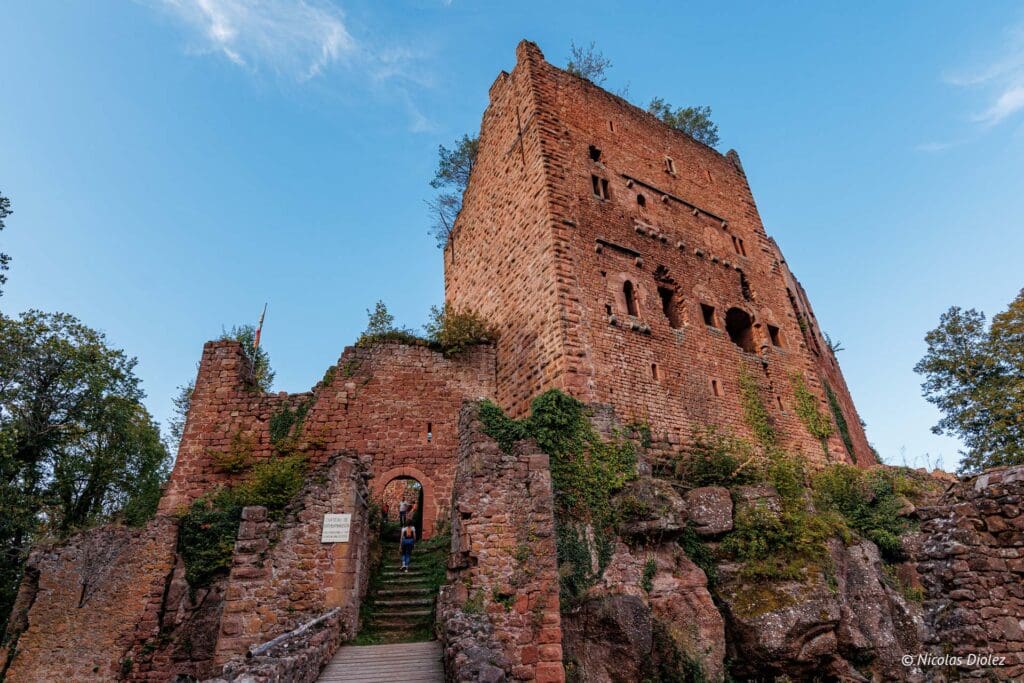
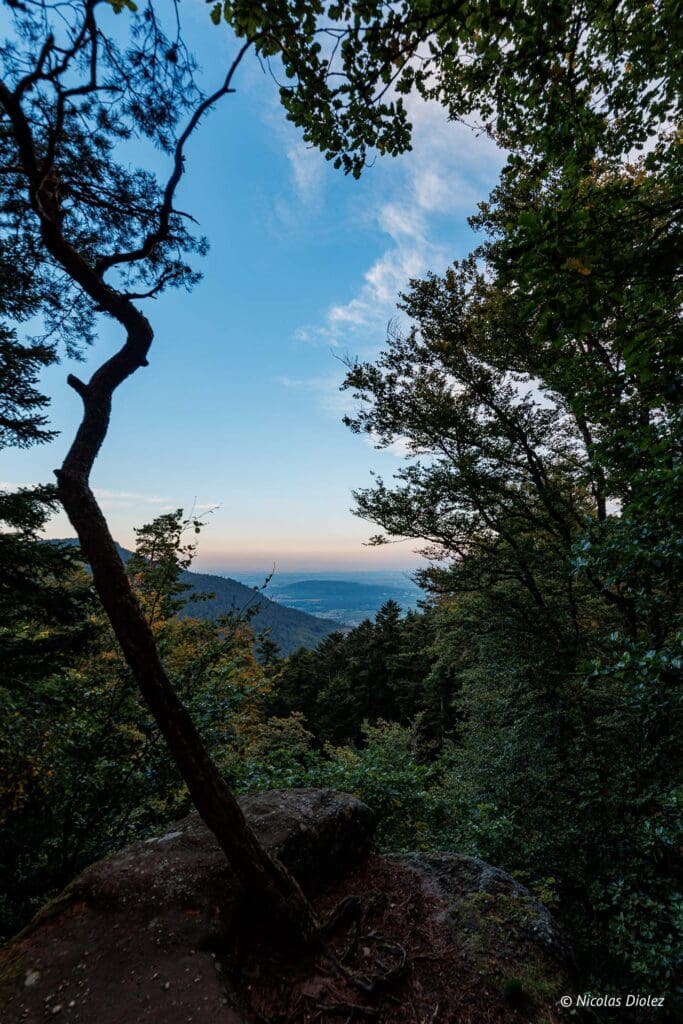
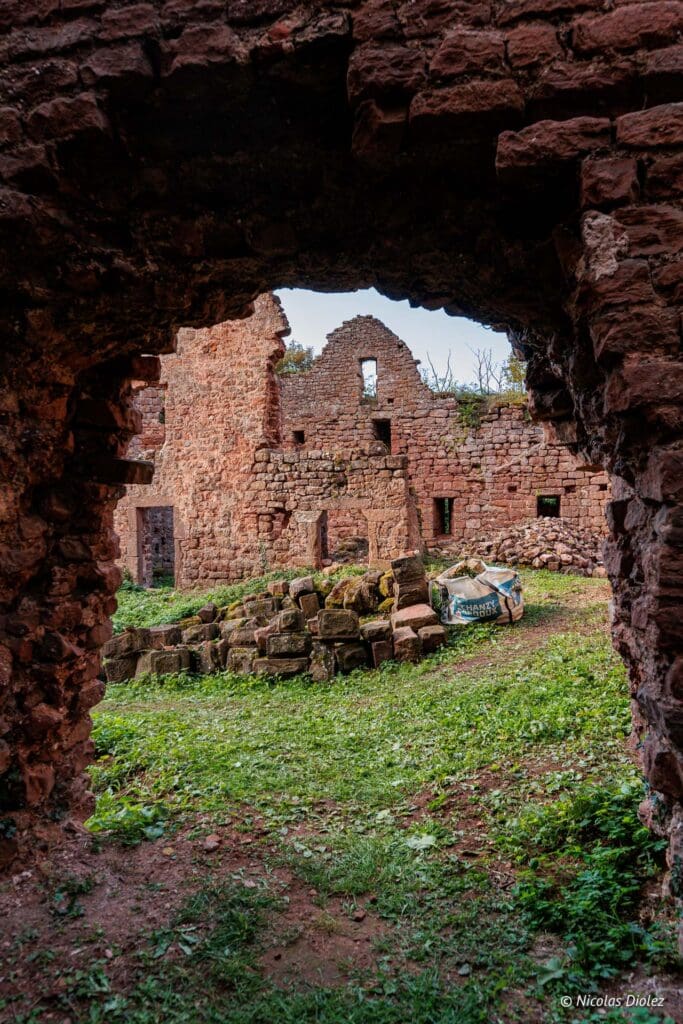
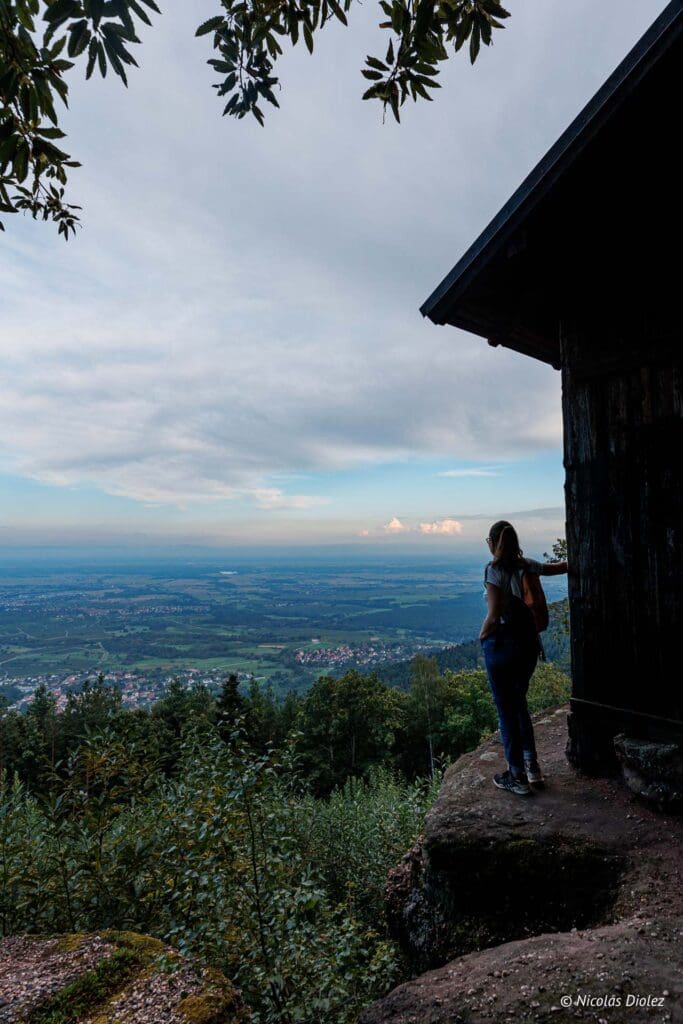
Ottrott Castles Hike
Distance: 10.34 km
Elevation gain: + 351 meters
_
Discover Rosheim
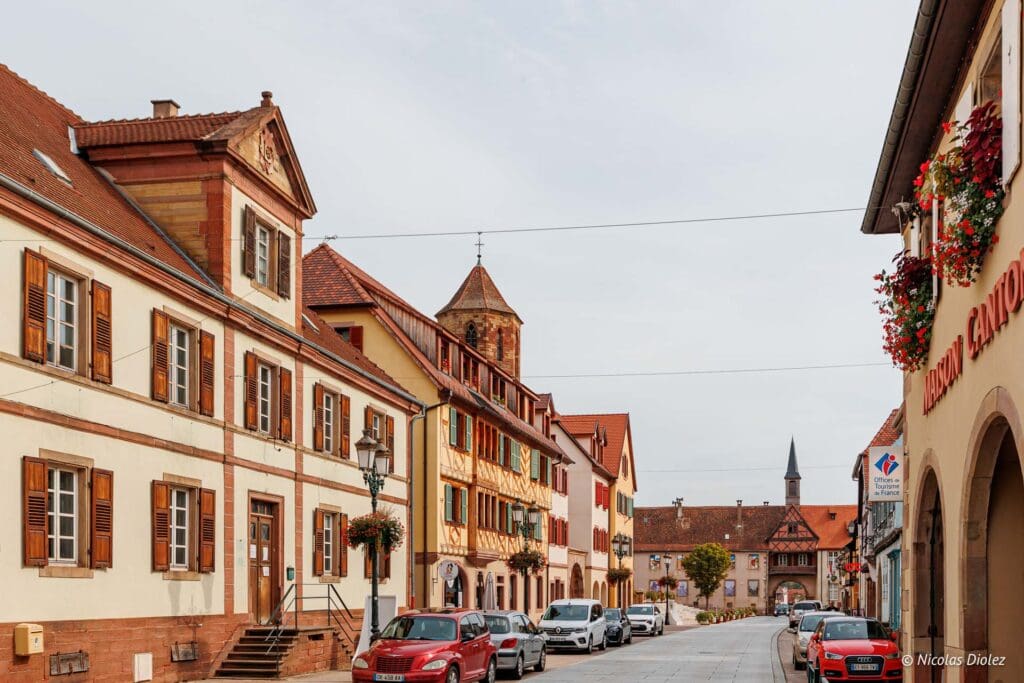
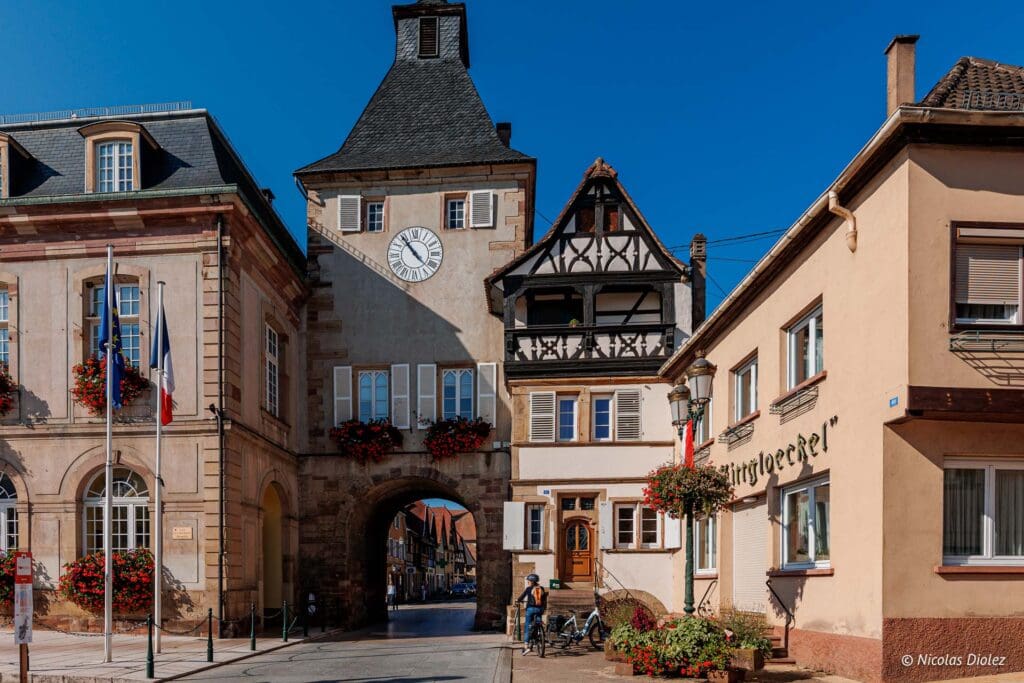
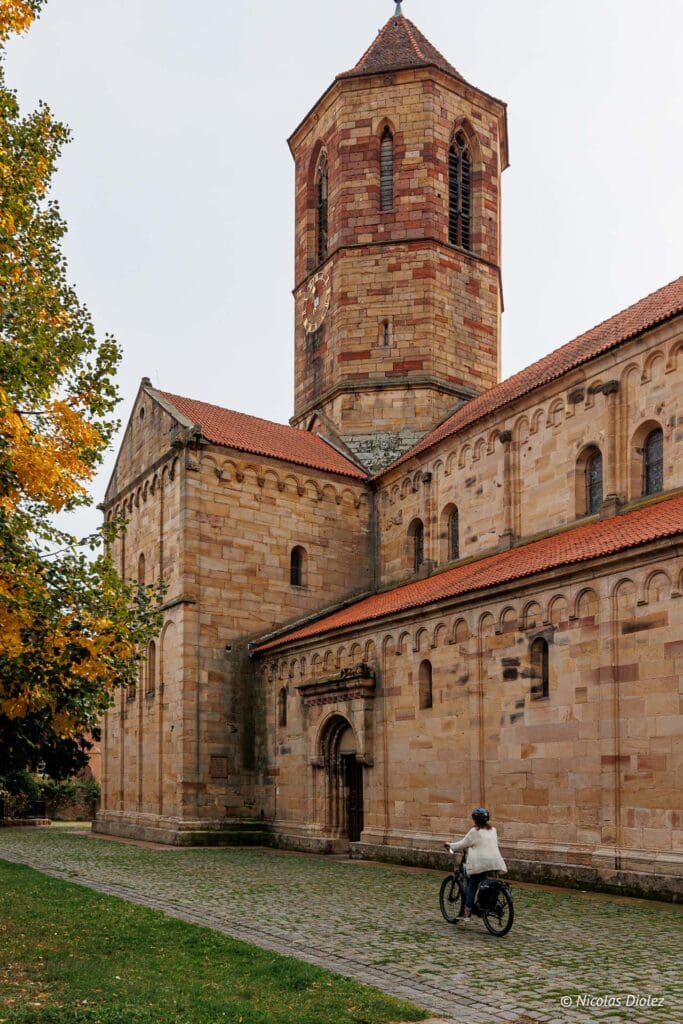
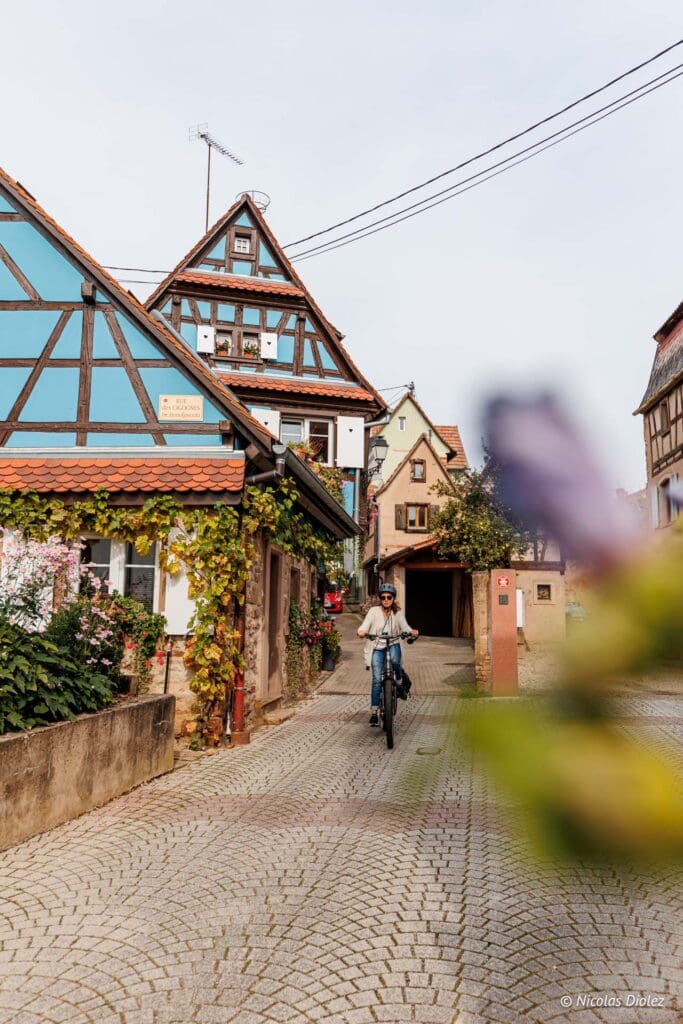
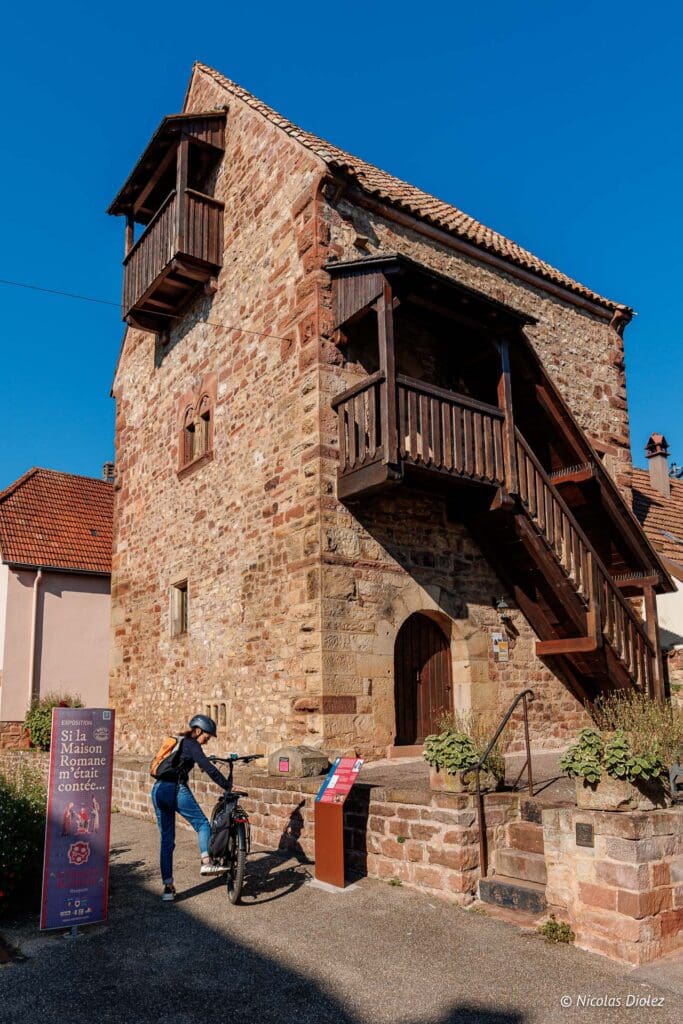
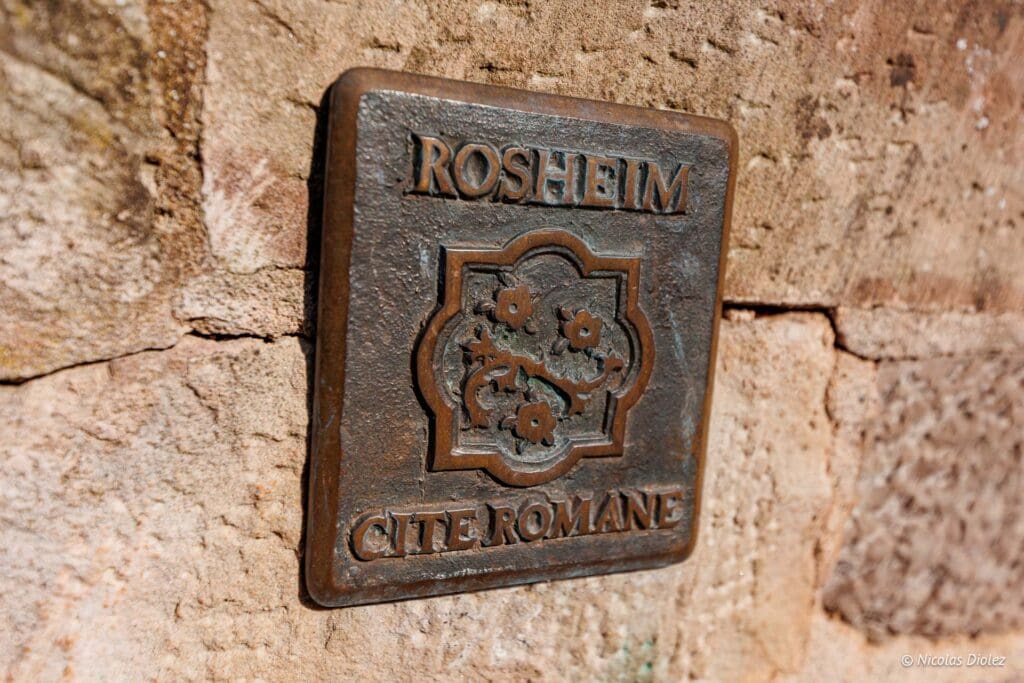
This beautiful Alsatian wine city in the Mont Saint-Odile territory is located on the Alsace Wine Route, and it can be the starting point for a bike excursion to the Mont Saint-Odile Sanctuary (which is what we did, in any case), as it is the starting point of the “Portes Bonheur, the Path of Quarries” greenway that I mentioned earlier. The city also benefits from a rich historical past with beautiful architectural heritage. To see: the Romanesque church of Saints-Peter-and-Paul, a jewel of the Romanesque Route of Alsace, the 4 city gates, and the Romanesque house known as the “Pagan House” dating from 1154.
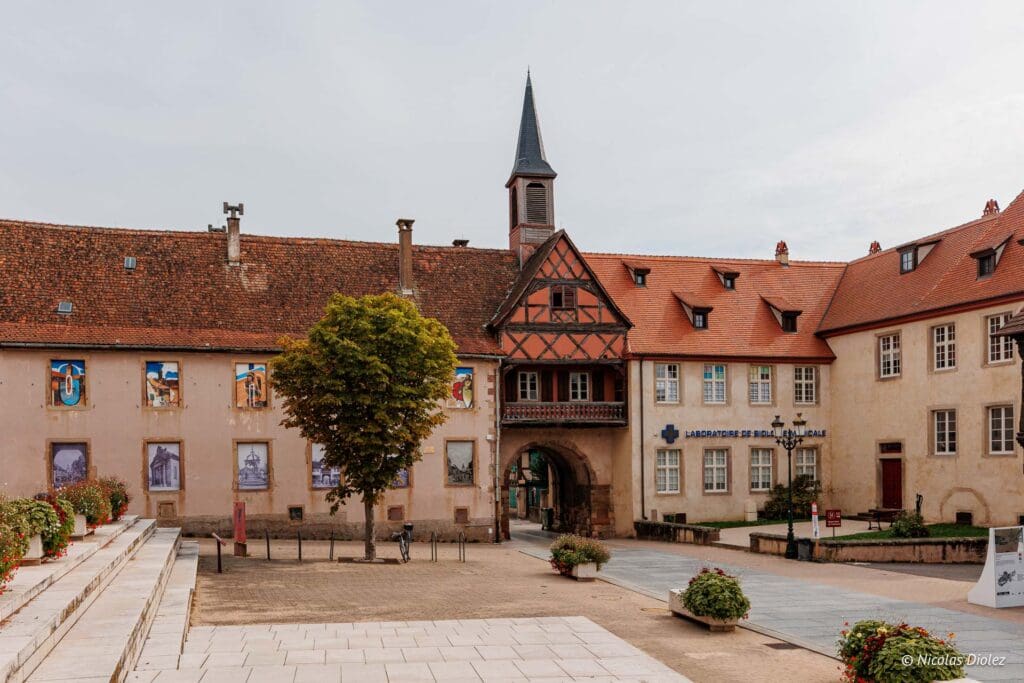
_
Obernai
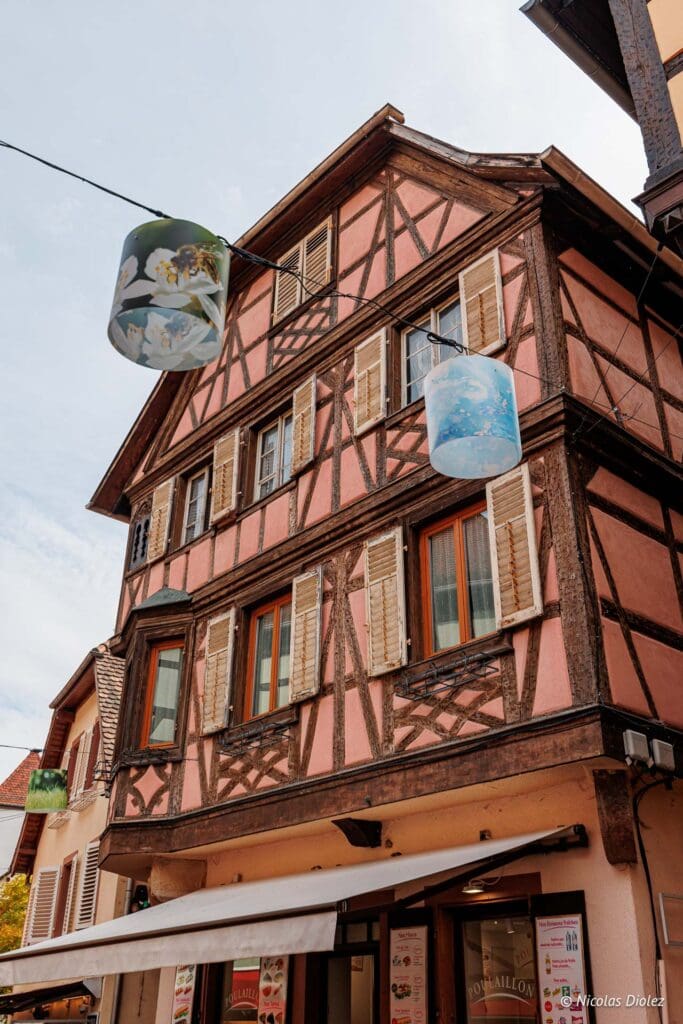
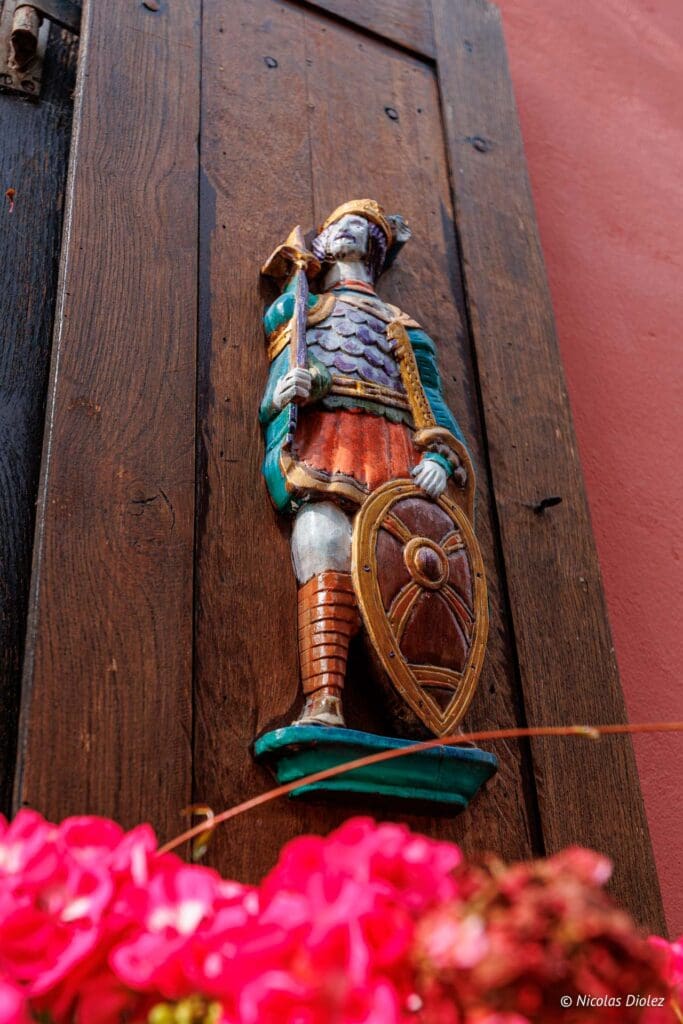
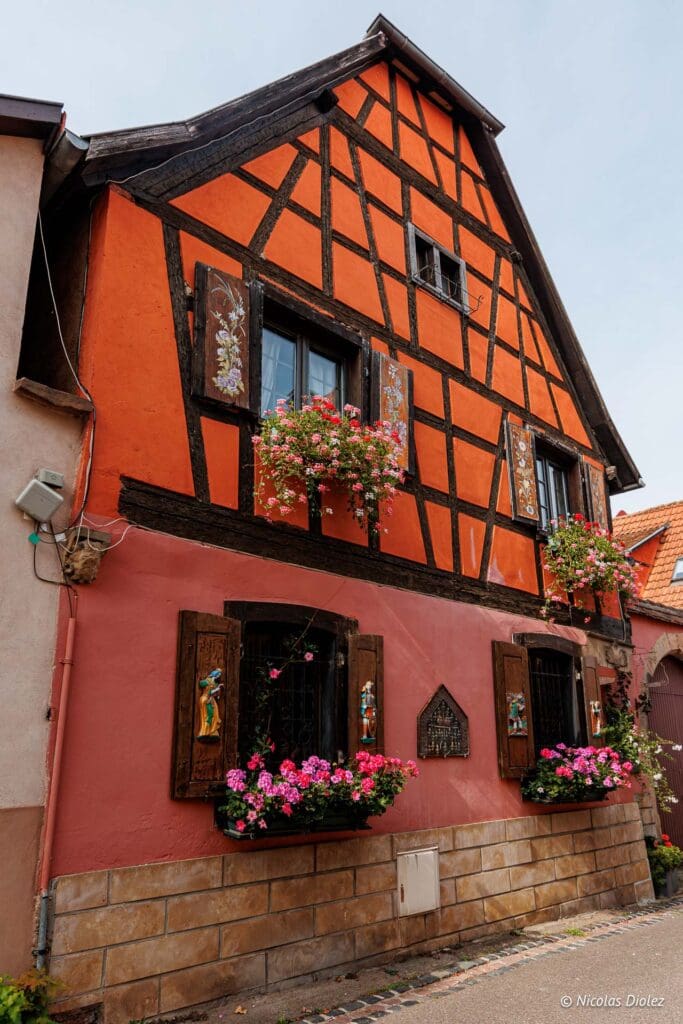
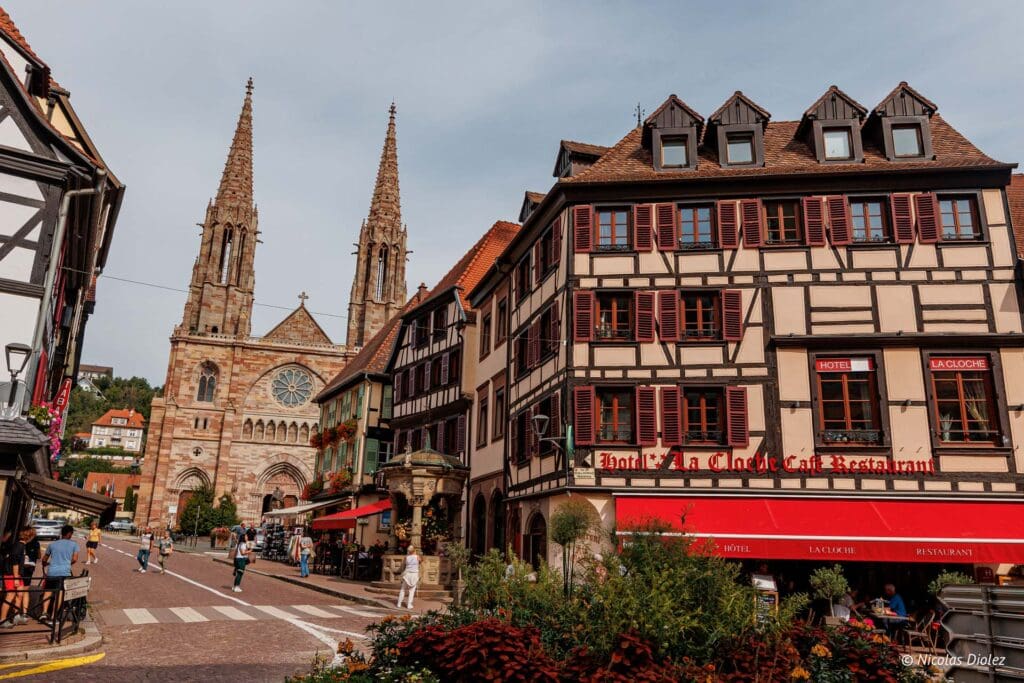
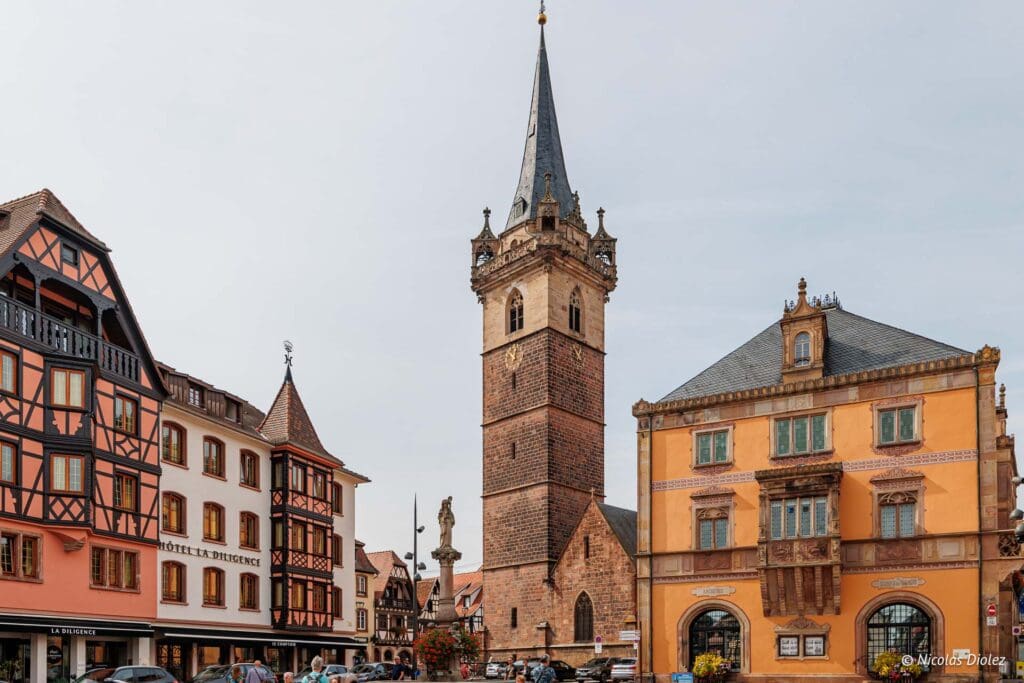
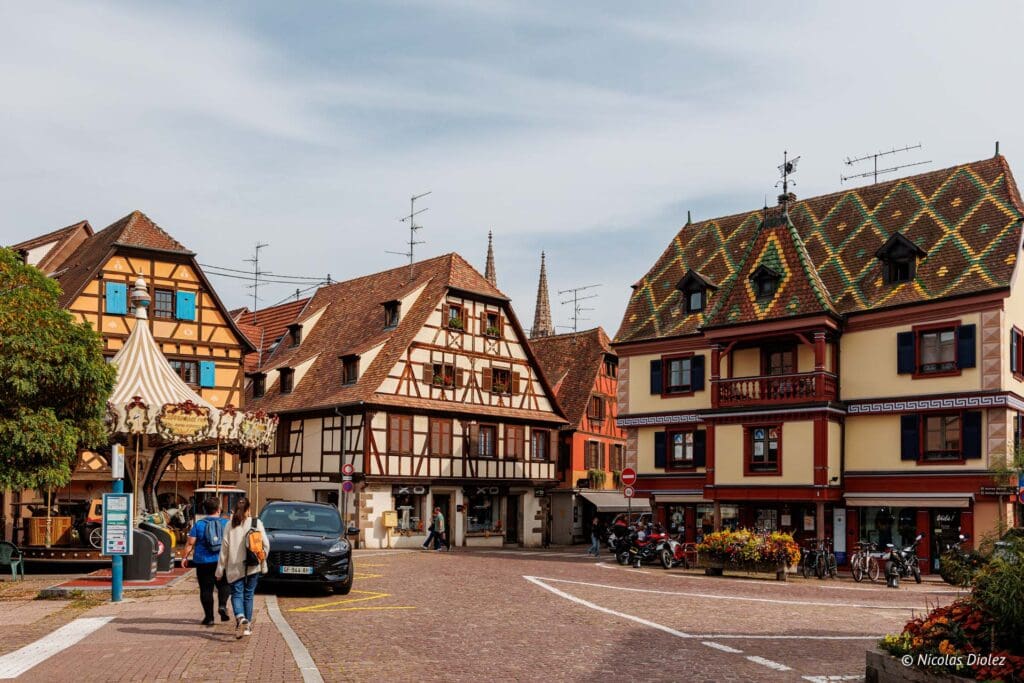
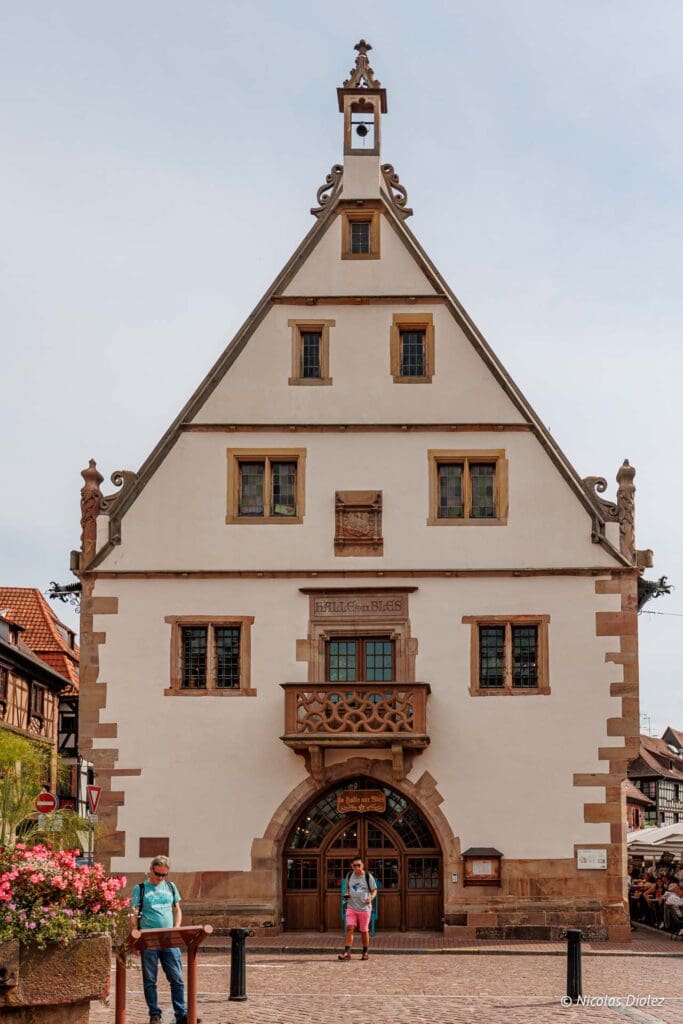
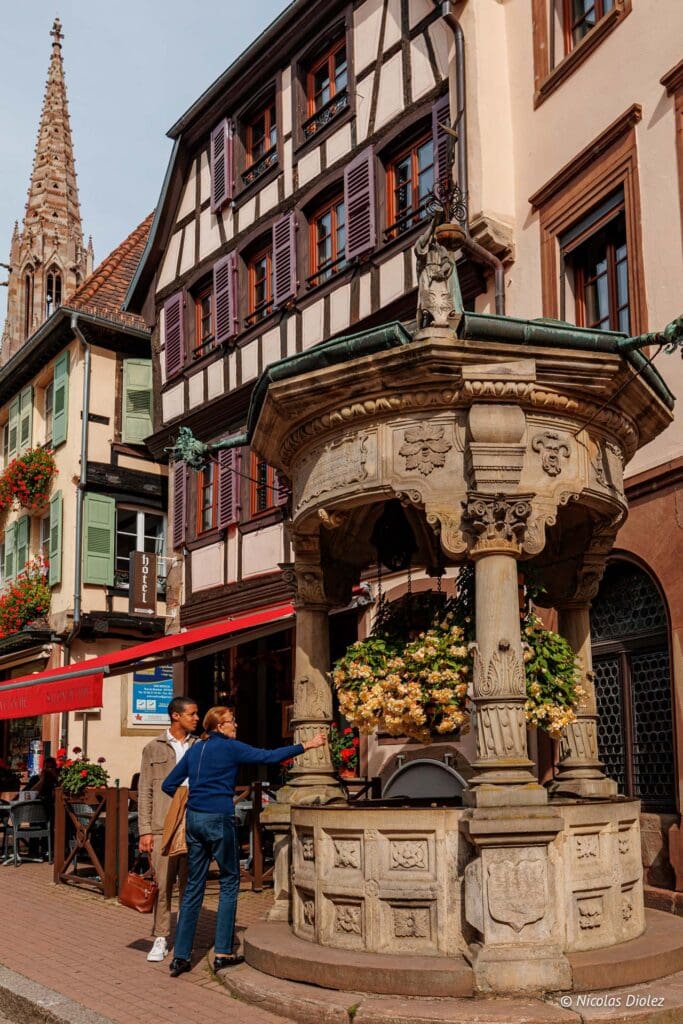
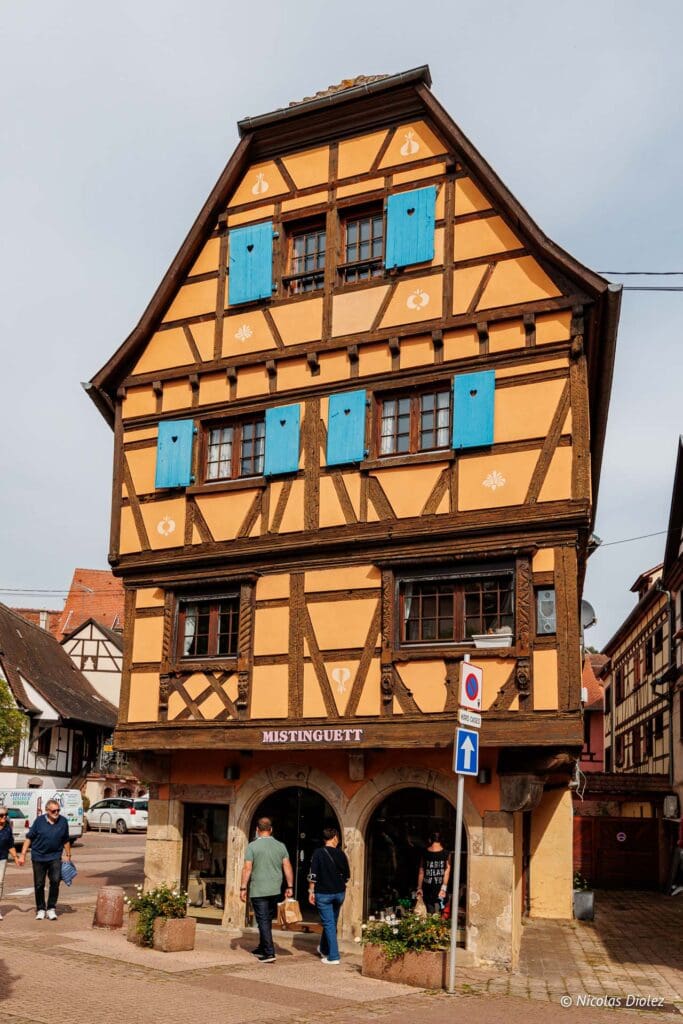
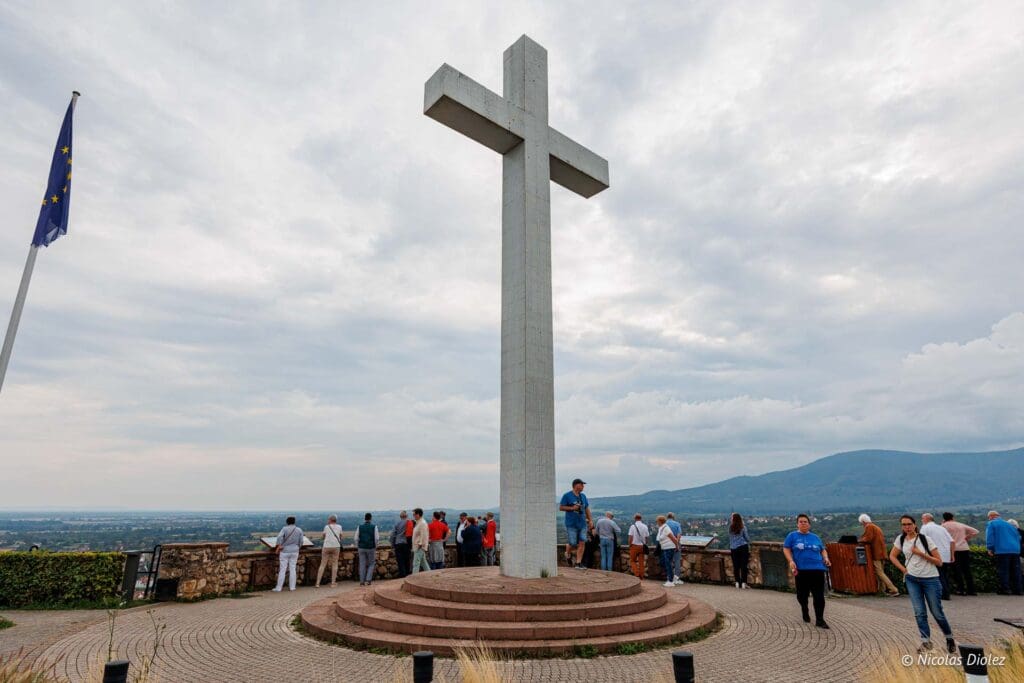
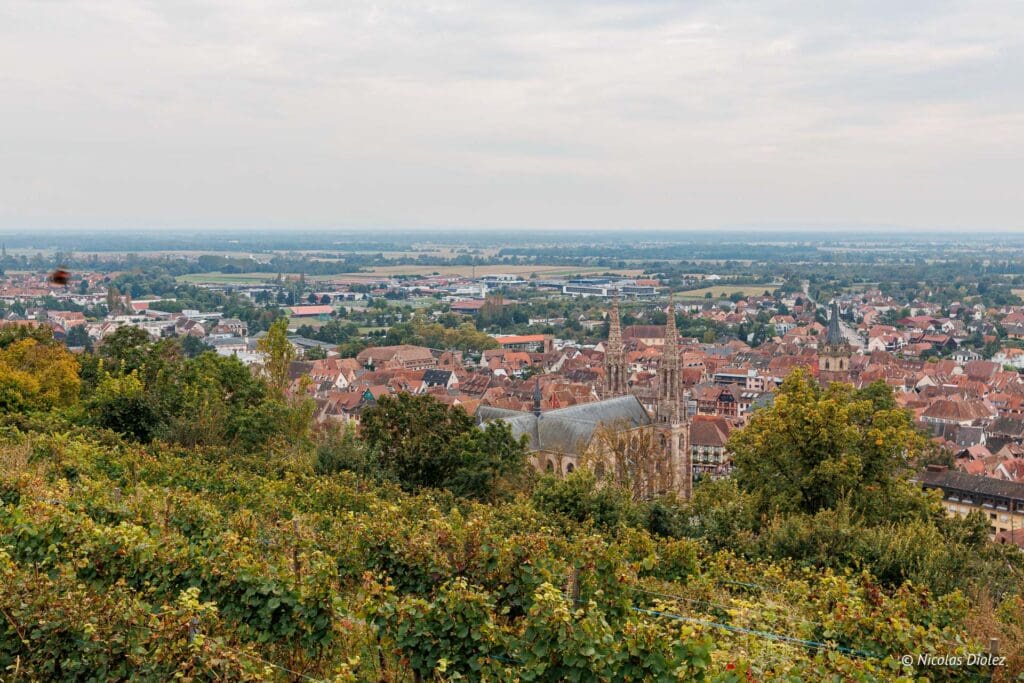
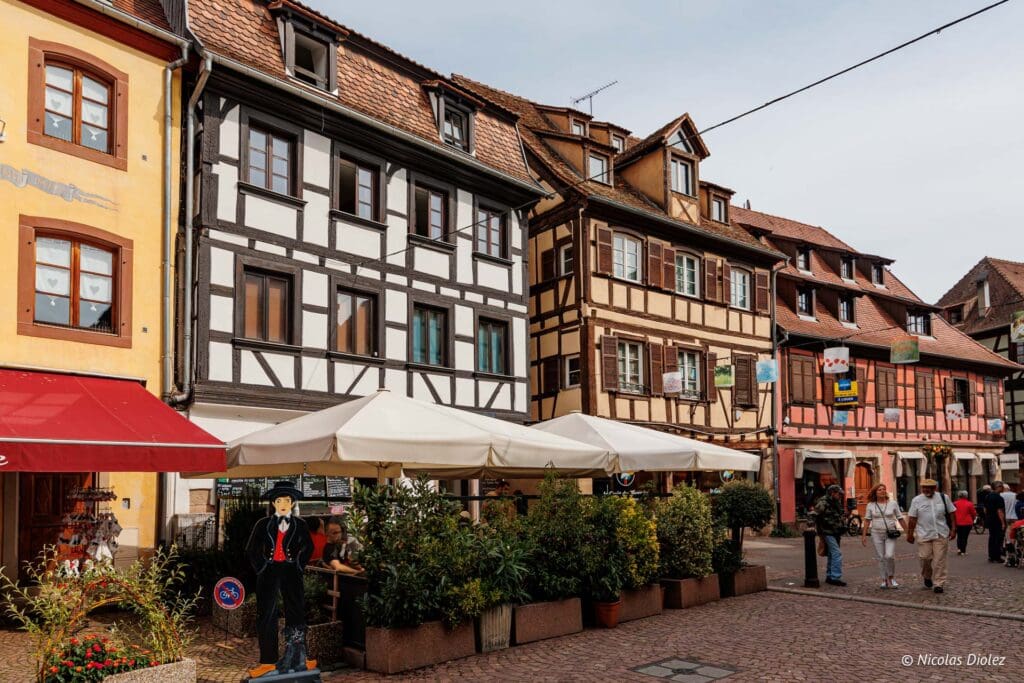
The second most visited city in the Bas-Rhin after Strasbourg, Obernai is a city full of charm that is worth the detour with its ramparts, its historic center with colorful medieval and Renaissance half-timbered houses, and its medieval belfry. Do not hesitate to go up to Mont National, which overlooks the city, to enjoy a magnificent viewpoint over the roofs of Obernai, the surrounding vineyards (including a Grand Cru), and the Alsace plain.
_
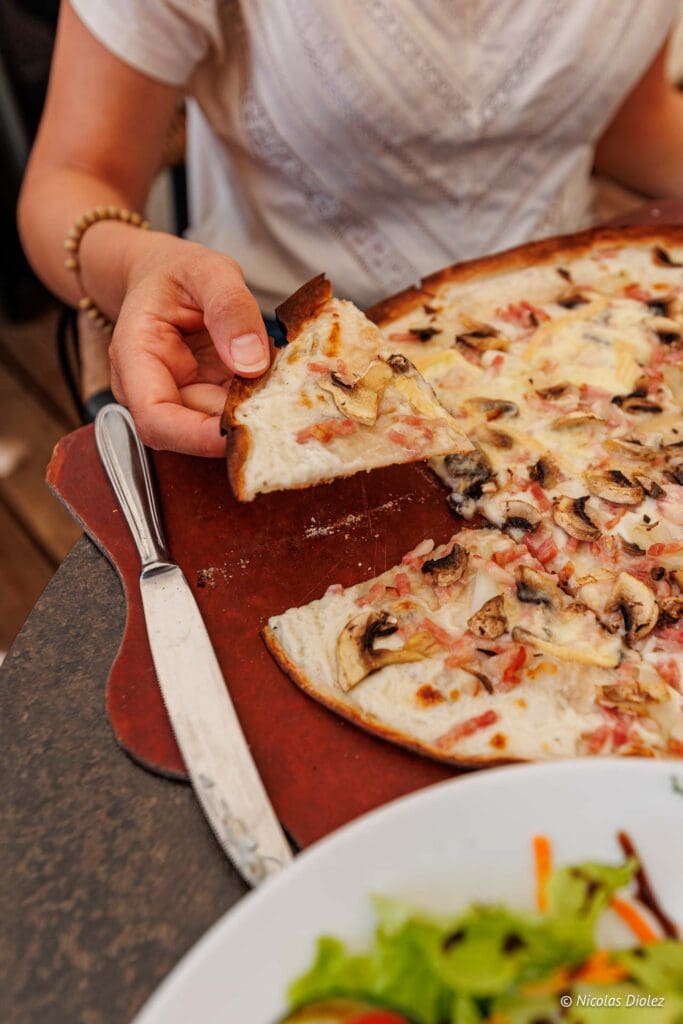
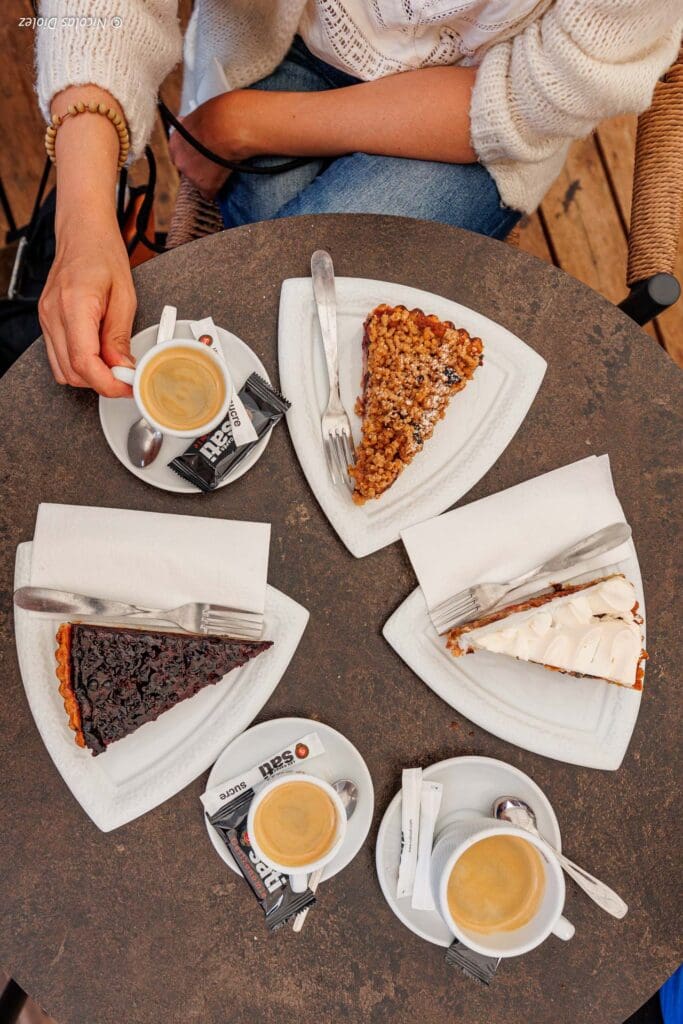
Where to eat on the go in Obernai? Vintage Café
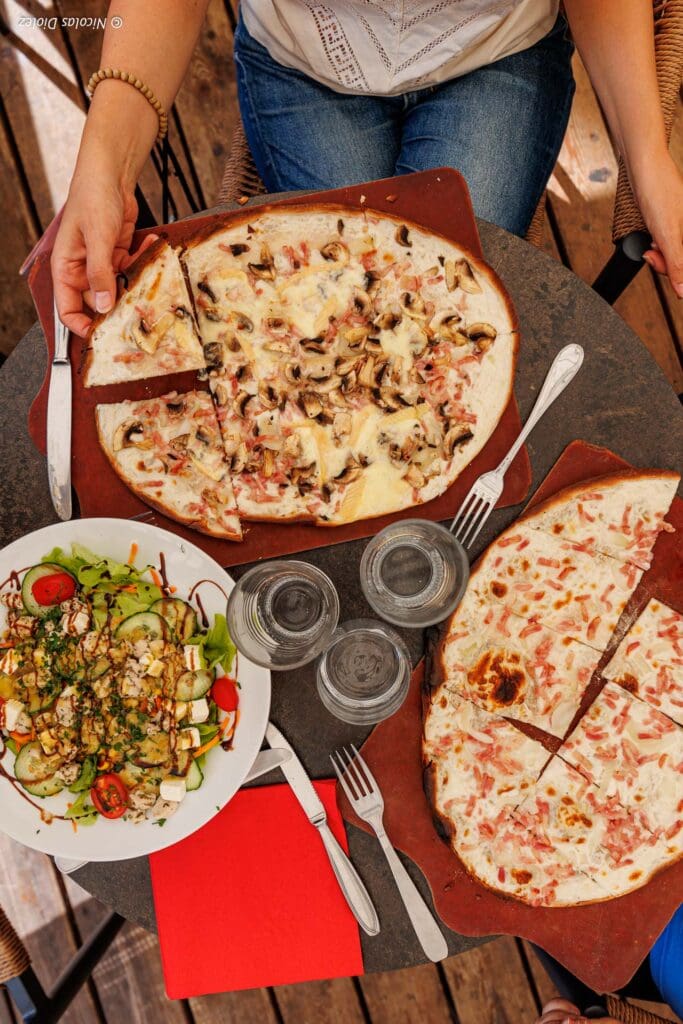
This charming address located on the main shopping street of the city offers a pleasant little terrace for sunny days. It is an ideal spot for a simple and quick lunch break. You can eat tartes flambées (the essential Alsatian specialty!) and also hearty salads there.
Vintage Café
53 Rue du Général Gouraud, 67210 Obernai
Price: tartes flambées between €9.50 and €13.50 / daily salad €13
_
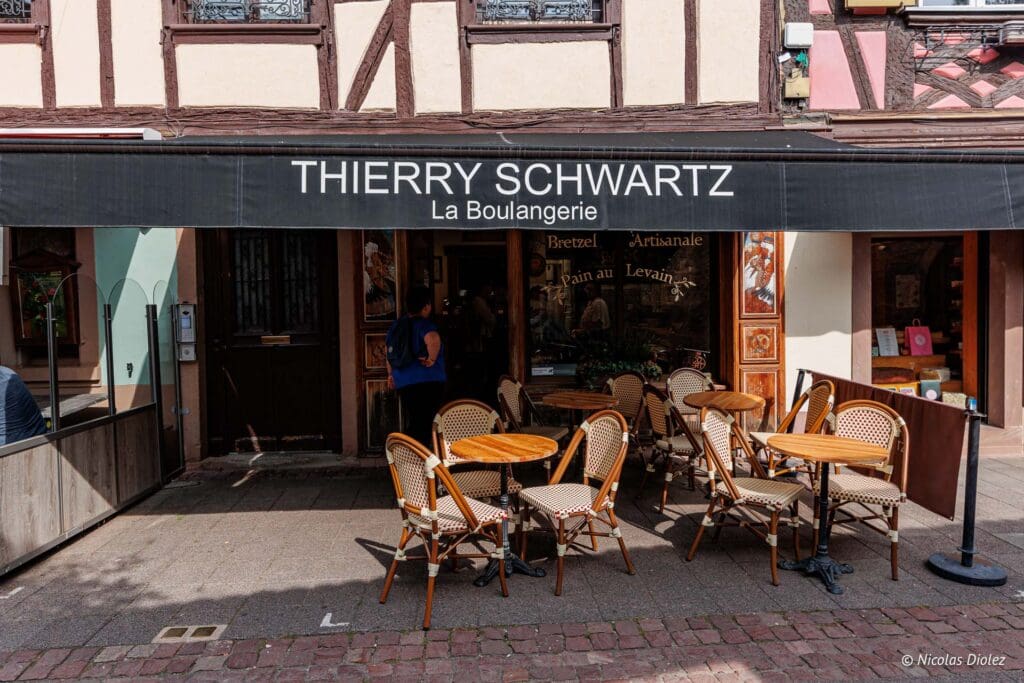
Where to buy good bread in Obernai? At Thierry Schwartz, living bread
For lovers of very good natural sourdough bread, do not miss the bakery of Thierry Schwartz, also a Michelin-starred chef in Obernai with the La Table Naturelle restaurant. Here, bread is considered a living food, kneaded with ancient and local flours. An unmissable address to bring back a gourmet souvenir or simply to treat yourself on the spot.
Thierry Schwartz
7 rue du marché 67210 Obernai
_
Where to buy treats in Obernai? La Maison Alsacienne de Biscuiterie
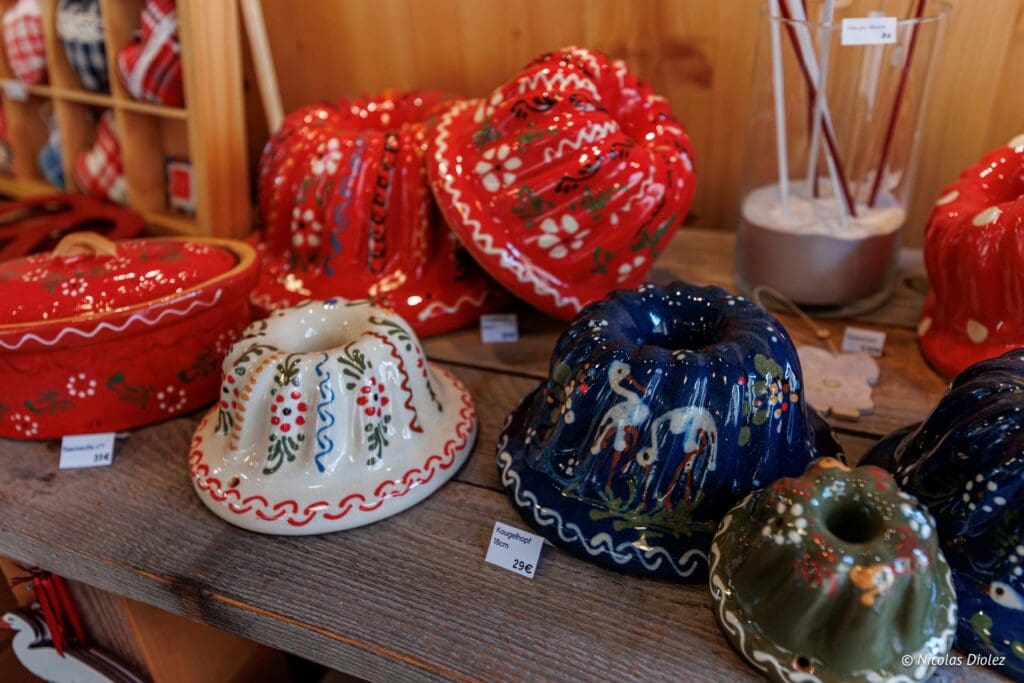
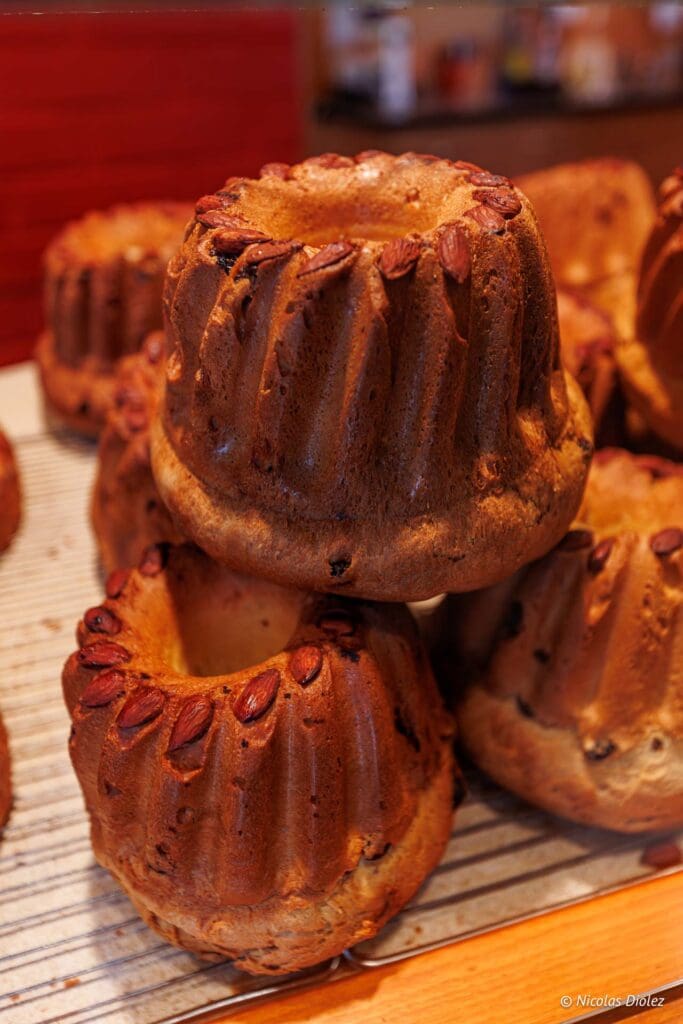
This address offers Alsatian biscuit specialties, from the Macaron de Riquewihr to the Kougelhopf, as well as the famous Christmas “Bredele.” Inside the boutique, take the time to look up to admire the superb original polychrome Alsatian ceiling.
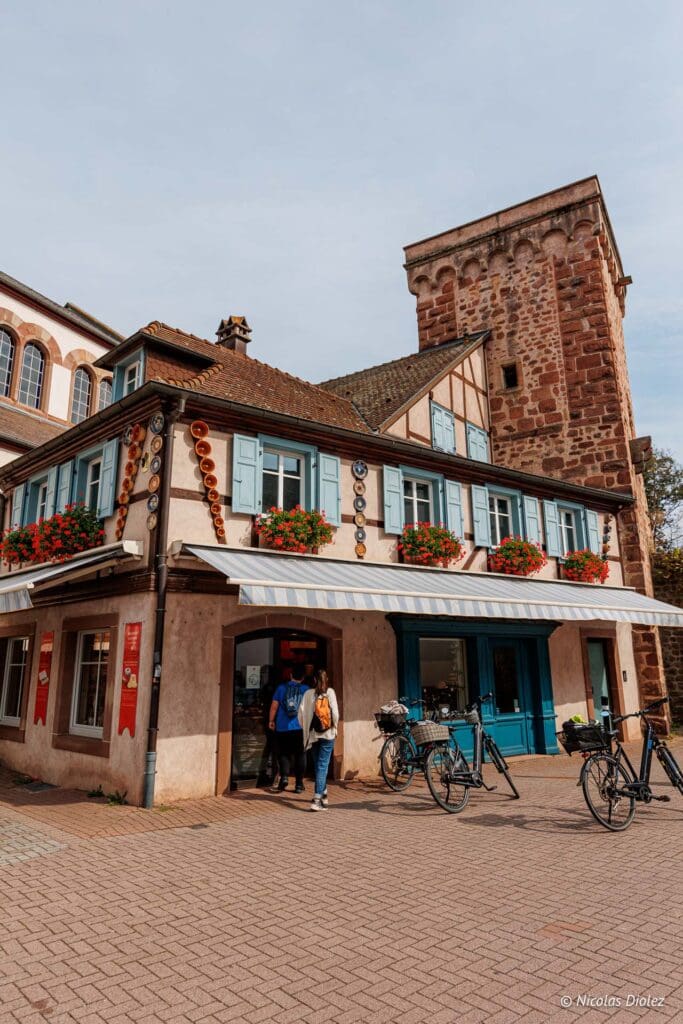
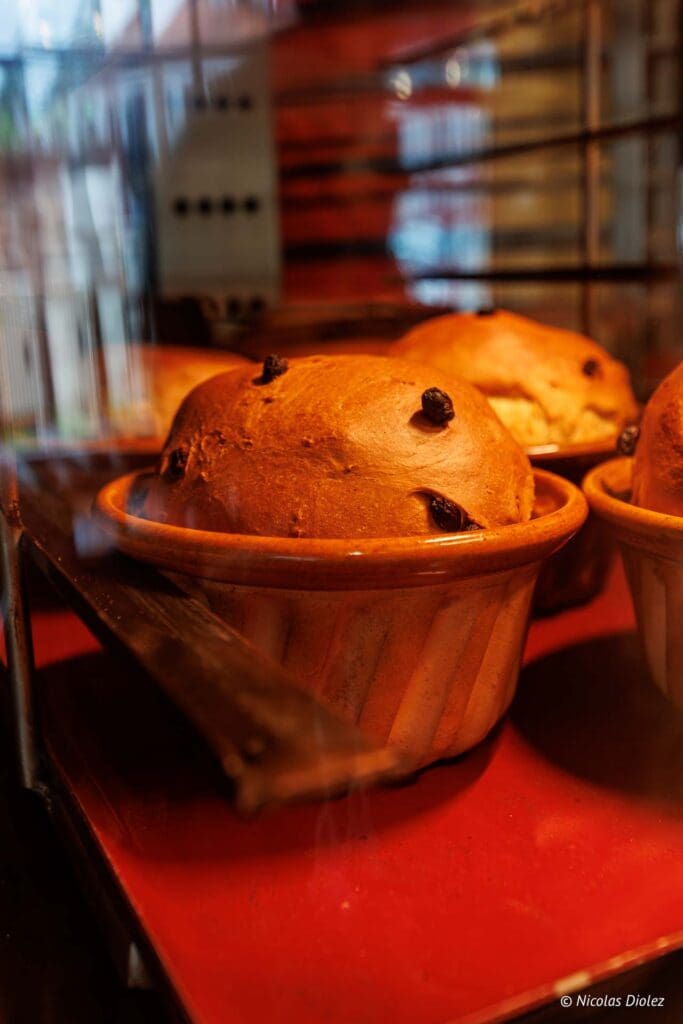
Maison Alsacienne de Biscuiterie
9 Rue de Sélestat, 67210 Obernai
_
Where to buy chocolate in Obernai? Chocolaterie Jacques Bockel
This chocolate factory works from cocoa bean to chocolate bar, with a real cocoa roasting center of 105m2 installed in Saverne-Monswiller. It notably offers many chocolate creations that are original registered trademarks. A beautiful stop for gourmets!
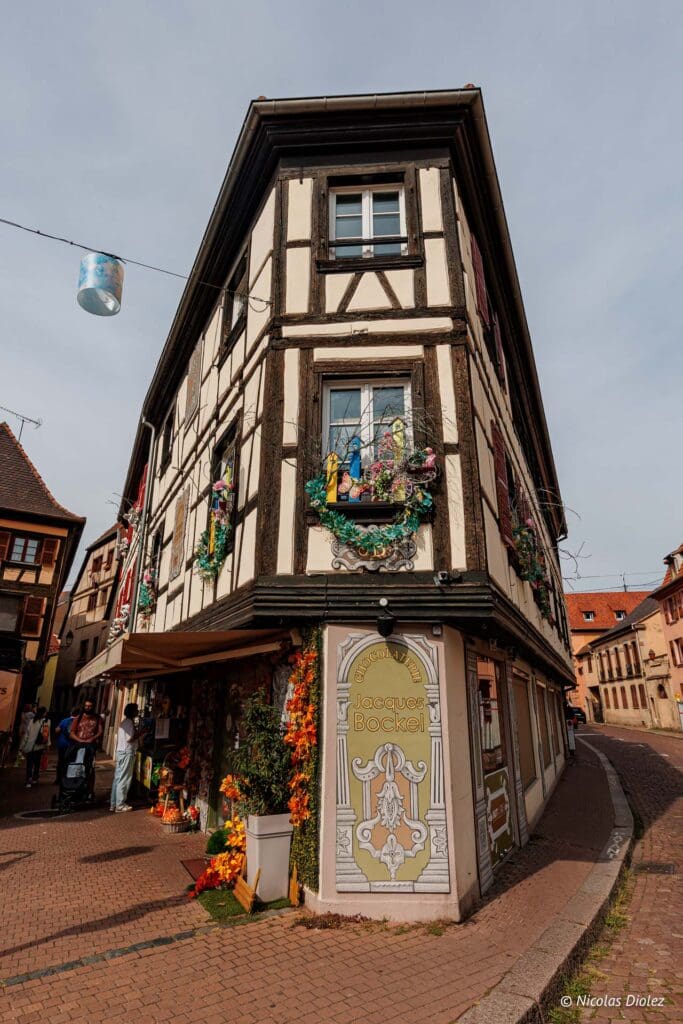
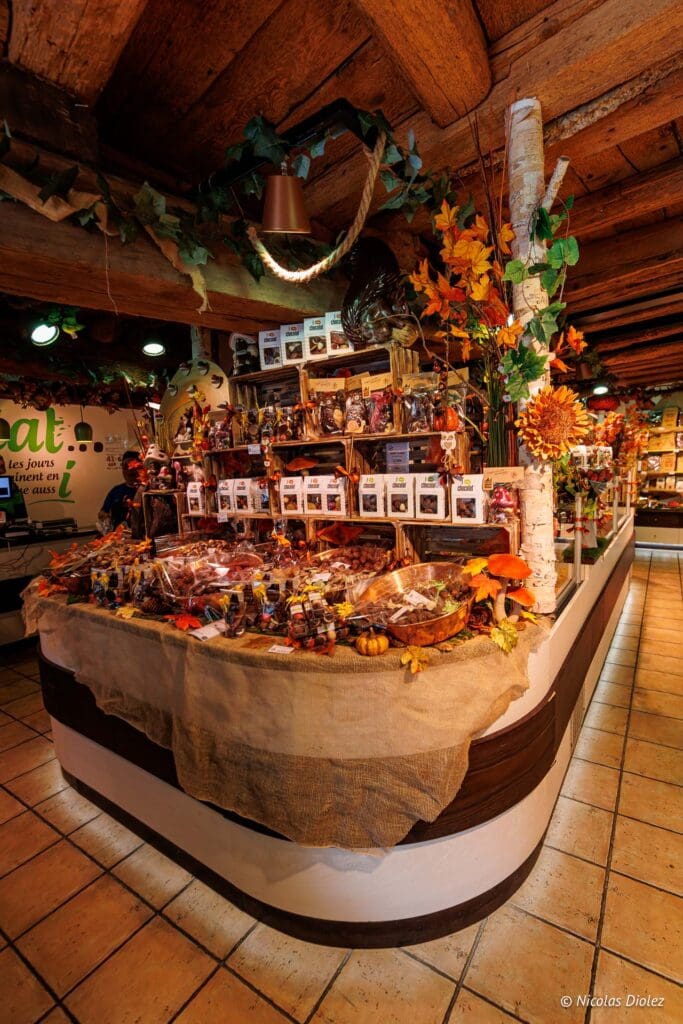
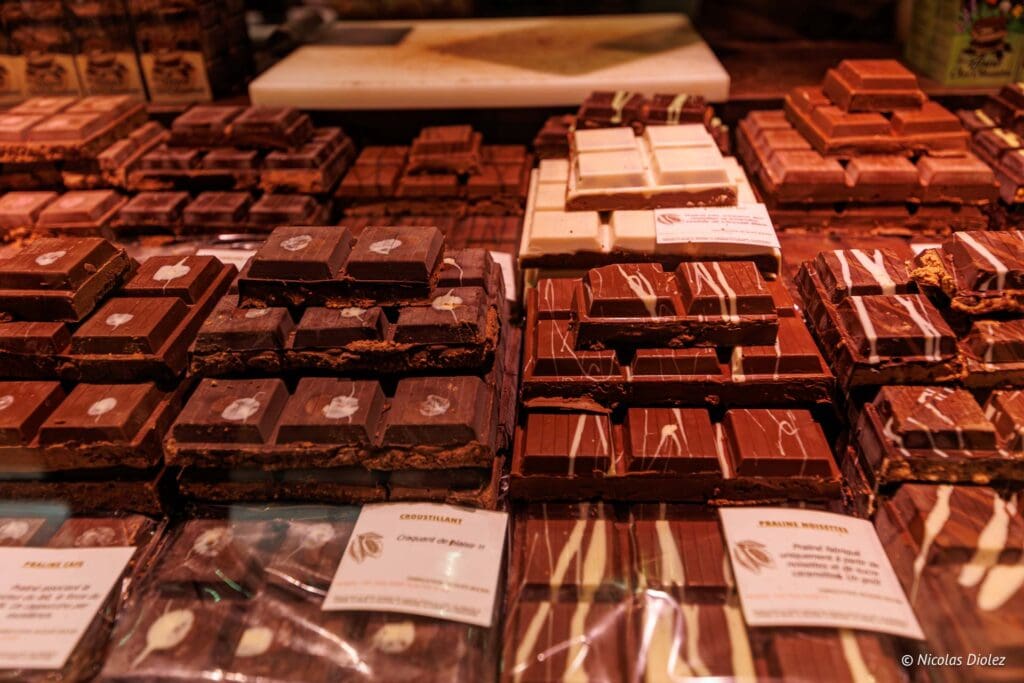
Chocolaterie Jacques Bockel
1 Rue du Marché, 67210 Obernai
_
Gertwiller
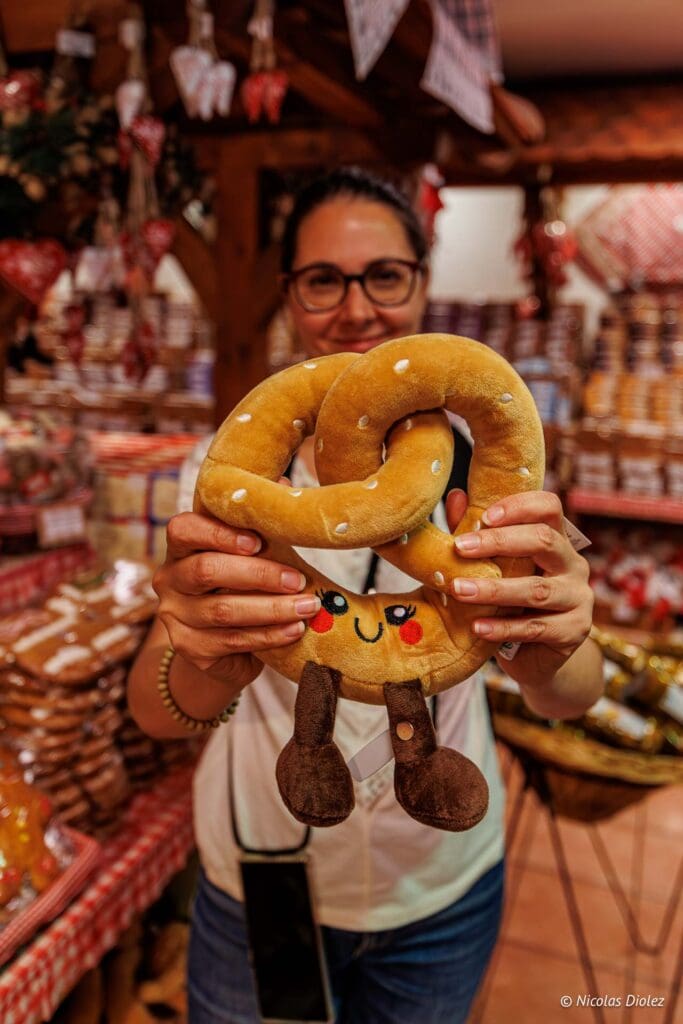
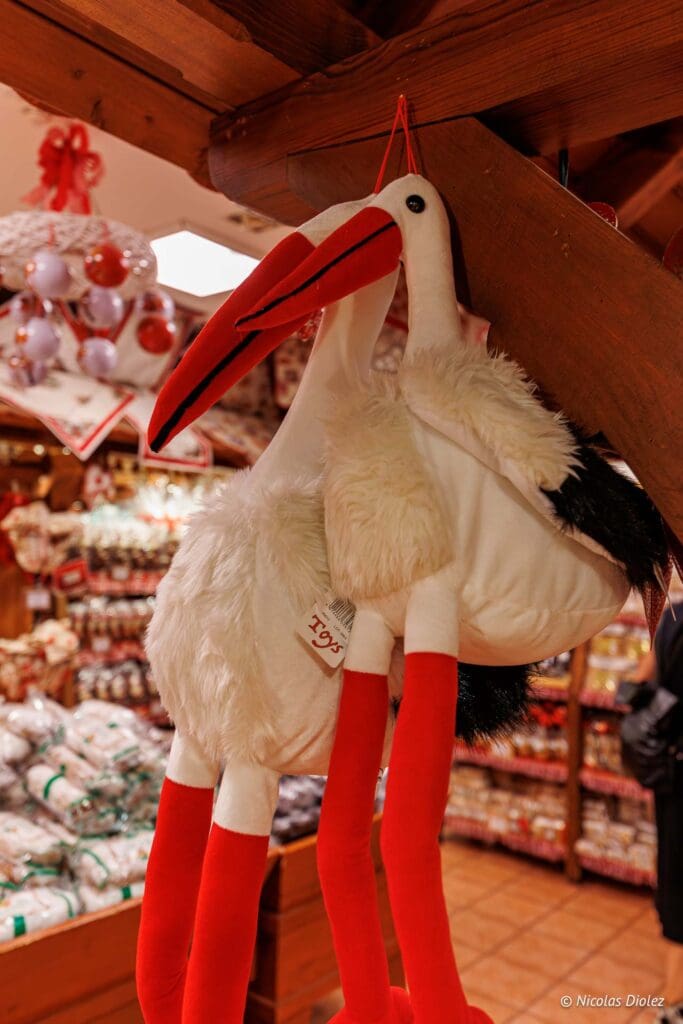
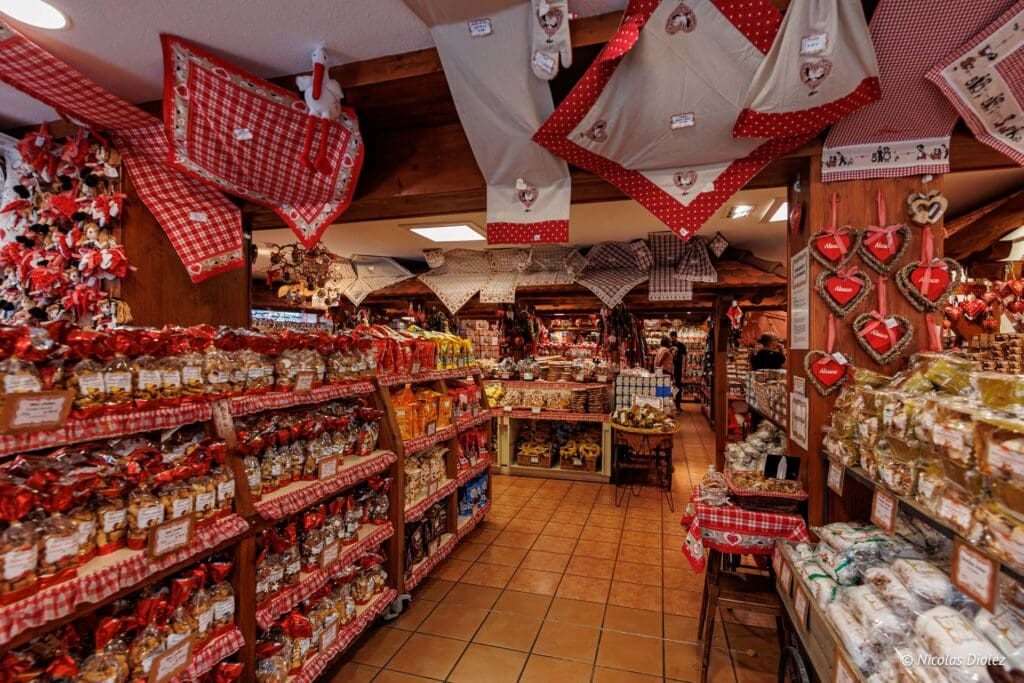
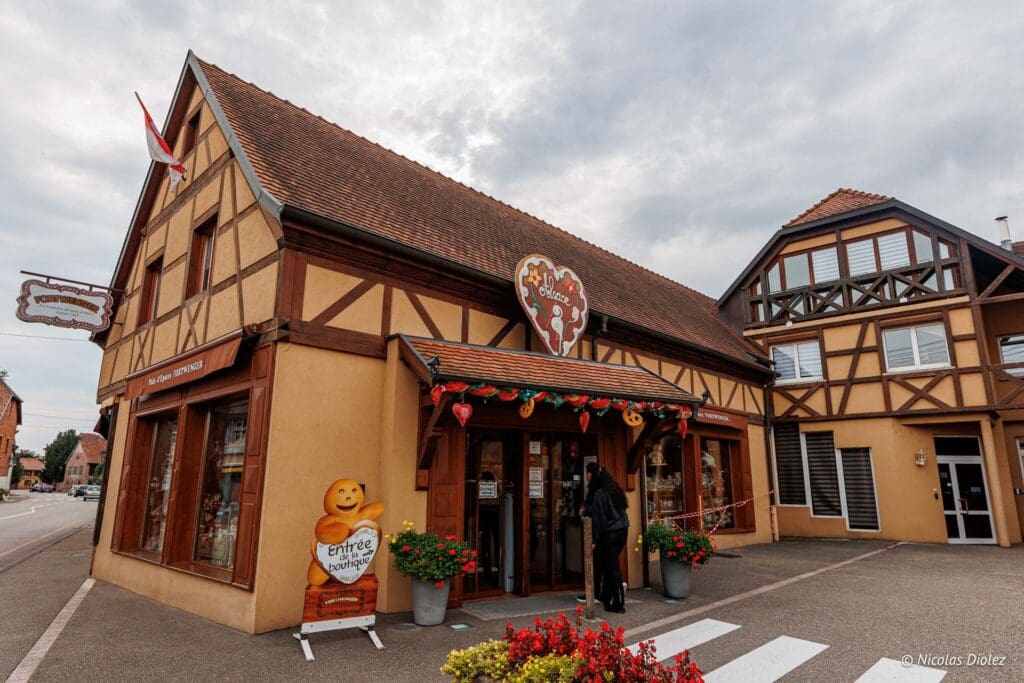
The Fortwenger Gingerbread Palace
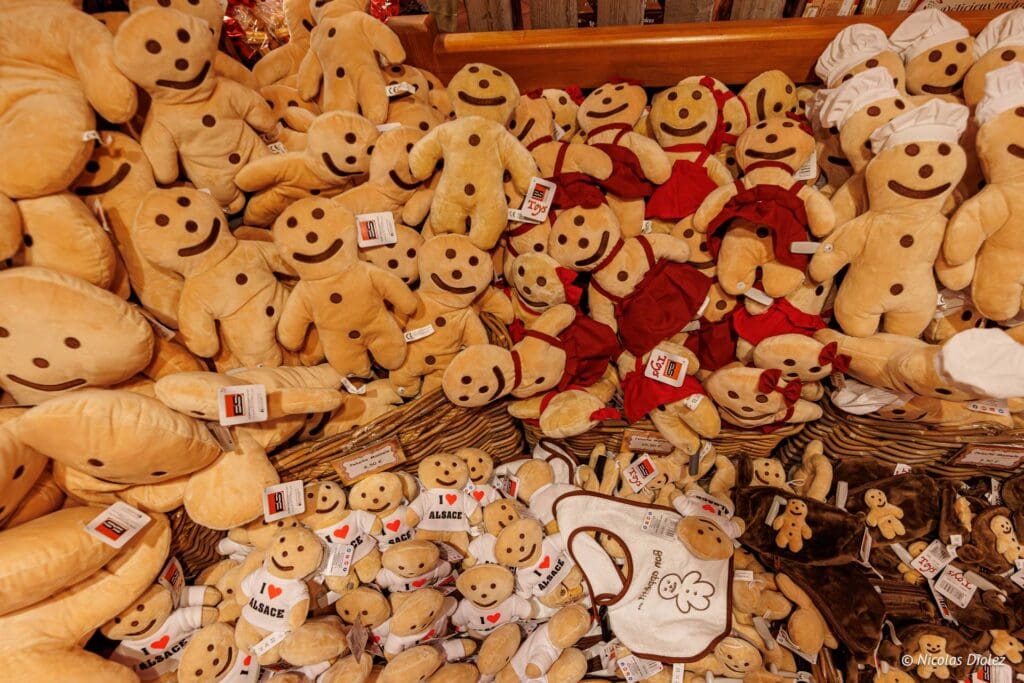
This shop (which also has a paid museum) is truly the temple of Gingerbread. We did not visit the small museum, but just entering the shop is a little journey in itself. The house specialty, since 1768, is gingerbread with the little “Mannele” figure as its symbol. We didn’t taste the products, so I don’t know if they are good, but the “loaded” decor of the place is worth a look!
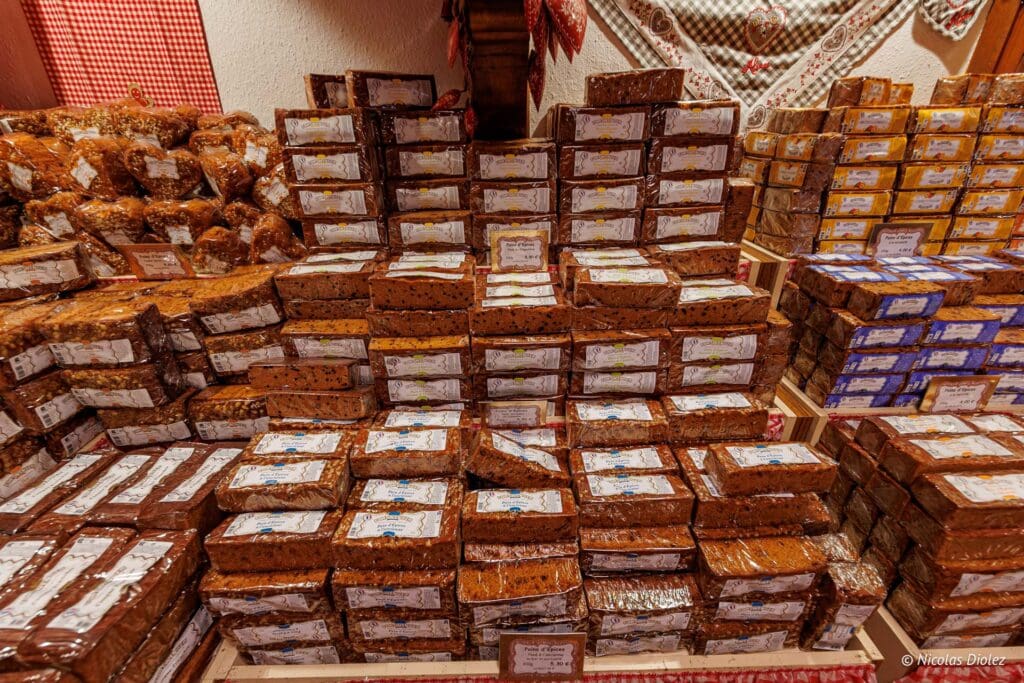
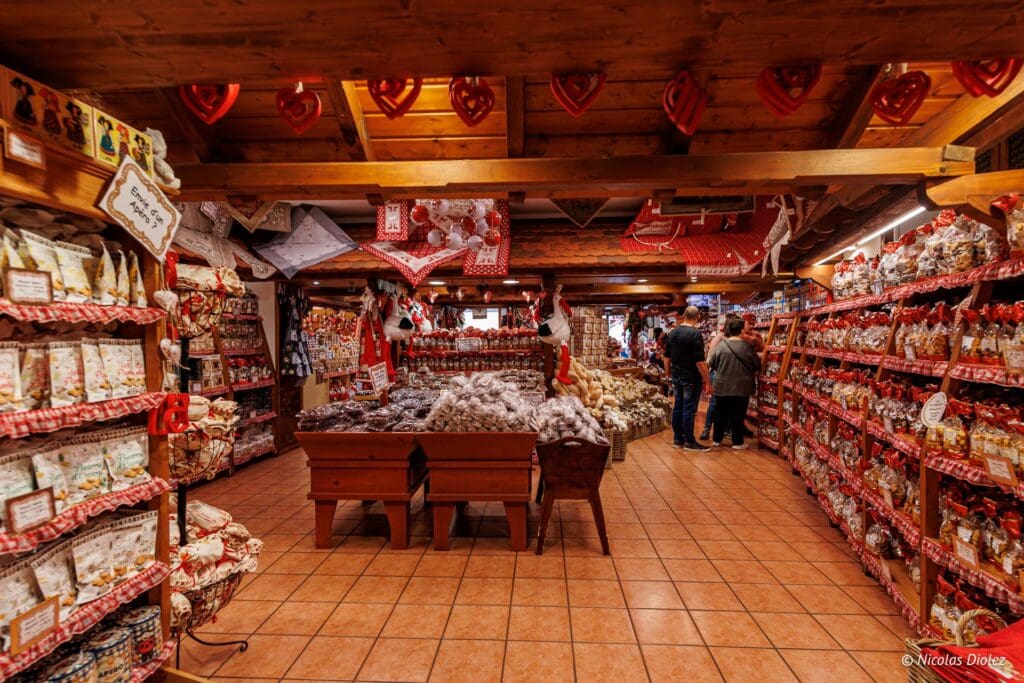
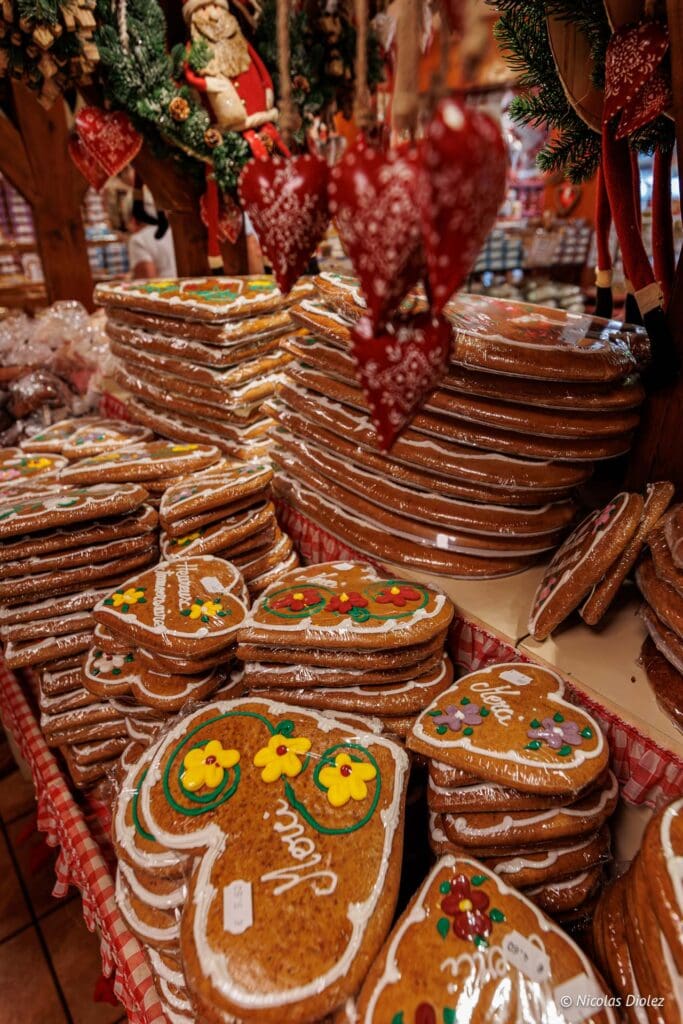
Fortwenger Gingerbread Palace
144 route de Strasbourg 67140 Gertwiller
_
The Bruche Valley
Relaxing and gourmet stay at La Cheneaudière Hotel & Spa
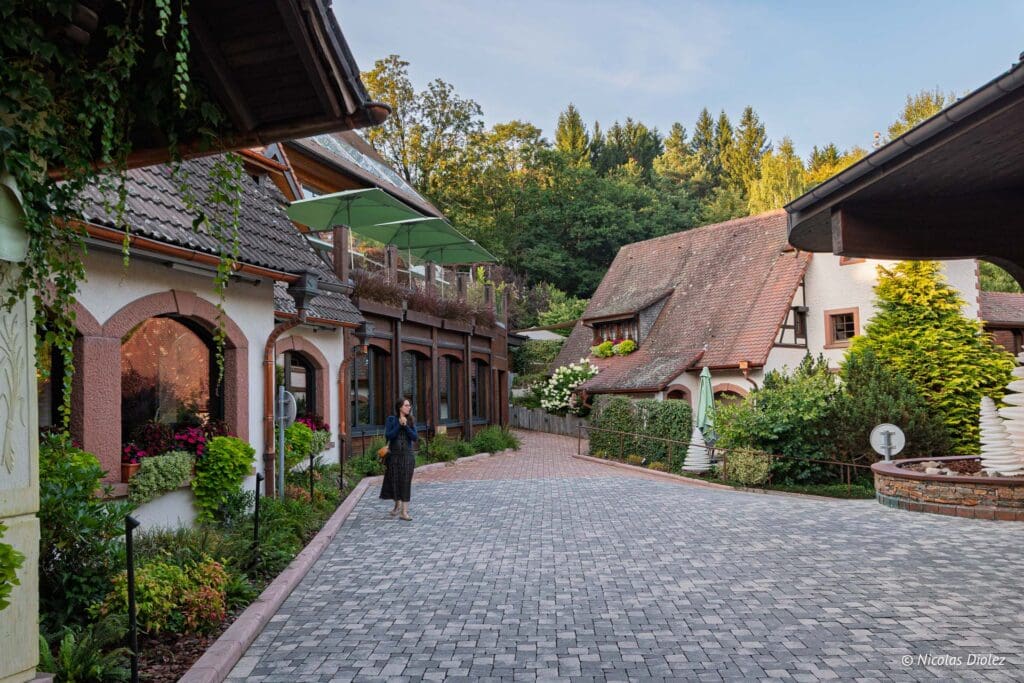
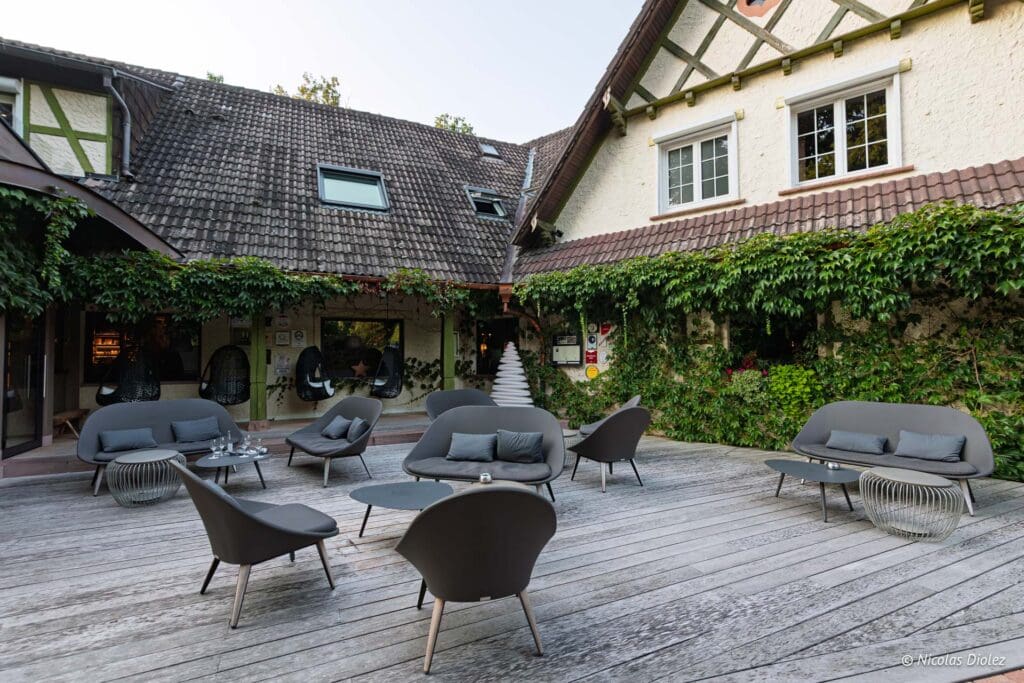
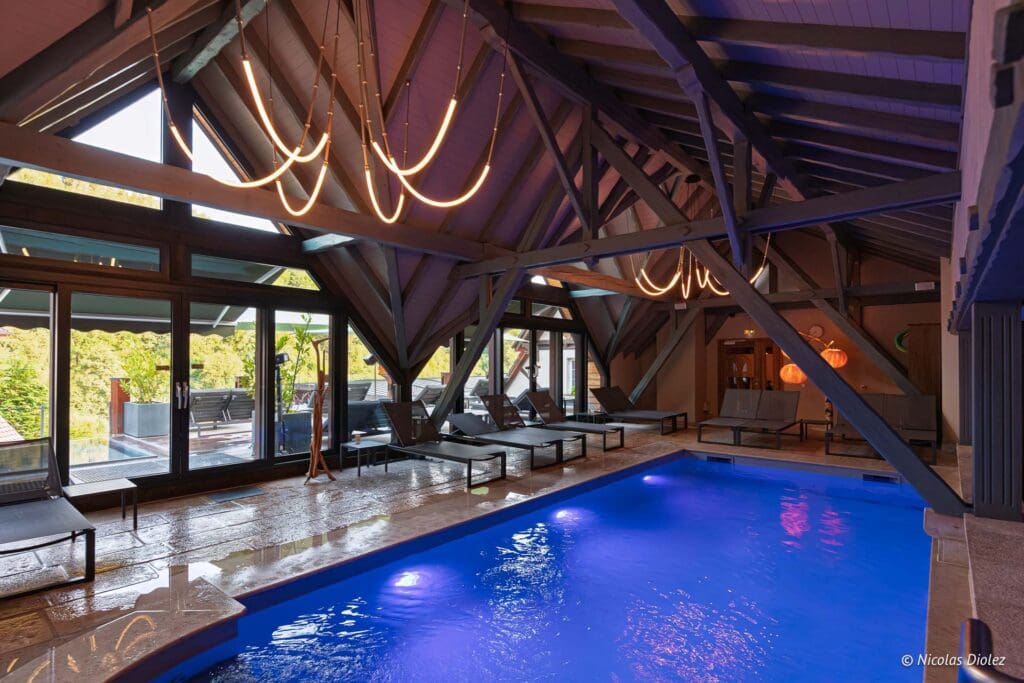
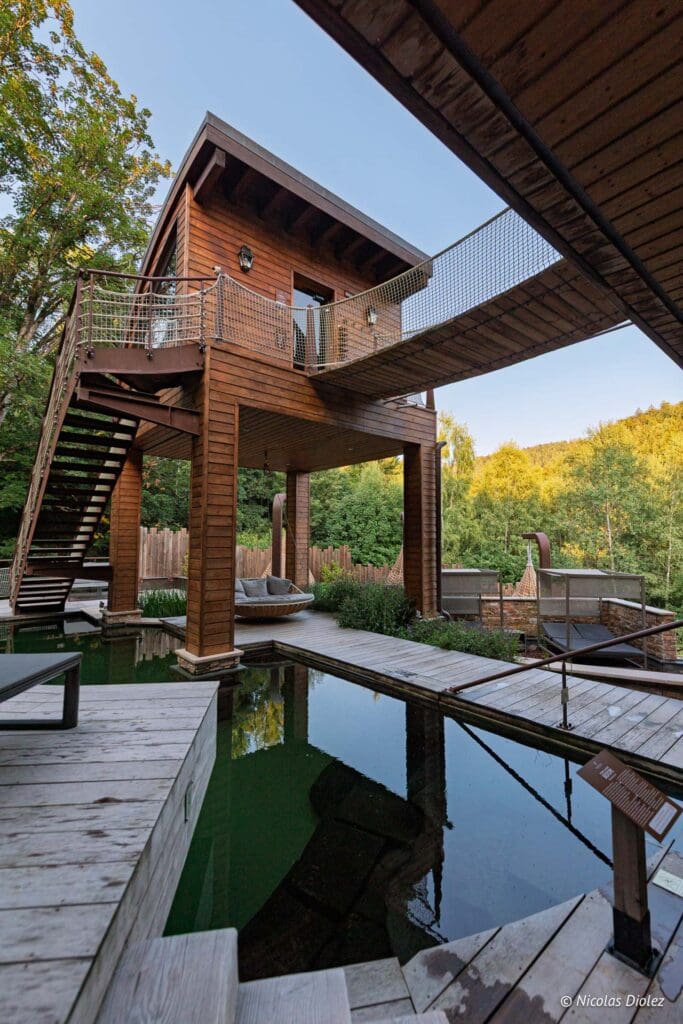
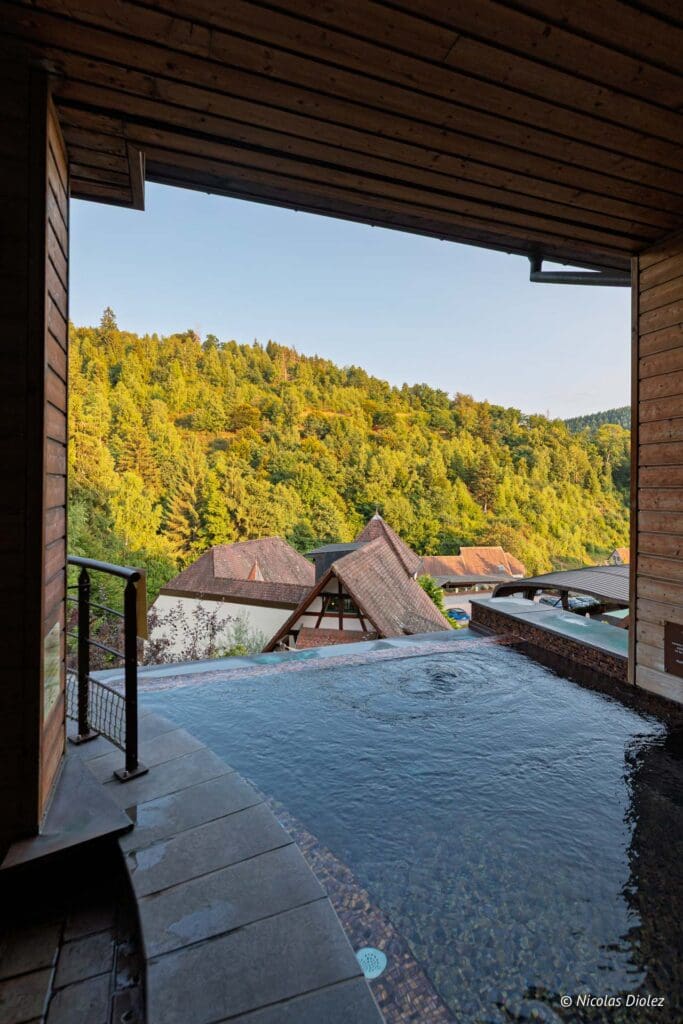
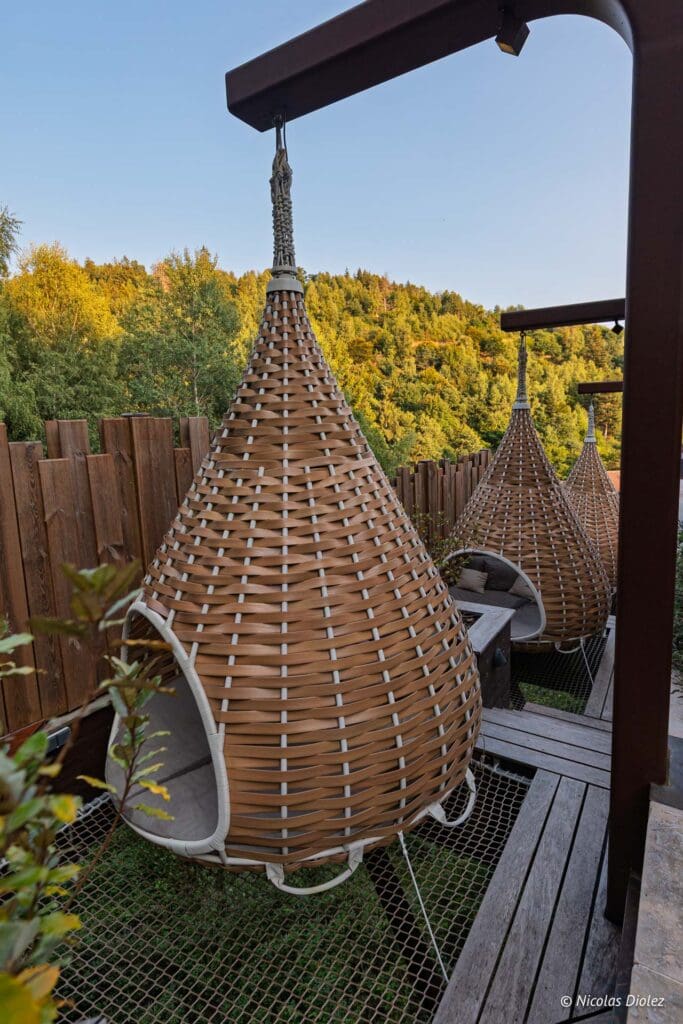
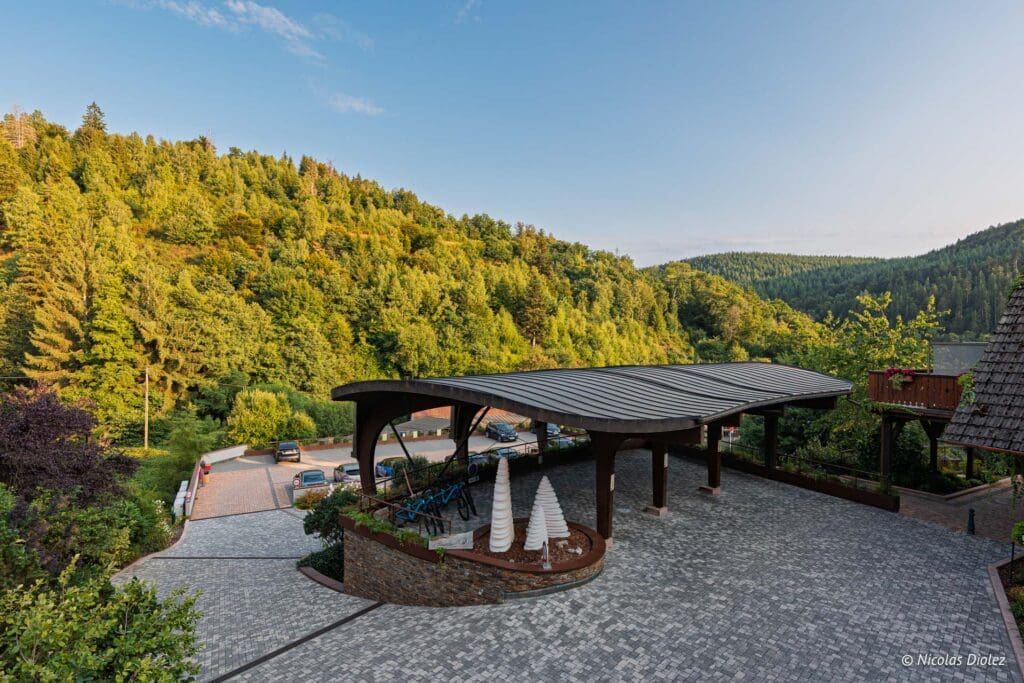
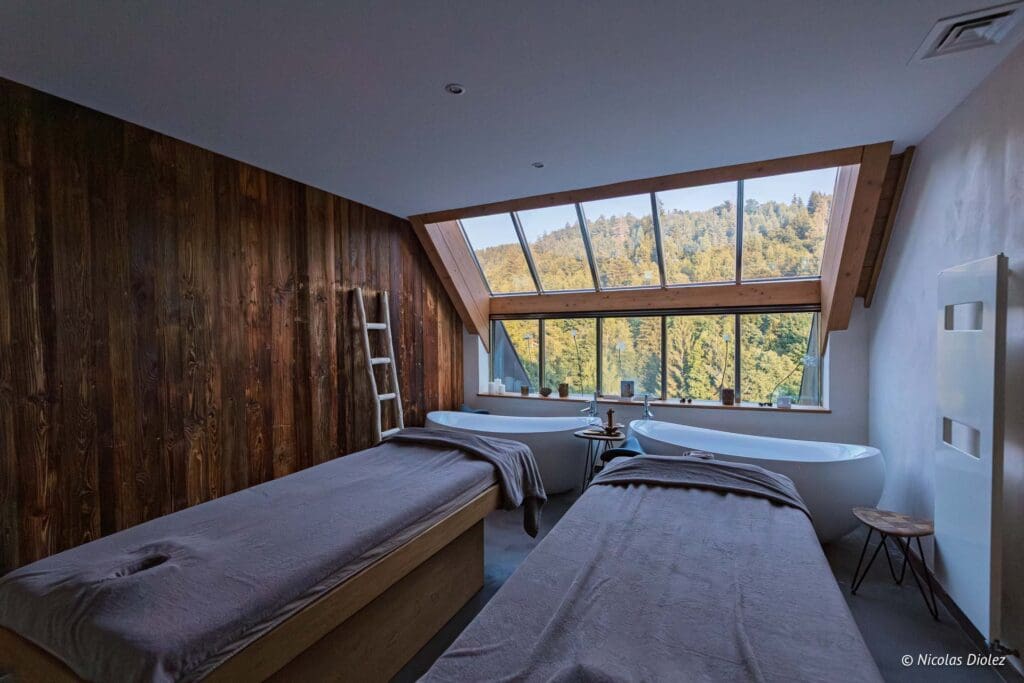
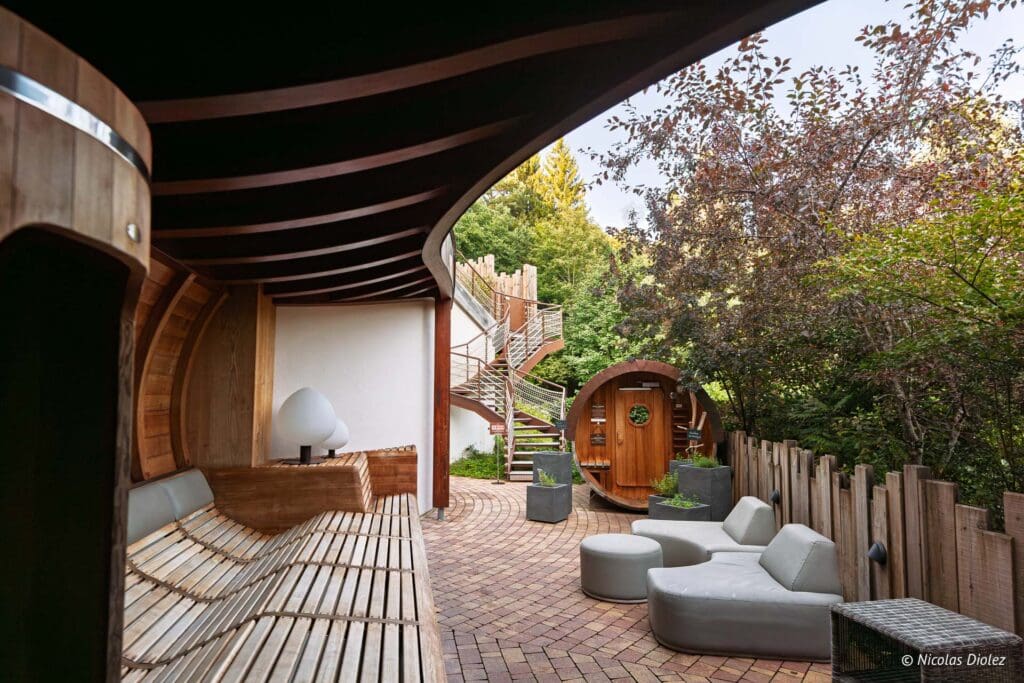
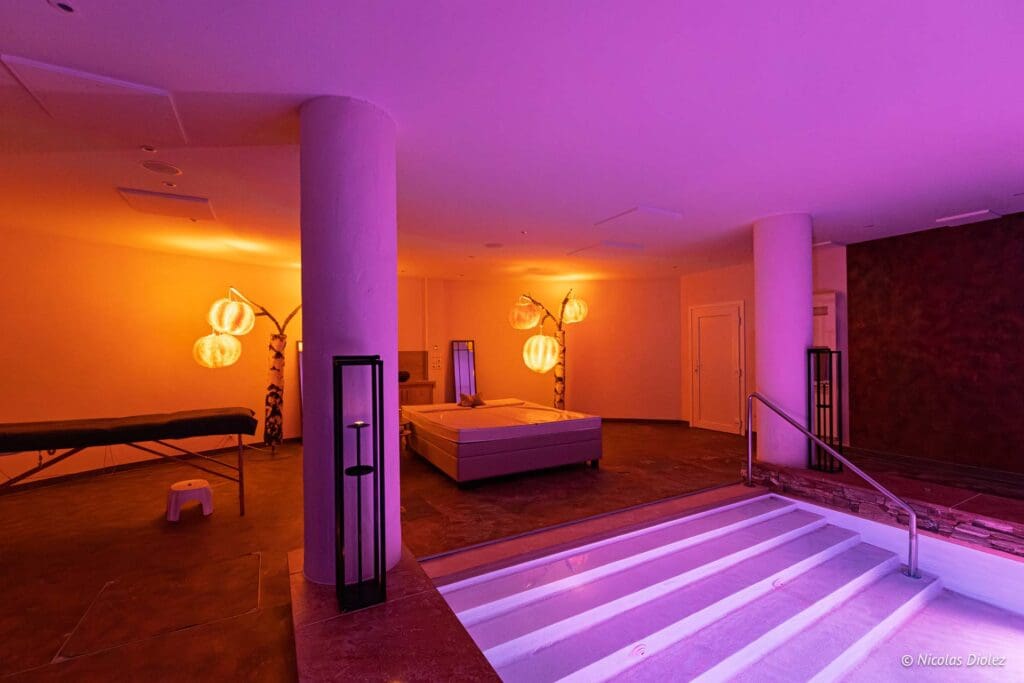
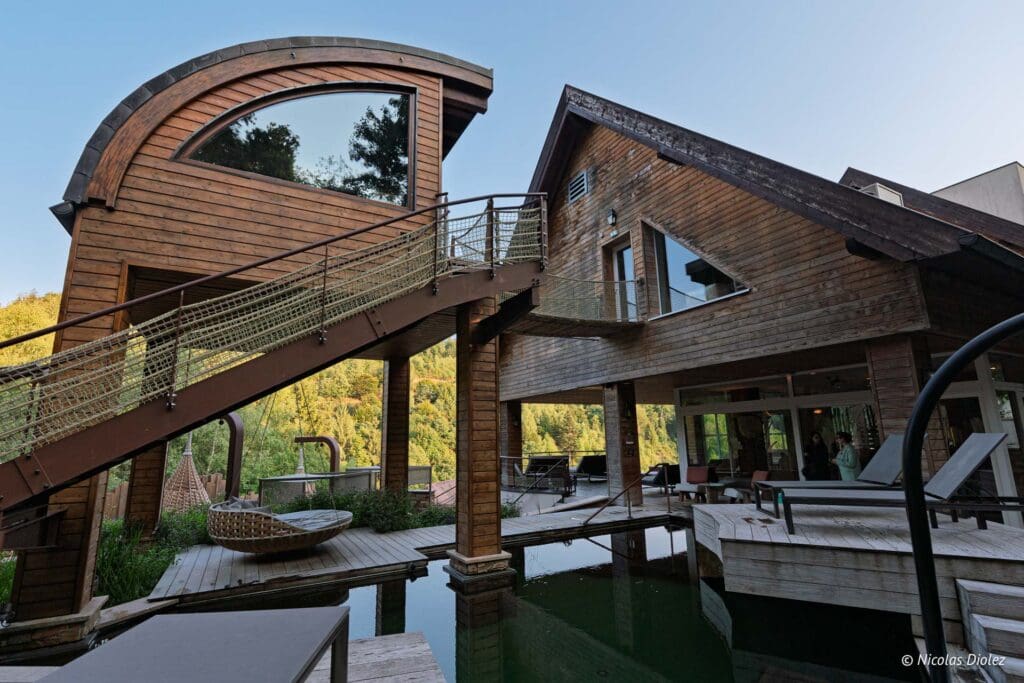
Nestled in the heart of nature, La Cheneaudière is a magnificent 5-star Relais & Châteaux establishment located in the Alsatian Vosges massif. It is the ideal place for a relaxing and gourmet stay for couples with its 45 rooms (including 10 suites) and its sublime spa (and I weigh my words, I think it is one of the most beautiful I have ever had the chance to see) that has existed for 15 years. It is 2500 m2 and includes indoor and outdoor pools, a natural pool filtered by plants, a flottarium (room by reservation), Nordic baths, a variety of saunas and hammams, an area reserved for families, water beds, a rest area with crushed Vosges candies… In short, you can easily spend the whole day there. Moreover, the spa is open to hotel guests and non-guests with day packages (€115 for the day / €85 for the morning and €90 for the afternoon). My only regret is that I couldn’t test it, but that’s just a temporary delay!
_
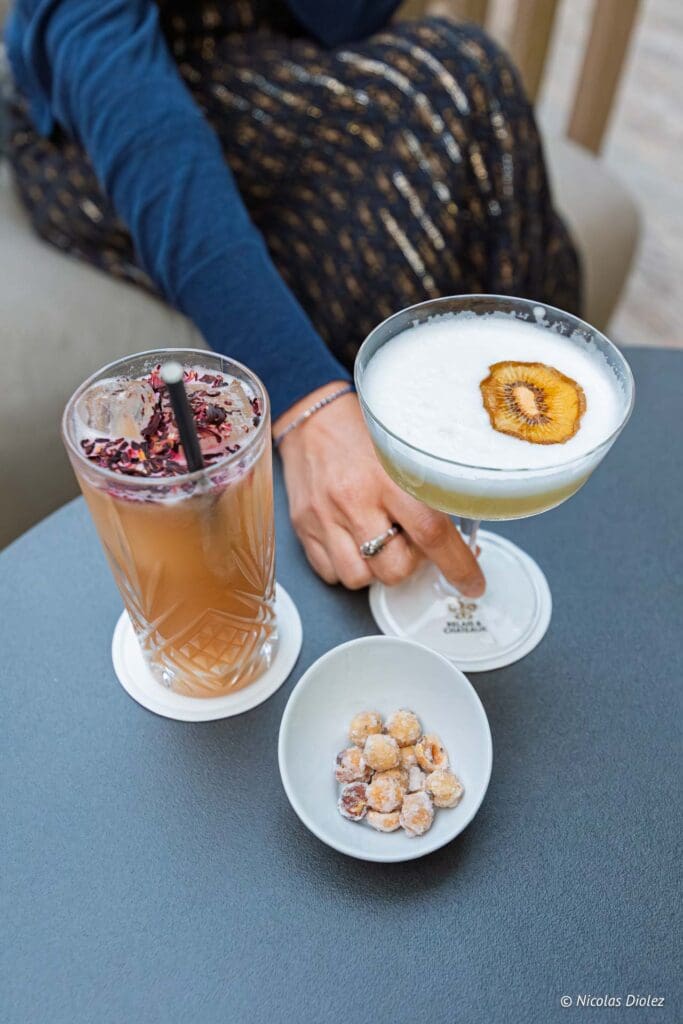
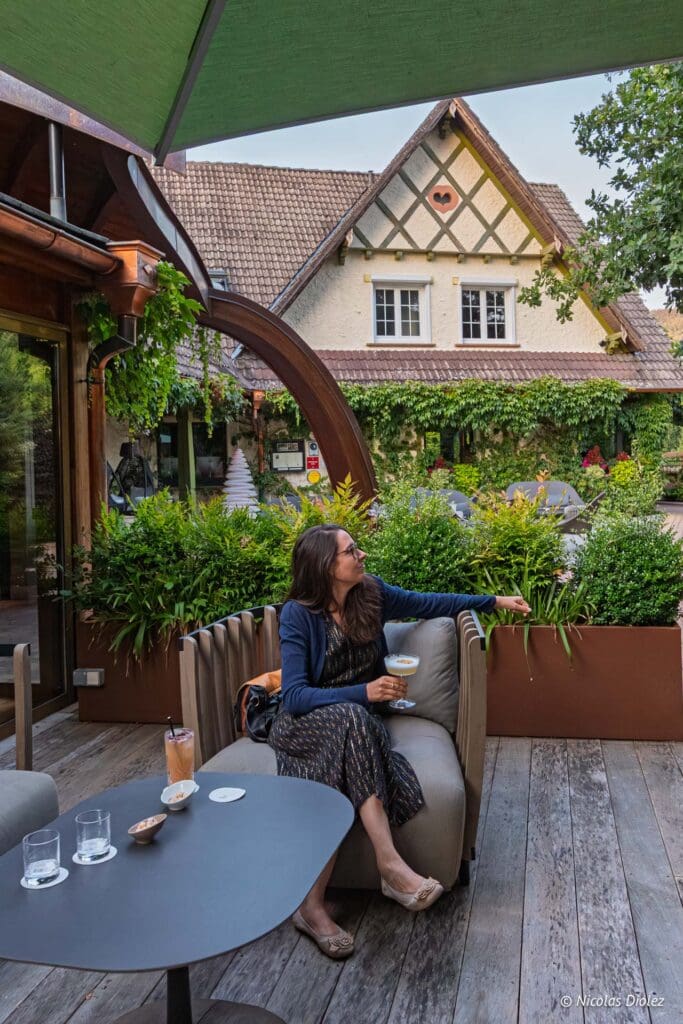
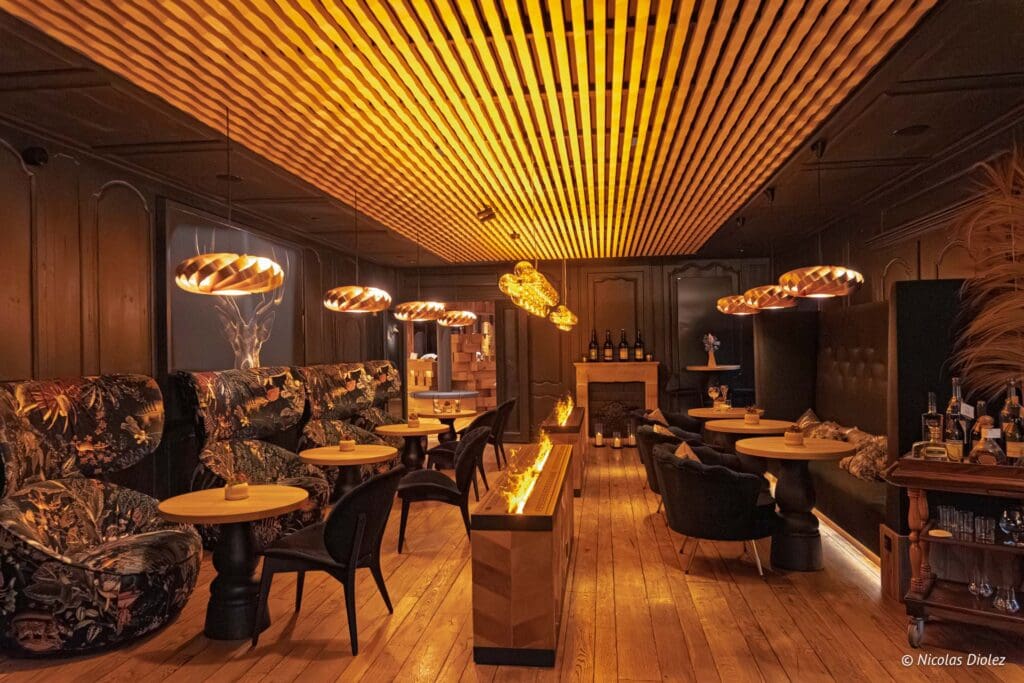
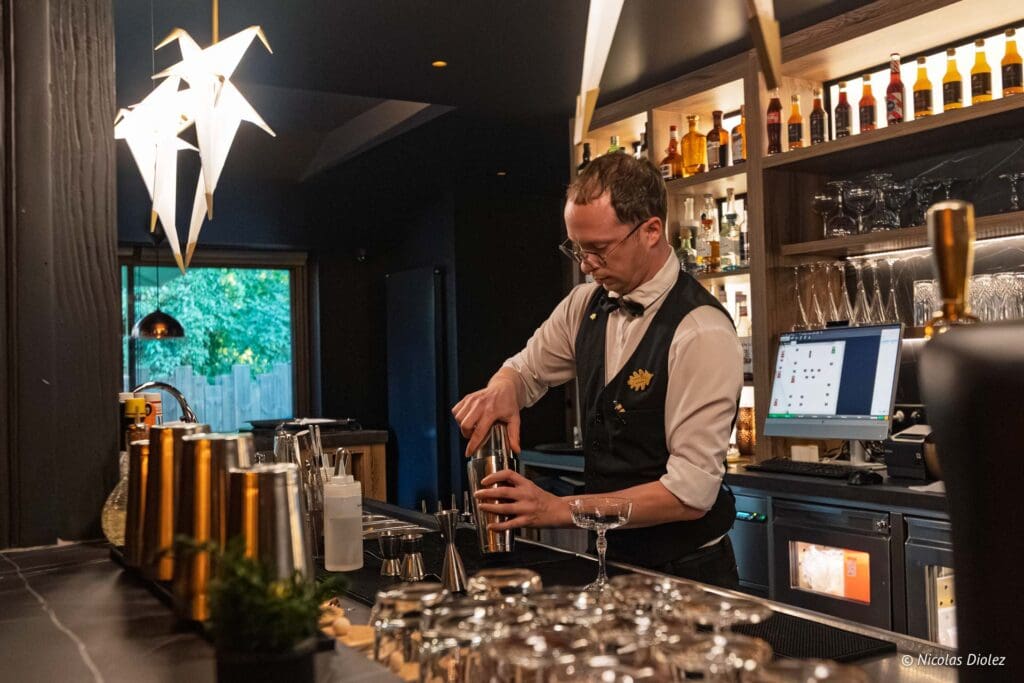
Bar le Calixte
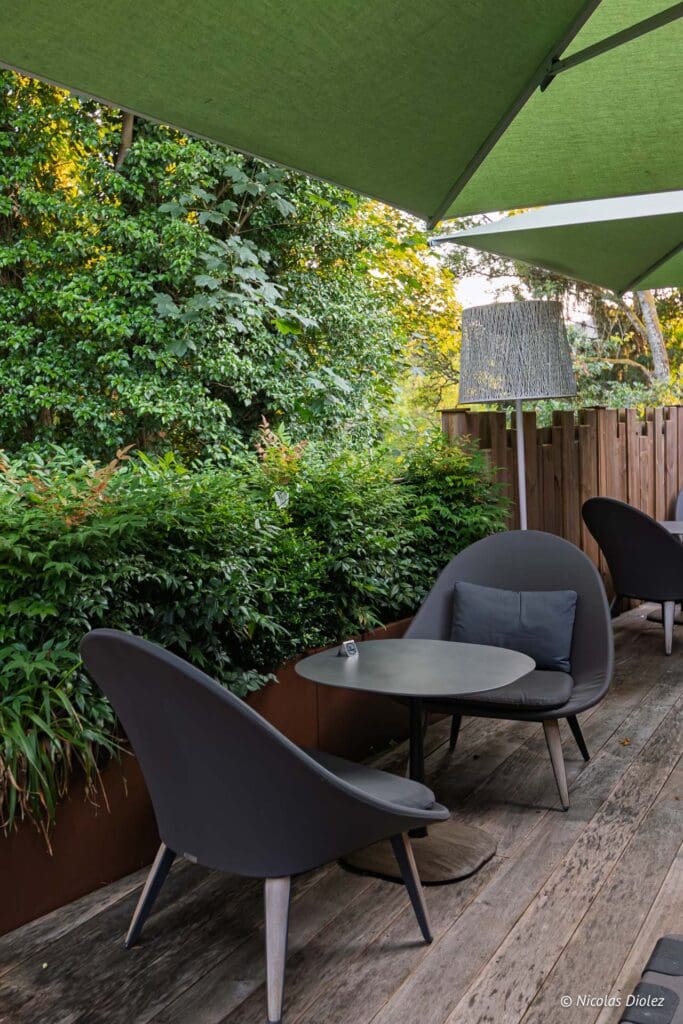
We started our evening with a little cocktail on the hotel bar terrace, Le Calixte. We tested a cocktail with alcohol, the Acid’Green with vodka and kiwi (€20), as well as a mocktail without alcohol, the Vergé rosé with pear, apple, mint, and a hibiscus syrup (€14).
_
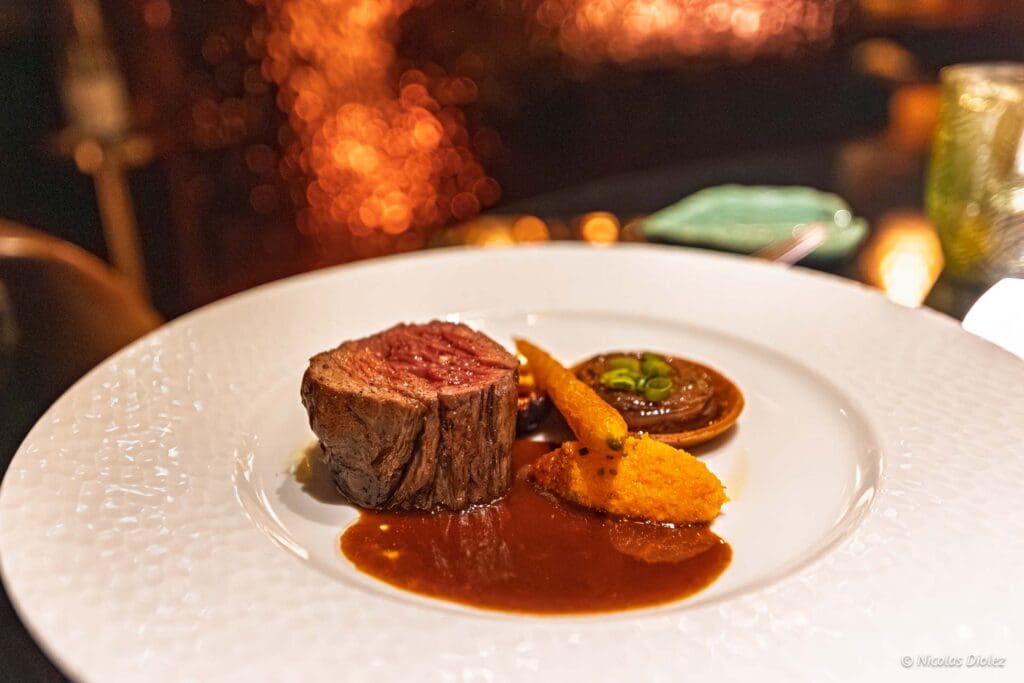
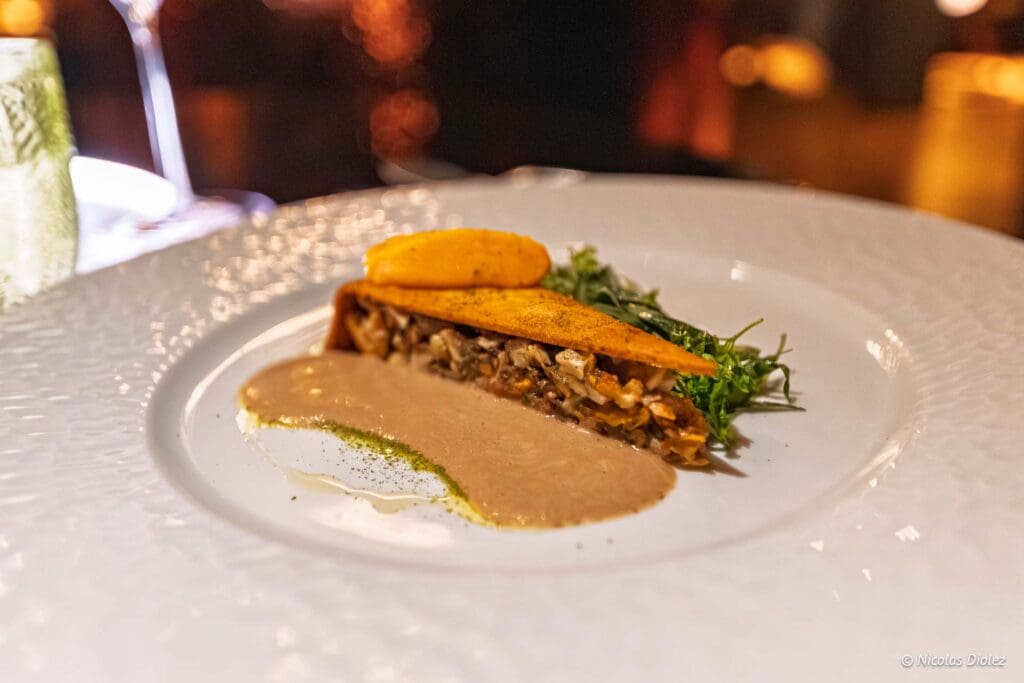
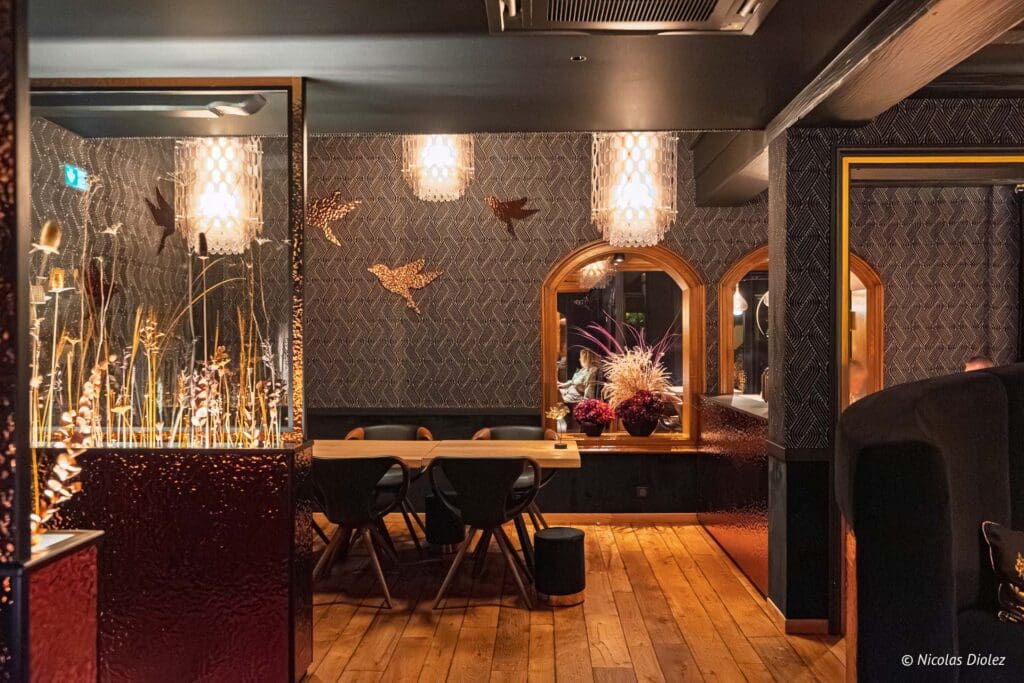
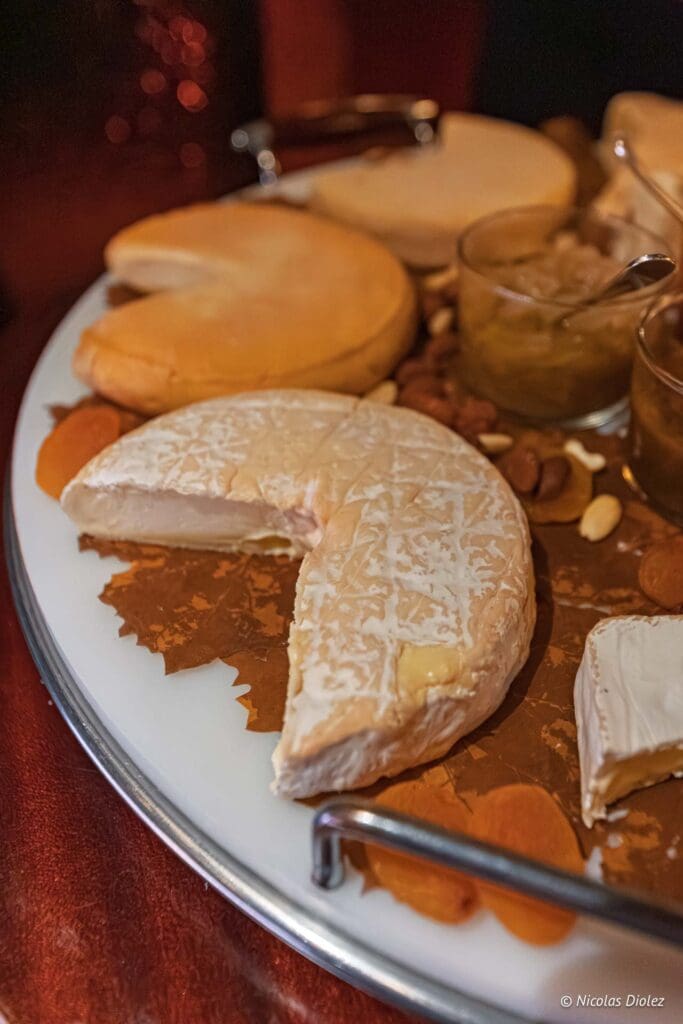
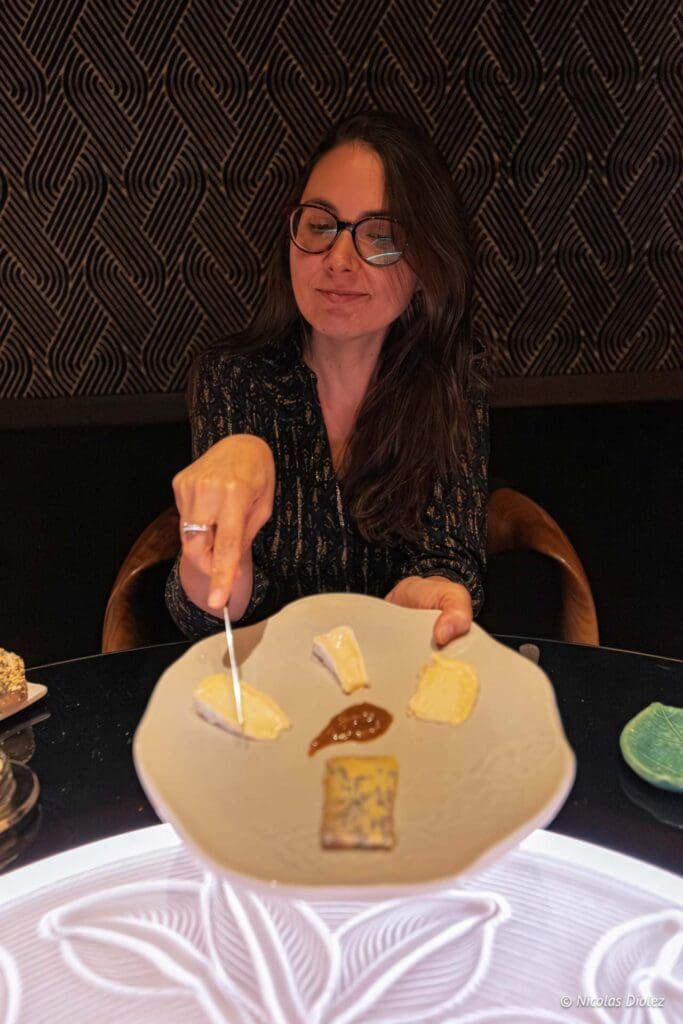
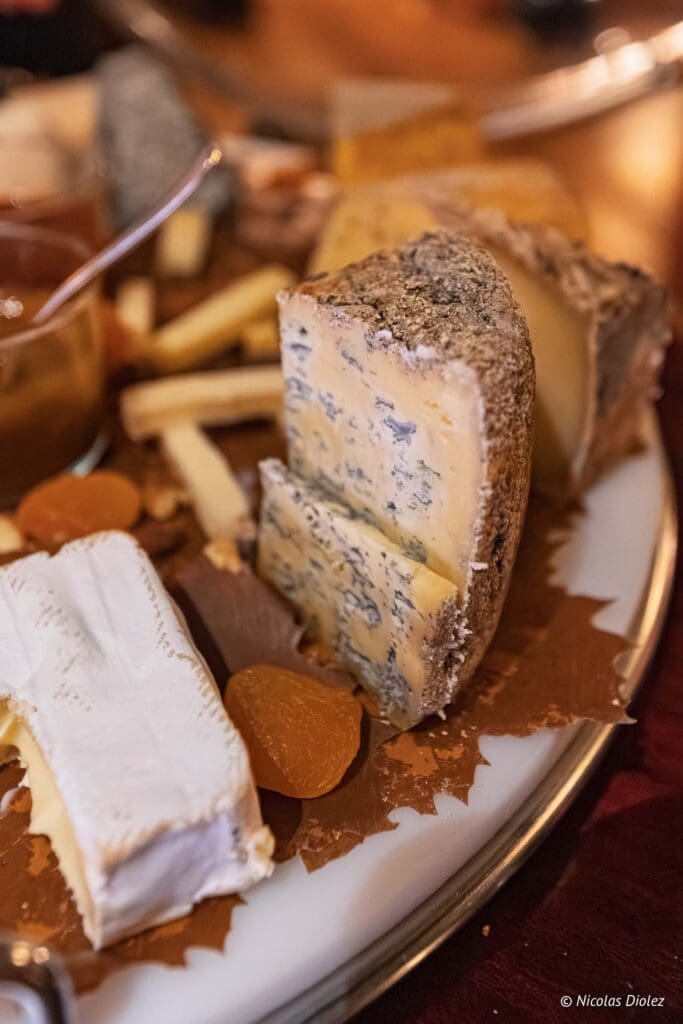
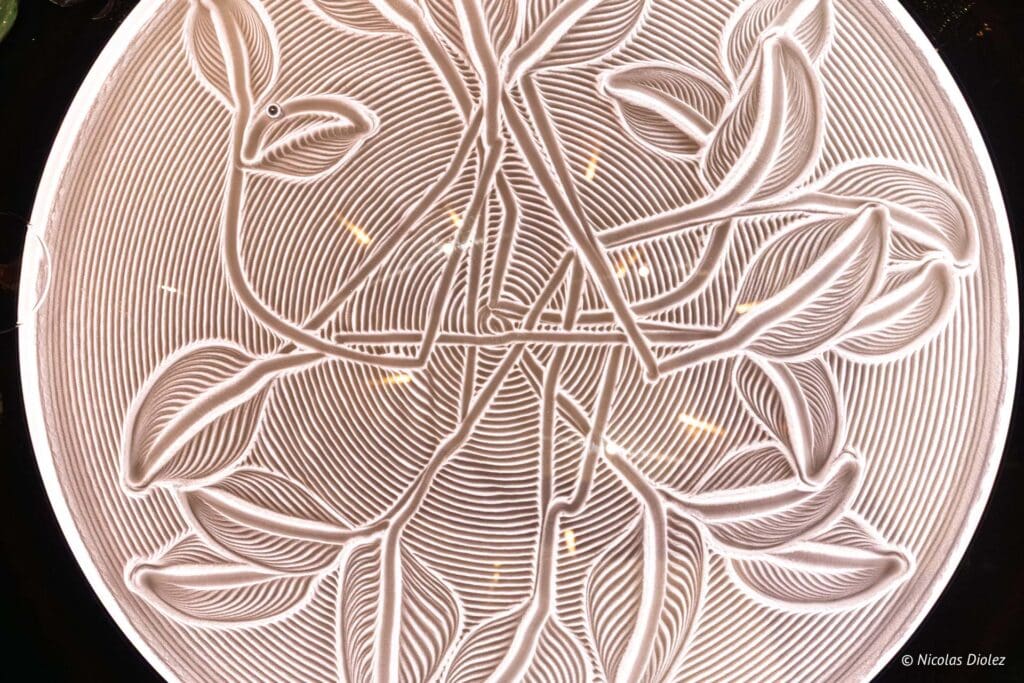
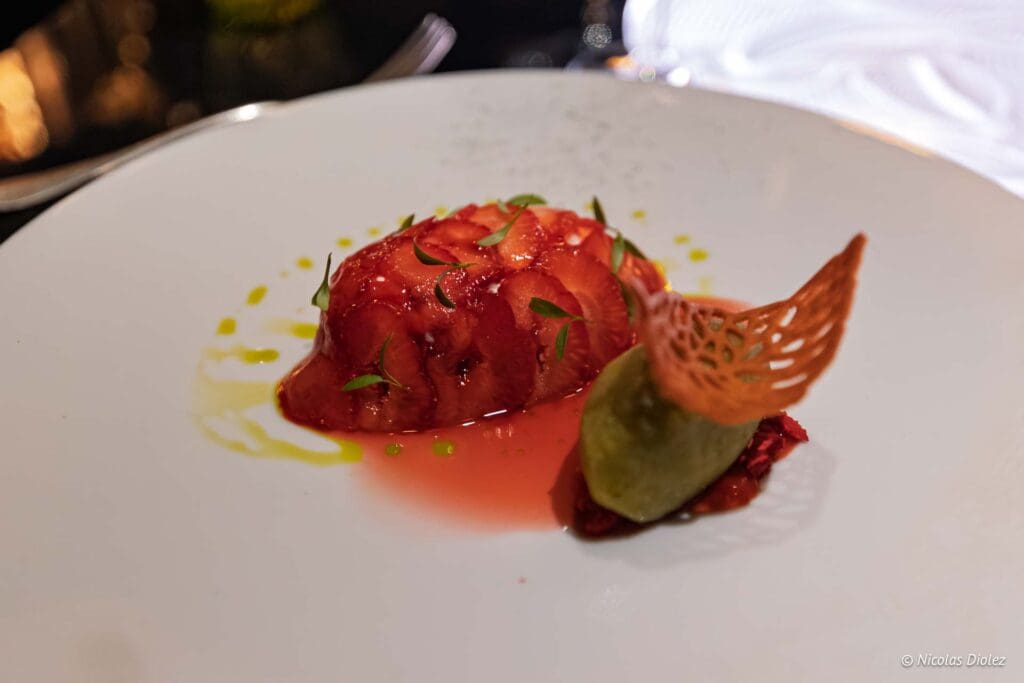
1-star Restaurant Le Feuillage
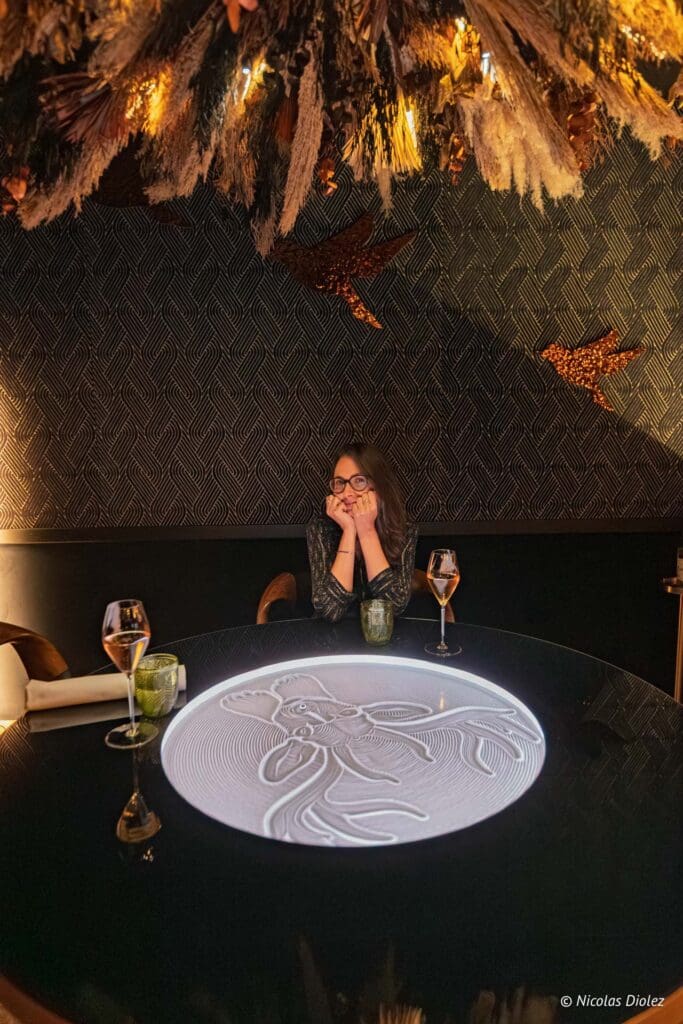
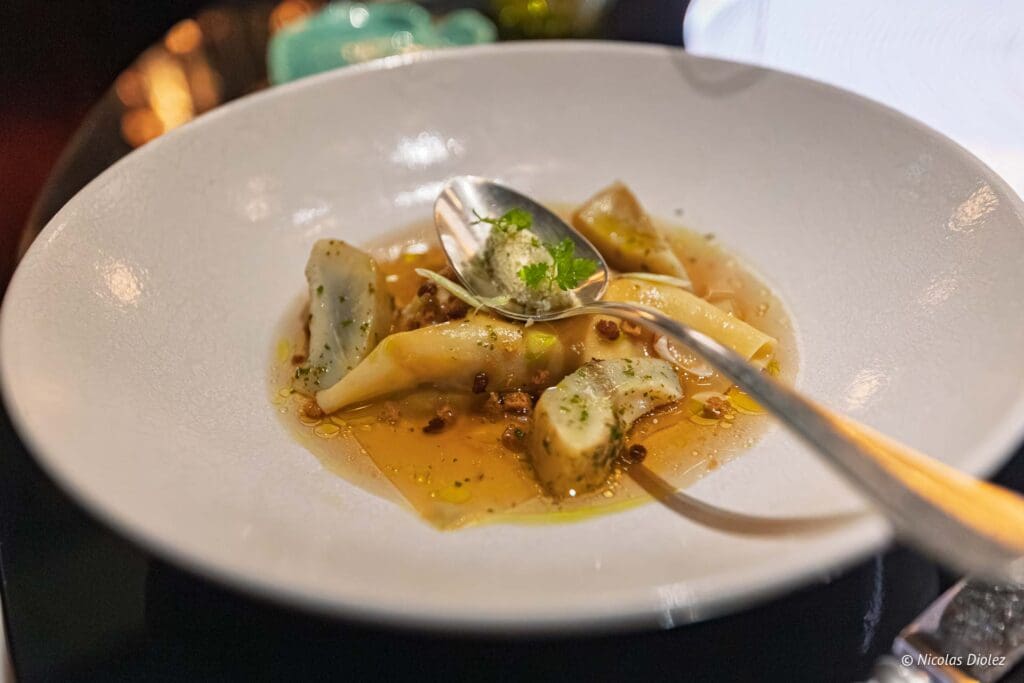
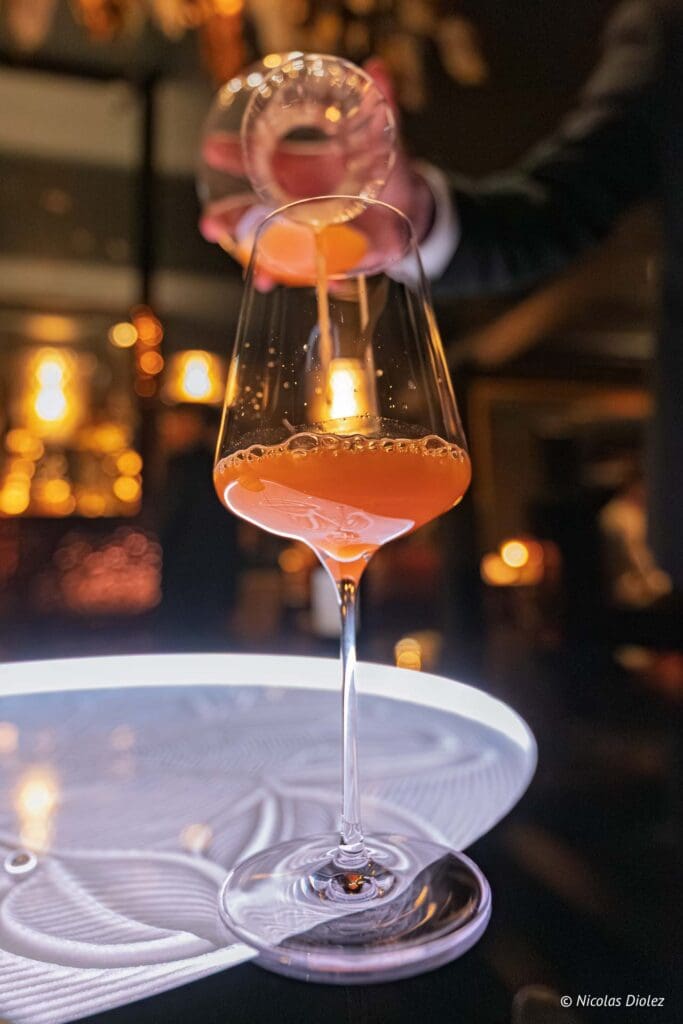
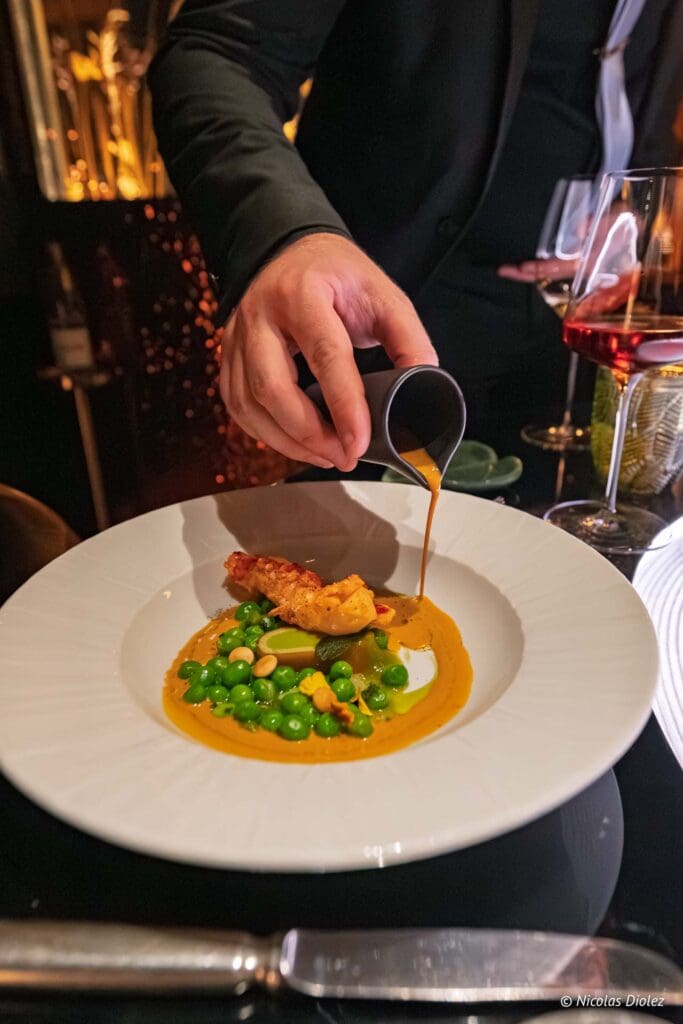
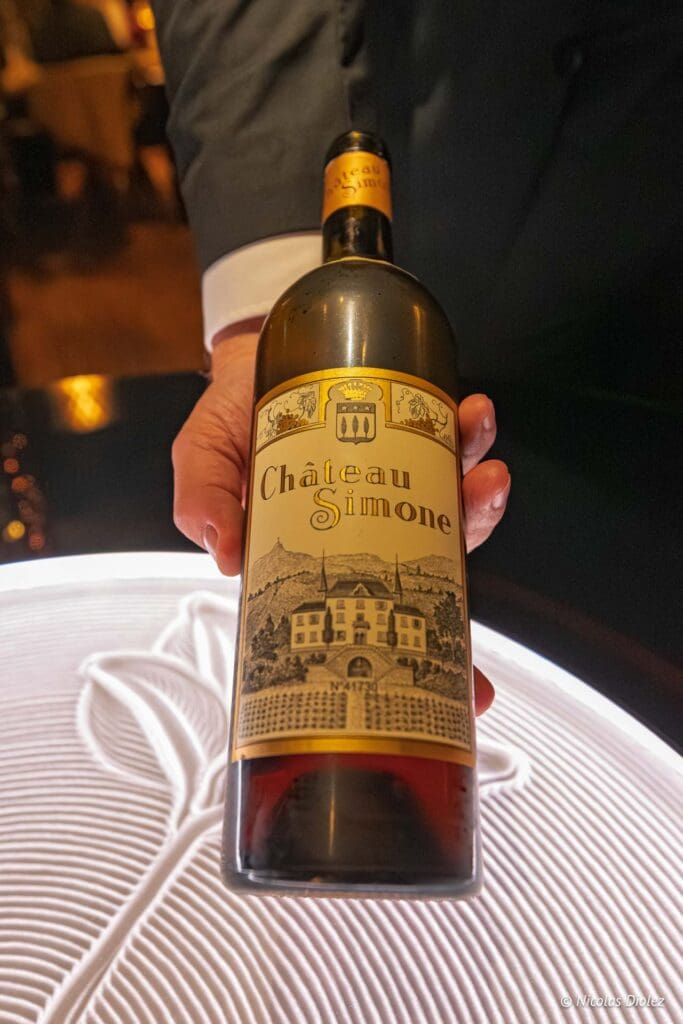
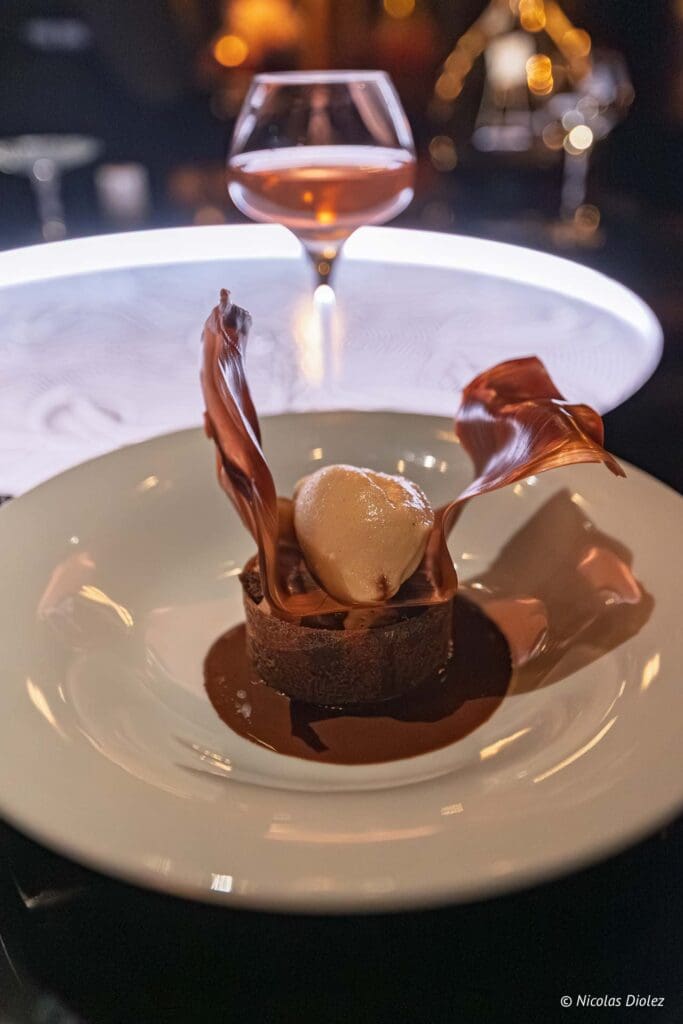
But we especially came to discover the establishment’s gourmet restaurant, Le Feuillage, led by chef Jean-Paul Acker, which was awarded its first star in the Michelin Guide in 2025. The chef was also named “Grand of Tomorrow 2024” by Gault et Millau, which also awarded him 2 toques and a score of 14/20.
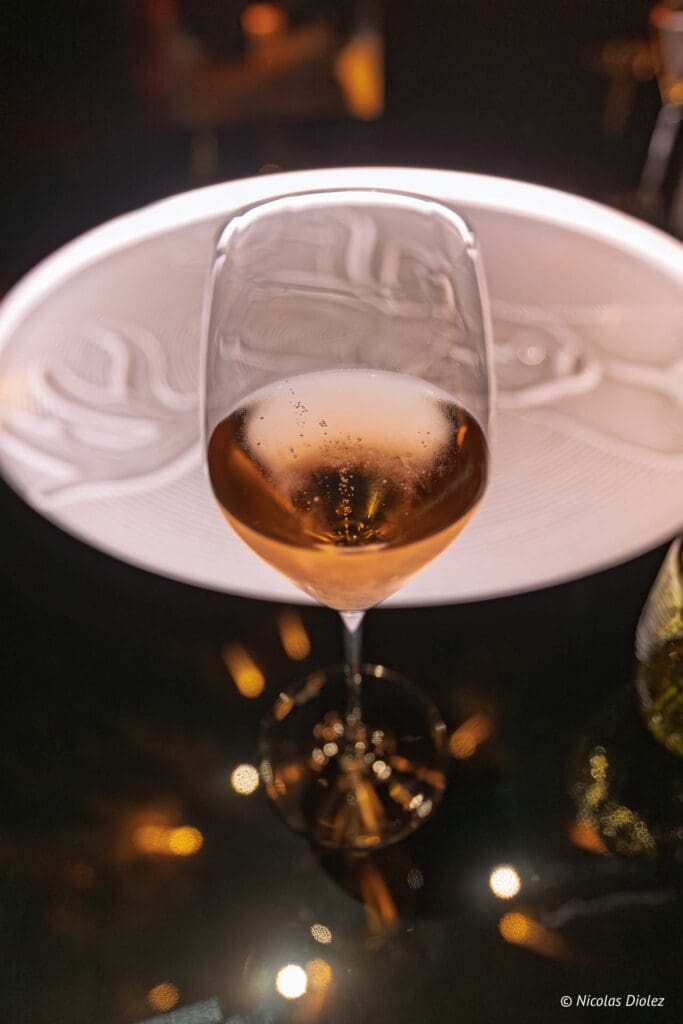
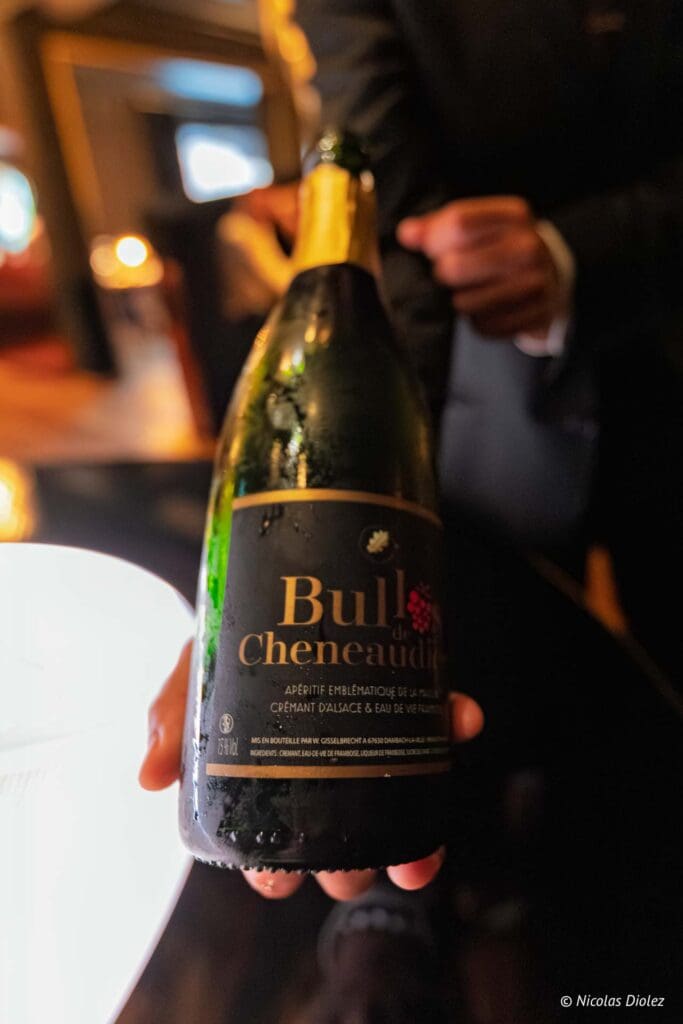
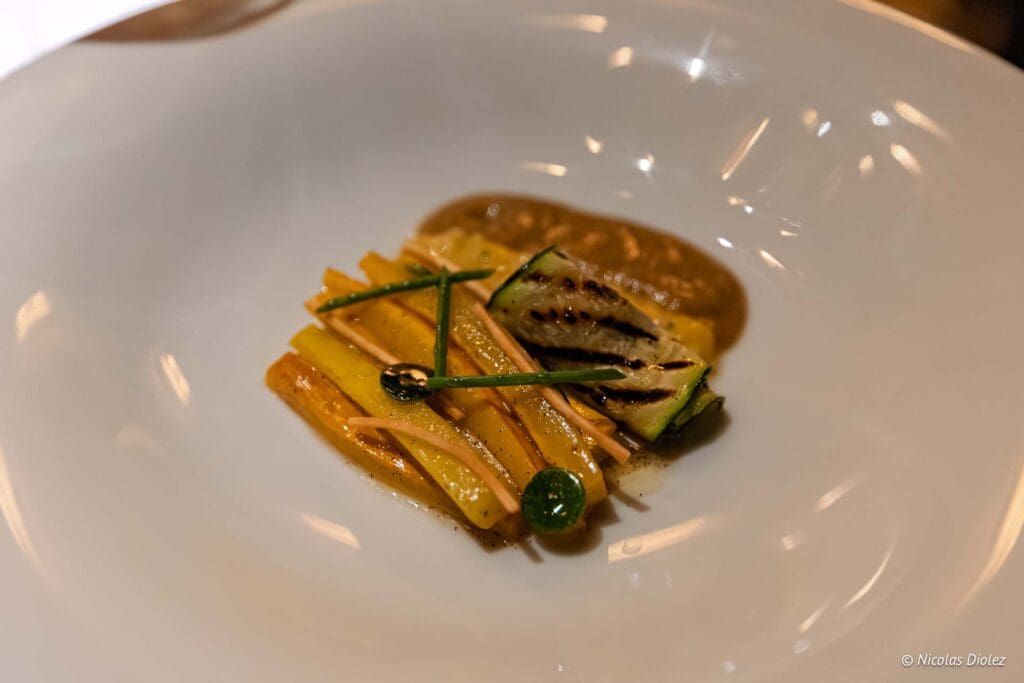
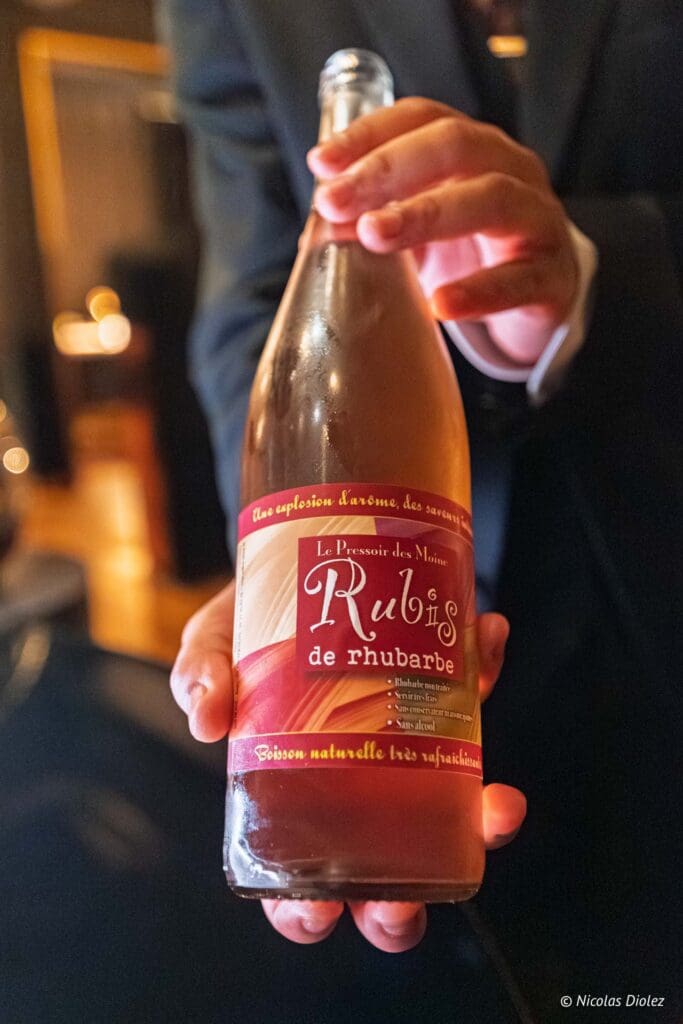
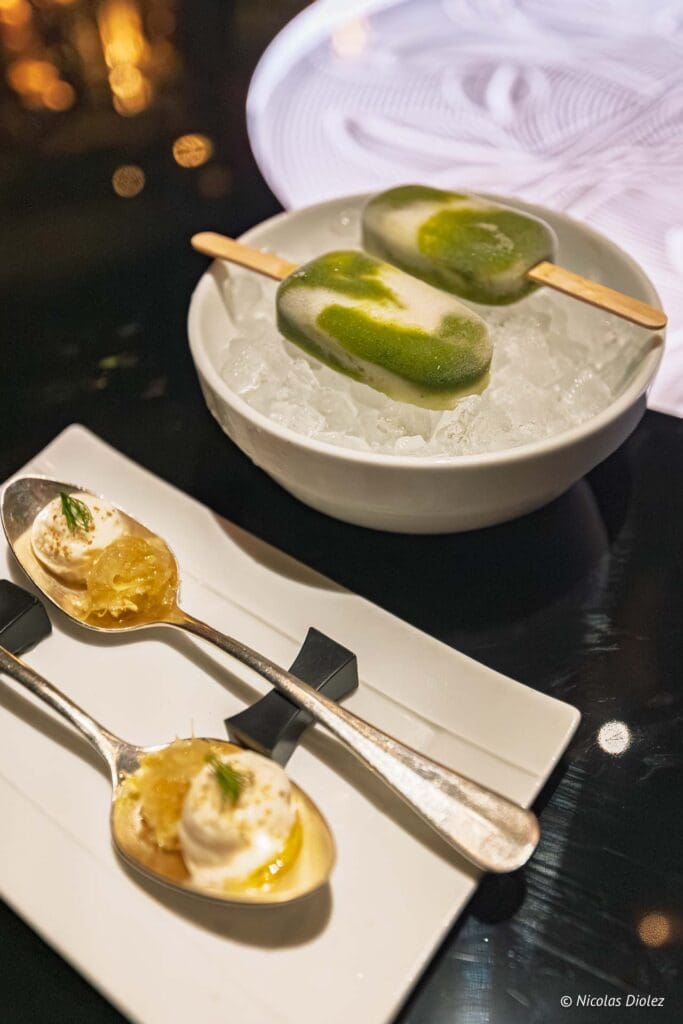
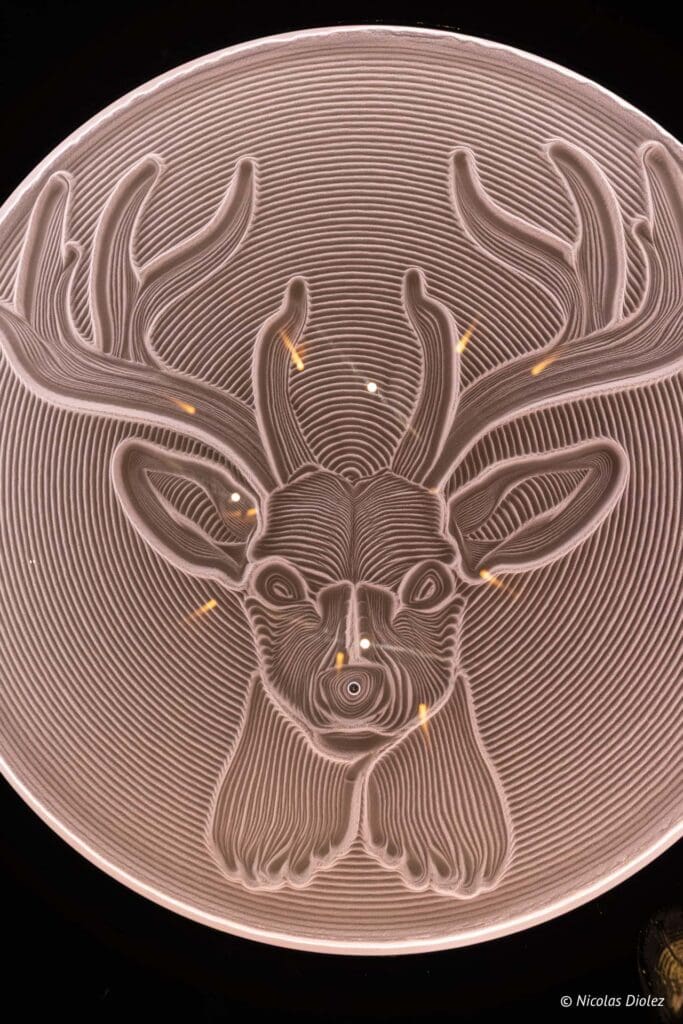
We tasted the two 7-course menus offered by the restaurant: the Tasting menu (€145) and the Vegetable menu which is 100% vegetarian (€105), and I must say we were delighted with this choice because the chef masters vegetable preparation very well. We also tested the non-alcoholic pairing with the vegetarian menu, which was very interesting and harmonized perfectly with it. We were also lucky enough to dine at the restaurant’s Experience Table, which combines gastronomy and relaxation. Regarding wines, the glass pairing allows you to discover beautiful local gems, and we started notably with a signature house aperitif, the Bulles de la Cheneaudière, made with Crémant d’Alsace and raspberry eau-de-vie.
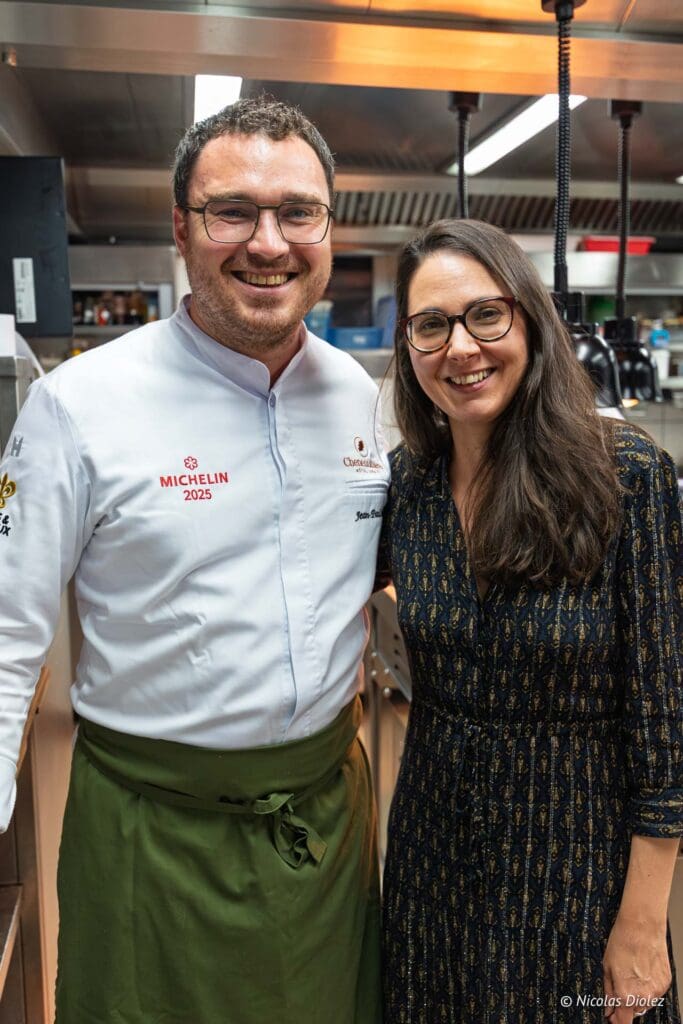
Restaurant tested in 2025 - Invitation
La Cheneaudière ☆☆☆☆☆
3 Rue du Vieux Moulin, 67420 Colroy-la-Roche
Price for Le Feuillage restaurant: 7-course menus between €105 and €145
_
Sélestat
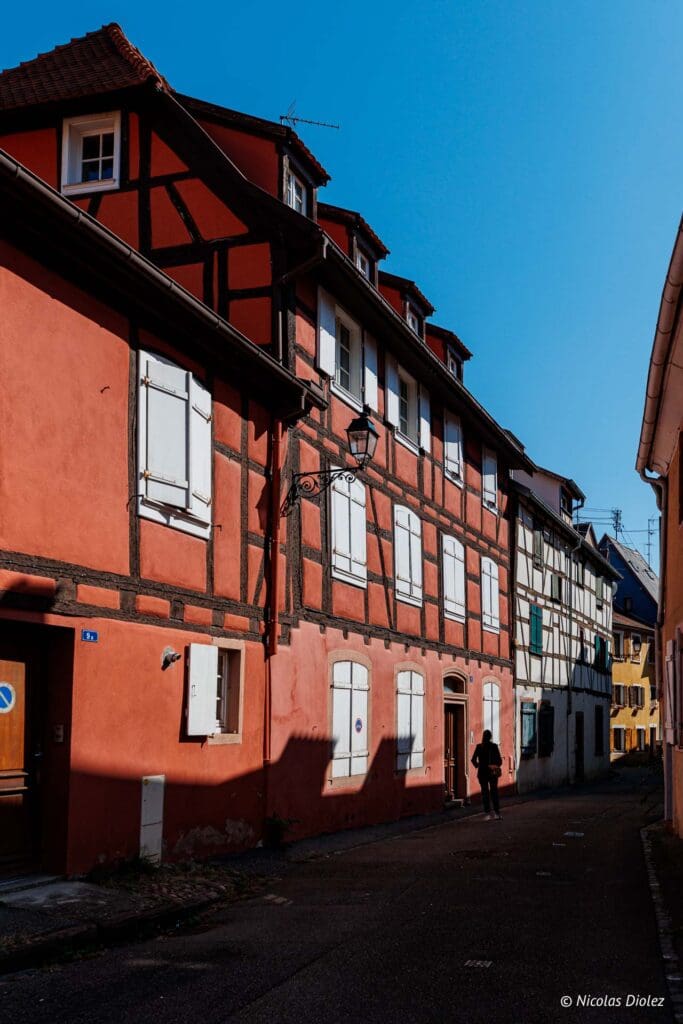
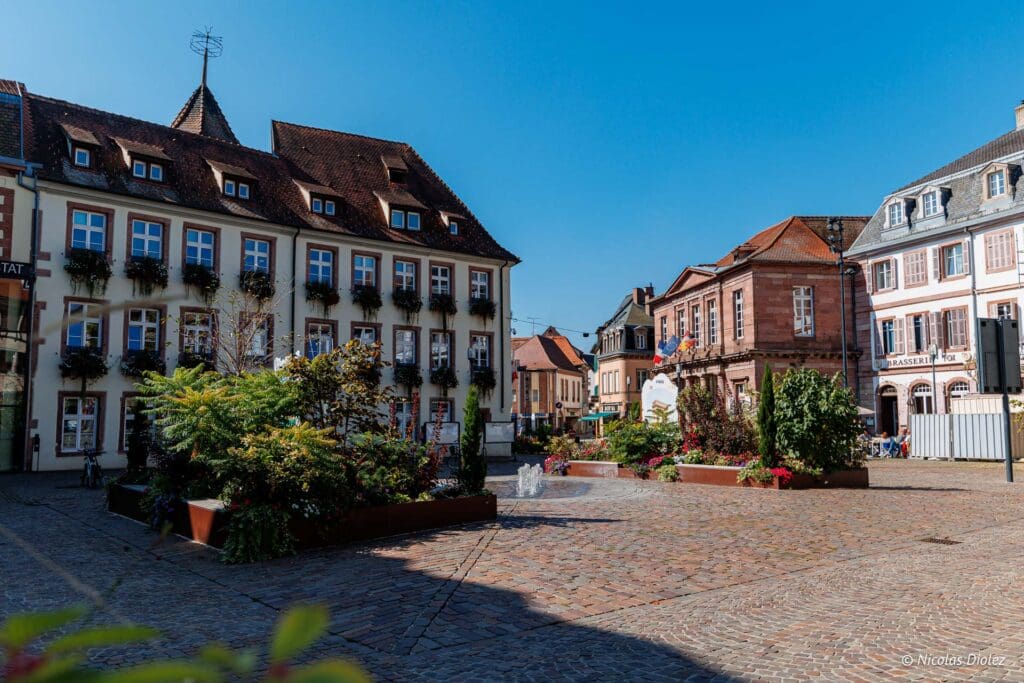
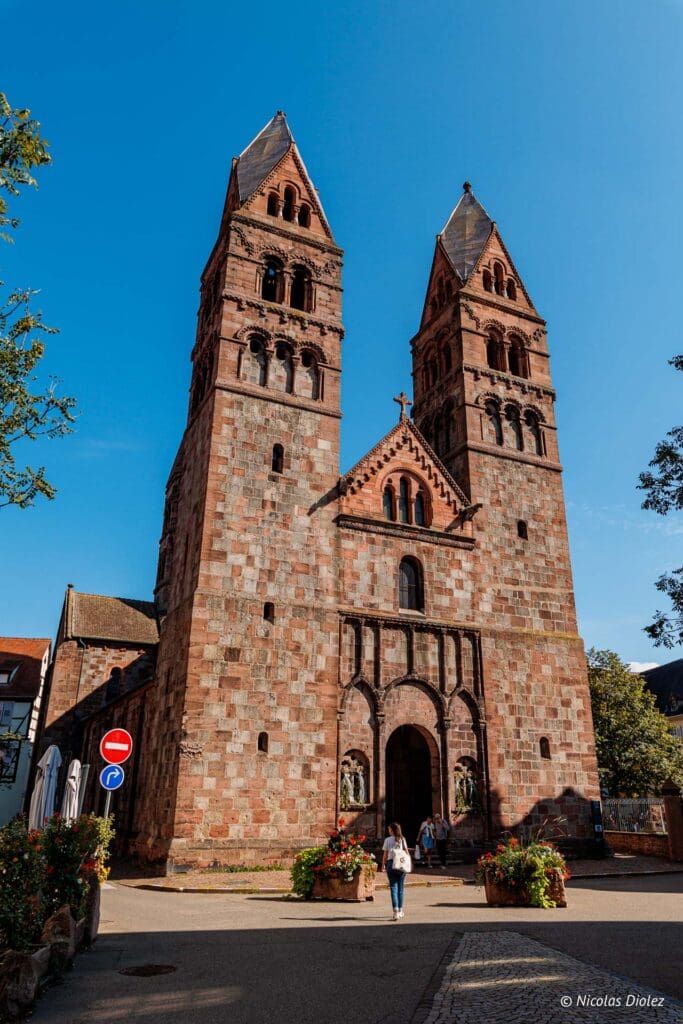
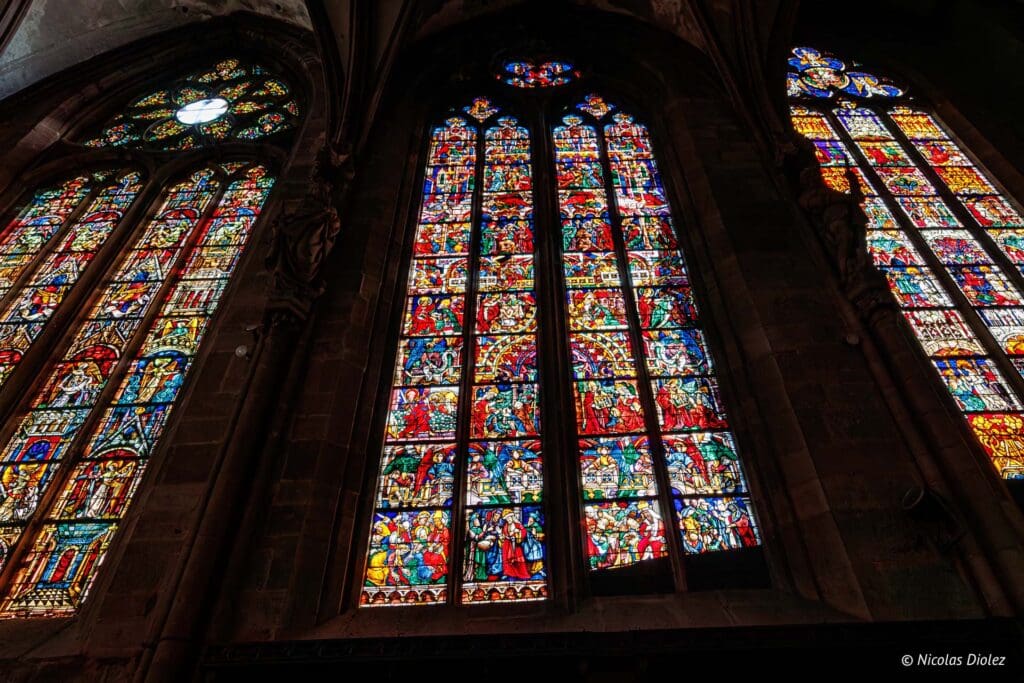
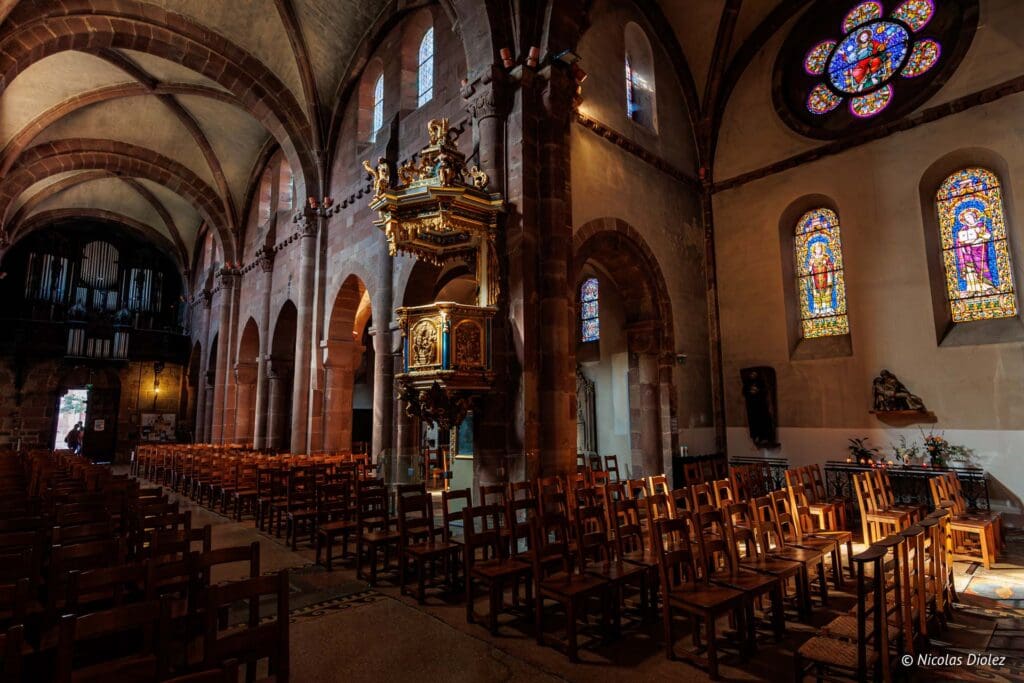
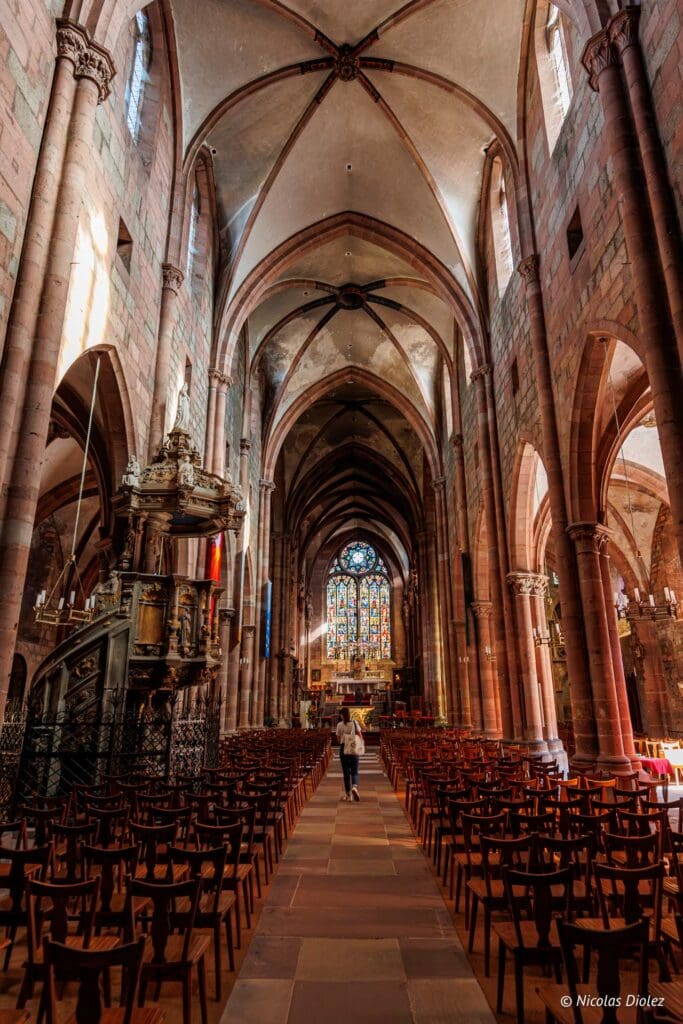
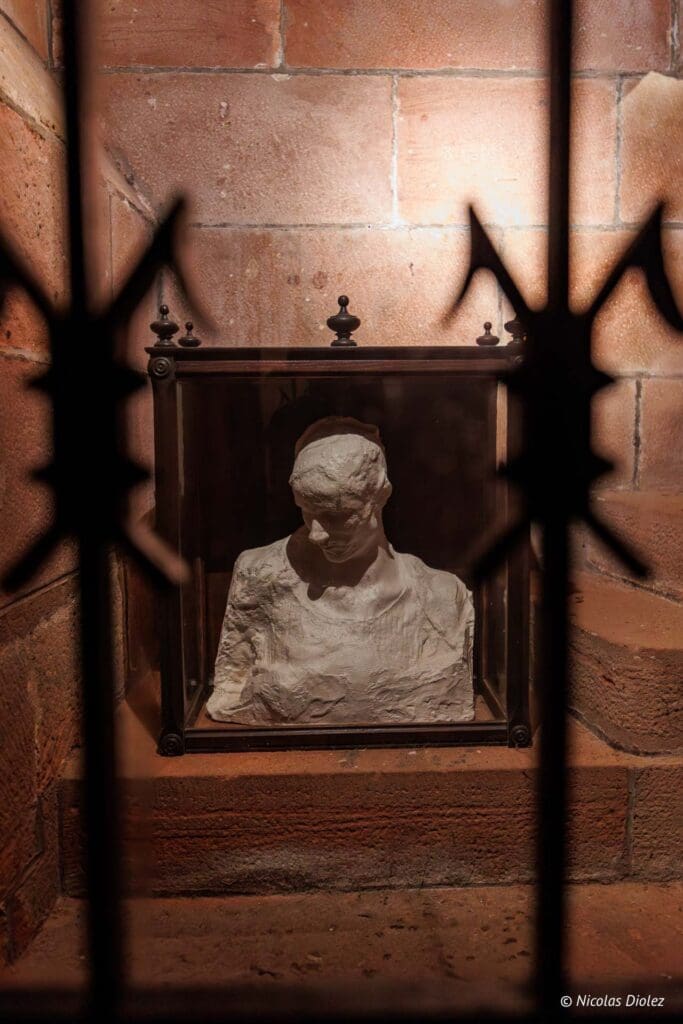
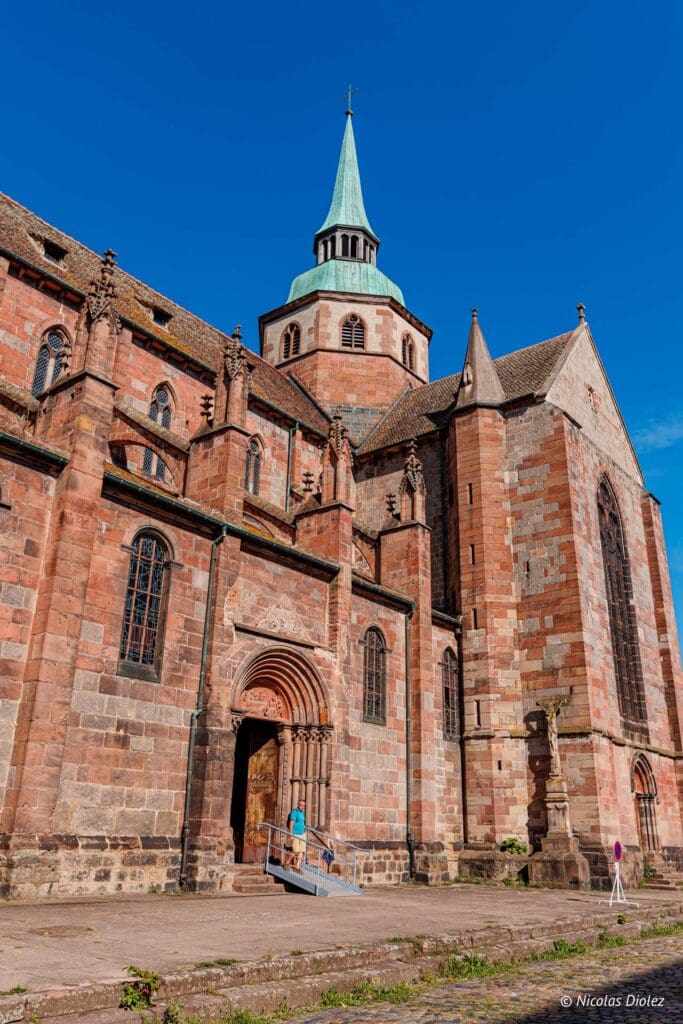
This city of art and history was truly one of our favorites of the trip and I think it deserves to be better known. It is the historic capital of the onion (yes, really!) and it has a very pleasant old town with beautiful half-timbered houses and a rich built heritage. Located on the banks of the Ill, a river that joins the Rhine in Strasbourg, Sélestat developed thanks to trade and its port, the Ladhof, with very beautiful prosperity, especially in the 15th and 16th centuries. We particularly enjoyed visiting its two main churches, Sainte-Foy (Romanesque) and Saint-Georges (Gothic), located side by side. Do not miss the crypt that contains the cast of the death mask of the “beautiful stranger of Sélestat” and the sculpted capitals of Sainte-Foy, as well as the magnificent 15th-century stained glass windows in the Saint-Georges church.
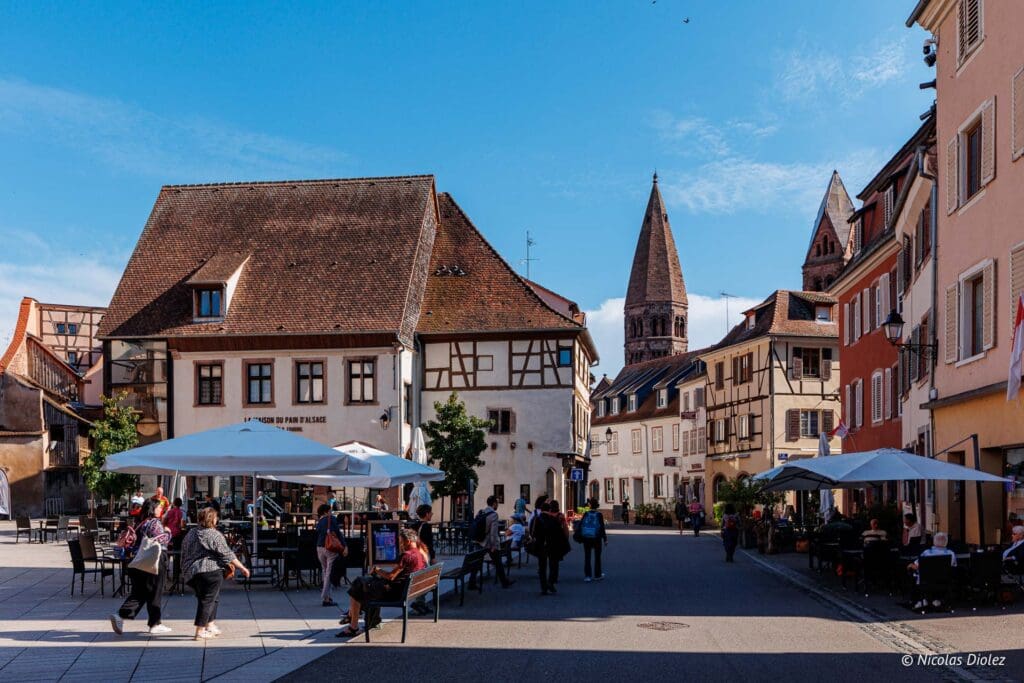
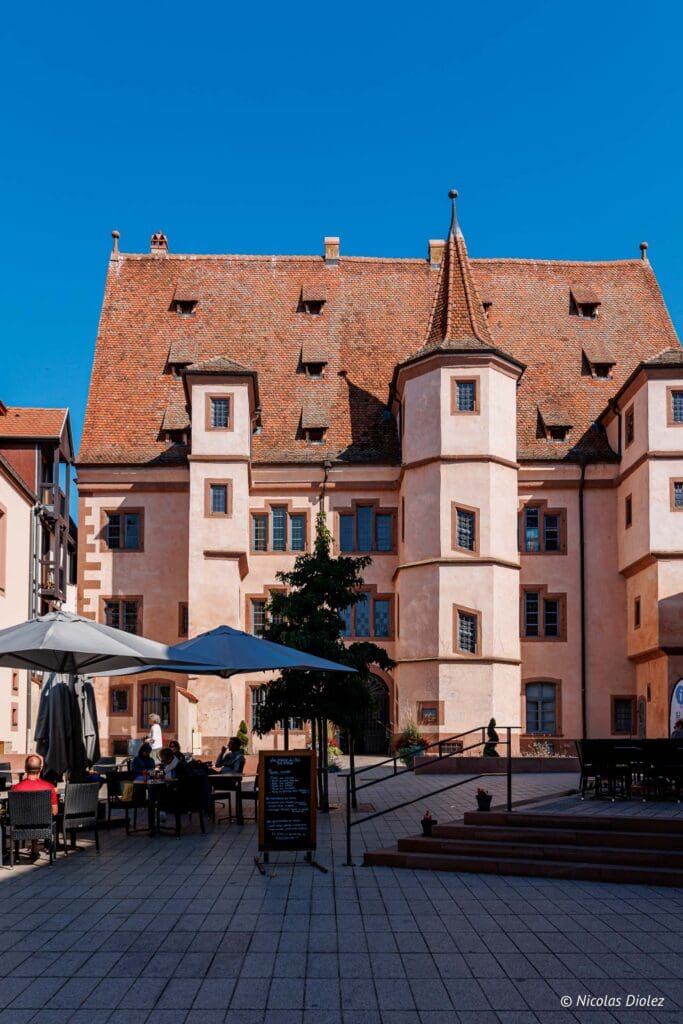
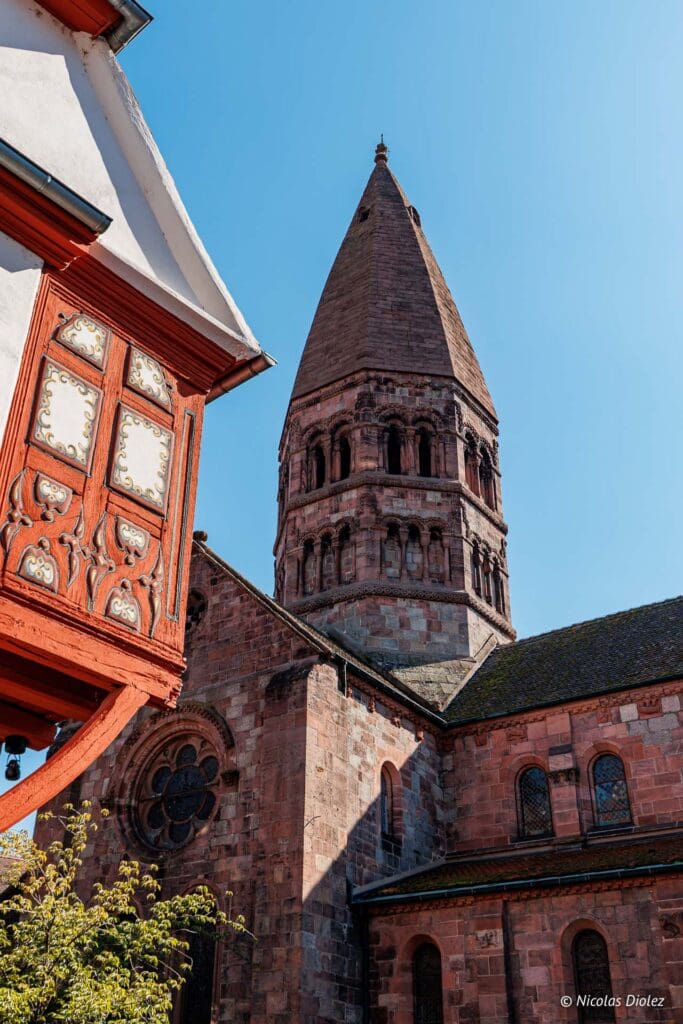
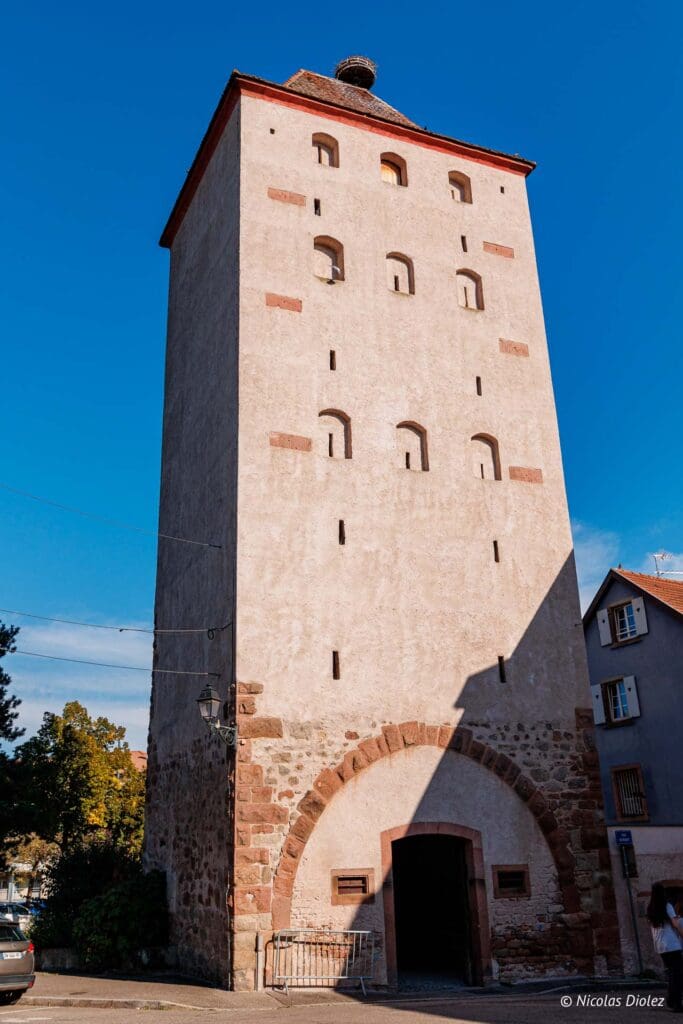
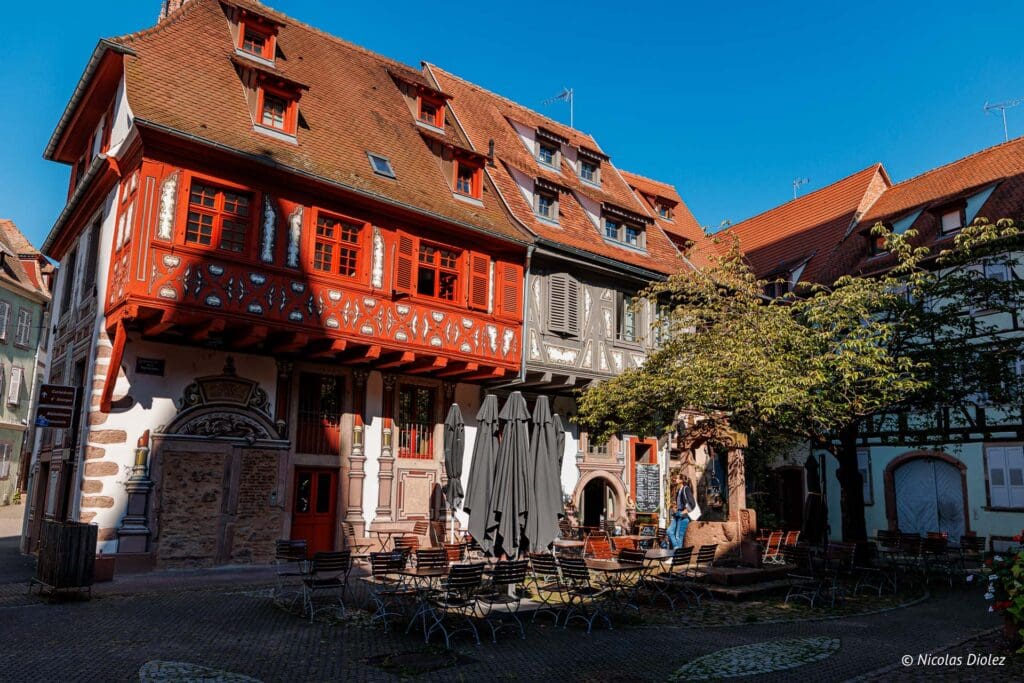
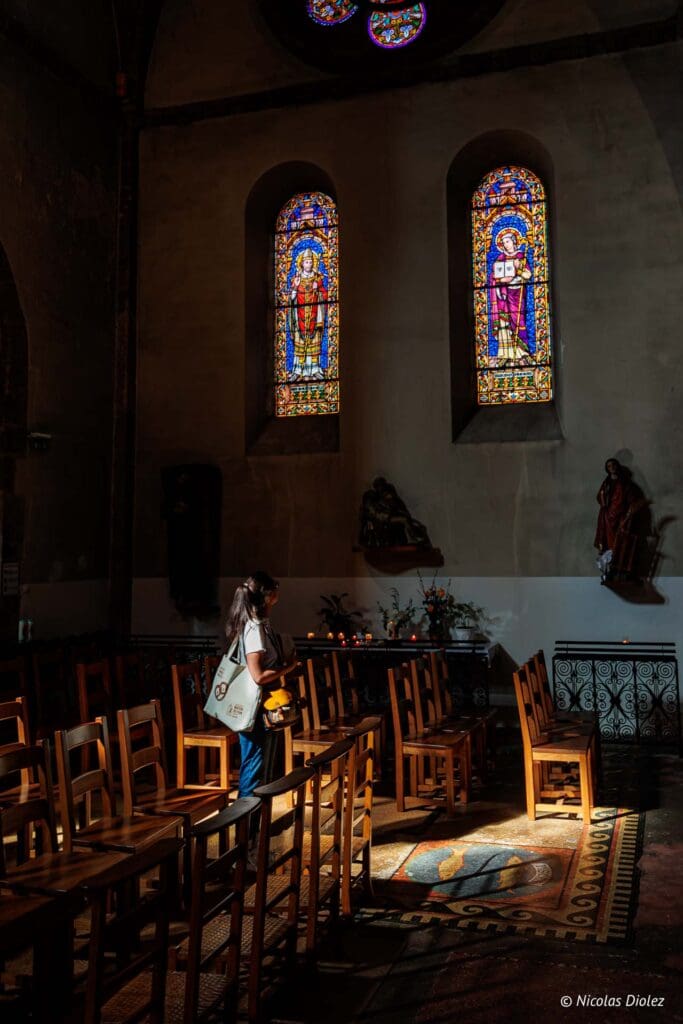
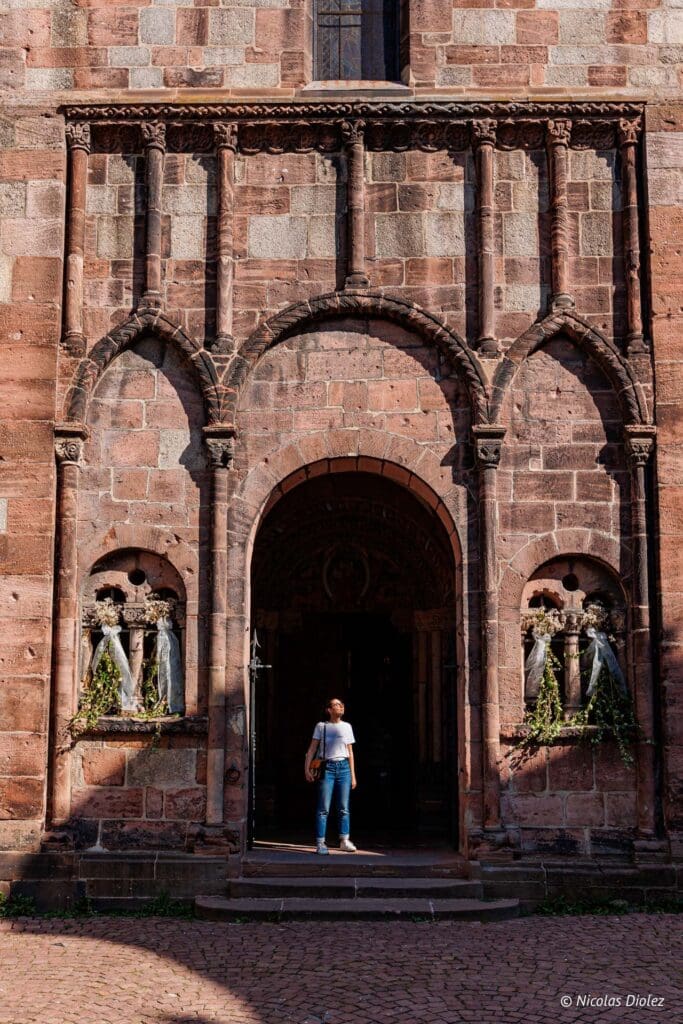
Sélestat Tourism Office
_
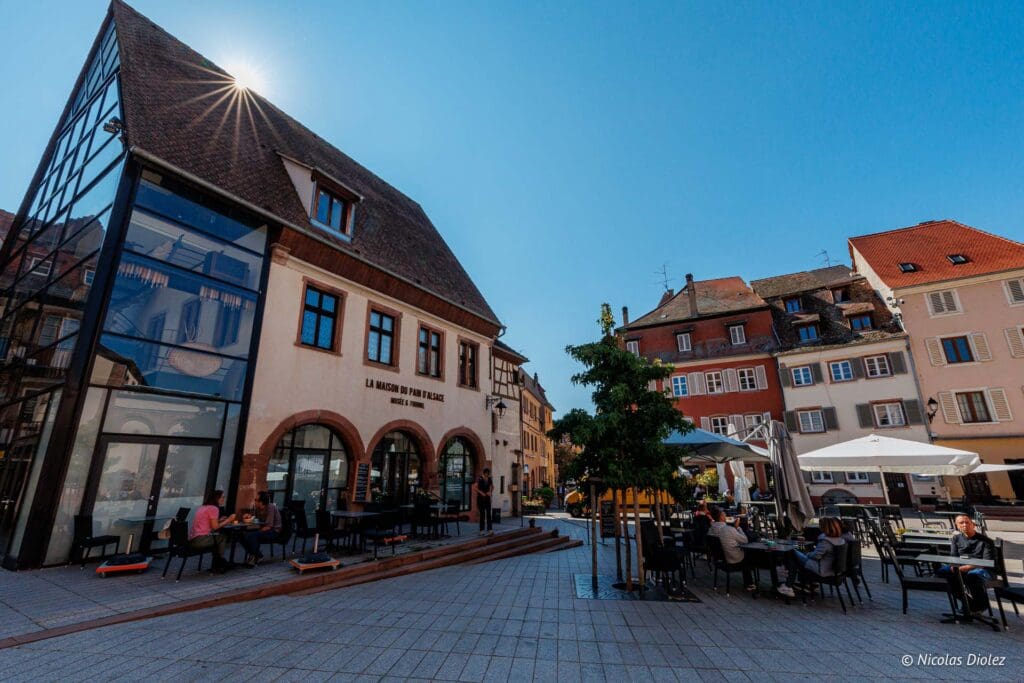
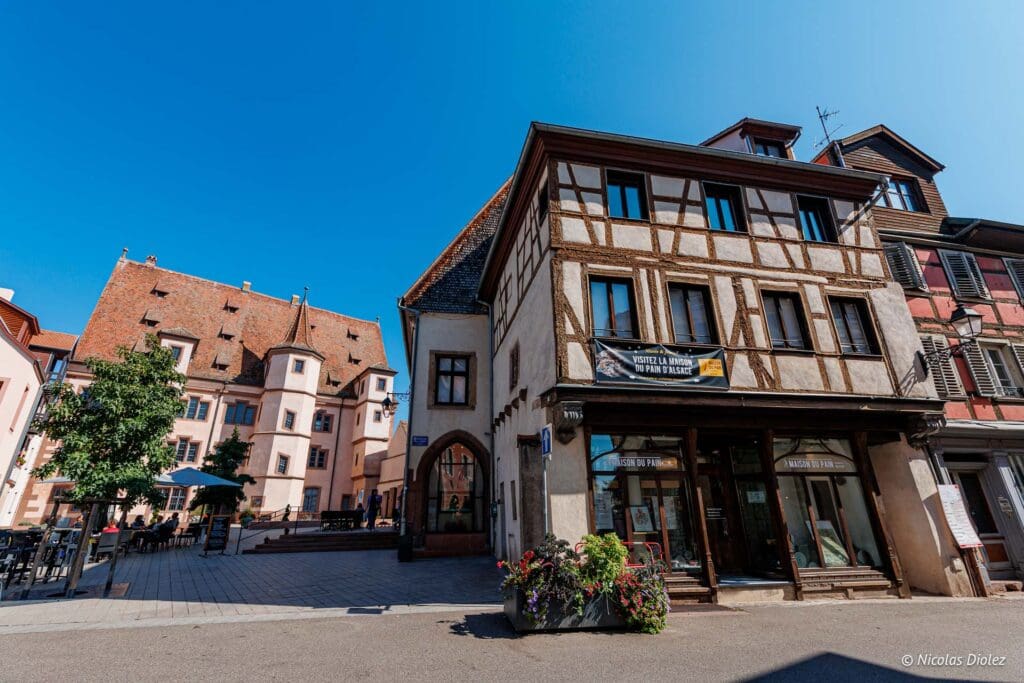
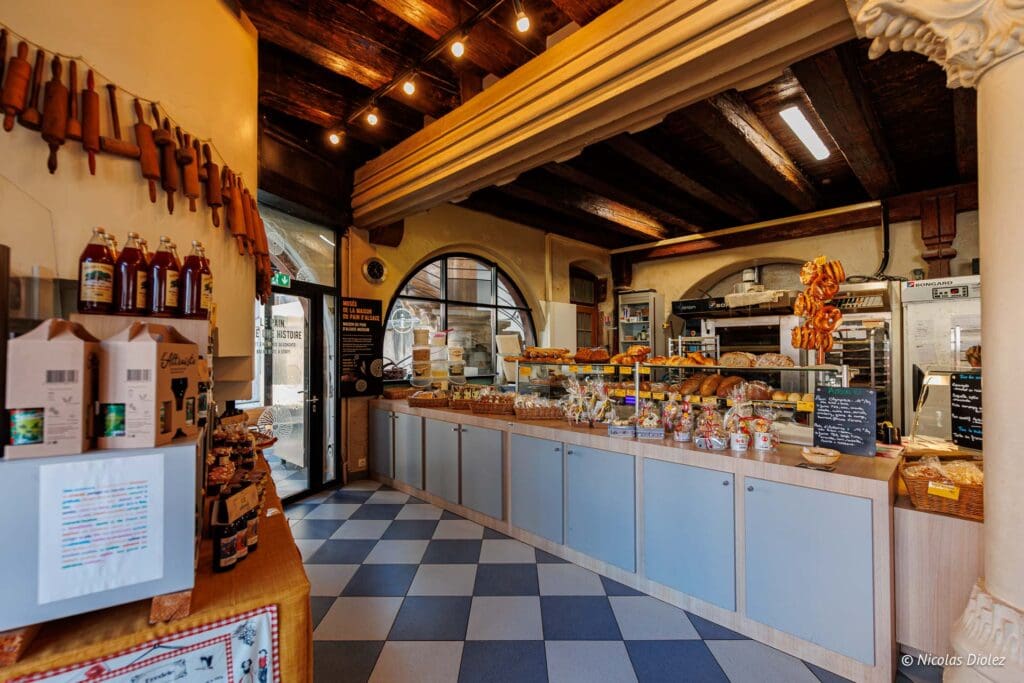
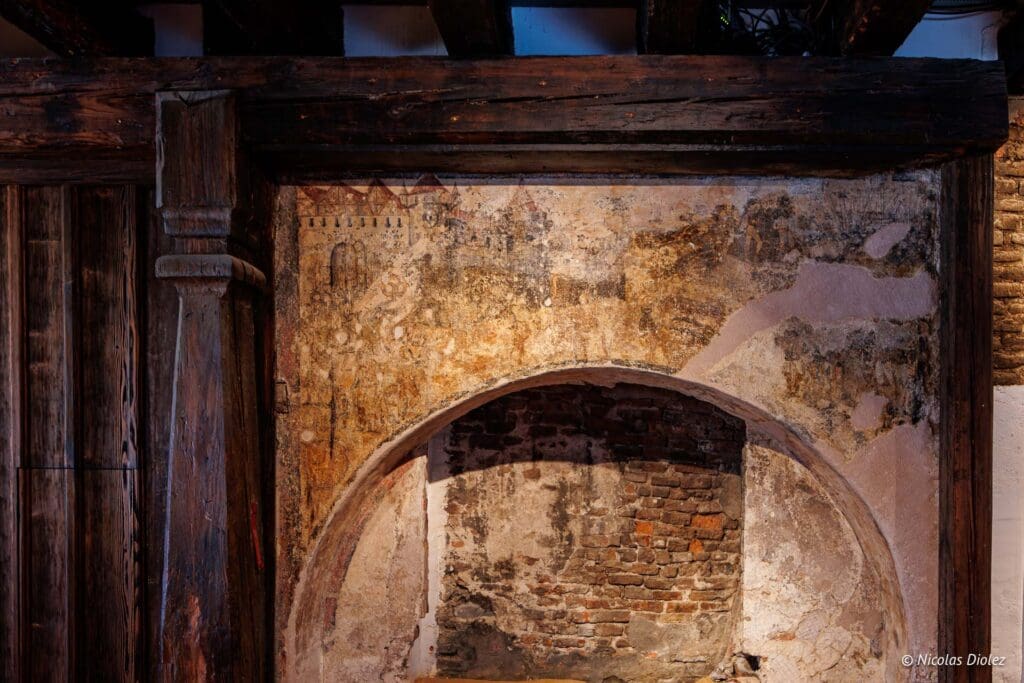
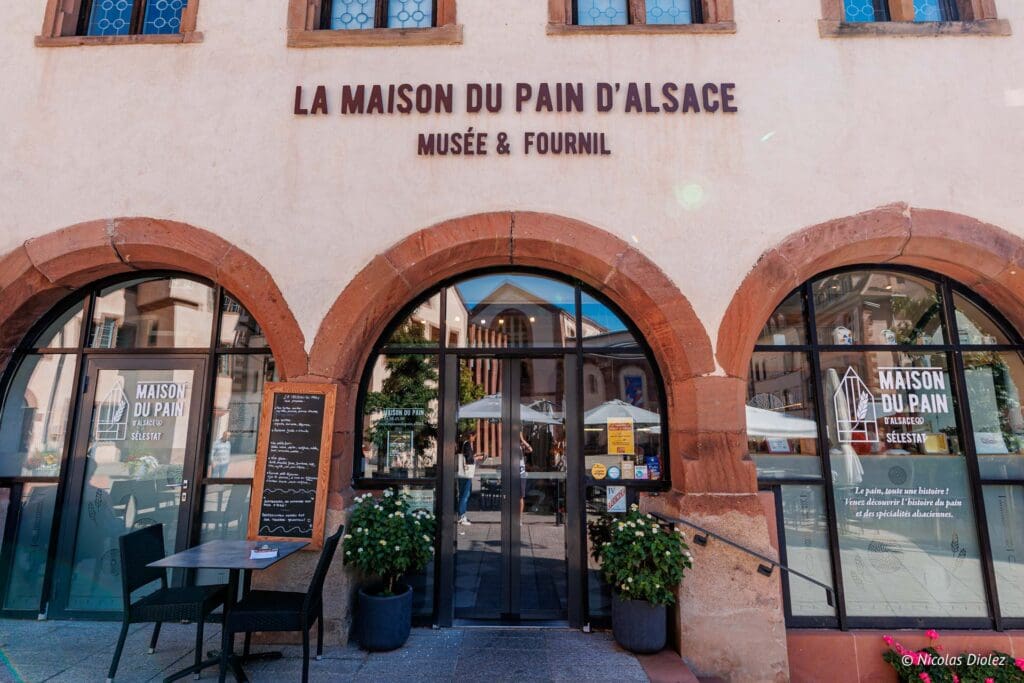
Discover the Maison du Pain d’Alsace (House of Alsatian Bread)
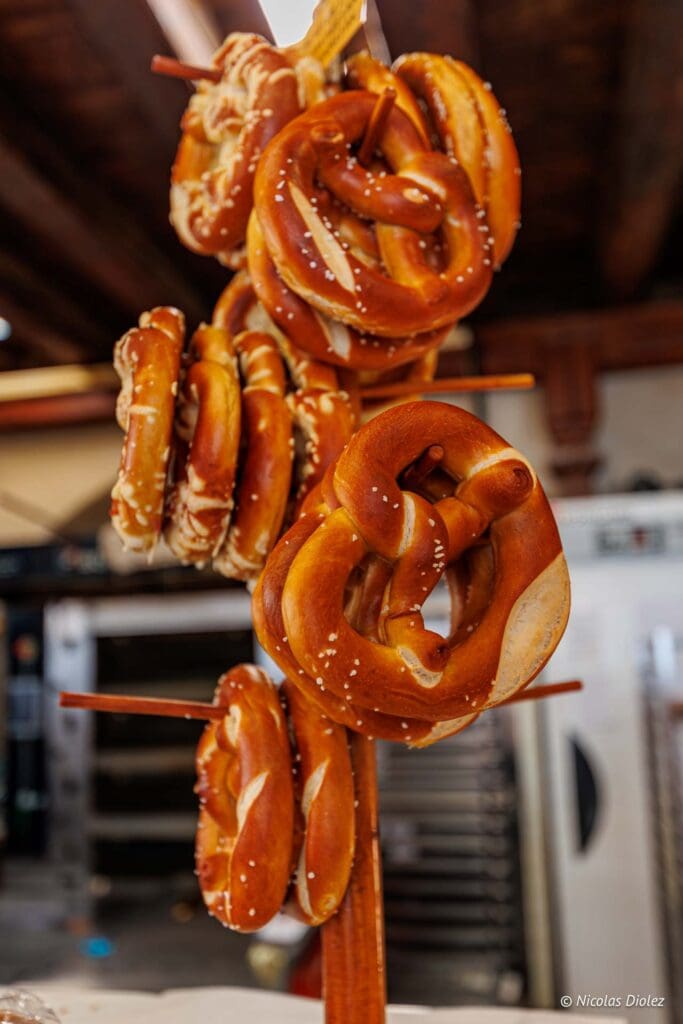
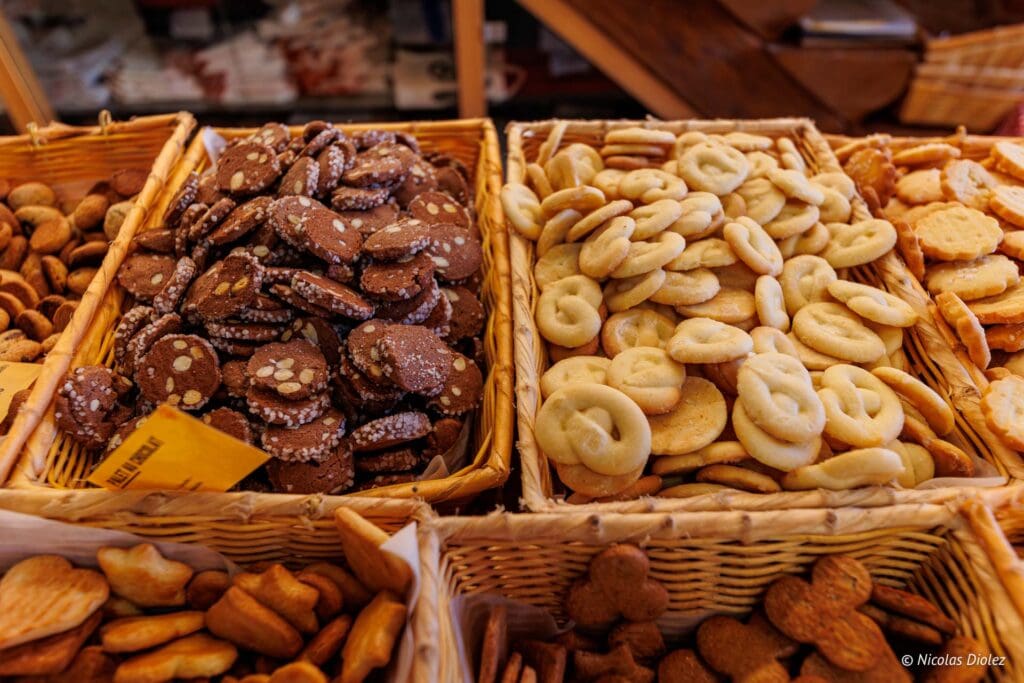
This unique place is located in front of the Cour des Prélats, in the former headquarters of the bakers’ and millers’ guild dating from 1522. Restored by an association of enthusiasts, it has housed a museum, a teaching bakery, and a tearoom since 2001. The objective is to preserve and pass on Alsatian baking expertise and to highlight local specialties throughout the seasons (kougelhopf, bretzel, lammele, osterbrot, bredle, mannele…). They also welcome apprentices to ensure the future.
Maison du Pain d’Alsace
7 Rue du Sel, 67600 Sélestat
Open Tuesday to Sunday (closed Mondays) from January to November and open every day in December
_
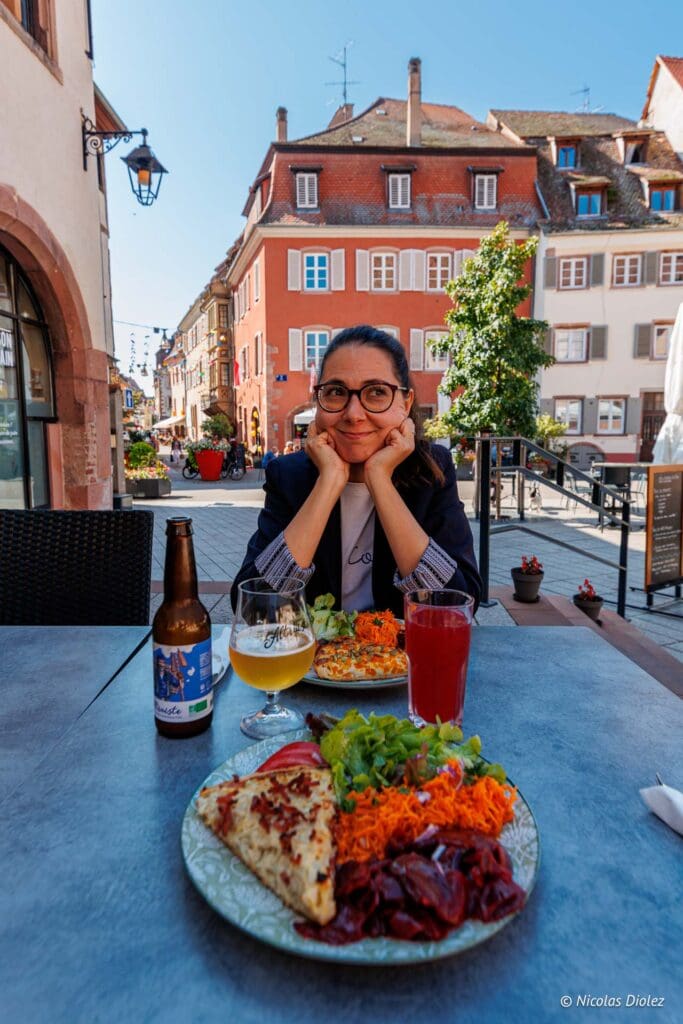
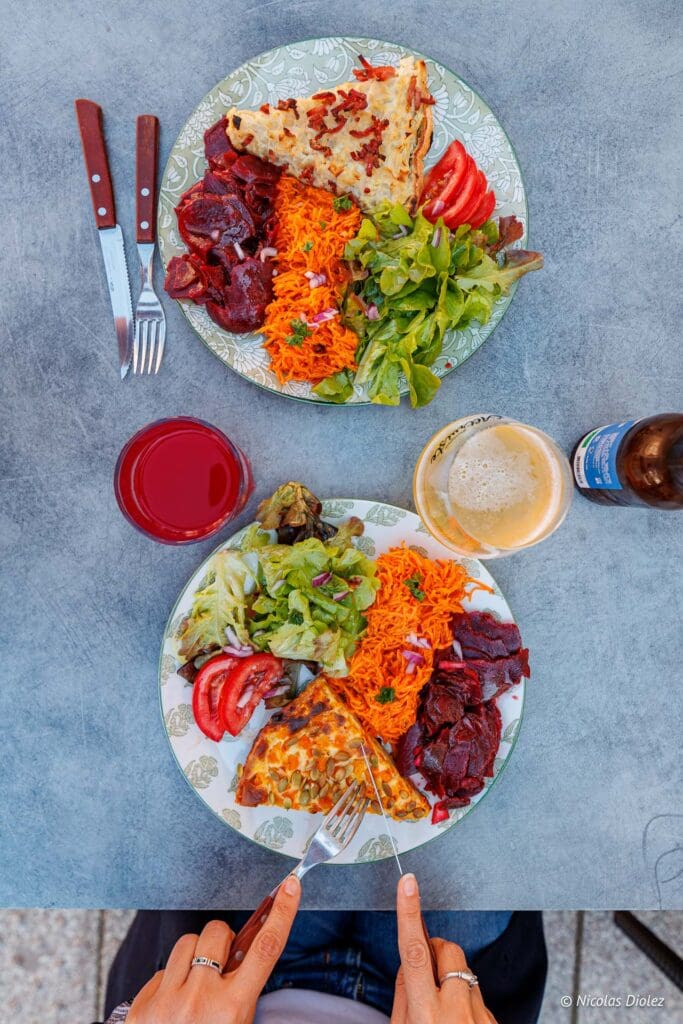
Lunch at the Maison du Pain d’Alsace tearoom
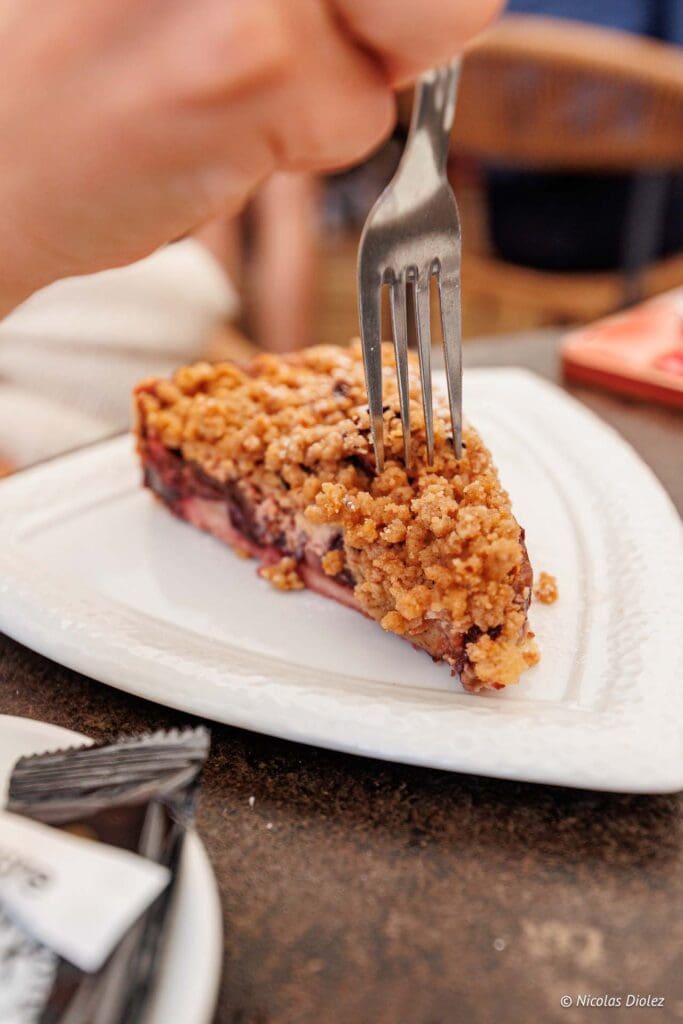
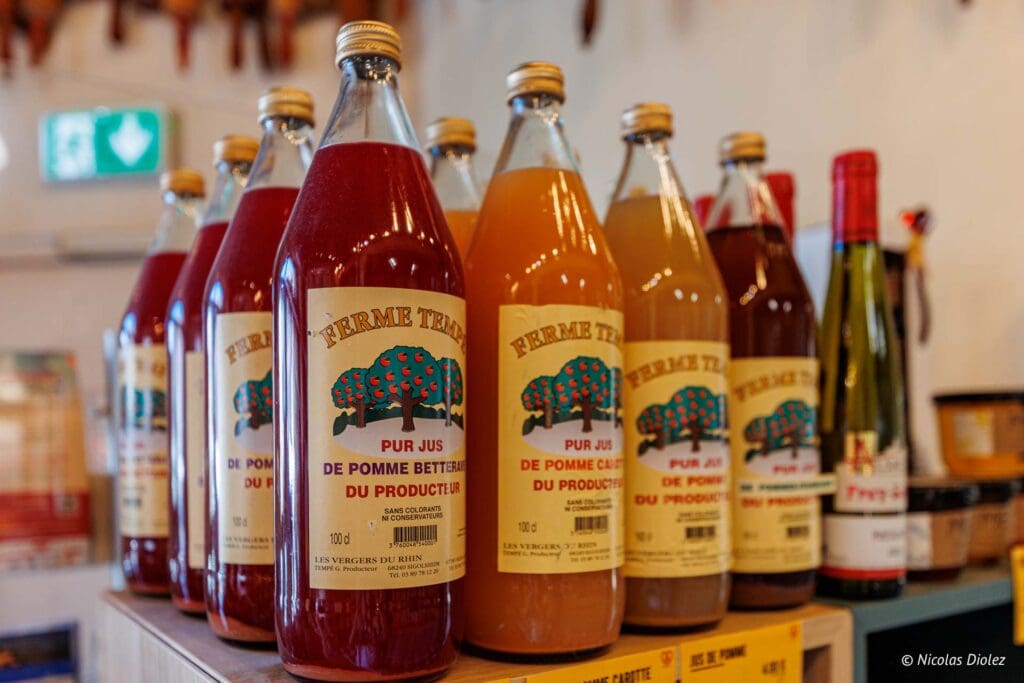
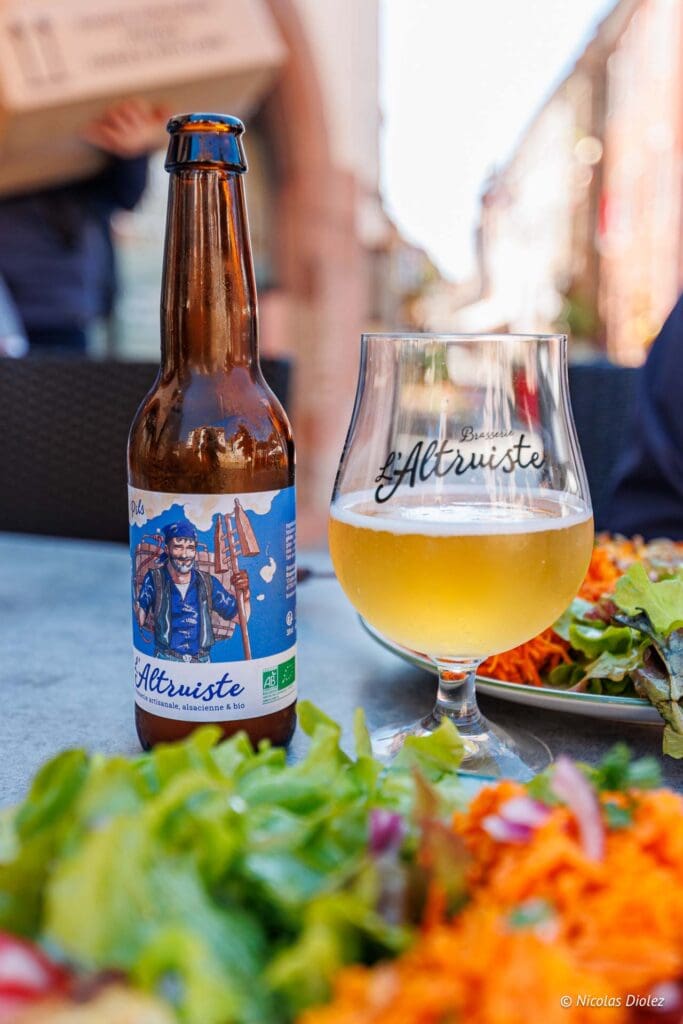
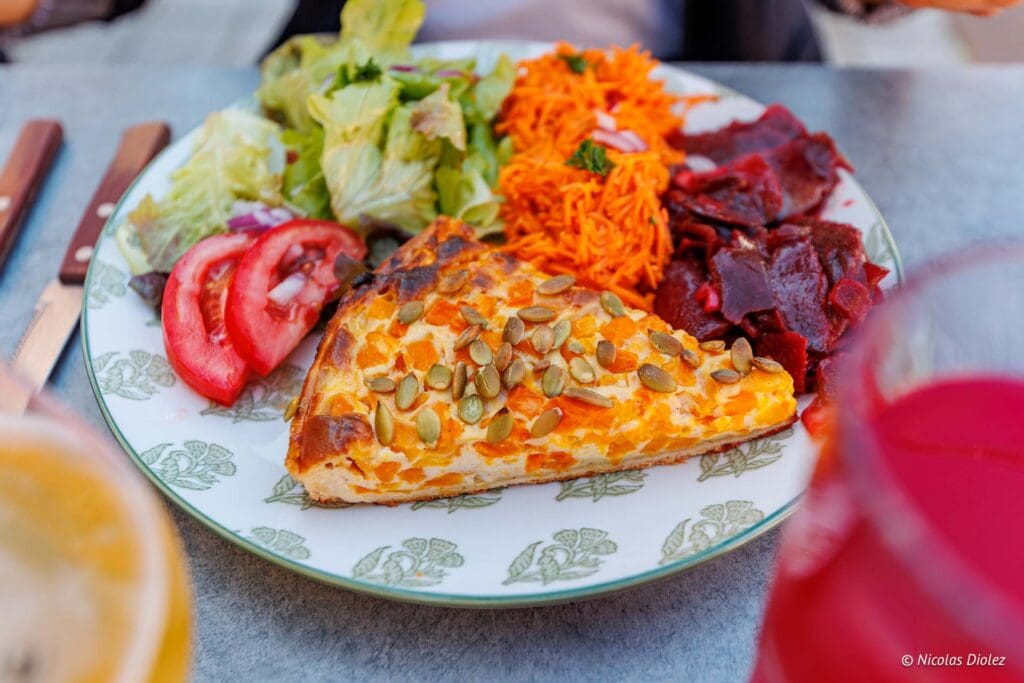
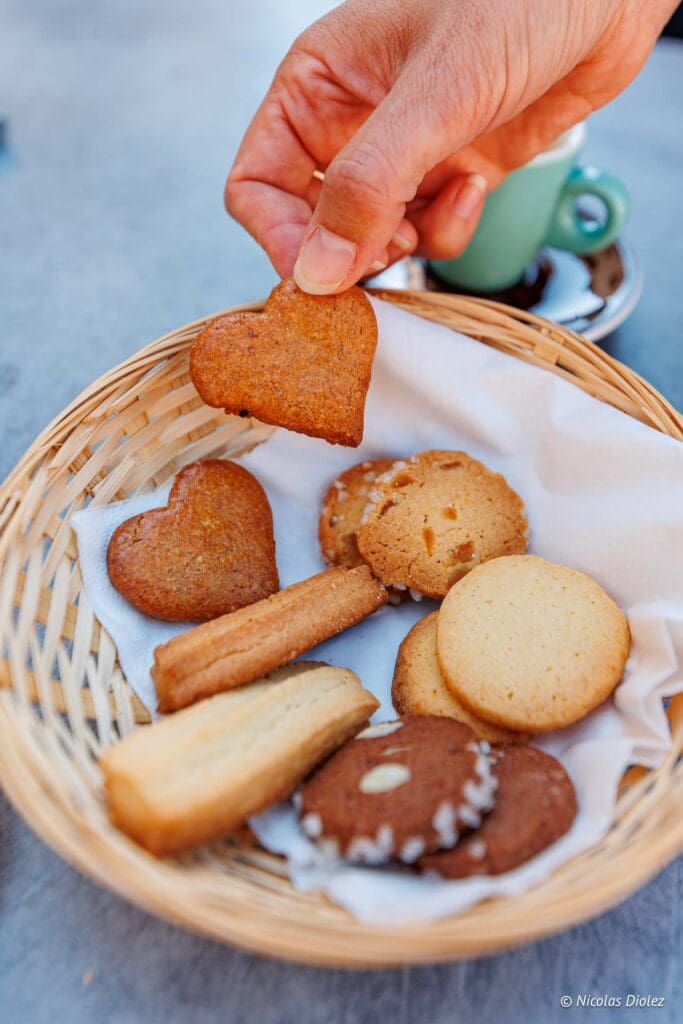
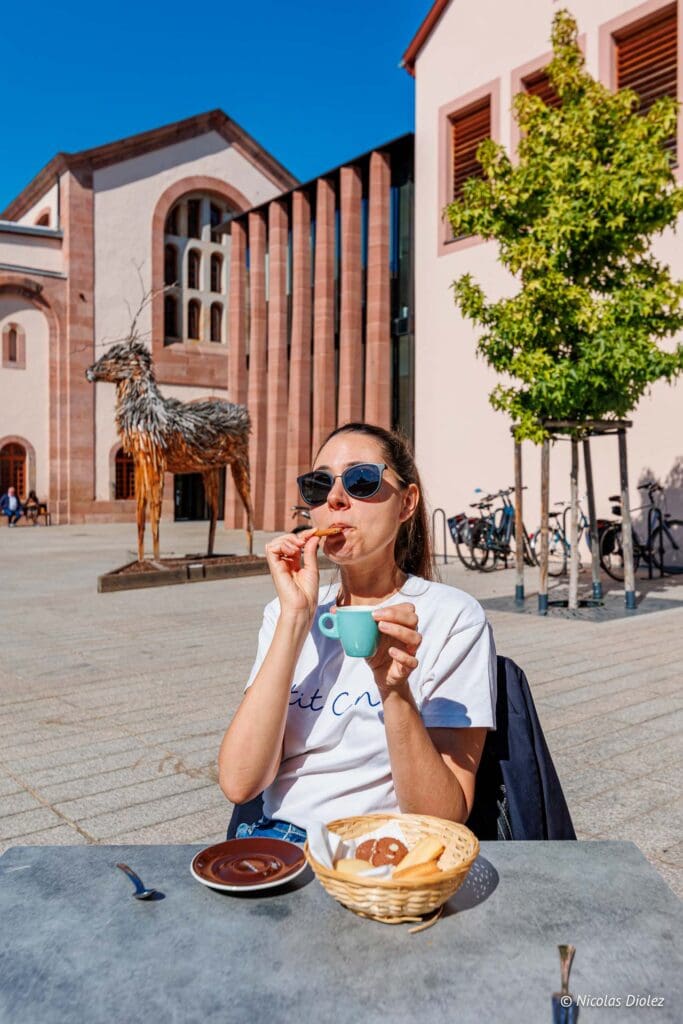
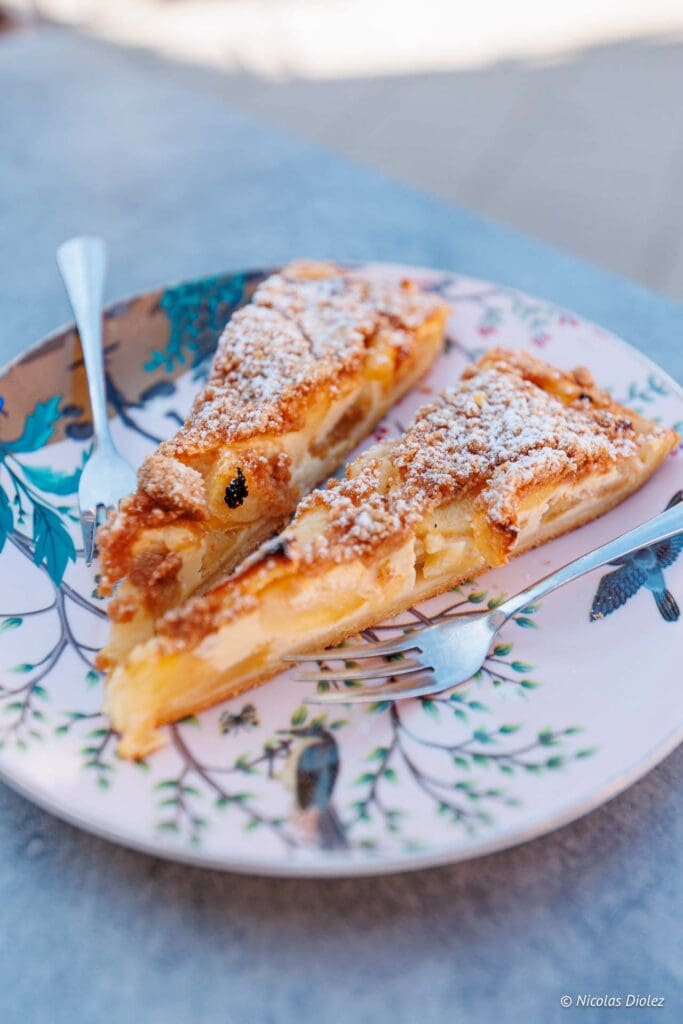
The address has a small terrace in front of the building for sunny days and also a tearoom if you want to eat indoors. They serve homemade savory quiches there (I recommend testing the onion quiche which is one of the specialties / but for info they also have vegetarian options). We also discovered a local organic beer from the L’Altruiste brewery in Scherwiller (€4 for a blonde beer in a bottle) and a surprising apple and beetroot juice as a non-alcoholic drink (€2.80). For dessert, do not miss the Christmas cookies, the Winachts-Bredele (served all year round) to accompany your coffee. And we also fell in love with their sweet tarts, especially the apple streussel which was a delight.
Maison du Pain tearoom
Price: lunch formula with savory quiche and raw vegetables for €10.80 and +€6 to have a sweet tart and an espresso / salted pretzel €1.70 / sweet tarts only between €4.10 and €4.70
_
Visit the Maison du Pain museum
The museum, renovated about 5 years ago, traces the history of bread, baking, and Alsatian specialties. It presents a rich collection of objects, ancient tools, and traditional molds, especially those used for famous gingerbread and Bredele. You discover the secrets, legends, and objects linked to the profession of Alsatian baker through a modernized and interactive route. It is an interesting visit to better understand the importance of bread in Alsatian culture.
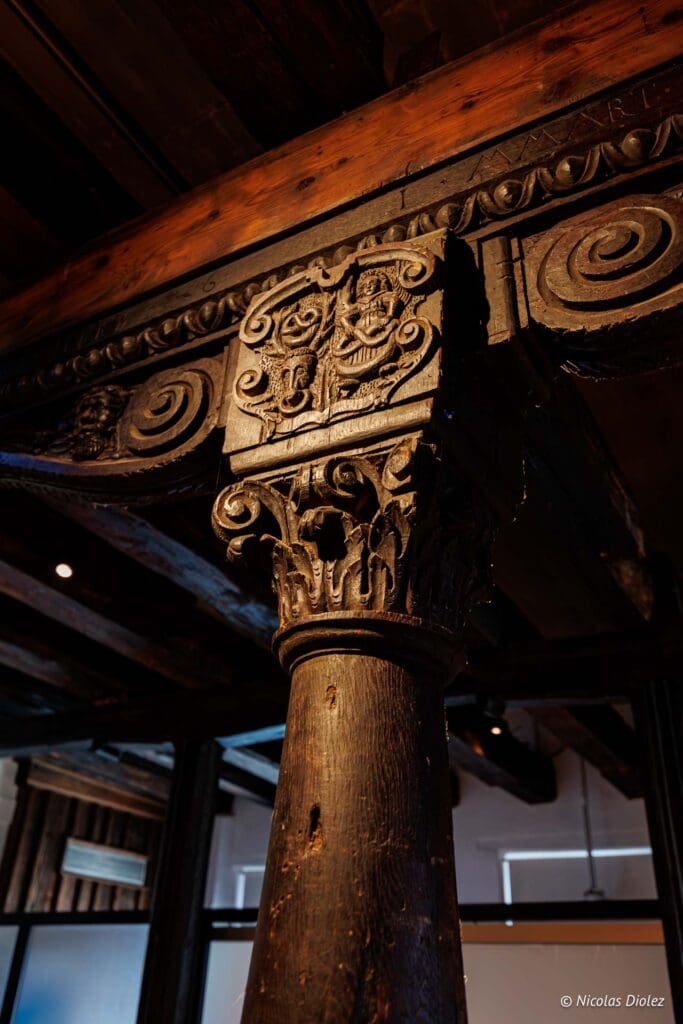
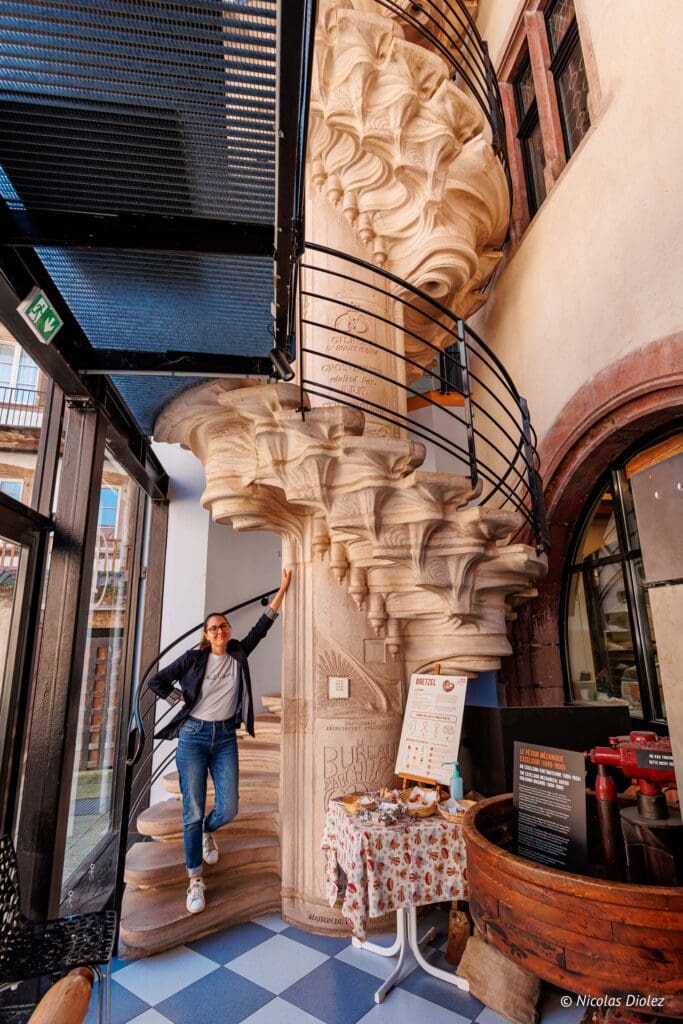
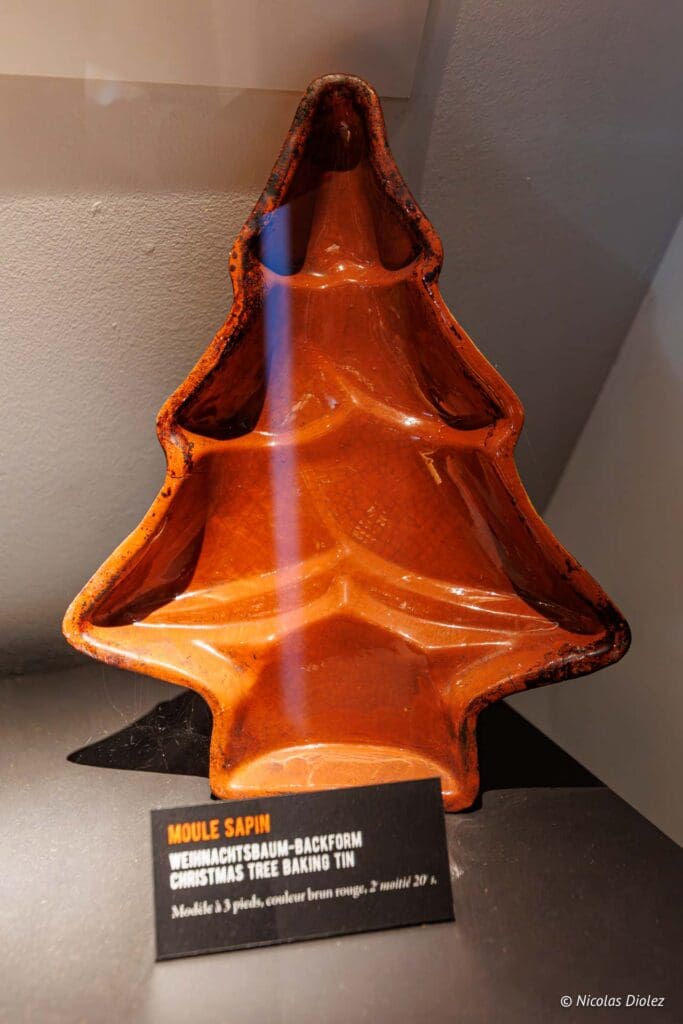
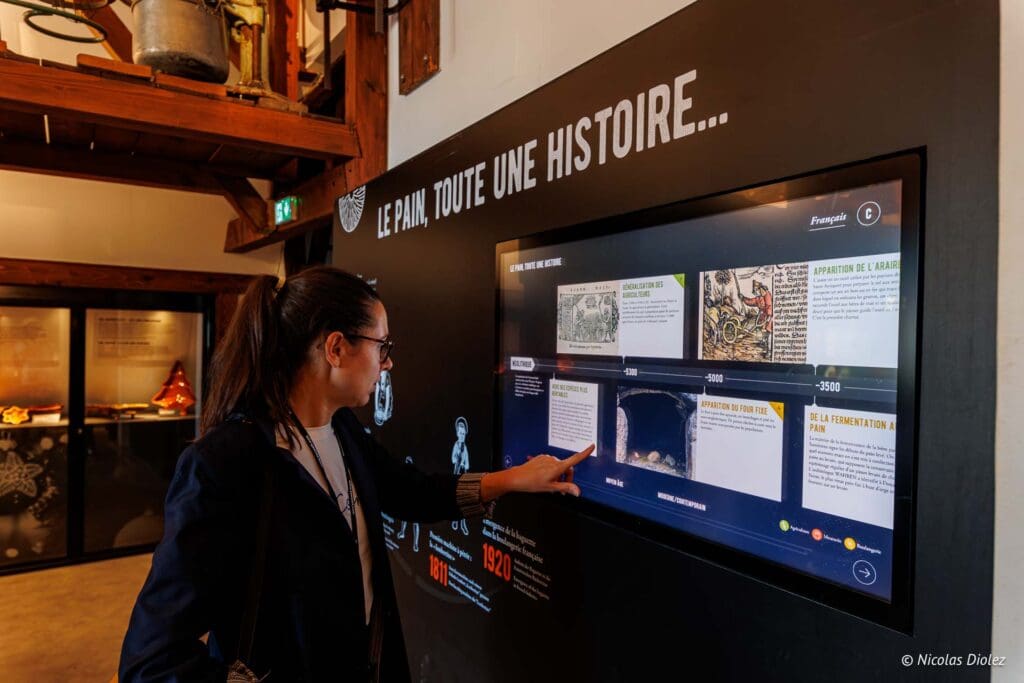
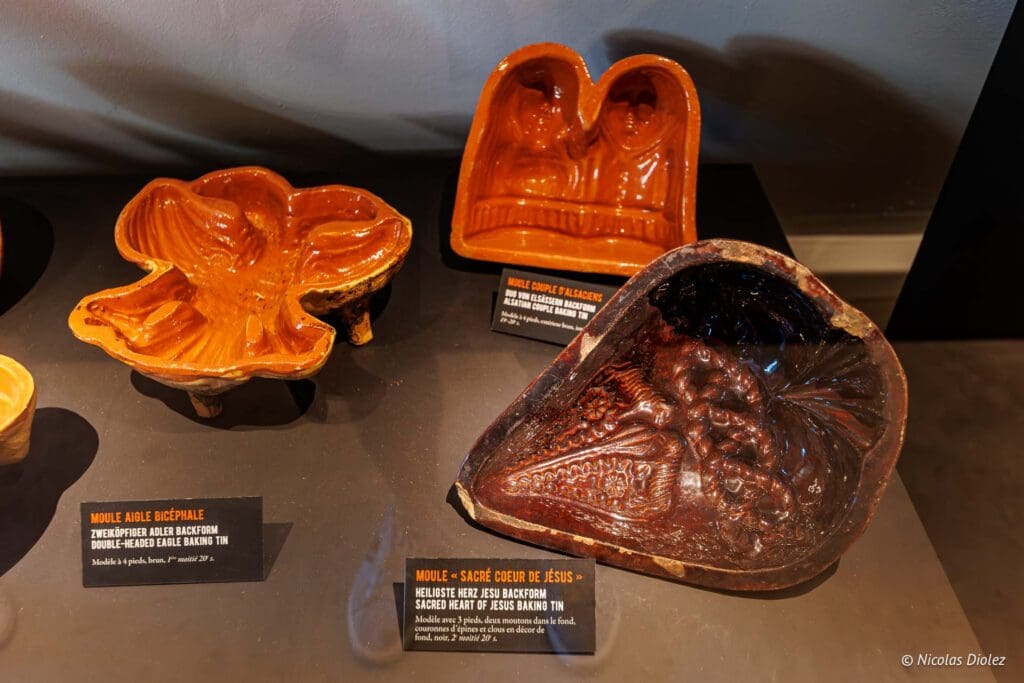
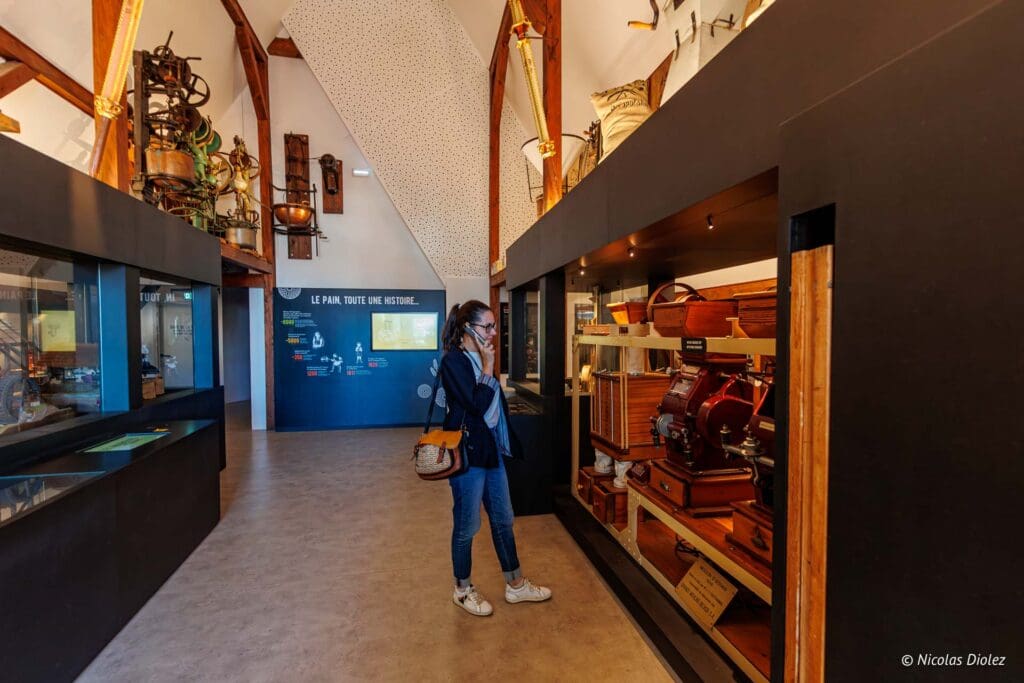
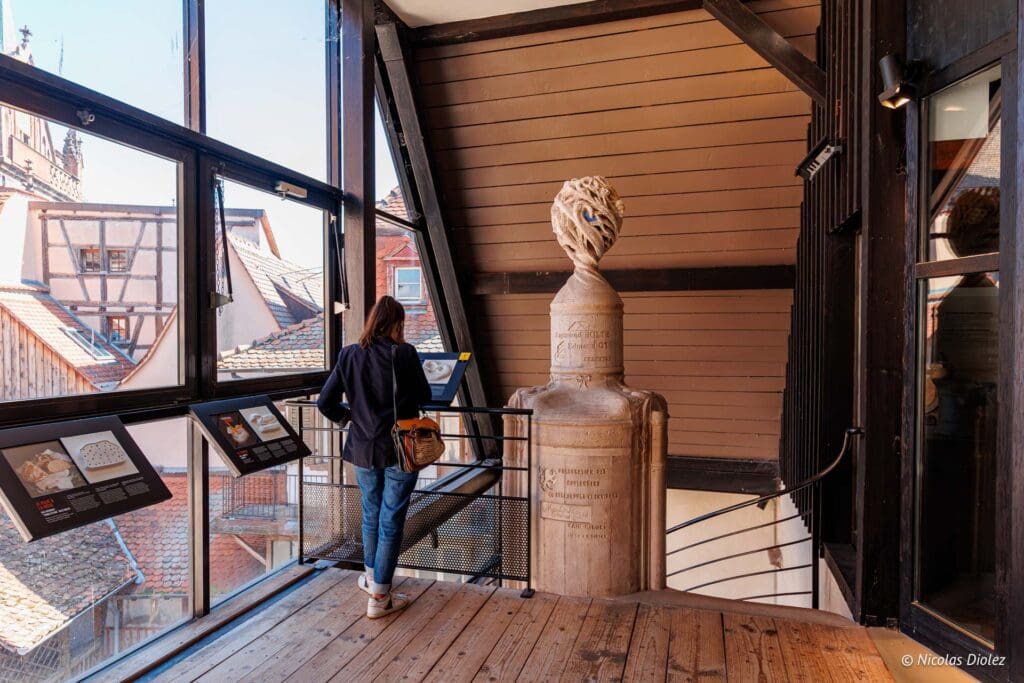
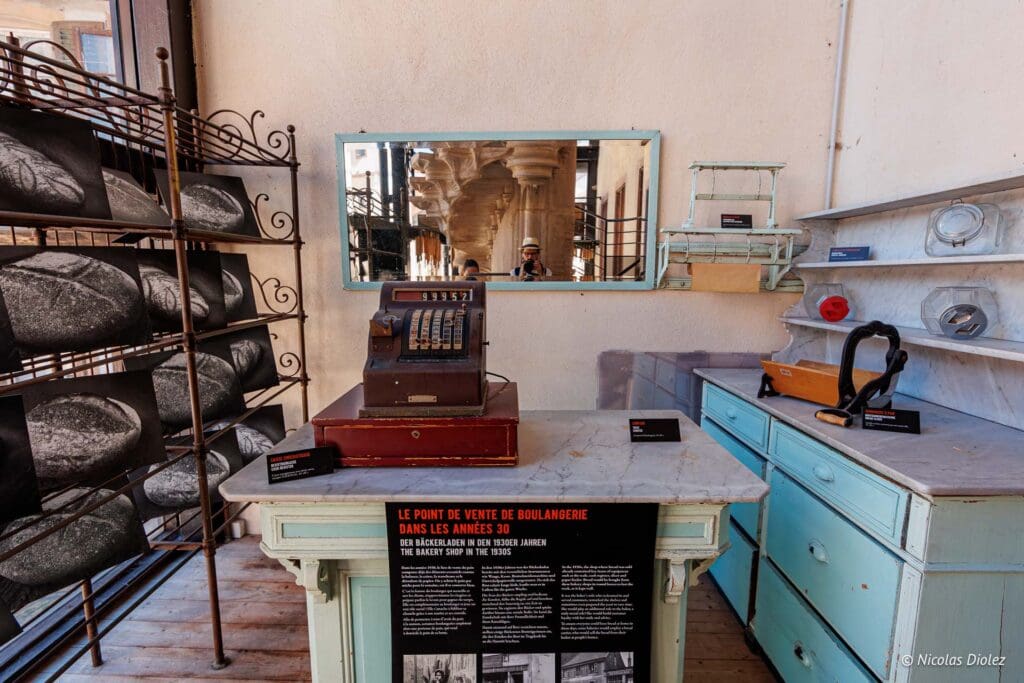
Museum of the Maison du Pain
Pricing: full price €6 / reduced price €4 / free for under-6s / family pass €15
_
Visit the Humanist Library
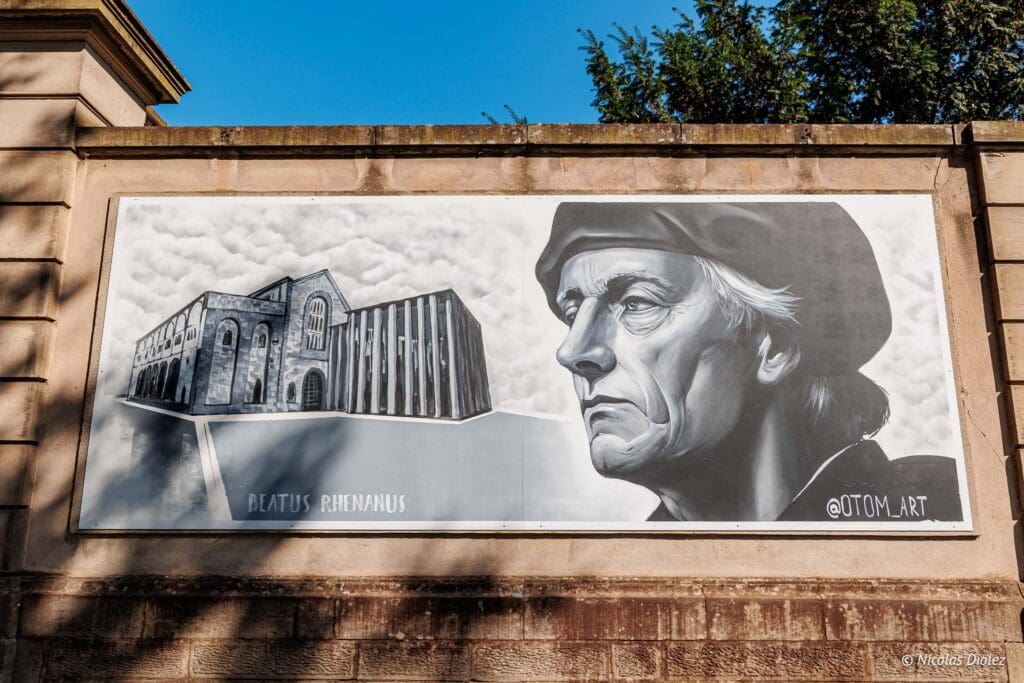
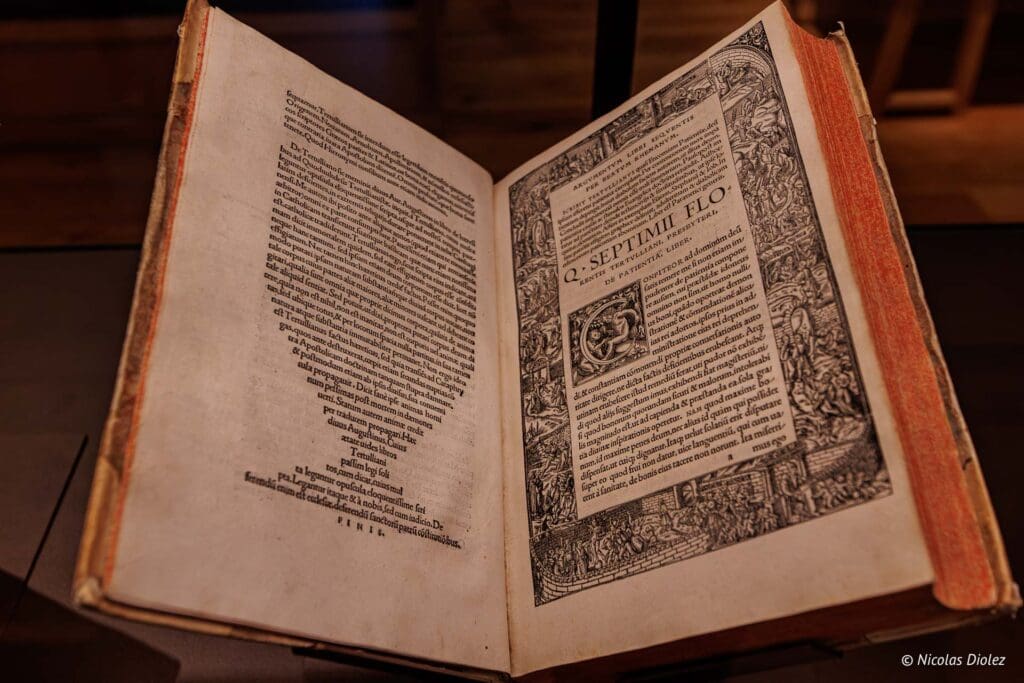
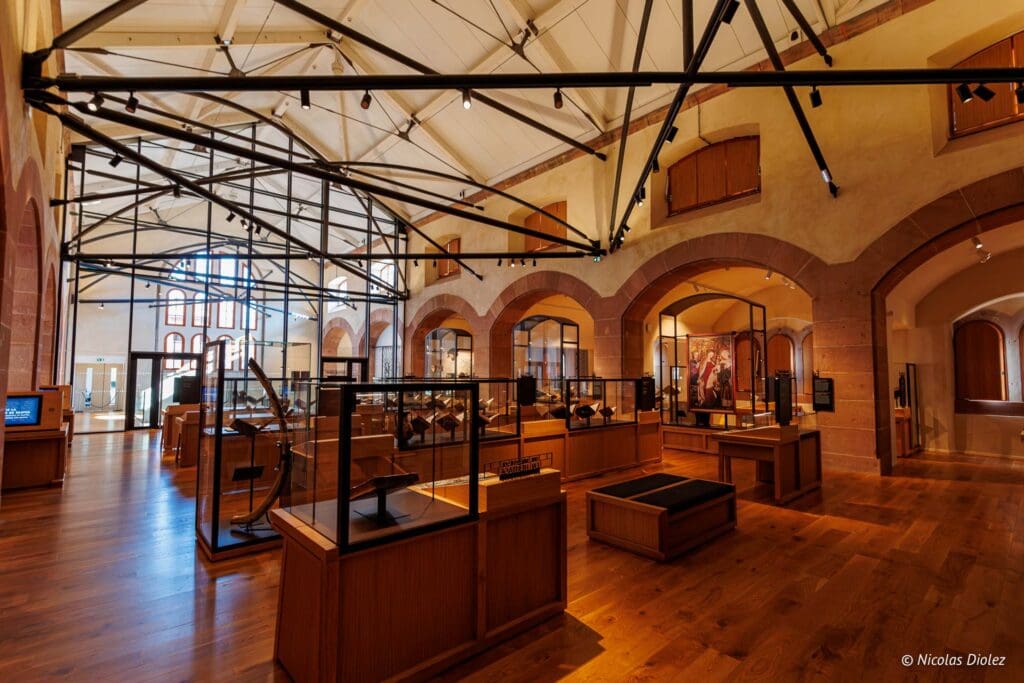
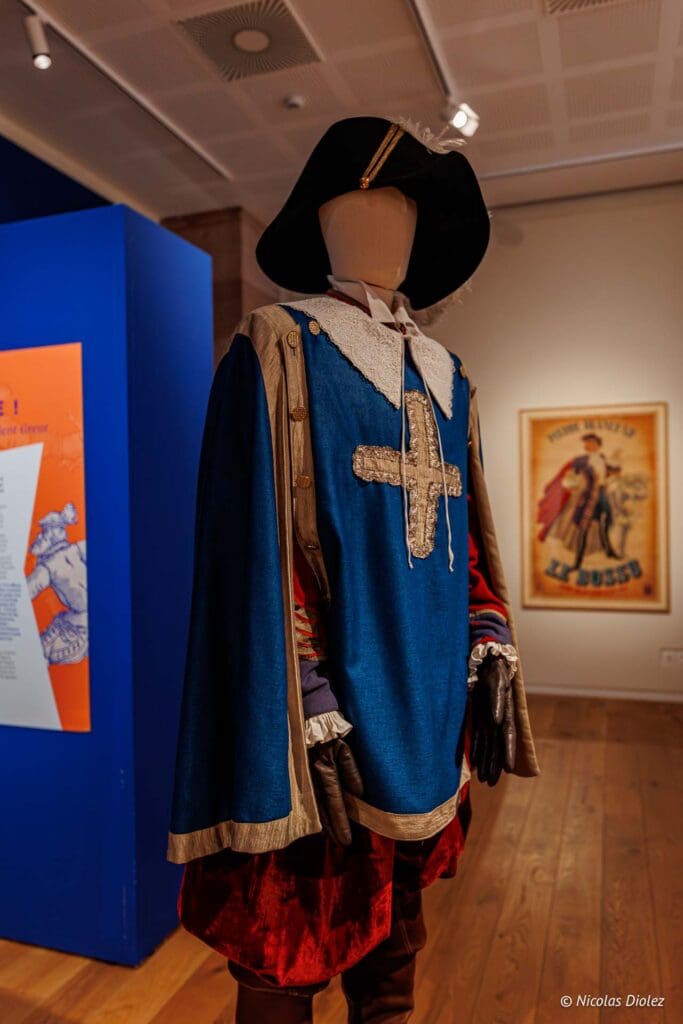
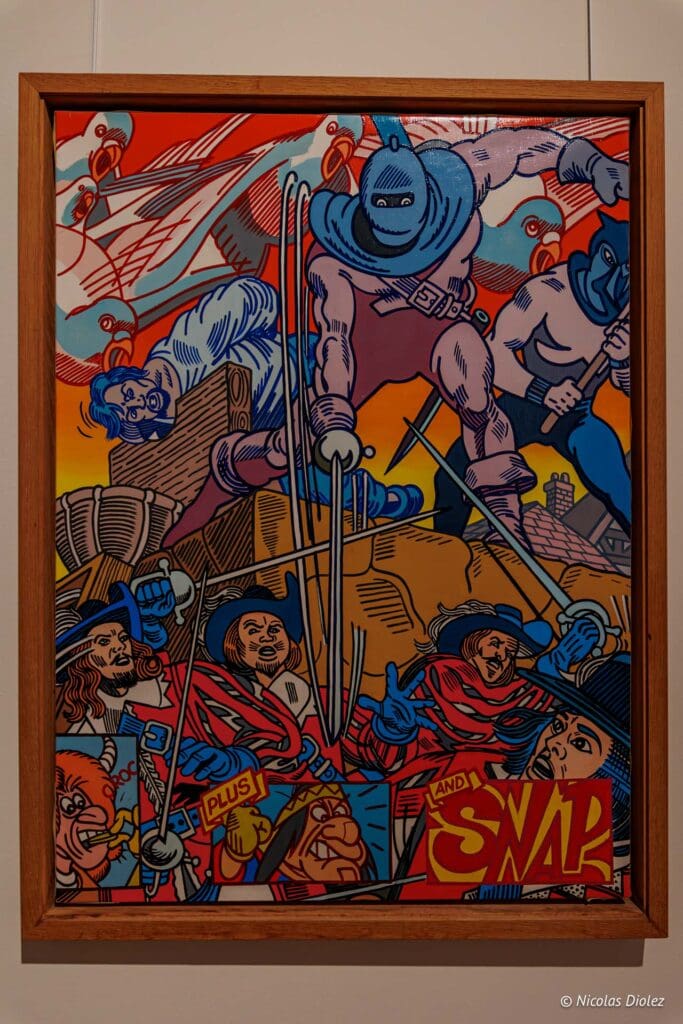
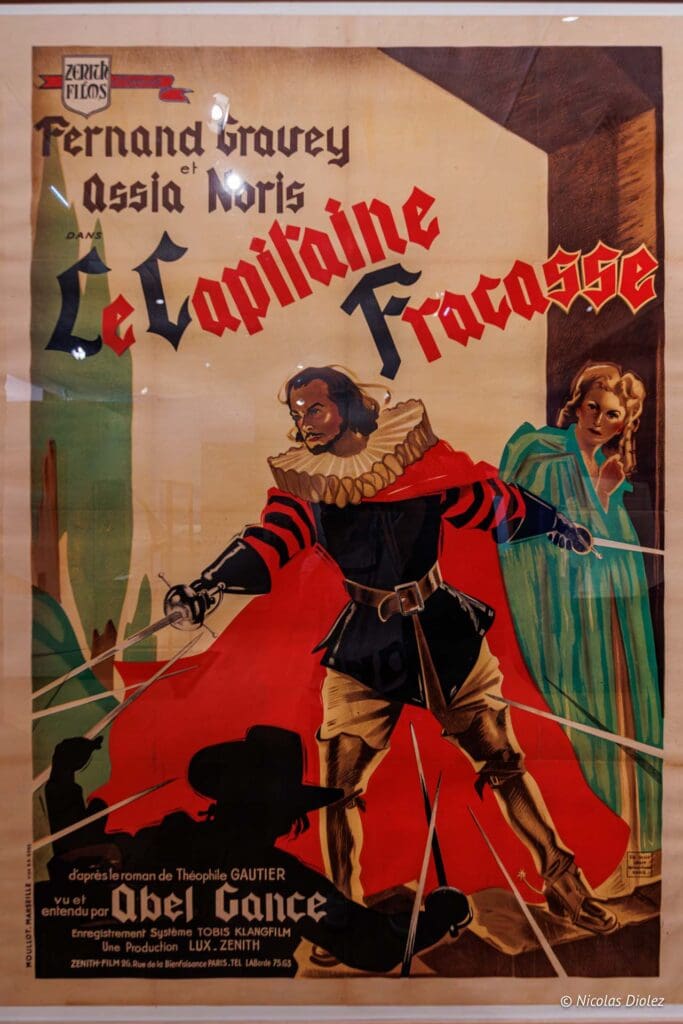
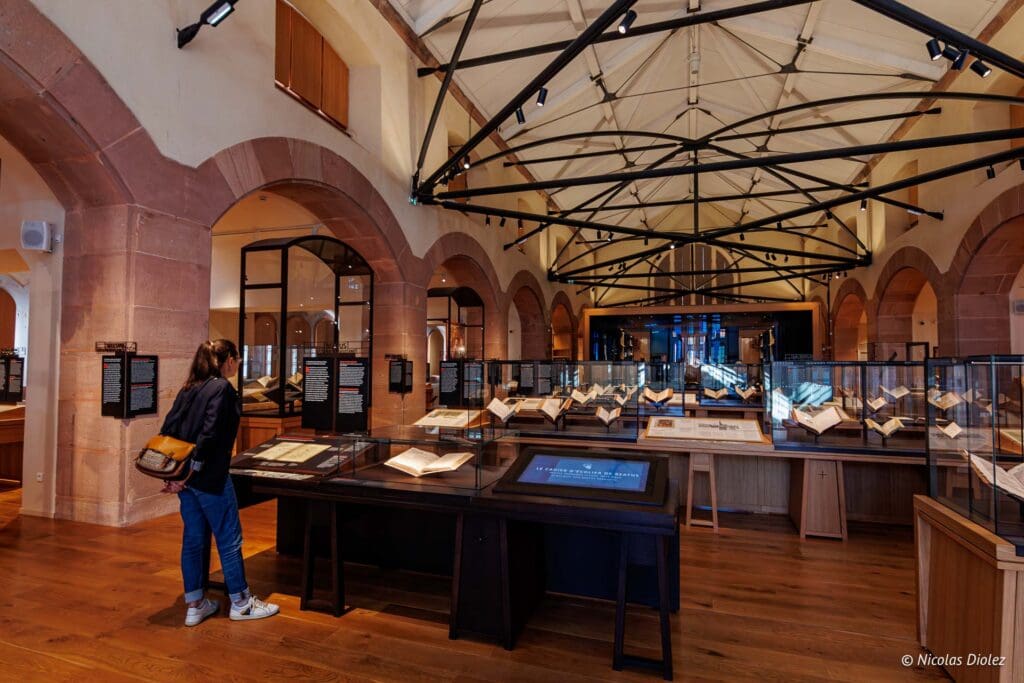
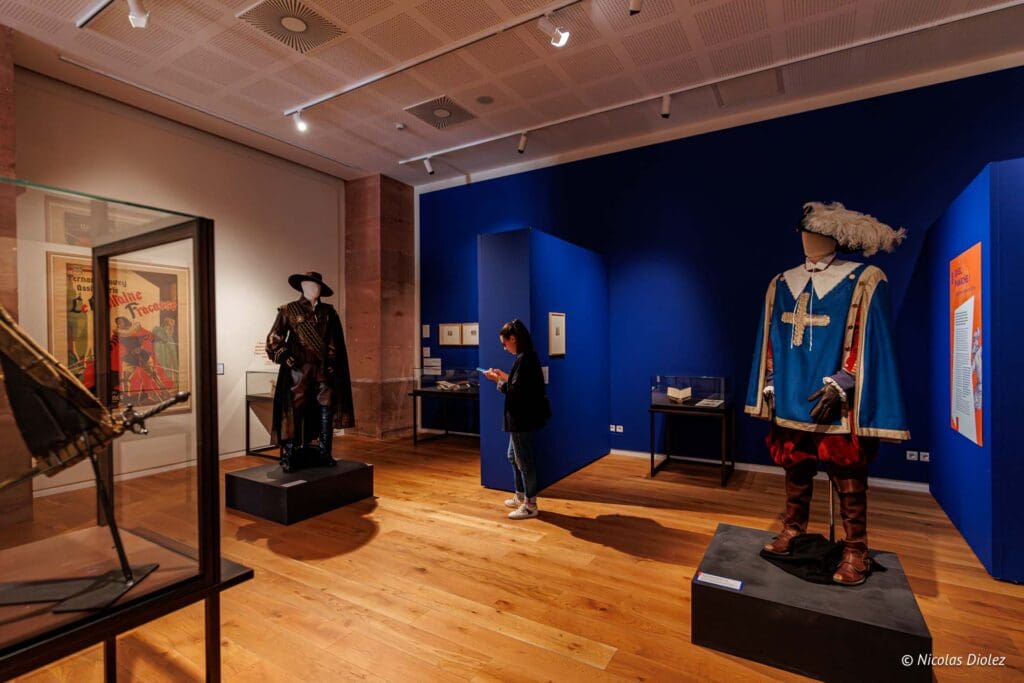
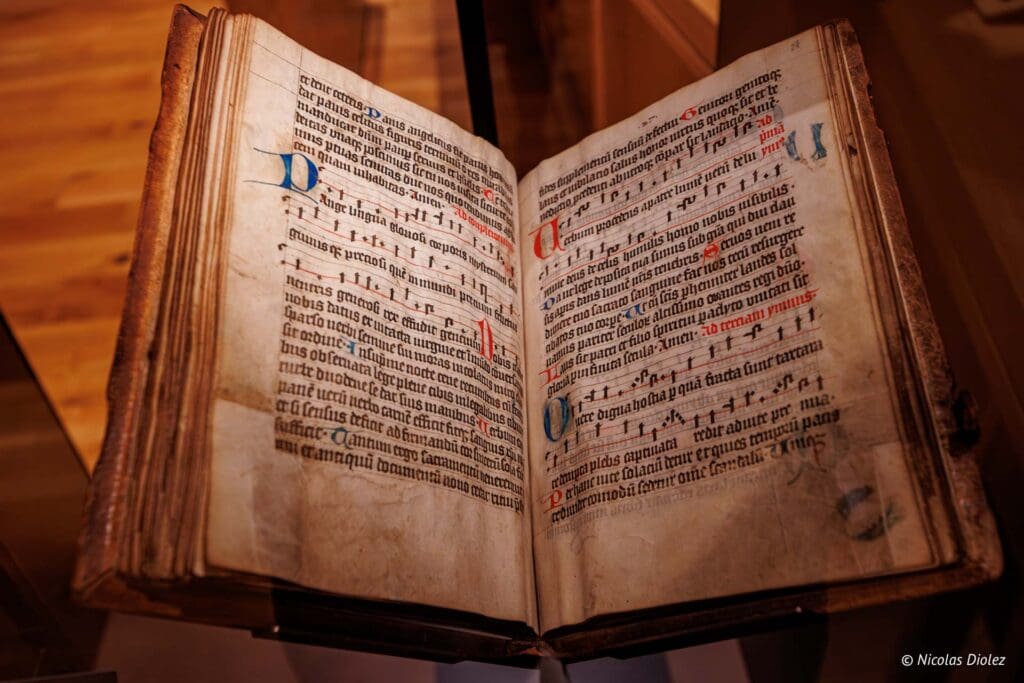
This incredible library has been installed for over 120 years in the city’s former Grain Hall, a building transformed and beautifully renovated by architect Rudy Ricciotti (to whom we also owe the MuCEM in Marseille) between 2014 and 2018. The museography is superb, both modern and interactive, highlighting precious collections from two funds created in the 15th and 16th centuries: the parish library of the Saint-Georges church and the personal library of the Alsatian humanist Beatus Rhenanus (born in Sélestat in 1485). The latter is in fact inscribed in the UNESCO “Memory of the World” register. The permanent exhibition presents ancient works that allow you to discover the life of a scholar from the 15th and 16th centuries. A visit to absolutely make if you pass through Sélestat!
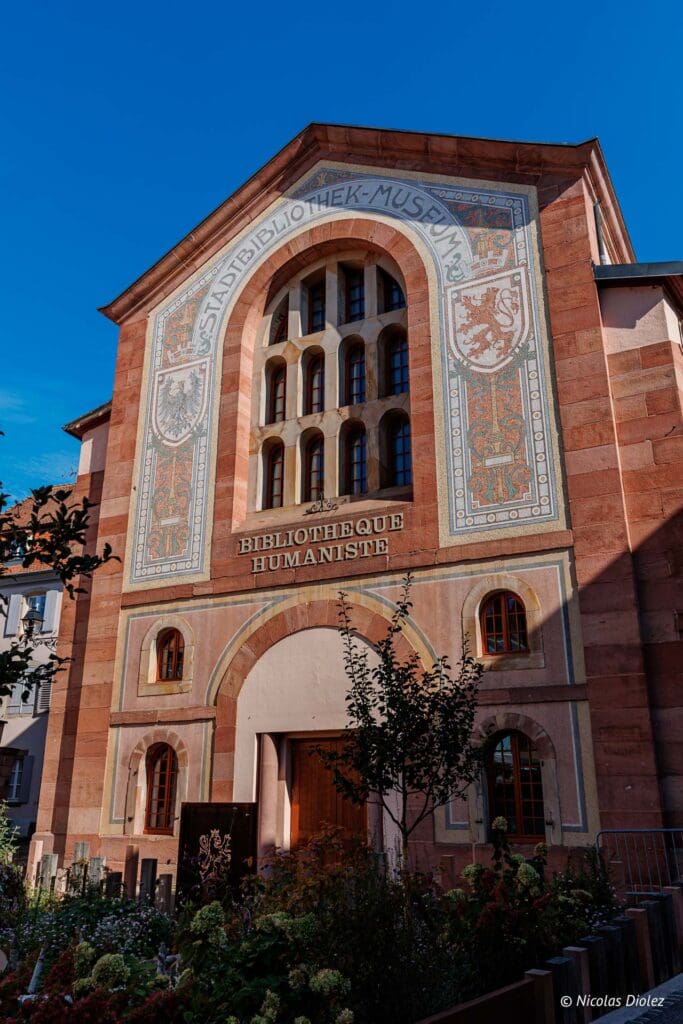
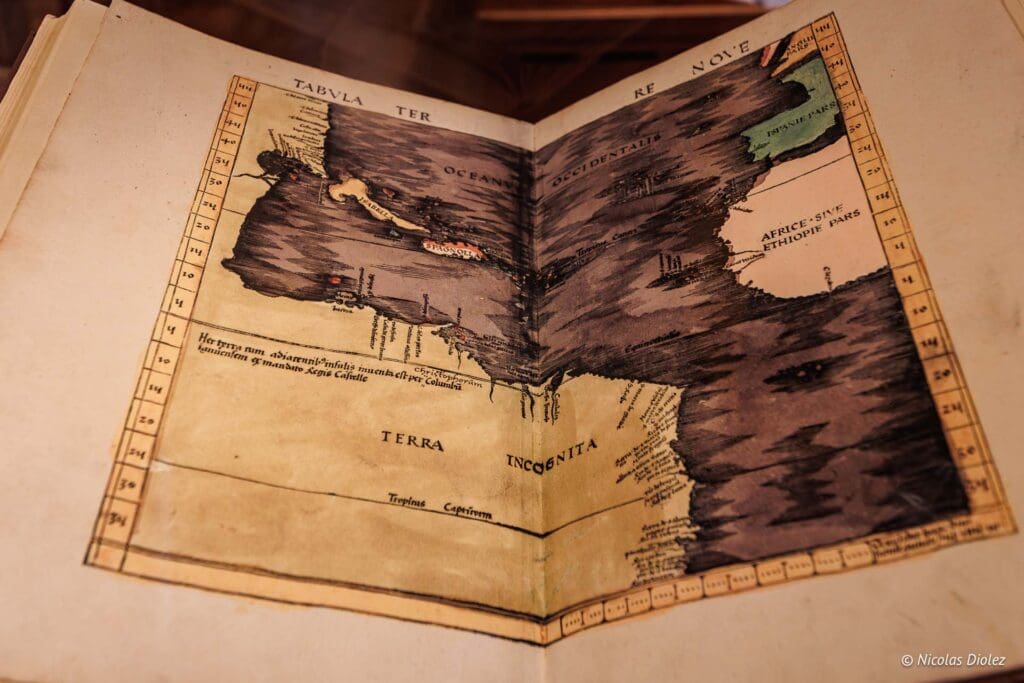
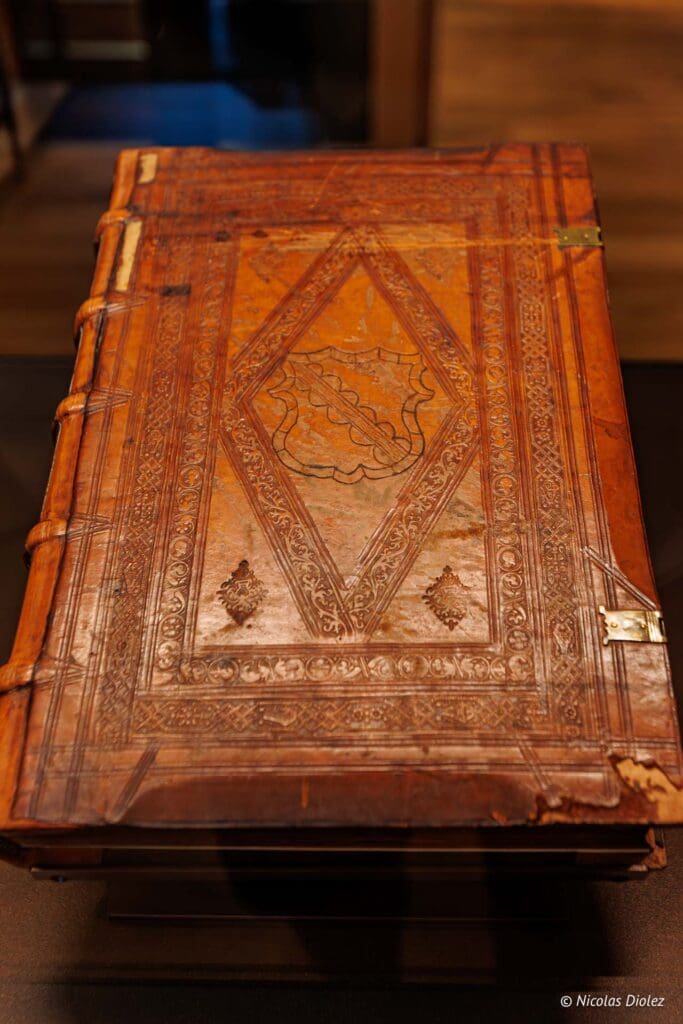
Humanist Library
1 Place du Dr Maurice Kubler, 67600 Sélestat
Open Tuesday to Sunday
Pricing: full price €6 / reduced price €4 / free for under-7s / family pass €16
_
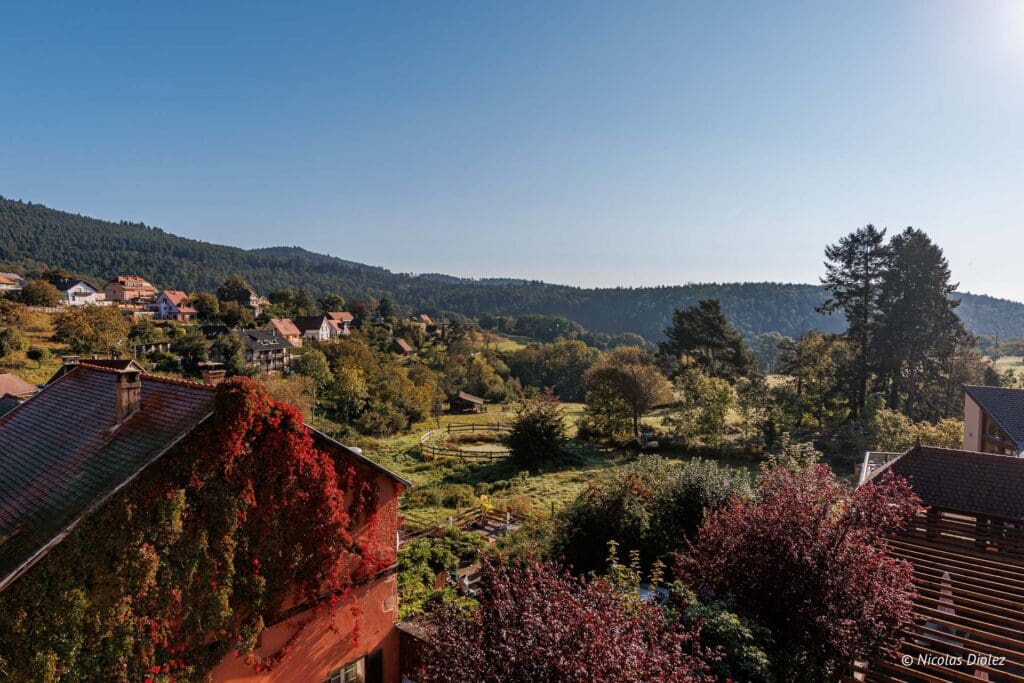
Thannenkirch
This charming small mountain village is nestled at the foot of Haut-Koenigsbourg and the Taennchel massif. It is an ideal starting point for numerous hikes and a peaceful place to stay.
_
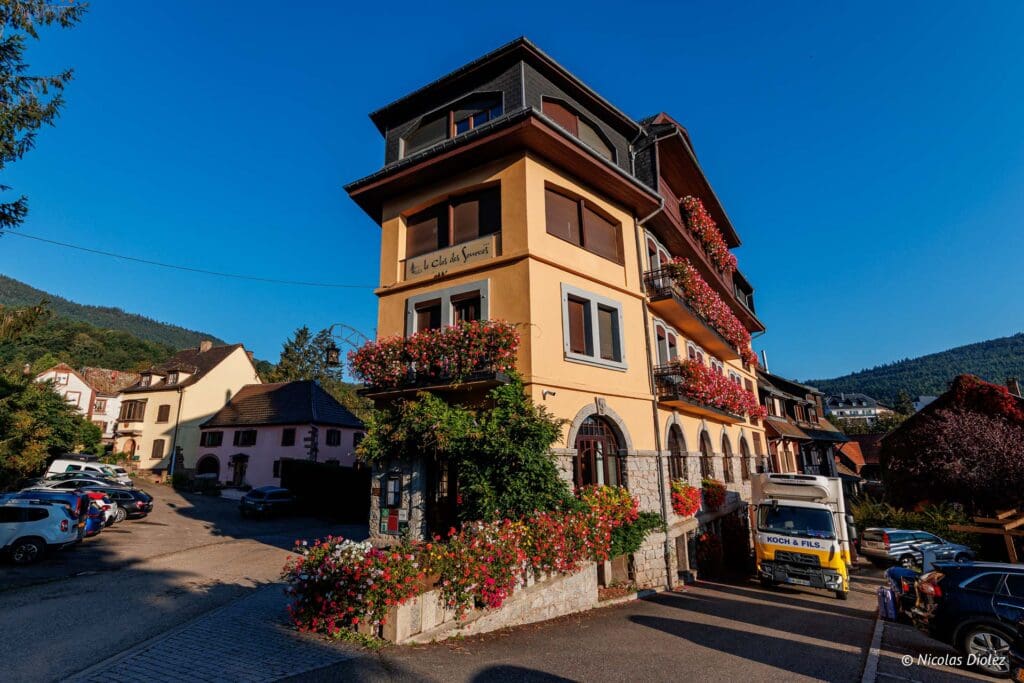
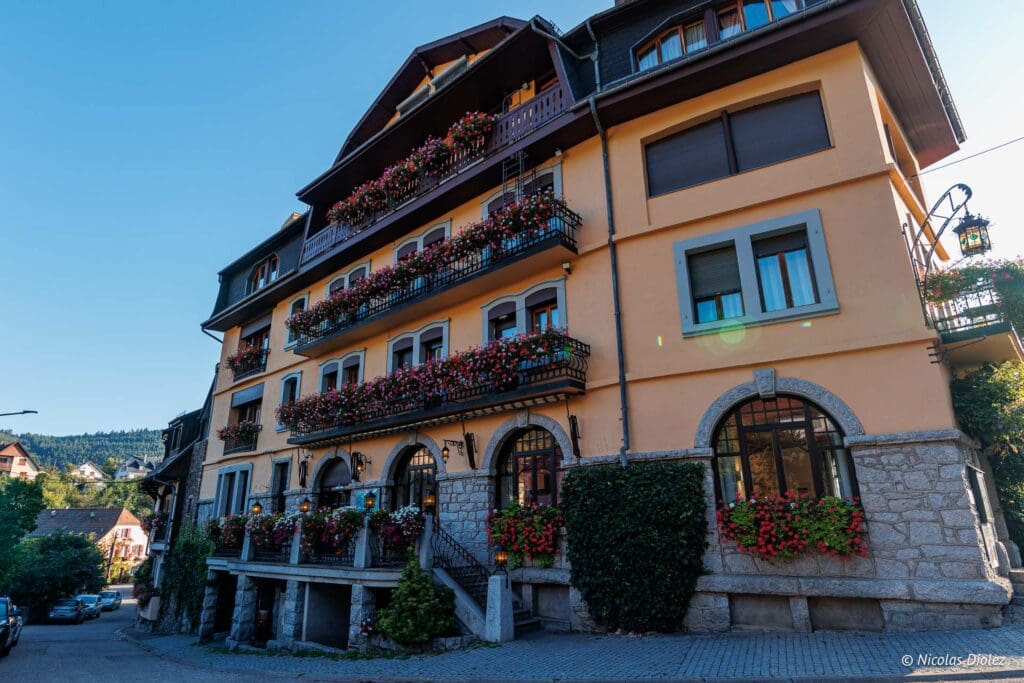
Hôtel & Spa Le Clos des Sources
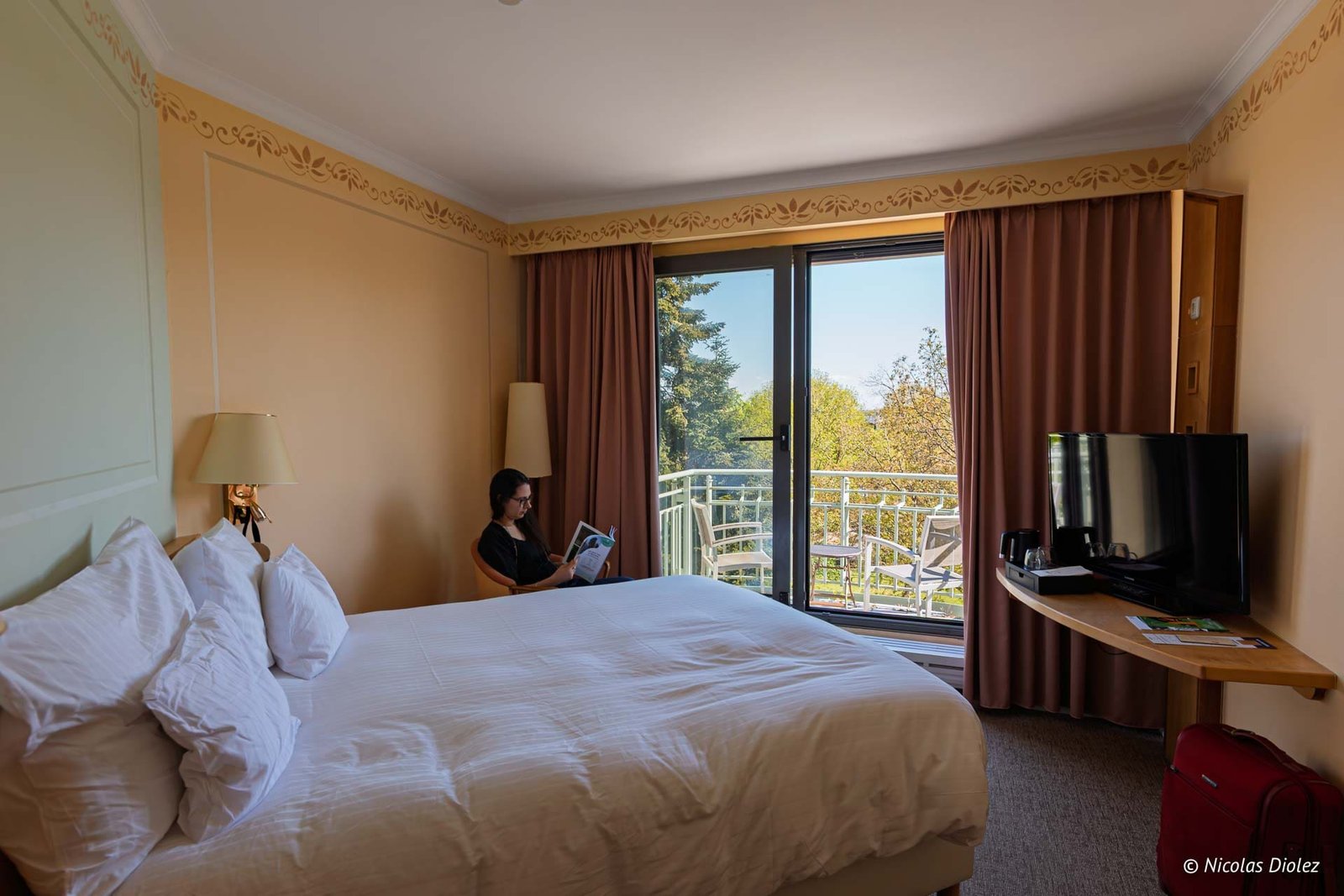
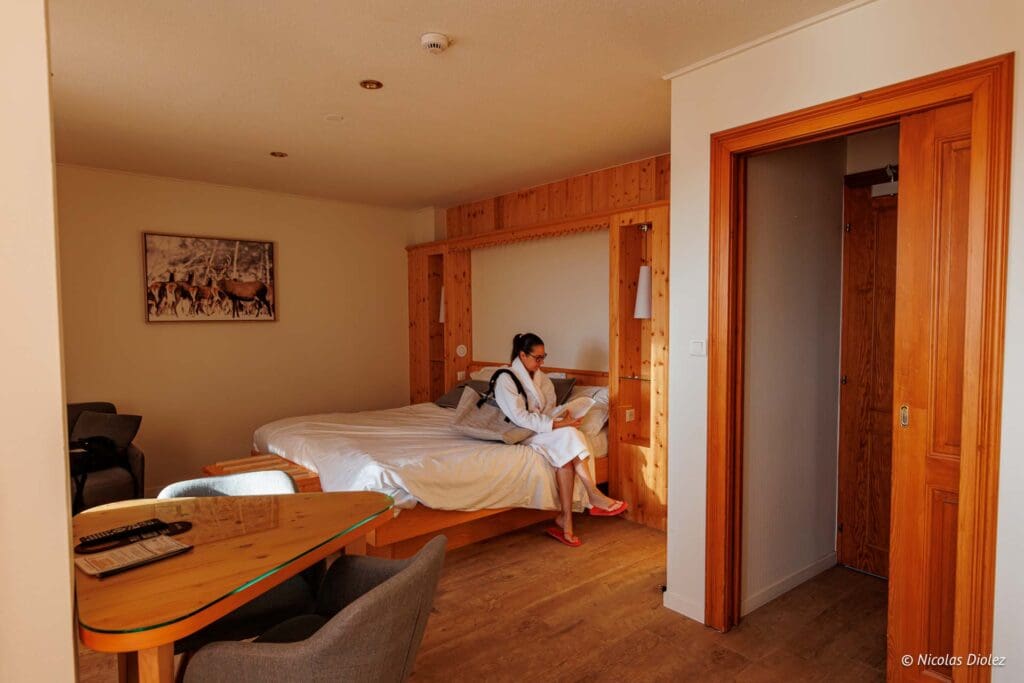
This 3-star hotel with spa and pool is located in the center of the small village of Thannenkirch. It was inspired by the surrounding nature to design a haven of peace with a very Alsatian atmosphere. Four generations of the same family, the Stoeckel family, have followed one another at the head of this establishment, which owes its name to the multiple springs of the Taennchel massif that provide pure water. Our room (we were in room n°228) offered a magnificent view and a warm mountain atmosphere with its wooden decor.
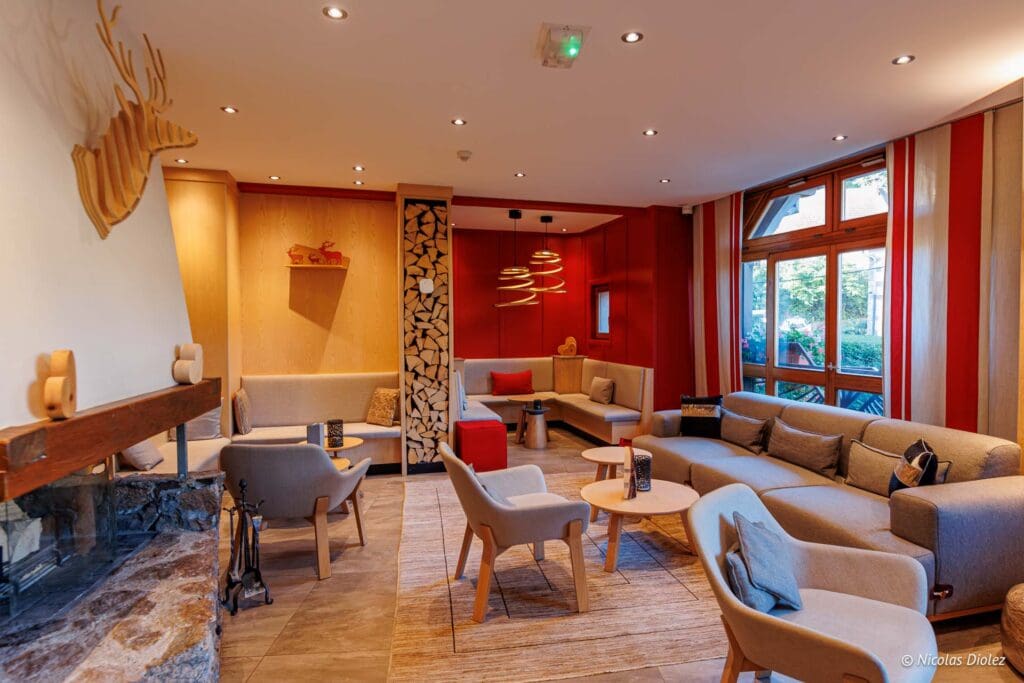
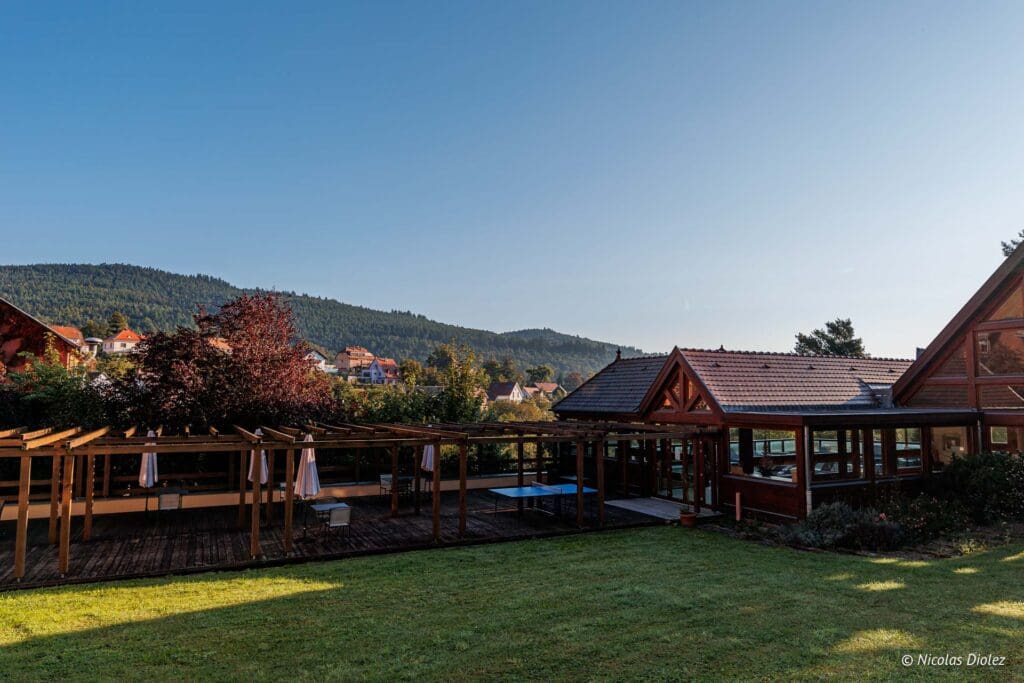
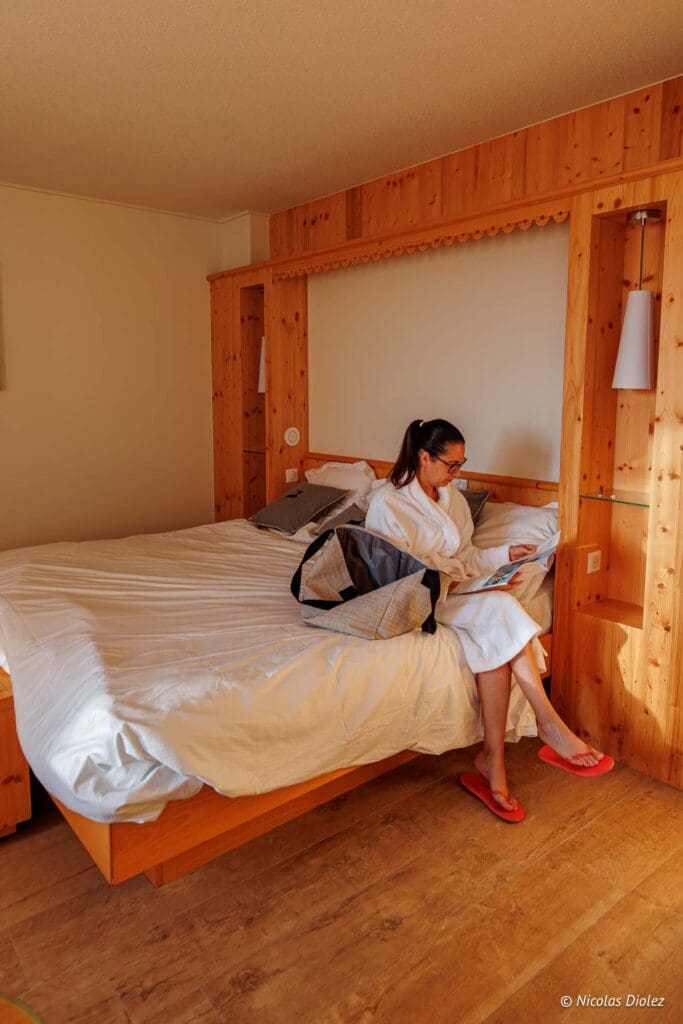
The hotel also has a very beautiful relaxation area with a heated indoor pool and a spa (be careful, the latter is naturist, German-style, swimsuits are prohibited there). The spa offers a sauna, steam room, sanarium, jacuzzi, and a relaxation room.
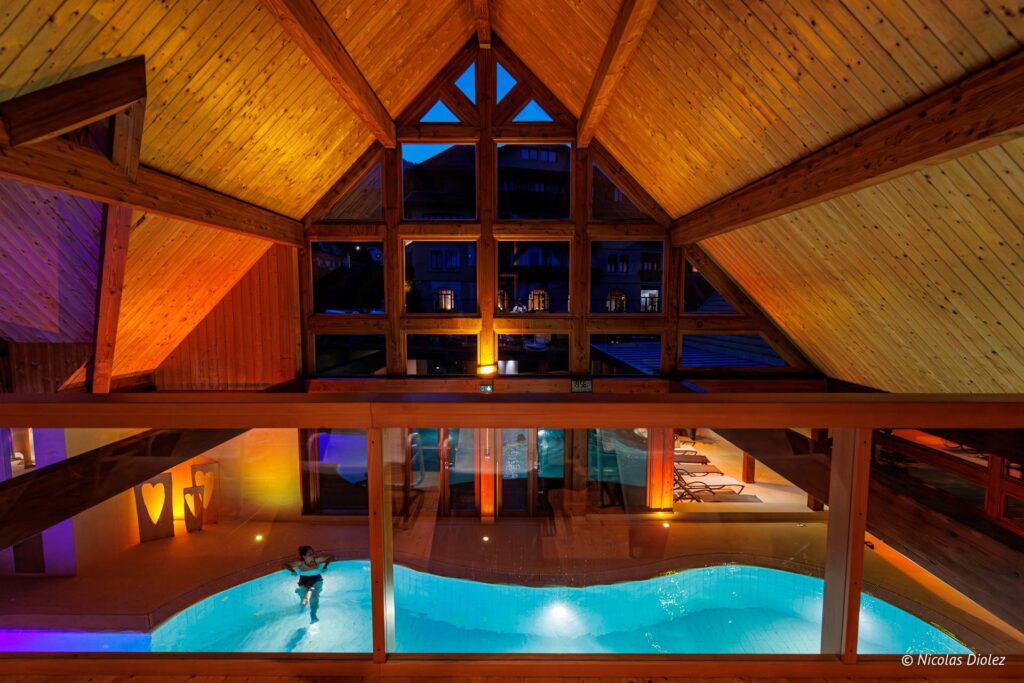
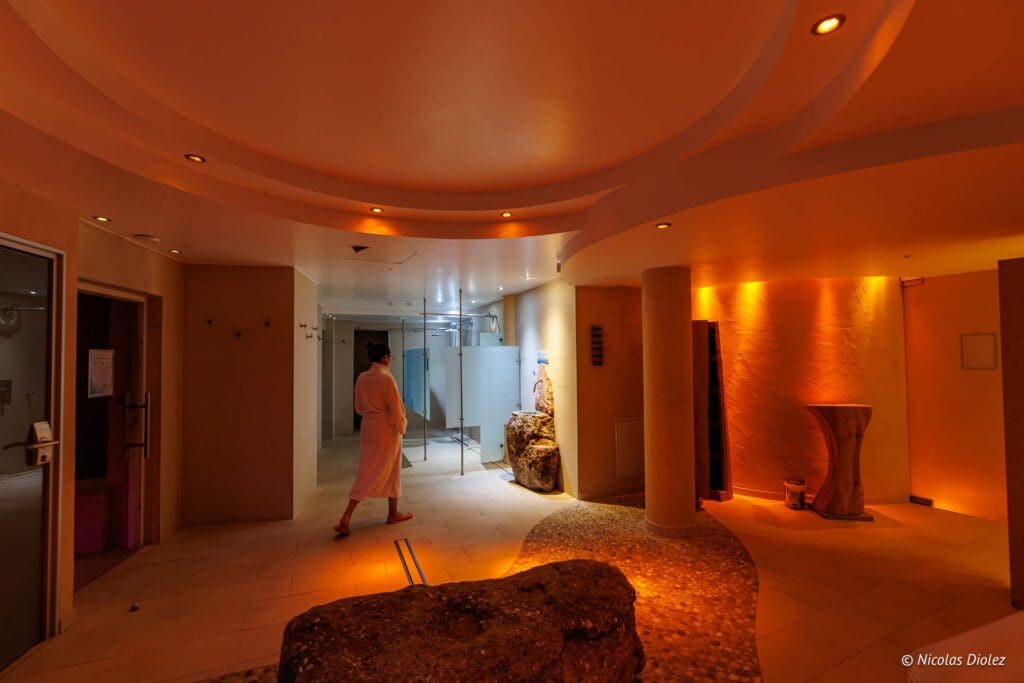
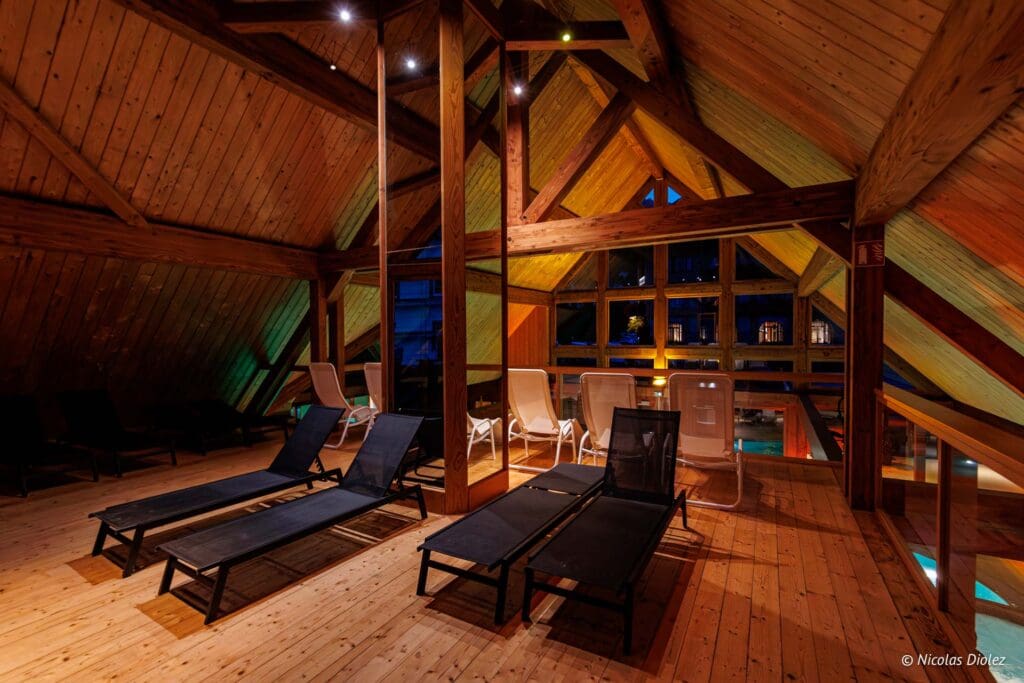
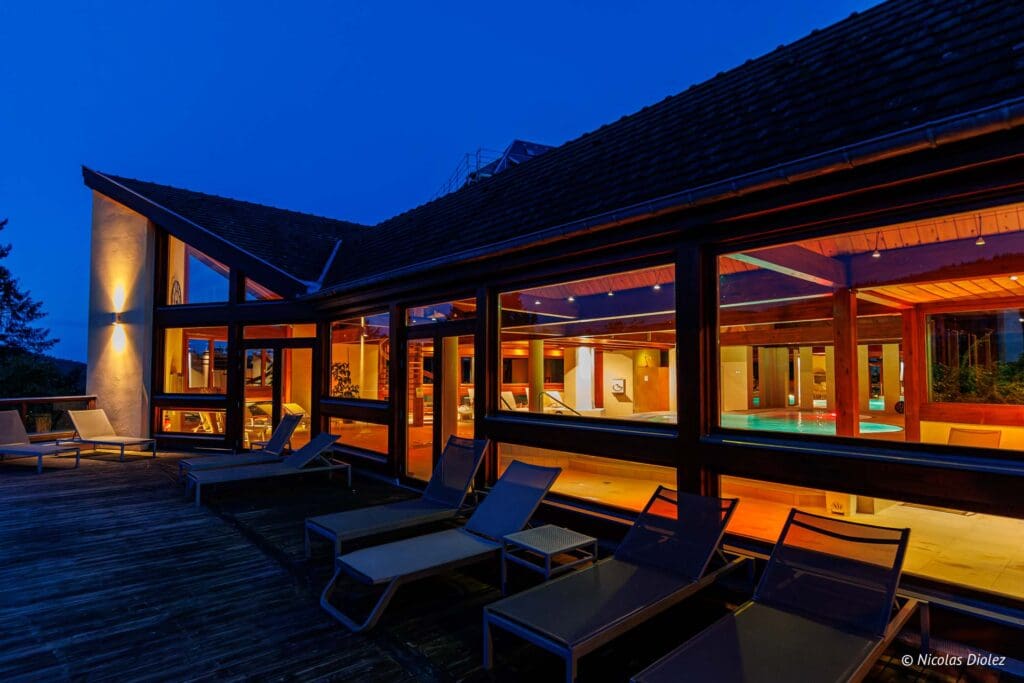
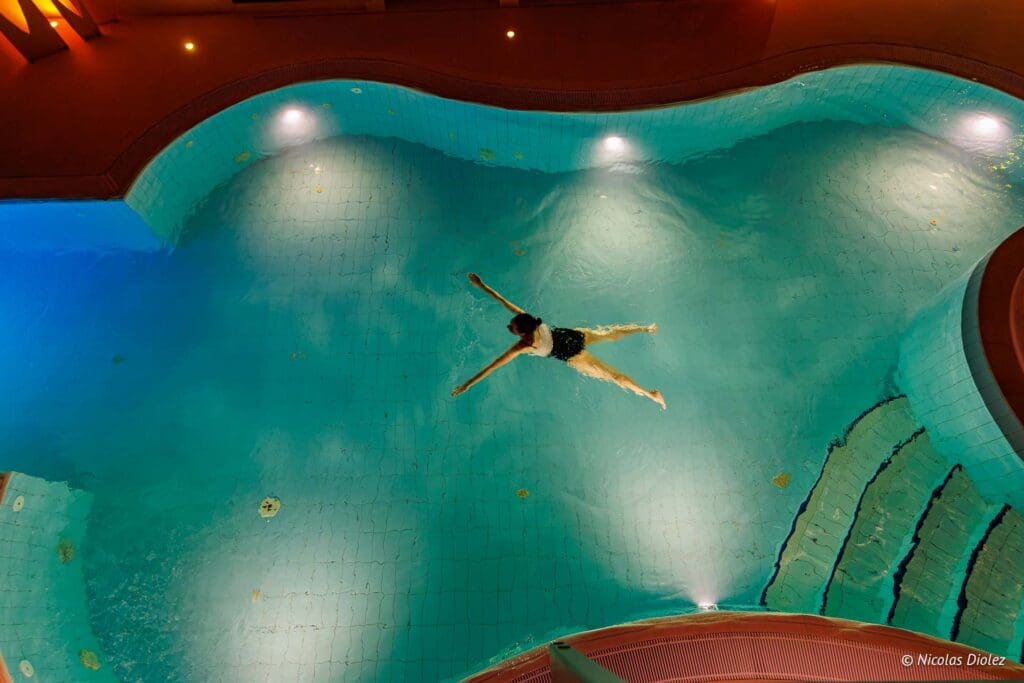
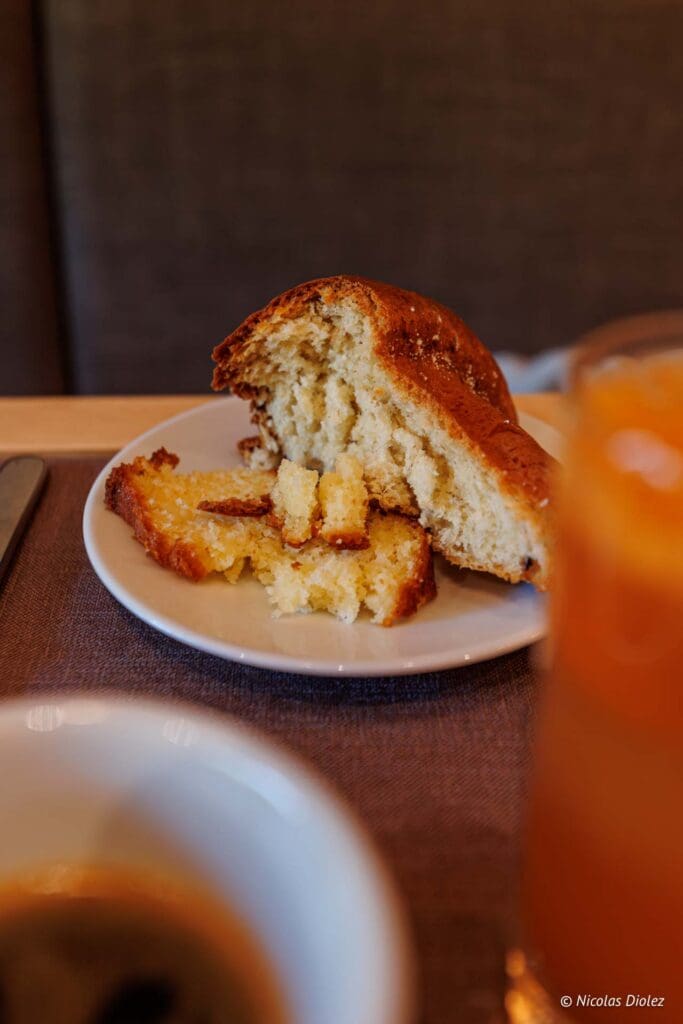
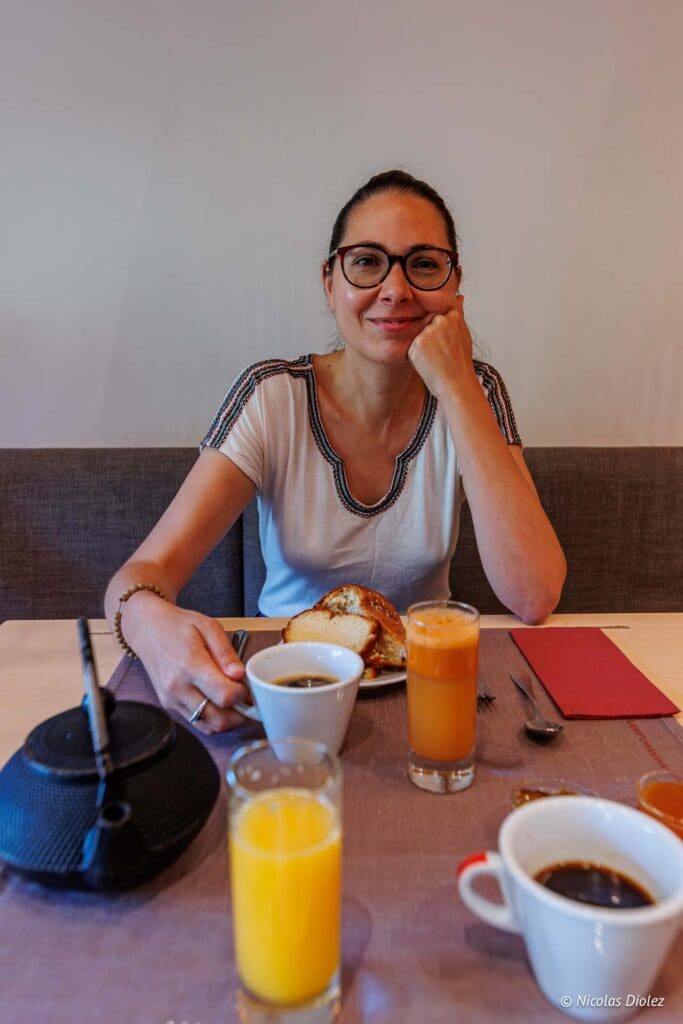
The hotel also offers a restaurant with traditional Alsatian cuisine, concocted by the Chef, Jean-Louis Biechler, and his team. As much as possible, the restaurant selects its products from local producers, and the aromatic herbs come from their organic garden. We enjoyed a stay in half-board with the evening menu included in our accommodation package.
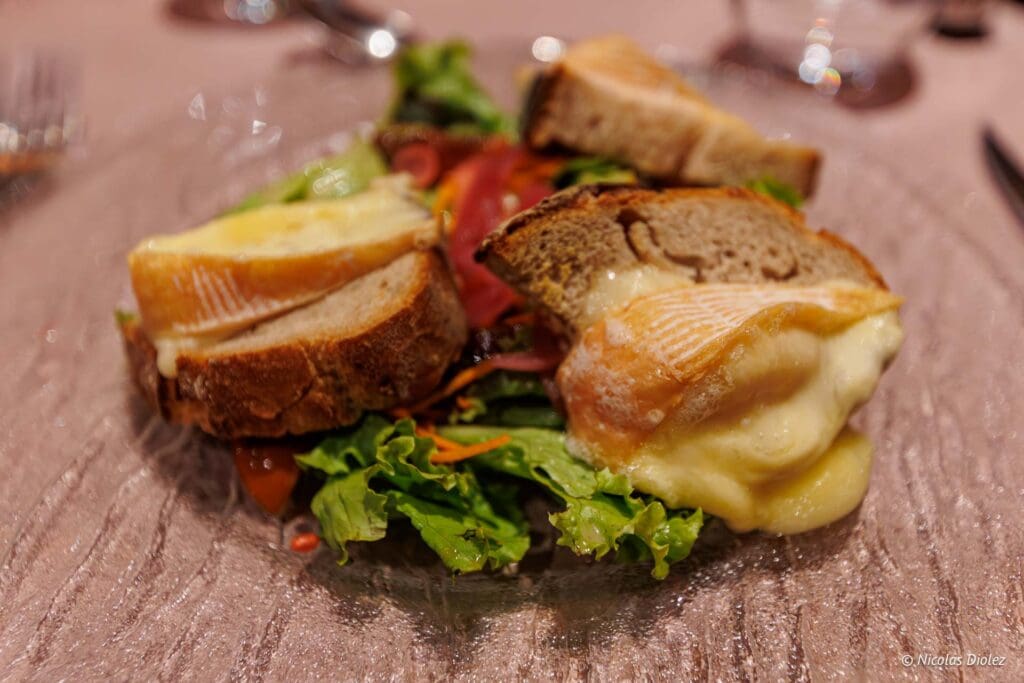
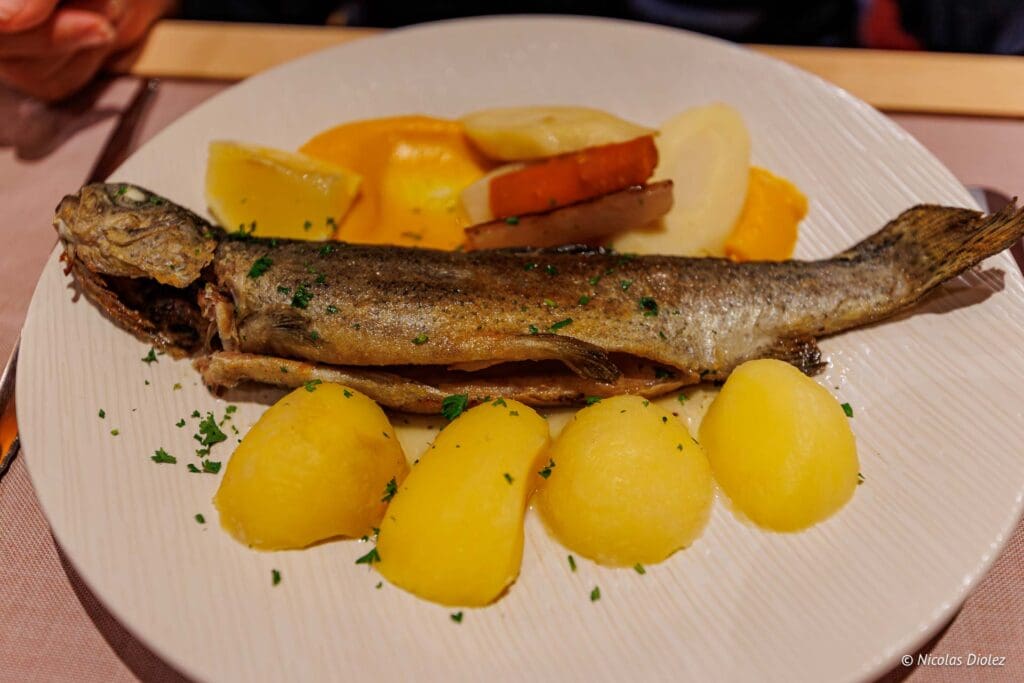
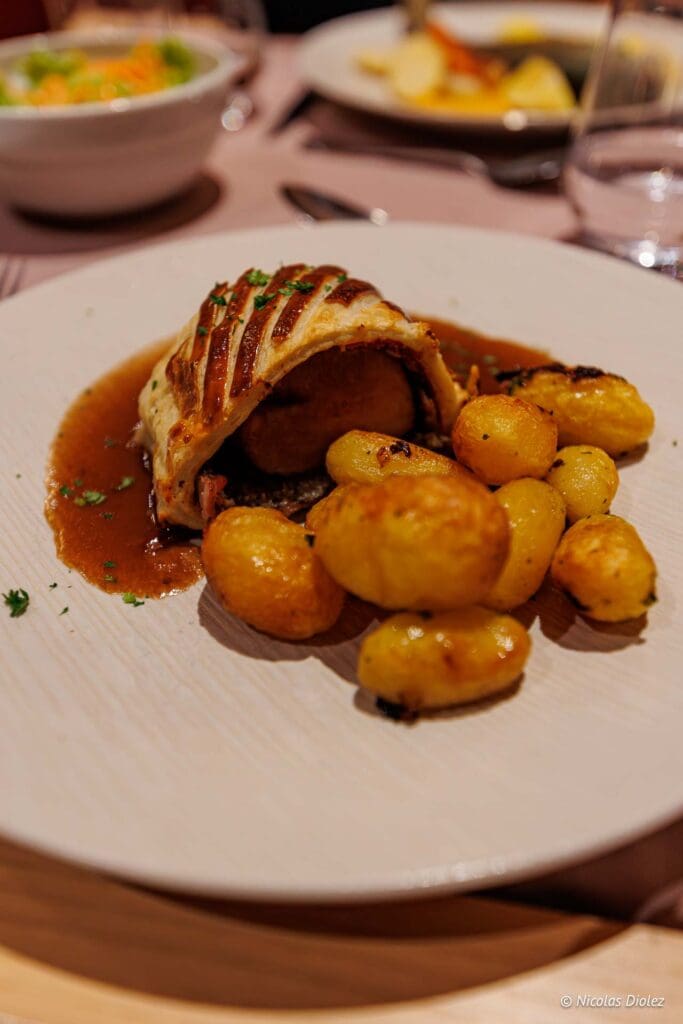
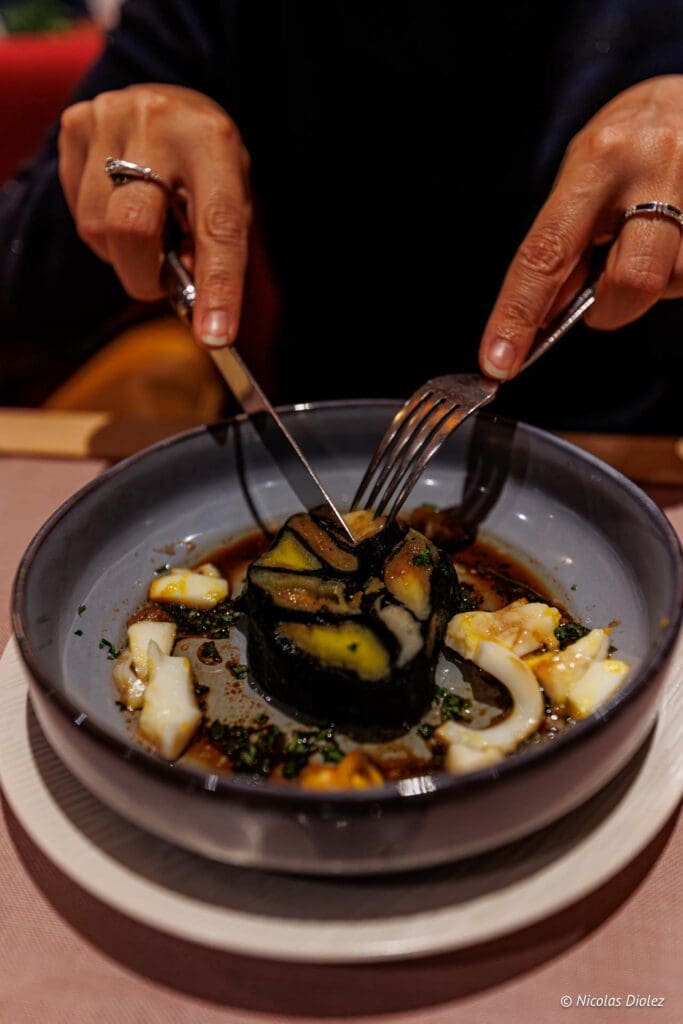
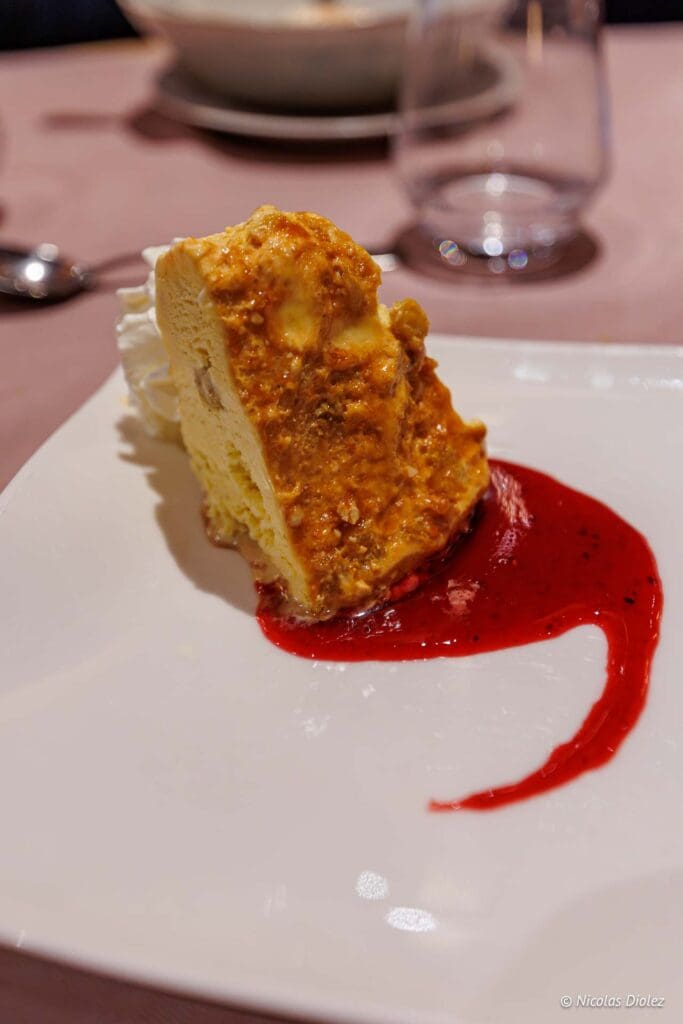
Hôtel Spa Le Clos des Sources ☆☆☆
2 rue de Rodern, 68590 Thannenkirch
Pricing: room from €110 / half-board available / spa day from €30 per person / “on sort encore” stay with one night for 2 people + spa access + restaurant dinner + breakfast from €295 / “Bien de chez nous” restaurant menu with appetizer + main course + dessert €34
Thanks to Clarisse from the Agence aiRPur, to Marie from Visit Alsace, and to the Mont Sainte-Odile Tourism Office for organizing this great stay to discover this corner of Alsace.
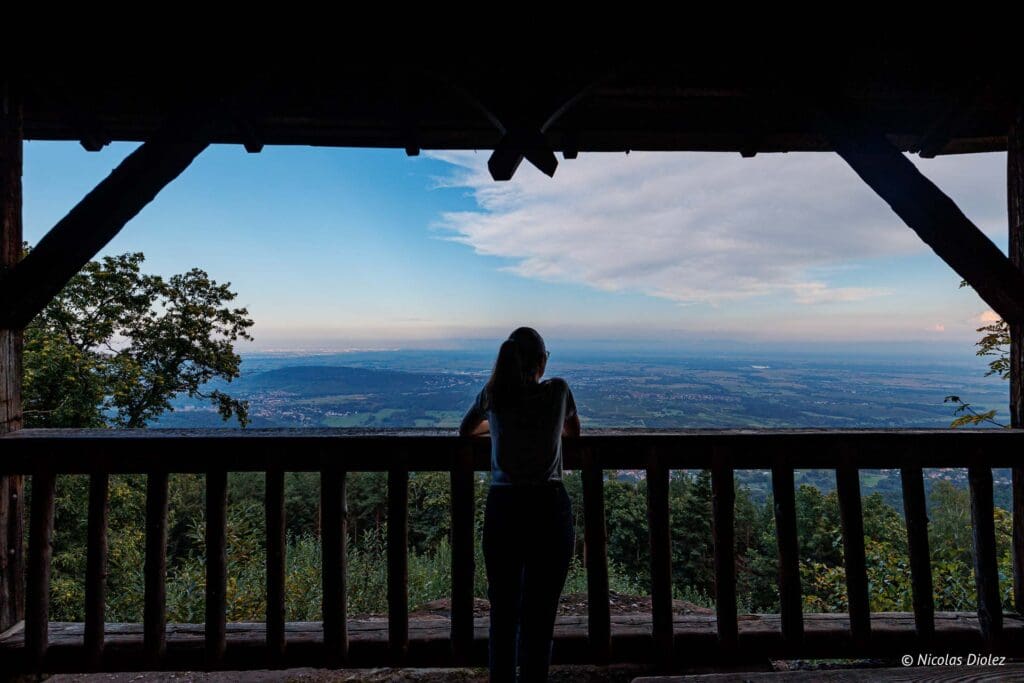
I hope that with all this, I have made you want to visit the Alsace Wine Route around Mont Sainte-Odile, and if you have your own great addresses and tips for this destination, don’t hesitate to share them in the comments below!
Photo credits: Nicolas Diolez
Photos are not royalty-free; the photographer's authorization is mandatory before any use