Rome is one of those European cities that you dream about. It represents both the Eternal City, whose history and past centuries are reflected around every corner, but also a modern city—the Italian capital, whose heart beats to the rhythm of tourists, Romans, and Vatican residents, all forming a joyful mix. It is not possible to discover Rome in just 2 days, as this city has a richness and complexity that deserve a bit more time. However, for a 4-day long weekend, as offered by Italowcost, it provides a great first overview of the Italian city and a chance for those who have been here before to explore it a little more deeply.
The city of Rome developed thanks to its geographical location, as it sits at a crossroads between the north and the south, which was favorable for trade. In ancient times, it was also a place where the Tiber was easily crossed, making it the center of an intersection of important communication routes. This explains its incredible growth during Antiquity.


_
Table of Contents
A little history…
Legend has it that the founding of Rome took place in 753 B.C. with the brothers Remus and Romulus, who were nursed by a she-wolf. The name of Rome is said to come from Romulus. The reality is obviously more complex, but it was in the heart of the 6th century B.C. that the city became a true urbs (a city), equipped with urban planning and an organized state. From 510-509 B.C., the Republic emerged.
The Punic Wars subsequently led to a great political and social change in ancient Rome, which resulted in the end of the Republic with Julius Caesar and Octavian. The latter would become the first Roman emperor under the name Augustus. The Roman Empire would reign over the entire Mediterranean until its fall in 476 A.D., and Rome would be its capital.
_
Cultural outing ideas and tips in Rome
As usual, I offer you some ideas below on things to do and see in Rome, accompanied by a few great deals.
_
Take a Free tour in Rome with Civitatis
Civitatis is a platform specialized in the online distribution of activities, excursions, and guided tours for the world’s main tourist destinations. The great deal is that it organizes Free Tours (so, free guided tours) in several major cities around the world, which have no fixed price. At the end of the visit, each person is free to give the guide an amount in cash based on their level of satisfaction. The Eternal City, the city of Caesar and the Baroque… Discover Rome through this free tour in the Italian capital.
Free tour in Rome by Civitatis Duration: 2 hours Link to book your free visit
_
The National Roman Museum / Palazzo Massimo alle Terme Section
The Palazzo Massimo alle Terme, which is organized over 4 floors, is the building that houses the most important section of the National Roman Museum. It is mainly dedicated to ancient Rome. The ground floor is devoted to masterpieces of ancient sculpture from the Republican era and the Julio-Claudian dynasty. On the 1st floor, works are preserved ranging from the imperial age of the Flavians to late Antiquity, including sculptures and several sarcophagi, both pagan and Christian.
The 2nd floor is probably the most interesting (from my point of view) in the museum; it houses frescoes and mosaics from Roman villas. You can see, among others, magnificent frescoes from the House of Livia and the ancient Villa Farnesina, placed here in a way that respects the volumes of the original rooms. In the basement is the most important numismatic collection in Italy, which belonged to King Victor Emmanuel III of Savoy.


_
The Vatican Museum
The Vatican Museum is free on the last Sunday of every month and on September 27th for World Tourism Day. However, those days are very crowded, so you will need to arrive early! I also advise you to visit the Vatican Sistine Chapel, which is nearby. And if you are looking for a guided tour (paid), you can look at Civitatis as well.


_
Visit St. Peter’s Basilica
St. Peter’s Basilica: entrance to the most famous church in Italy is free, however, you must be dressed decently to enter. On the other hand, the climb to the dome, to admire the magnificent view over Rome and Bernini’s Piazza San Pietro, is paid.


_
Visit the churches of Rome
Most churches in Rome also have free admission, and many contain treasures! Here is my little selection of those to see: Santa Maria Maggiore (one of the first paleochristian churches in the city); the Basilica di Santa Prassede (with superb Carolingian mosaics); the Basilica of Saint John Lateran.


_
The Pantheon
The Pantheon (Piazza della Rotonda), one of the iconic monuments of ancient Rome, is open and visitable every day from 8:30 AM to 7:30 PM, except on Sundays from 9:00 AM to 6:00 PM. The first time I went, it was free (before 2023), but these days in 2026, it is unfortunately no longer the case… (€5).


_
My Roman best addresses
Another very important attraction of the city: its restaurants. Indeed, you cannot go to Rome without enjoying Roman cuisine, that would be a heresy! Below, I also offer a selection of good addresses to eat in Rome that I had the opportunity to test during my stay in the Italian capital.
_
Restaurant Al Chiostro
The place is perfect for enjoying seafood pasta in a charming setting (magnificent terrace in an interior courtyard for the summer).


Restaurant Al Chiostro

Via Paolina, 31 - 00184 Roma ( 100 m from Termini metro station)
_
Osteria Sant’Ana
To taste Roman-style artichokes (a local specialty) or just because everything there is delicious and the setting is truly typical, you must treat yourself to at least one meal there; it is a must-see if you go to Rome!


Osteria Sant'Ana

via della Penna, 68
_
Pizzeria Alle Carrette
To taste a white pizza (rosso pizzas are more of a specialty of southern Italy), I recommend those from this pizzeria. It should be noted that Roman pizza has a thin crust, unlike its Neapolitan cousin, which has a thicker crust.


Pizzeria Alle Carrette

Via Madonna dei Monte 95
_
Alfredo alla Scrofa
This restaurant is a Roman institution, very famous in particular for the famous “Alfredo” pasta, which legend says Alfredo prepared for his wife one day when she was ill. The preparation alone is an absolute must-see, a great moment!


Alfredo alla Scrofa

Via della Scrofa, 104
_
My trip with Italowcost
For my part, it was a return to the Italian capital after 10 years of absence. I had indeed been lucky enough to spend a week in 2003 with the Lyon university, when I was still a student. The Italowcost packages (information and booking on the Héliades website and at 08 92 23 15 23) for Rome offer stays from Thursday to Sunday based on 4 days and 3 nights in a 4-star hotel outside the historic center (like the Clodio, which I was able to test during my stay) starting from €329/person.
The price includes: round-trip flights (you can check out this article from Bonjour Rome for great deals on how to get from the airport to the city center), airport/hotel transfers, 3 nights in a double room with breakfast, taxes, and assistance. The same type of package also exists with a hotel in the city center (like the Accademia, a 3-star hotel), but this time starting from €780/person.




From my point of view, taking into account how really poorly planned Roman public transport is (only 2 metro lines and a regular, but not necessarily frequent, bus passage), I would rather advise you to take the slightly more expensive package, with a 3-star hotel but in the center, which will save you hours of walking or waiting, unless obviously you are the “great pilgrim” type and you want to discover the city from top to bottom by walking. If you are very resourceful, that works too.
For my part, I like to walk, but I assure you that after 4 days, I was exhausted, as the expression goes. Because Rome is truly a city with a complex and rich history, I strongly advise you to take advantage of the (paid) offer of guided tours proposed by Italowcost. These tours integrate different districts of the city through varied themes: Baroque Rome, Ancient Rome, Christian Rome, the Trastevere district, the Vatican City…
I really appreciated this offer, first for the quality of its guides (and having been a guide in Paris myself, I can assure you that I am quite strict on the subject), for the diversity of the offer, and for the convenience (indeed, shuttles take you from the hotel to the places of the visits, and that is really the best!).




_
My travel guides for Rome
Last little piece of advice before you leave, don’t forget to buy yourself a fairly recent travel guide. Indeed, it will be absolutely essential for discovering the city. First, to have a city map (even if the hotel will often provide one on request), and secondly, to have the opening hours of the various monuments and places to visit.


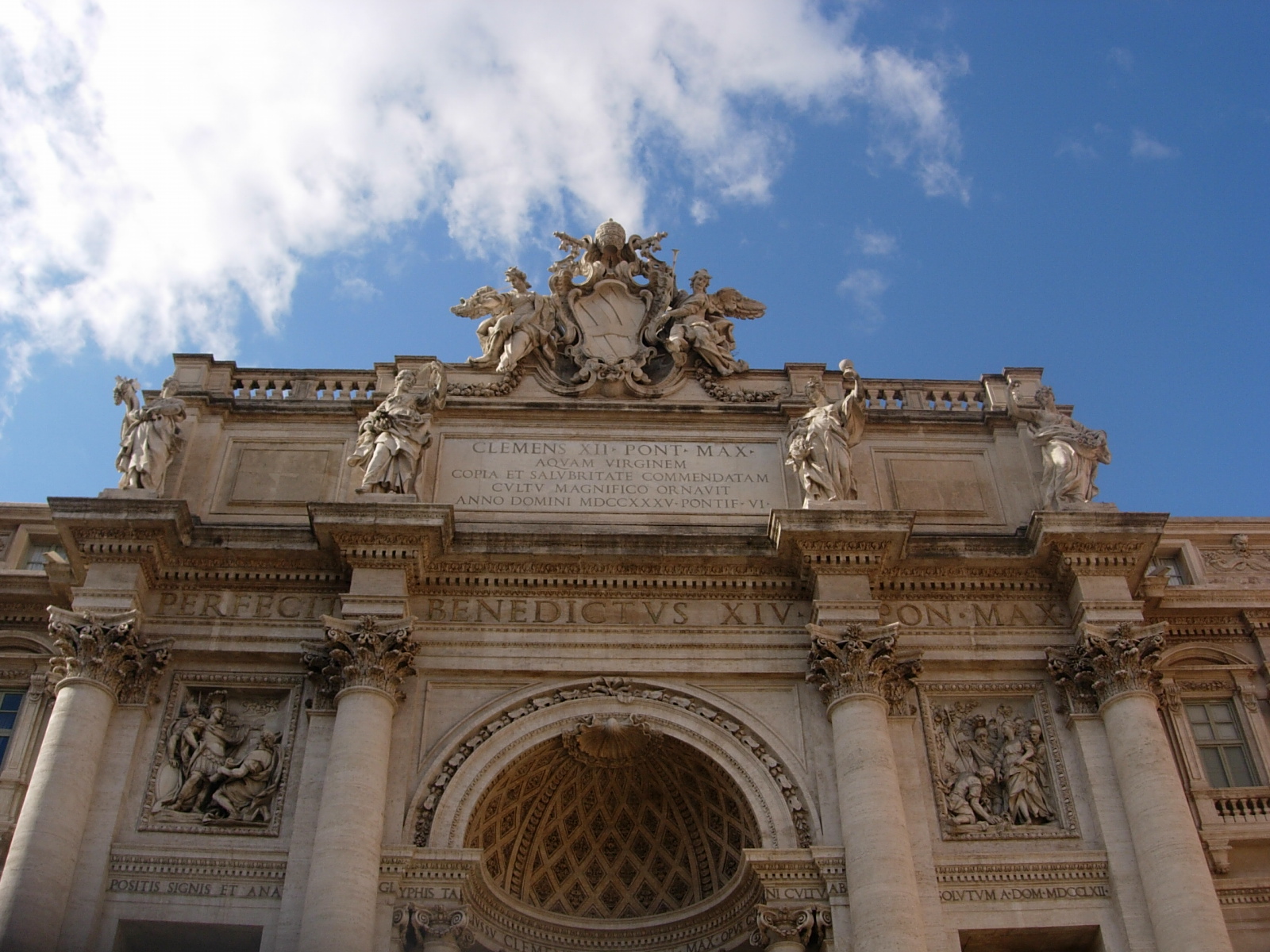
There you go, all that’s left is to wish you a good stay in the Eternal City, and don’t forget to toss a coin over your shoulder into the Trevi Fountain; custom says this gesture ensures you will come back to Rome one day.


_
If you also have your own best addresses and great tips for enjoying the Italian capital, don’t hesitate to share them in the comments!
Photo credits: Mademoiselle Bon Plan and Philippe Peiffer
Photos are not royalty-free, photographer's authorization mandatory before any use