New season, new discoveries. This summer we are taking you to Paris to the Museum of the Liberation Order for a free exhibition on the Liberation. Then, we will head to Porte de Versailles for the 2 flagship exhibitions of this summer: Lascaux in Paris and The Art of The Brick, then to the Marais at the Cognacq-Jay museum for the Tea, coffee or chocolate exhibition.
And we will end this article with a quick trip back to Nantes to discover 2 more exhibitions, one at the Castle of the Dukes of Brittany and the other at the Chapelle de l’Oratoire.

_
The companions of the Liberation in the spotlight at the Invalides
(by Melle Bon Plan)

This free exhibition “In honor and through victory. The military units of the Liberation companions”, presented at the Hôtel des Invalides, is part of the 70th anniversary of the Liberation, as an extension of the Churchill – de Gaulle exhibition, presented at the Army Museum.
The exhibition looks back at each of the 18 military units of companions distinguished by the Liberation order, an insignia created on November 16, 1940, by De Gaulle to reward the most deserving among those who joined him after the call of June 18, 1940.
A special place is given to the Resistance medal, the second decoration created during the war by General de Gaulle, as well as to the Central Bureau of Intelligence and Action, whose members were the most decorated.

Table of Contents
Army Museum – Museum of the Order of the Liberation
Hôtel des Invalides, 129 rue de Grenelle, 75007 Paris
Exhibition with free and open access on the pillars of the Cour d’Honneur
from July 27 to October 4, 2015
Open every day from 10 am to 6 pm, 7 pm in July and August
_
The Art of the Brick, the incredible Lego art by Nathan Sawaya
(by Eloha)
 What to do on a Sunday in Paris with two high-energy pre-teens? The “Art of the Brick” exhibition, of course.
Well, if you don’t have a pre-teen, go anyway. It’s an exhibition for everyone. Adults rediscover their inner child and marvel just as much as the little ones at these feats. It’s stunning!
You have to get close to some of the works to see that they are indeed Legos that have been assembled. You will see reproductions of famous paintings and sculptures, but I won’t say more so that you have the pleasure of discovery and playing: “what is being represented? which artist is it?”

Don’t wait too long to go because it ends on August 30. You will have a great time, and at the exit, you’ll be entitled to a playground for all ages. In short, it’s a fun, poetic, and truly fascinating exhibition. Enjoy the visit and have fun!

Rates: adult €16.50 / child (4 to 12 years old) €13.50 / single rate at €13.50 on Fridays / free for children under 4 years old
The Art of the Brick
from May 14, 2015 to August 30, 2015
open every day from 10 am to 7 pm / last entries at 6 pm
Paris Expo, Porte de Versailles, Pavillon 8/A 1 Place de la Porte de Versailles 75015 Paris
_
Lascaux in Paris
(by Eloha)
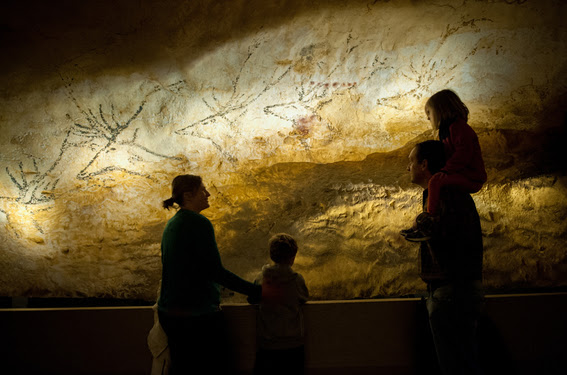
 How about going to see what our ancestors were doing? And when I talk to you about “our ancestors,” I am thinking about the “Lascaux” exhibition at the exhibition center in Paris and the so-called “Cro-Magnon” man from 20,000 years ago. You will be transported for… 5 good minutes!
The exhibition itself is truly very complete. You will know everything about the discovery of the cave in 1940, about its morphology (there is even a 3D film), about the animal representations on the walls and their different datings, about the tools used, and about the lives of these men.
Small downside however: our audio guides were not working correctly (even though they are essential for the visit), the exhibition is quite long (count a good hour and a half if you want to see and read everything) while the visit to the reproduction of the cave itself (what we were waiting for with the most impatience) is… very small, even though the cave is gigantic!
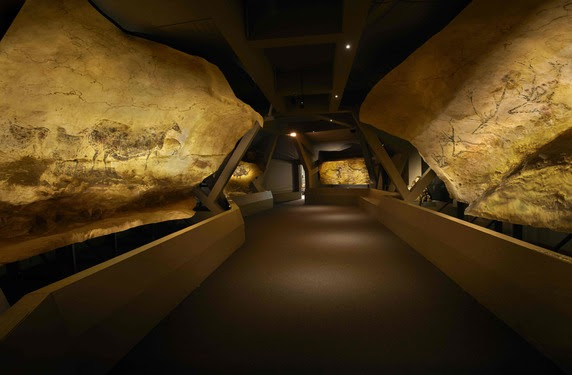
Frankly, if you like archaeology, go for it. The exhibition is very fun and quite complete. But I’m not convinced that it’s really for the general public: the children (both little ones and teens) we crossed did the exhibition in a rush and only seemed interested in the reproduction of the cave itself and, possibly, the Cro-Magnon man and woman mannequins. What a pity!
The positive point is that you will only have one desire: go see the in situ reproduction of Lascaux II in Montignac.
Rates: adult €15.90 / child (5 to 12 years old) €12.90 / single rate at €12.90 on Mondays / free for children under 5 years old
Lascaux in Paris
from May 20, 2015 to August 30, 2015
open every day from 10 am to 7 pm / last entries at 6 pm
Paris Expo, Porte de Versailles, Pavillon 8/B 1 Place de la Porte de Versailles 75015 Paris
_
Tea, coffee or chocolate? The rise of exotic drinks in the 18th century
(by Camille)
When you are waiting in front of the coffee machine on Monday morning, inhaling with impatience the smell of coffee that already wakes you up a little more, you have the impression that this delicious nectar, like tea or chocolate, has always been there, that it is part of your habits and that you could not do without it.
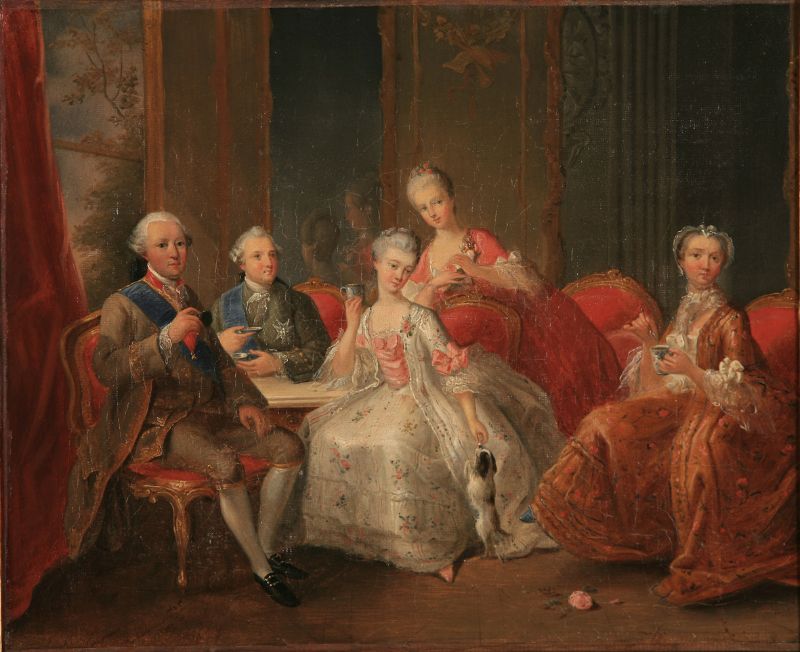
However, this is not the case, and when it is introduced into Europe in the 17th century, it is an exotic product, extremely expensive and reserved for the elite. The “Tea, coffee or chocolate” exhibition traces the path of these drinks from the Orient which gradually transformed the society of the 18th century, having impacts that we can still see today. These exotic products indeed gave birth to new moments of consumption and sociability (breakfast, snacks, tea), but also places (Cafés), and service equipment.


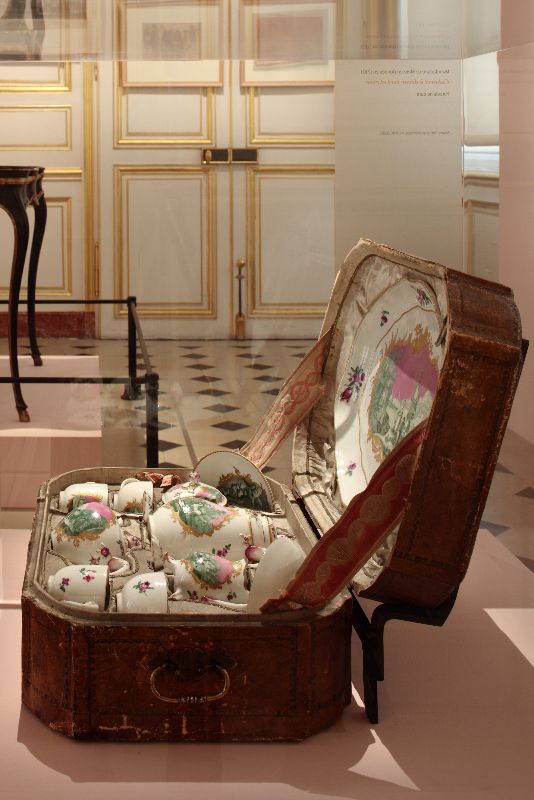
Organized around three themes – “Virtues and dangers of exotic drinks”, “Consumption circles” and “New services” – this exhibition offers a new reading of these beverages that entered into daily rituals, by presenting works by many iconic 18th-century artists like Boucher or Chardin but also more than 120 objects, sometimes very common but which at the time were real inventions: cups, litrons, trembleuses, paste teapots, coffee pots, or double-handled goblets…
- “Virtues and dangers of exotic drinks”:
You will discover that coffee, tea, and chocolate were at the time subjects of great controversy and debate among the elites. Some perceived them as oriental drugs, others attributed therapeutic virtues to them. Finally, the medical thesis won and these drinks spread until they landed in cookbooks, which were booming at the time.


- “Consumption circles”
Some will say that Enlightenment ideas were born in coffee houses, which Diderot called “manufactories of the spirit, both good and bad.” Meetings between friends in salons constituted as many occasions for the consumption of chocolate and tea, but more particularly of coffee, a stimulant drink highly prized by philosophers, revolutionary politicians, and the people.

- “New services”
The consumption of these hot drinks in France experienced a development that went hand in hand with that of porcelain manufactories, gradually shaping the lifestyle of the 18th century. Indeed, new table uses and specific instruments for preparing and consuming these drinks appeared. They are the direct witnesses of changes in fashions and tastes.


Cognacq-Jay Museum
8, rue Elzévir – 75003 Paris
Until September 27 : 10 am to 6 pm Tuesday to Sunday (ticket office closes at 5:15 pm). Closed Monday and holidays
Full price: €7
Free exhibition-dedicated app available on Playstore and AppleStore
_
2 exhibitions in Nantes: Flemish & Dutch / Charles de La Fosse
(by Cathy)
I have wanted to schedule weekend trips in the provinces for a long time. Yes, but accommodation, food, round-trip transport, that costs money. And instead of thinking about it seriously and intelligently, I gave up.
Until the day Mademoiselle Bon Plan asked me to represent the blog in Nantes. Not for shows, as I usually do, but for two superb exhibitions.
When I saw that the trip was a same-day return, I promised myself to do a beautiful provincial outing three hours from the capital at least once a month. The good tip is to book the TGV far enough in advance to have your transport at a lower cost. But for now, let’s leave for Nantes…

And here I am, arrived in Loire-Atlantique for a cultural and nevertheless friendly day. The two exhibitions I am going to tell you about end at the end of August for one, and mid-September for the other.
- Flemish & Dutch
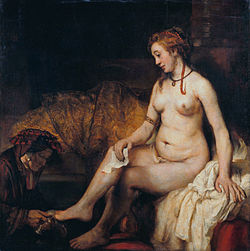
Closed to the public for renovation, this summer the Museum of Fine Arts of Nantes invites itself to the Castle of the Dukes of Brittany to present artworks from the Golden Age. More precisely, sixty-five paintings by the greatest Flemish and Dutch painters from the 16th to the 18th century. Like Brueghel, Rubens without forgetting the pupils of Rembrandt like Govert Flinck or Jürgen Ovens.
The exhibition path is composed of several phases allowing visitors to discover the new styles of Northern painters. Such as portraits, landscapes, and still lifes, among others. You should know that all these new genres are made with oil paint. Moreover, oil paint was born at the same time as Dutch painting in the 15th century.
Rembrandt
Matthias Stom

For the more literary among us, the most famous Flemish portrait by François II Pourbus, The Beautiful Flemish Woman, did not leave the writers Stendhal and Flaubert indifferent. The former visited the Nantes museum in 1837 and the latter ten years later. In his novel Memoirs of a Tourist, Stendhal describes a perfect commentary on this painting.

This very enriching exhibition can be done as a family with children from 6 years old. A booklet with games will be offered to you at the reception.


Castle of the Dukes of Brittany
4, place Marc Elder 44000 Nantes
until August 30, 2015
open every day except Monday from 10:00 am to 6:00 pm
rates: €8 / €5 for 18-25 year olds and one hour before closing
The good tip: free for those under 18, job seekers, Carte Blanche holders, RSA beneficiaries, disabled people, and their companions.
_
- The Loves of the Gods, Charles de La Fosse
Now we are going to the Chapelle de l’Oratoire to see our second exhibition Charles de la Fosse, the loves of the gods. This is done in partnership with the Palace of Versailles, which for 3 months presented to the Versailles public the career of the great decorator and nonetheless excellent illustrator that was Charles de La Fosse.

For my part, it is thanks to this exhibition that I discovered the artist who participated in all the royal commissions under the reign of Louis XIV. It was through meeting his master Charles Le Brun that La Fosse executed his first paintings. He revealed himself as the greatest colorist painter of his generation.
Having learned fresco painting during his trip to Italy, it was upon his return to France that he was commissioned for the works at the Tuileries Palace and that of Versailles. The exhibition highlights his career in the service of the king. The works of this artist are mainly the ceilings of royal salons and the vaults of chapels.


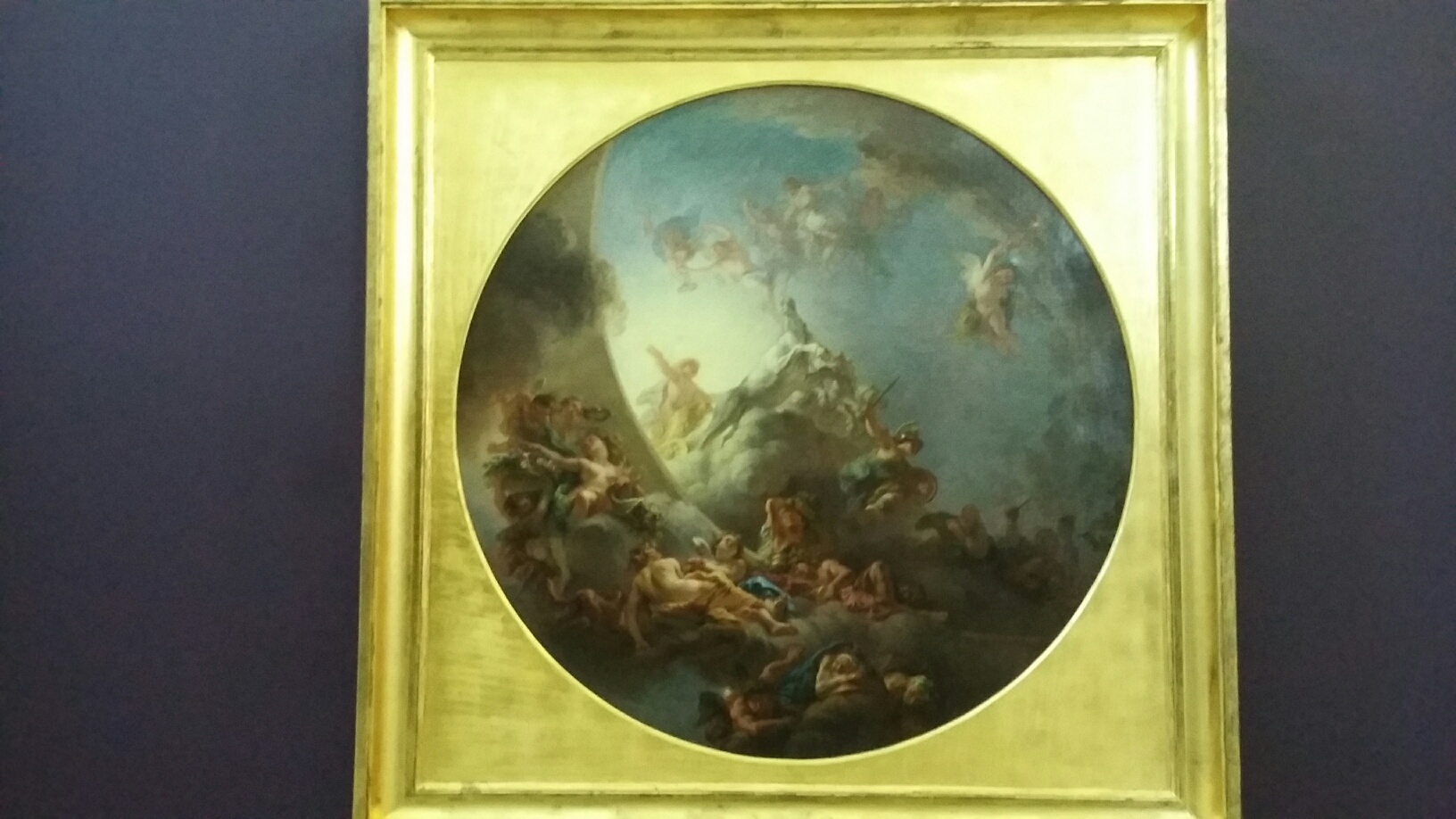
Charles de la Fosse
also drew a lot. A great admirer of Rubens, he adopted his technique. That is to say, the three-pencil technique: black stone to define the facial features, red chalk to bring life to the skin, and white chalk to intensify the light effects.
Charles de la Fosse lived to be 80 (very old for the time) and worked until the end of his life. He passed away in 1716.
Chapelle de l’Oratoire
place de l’Oratoire 44000 Nantes
until August 30: open every day from 10:00 am to 7:00 pm
from August 31 to September 20: open every day from 10:00 am to 6:00 pm except Tuesday
late-night opening on Thursday until 8:00 pm
rates: €5 / €3
The good tip: free entry on the 1st Sunday of the month and on Thursday evening from 6:00 pm, for young people under 18, job seekers, and school groups
_
article written by Cathy, Eloha, Camille and Melle Bon Plan