All these holidays in May and June have given us a massive urge to go for a stroll outside of Paris!
So, for this little cultural outing, we suggest you first discover the garden and the house of Claude Monet, in Giverny. We will then take you to the Château de Champs-sur-Marne to see a lovely exhibition of period costumes (though you can also walk around the gardens…) and then to Yerres, to discover the Propriété Caillebotte.
Back in Paris, we’ll get a change of scenery with the “Chinese” and oh-so-powerful and original works of Prune Nourry, at the Musée Guimet. Finally, we’ll finish with a little break in a little-known yet very zen spot: the Atelier Brancusi.
_
Table of Contents
Giverny, Claude Monet’s house and garden
(by Valérie Collet)
I visit every year and every time, it’s the same pleasure, a bath of light and color, a sort of ritual to celebrate the arrival of warmer days.
Claude Monet arrived in Giverny at 43 years old with his second wife and his 6 children, a blended family that was very modern for the time. He stayed there for about forty years (until his death), developing his gardens with multicolored flowers in parallel with his paintings, which are a reflection of them.
Here, Monet painted the Water Lilies, those famous large compositions kept at the Musée Marmottan and the Musée de l’Orangerie; they were created by the edge of his famous pond where bamboo, water lilies, and reeds grow, and where weeping willows reflect…


The house, too, is full of color. It’s Alice’s domain and a warm atmosphere reigns there. Everyone has their own bedroom, and the boys sleep in the attic.
The exterior walls are pink, but the dining room glows with a superb cadmium yellow, while the kitchen, with its earthenware tiles, plays with blues and whites. A vibrant interior, under the sign of taste, where children had their place and where they loved to feast and entertain.
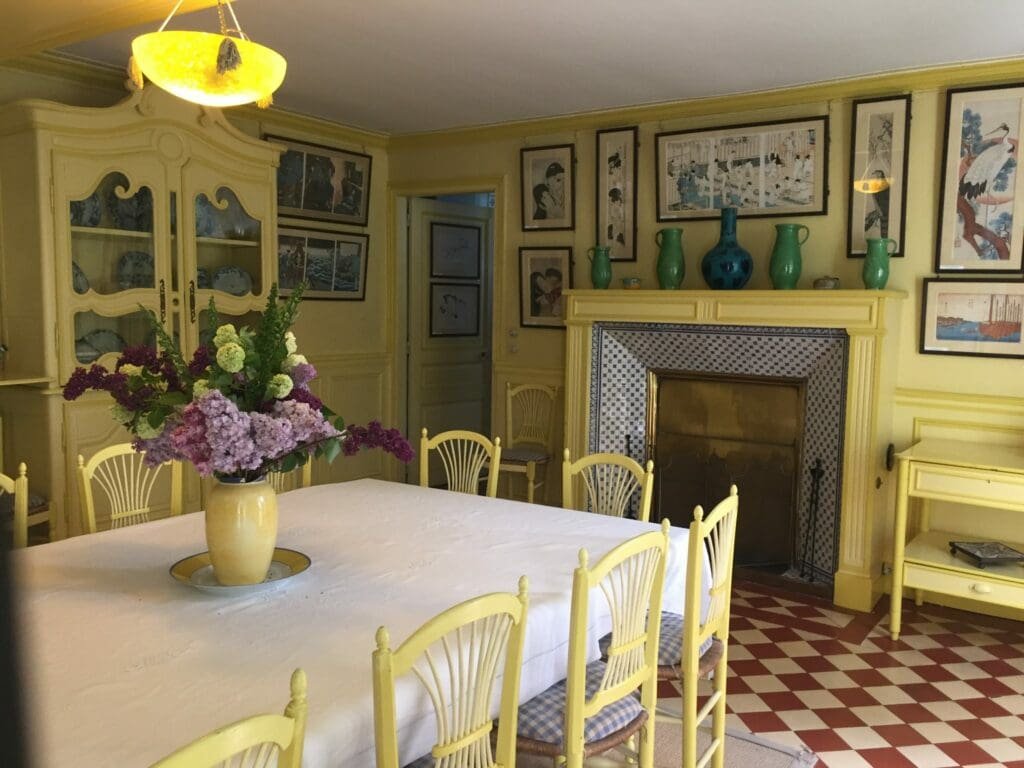

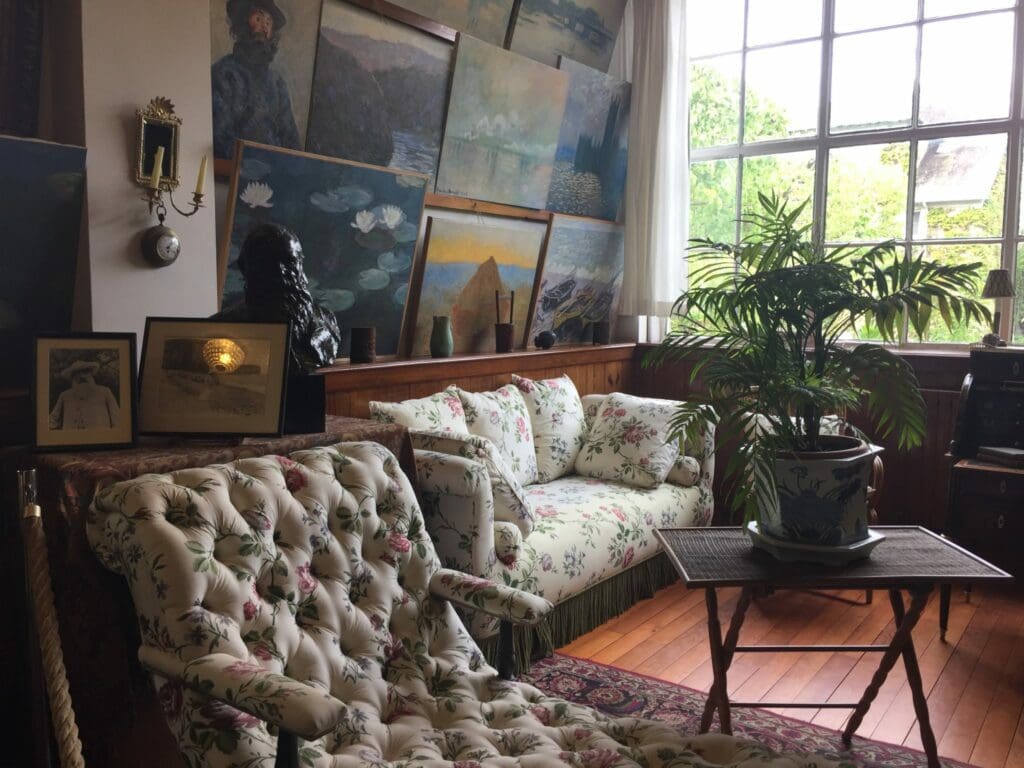
 A peek at the studio? The master’s canvases (reproductions) are touching each other. Monet’s bedroom is decorated with the works of his friends Renoir, Caillebotte, or Cézanne.
Almost everywhere, on the walls, you can admire the famous collection of Japanese prints that the artist loved.

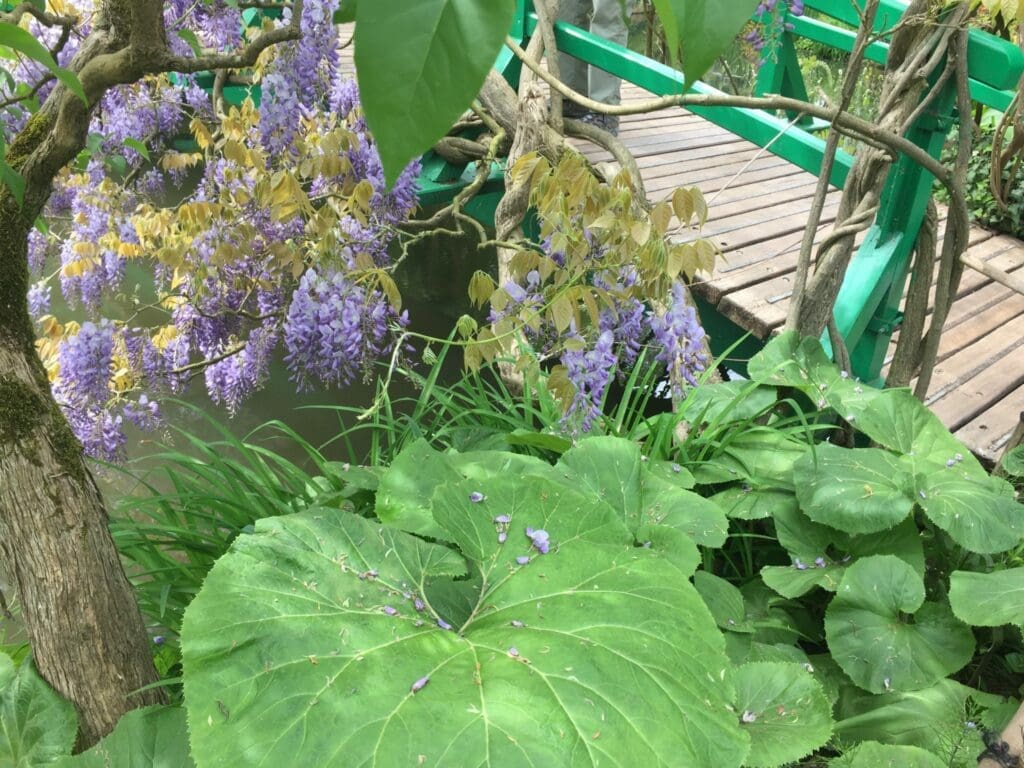
Then it’s time to visit the garden, multicolored with its thousands of flower varieties. A perpetually changing painting, skillfully composed by the artist and today in the hands of a dozen gardeners.
After the tulips, the azaleas, and the wisteria on the Japanese bridge, it’s the roses’ turn to bloom before the famous water lilies that Monet loved so much begin to blossom. Then autumn will come with its monochrome tones. Giverny can be visited in any season with the same happiness…


Tips:
- Free entry for children under 7 / children 7-12 and students: 5.50 €
- Reduced rates (adults, young people, and children) for combined tickets (and skip-the-line) with the Musée Marmottan Monet, the Musée de l’Orangerie, and the Musée des Impressionnismes in Giverny (until July 2, the latter is presenting a beautiful exhibition “Tintamarre! Musical Instruments in Art, 1860-1910”)
Claude Monet-Giverny Foundation
84 rue Claude Monet, 27620 Giverny

Open every day from the last weekend of March to November 1st, from 9:30 AM to 6 PM
Rates: 9.50 €
_
History in costumes at the Château de Champs-sur-Marne
(by Valérie Collet)
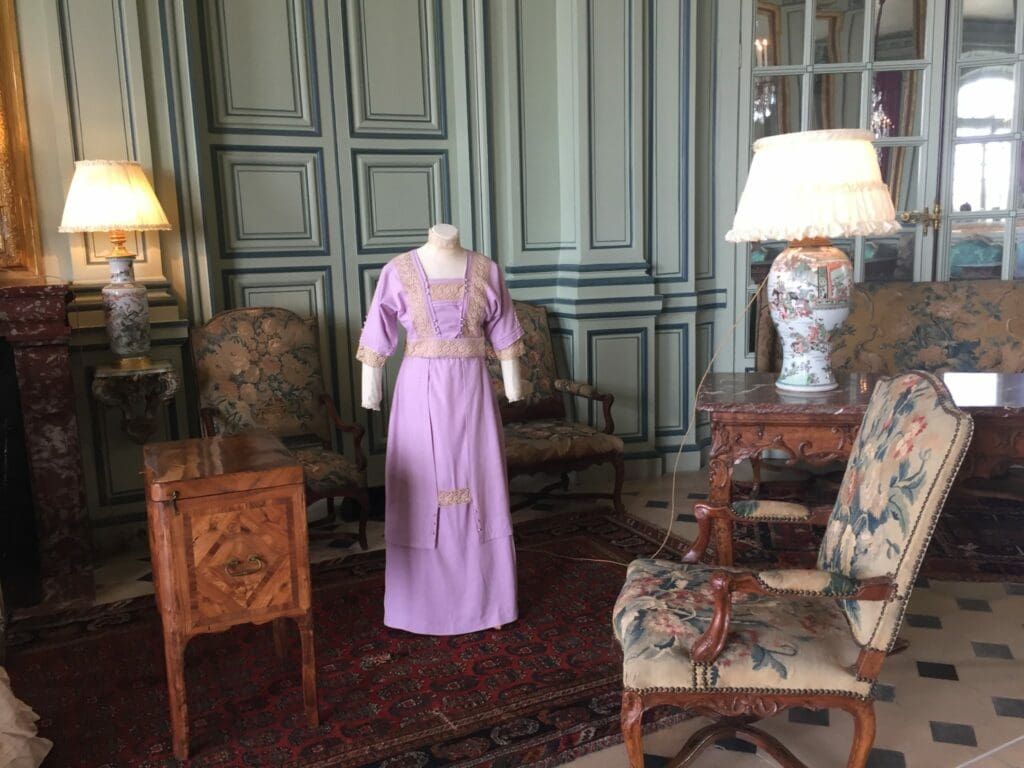
This exhibition dedicated to the fashion of the Belle Epoque to the Roaring Twenties (1890-1930) provides the opportunity for a magnificent stroll, half an hour from Paris, between old stones, furniture, and antique clothing. Not to mention the pretty French garden around the castle; when I went, the tulips were drawing what looked like a long pink ribbon of the most beautiful effect.
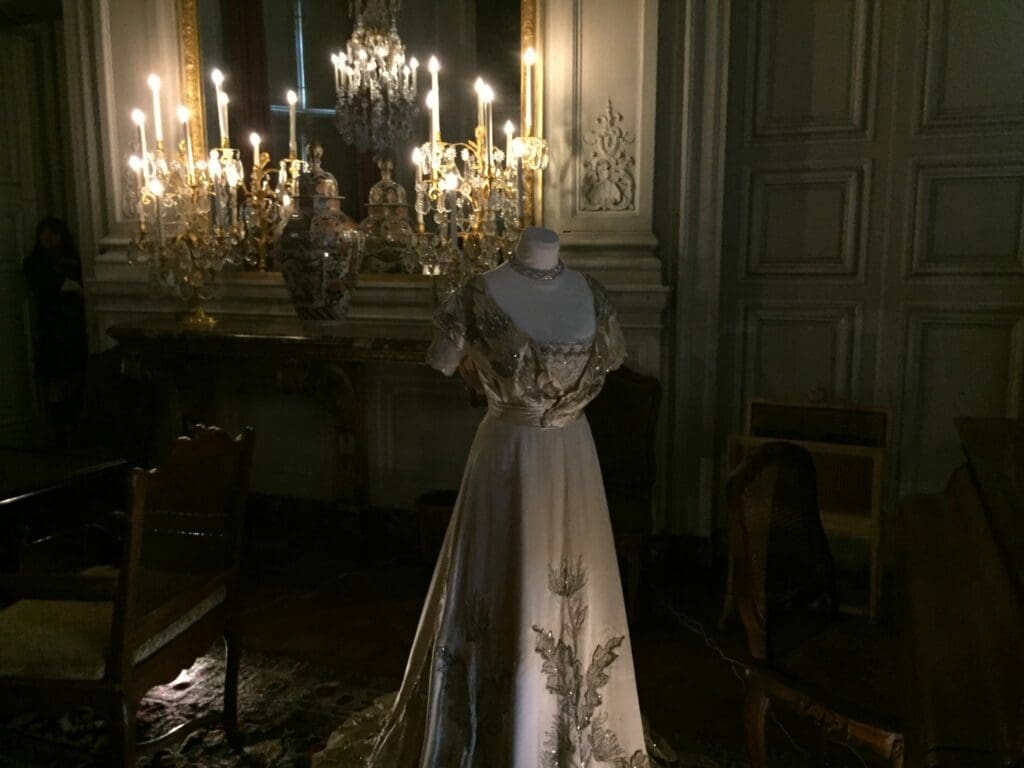
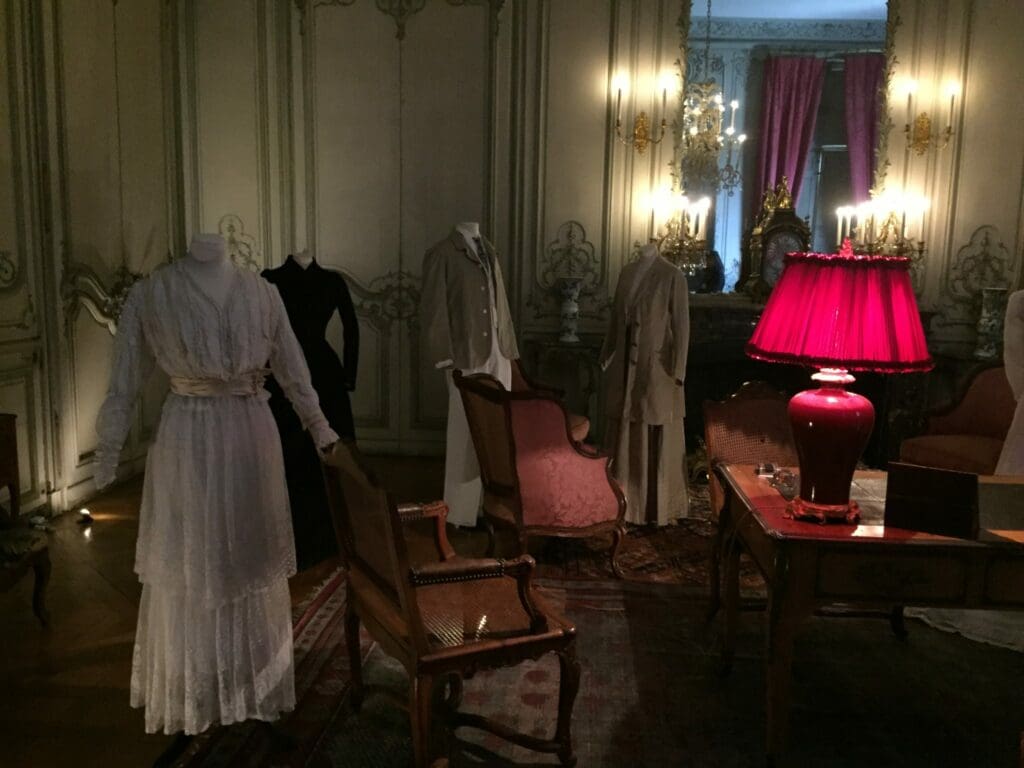
In this charming 18th-century pleasure house, recently restored, about forty women’s and men’s costumes have been placed on mannequins, right in the middle of the furniture. They were loaned by the historian and costumer Nathalie Harran, who is passionate about the subject and owns about 800 of them (antique or reconstructed).

Costumes are small, fragile things… So, to protect them from the light, all the castle’s shutters have been closed. The visit takes place in the semi-darkness under the faint lighting of the chandeliers.
“Imagine a winter evening, just before dinner,” suggests Nathalie Harran. Atmosphere, atmosphere… Quite a change of scene for the season!


At this time—the end of the 19th century—clothing marked social rank above all else. For the upper-middle-class woman whose life is divided between leisure and social display, it follows very rigid codes that may force her to change up to five times a day.
From the Grand Salon to the Dining Room or the Chinese Salon, day, afternoon, or evening dresses follow one another in a pretty dance. Very long before the First World War, they shortened as women became liberated in the 20s, playing the ‘garçonne’ or sporty look. They would soon no longer mark the waist and, a great novelty, would reveal… the leg!
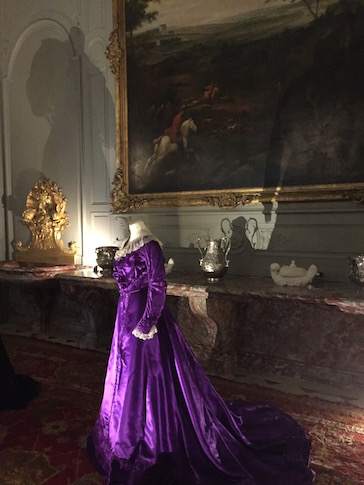

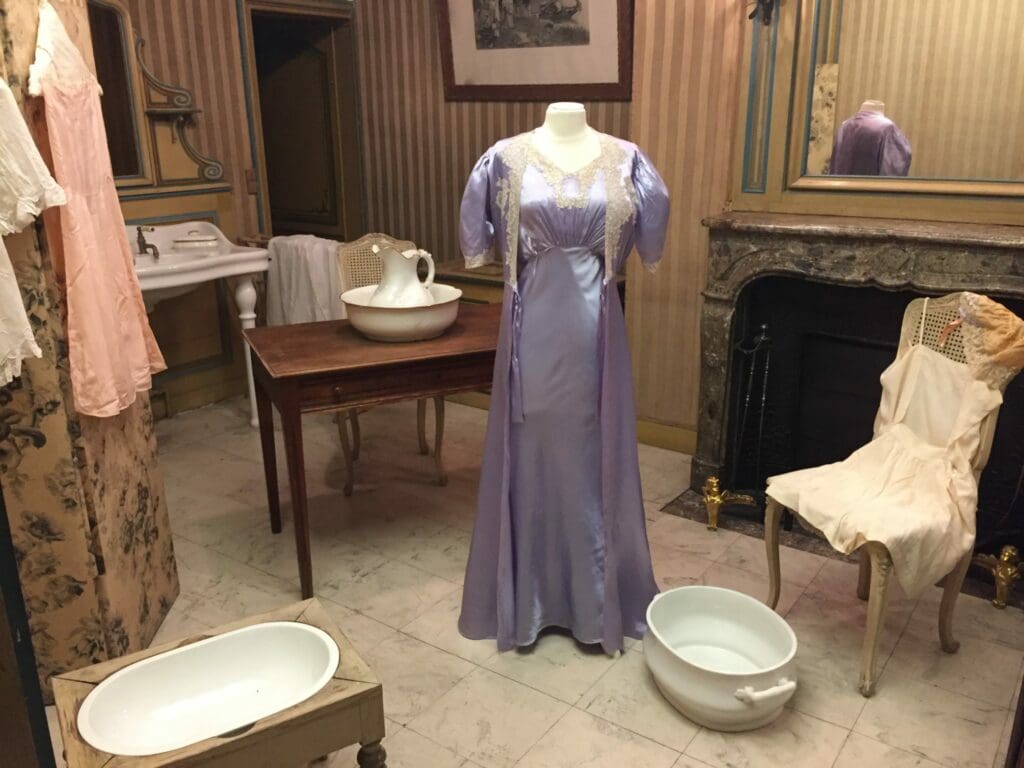
 Let’s move on to the bathroom: it’s the great reign of undergarments and the corset. Worn since childhood, the latter refines the waist and sculpts the famous S-profile that ladies aspired to. But soon bored by this very beautiful “instrument of torture” (advised against by doctors), they would soon throw it away.
In 1920, the brassiere was born to support or flatten the chest. Then came the girdle to smooth out, this time… the hips and the stomach!


In the smoking room, the gentlemen discuss business or politics. One is no less strict there, as informality is not appropriate in the evening. One never goes out without a tailcoat and later a “tuxedo”!
For these all-black silhouettes, the English tailors built a great reputation, especially for the quality of their fabric and the art of detail that makes men’s fashion what it is. The top hat and the cane were left to the servants as soon as they entered the castle. Children’s clothing is also presented: the sailor suit for both boys and girls. Astonishing era!

Tips:
- Free entry for those under 18 and 18-25 year olds (European Union nationals and regular non-European residents in the European Union territory)
- The free little visit booklet, a sort of mini-catalog room by room, with interesting explanations
- The free discovery path booklet for children
"History in costumes" exhibition (until September 30, 2017)

Château de Champs-sur-Marne
31 rue de Paris, 77420 Champs-sur-Marne

Full price: 8 € / reduced price: 6.50 €
_
The Propriété Caillebotte
(by Melle Bon Plan)
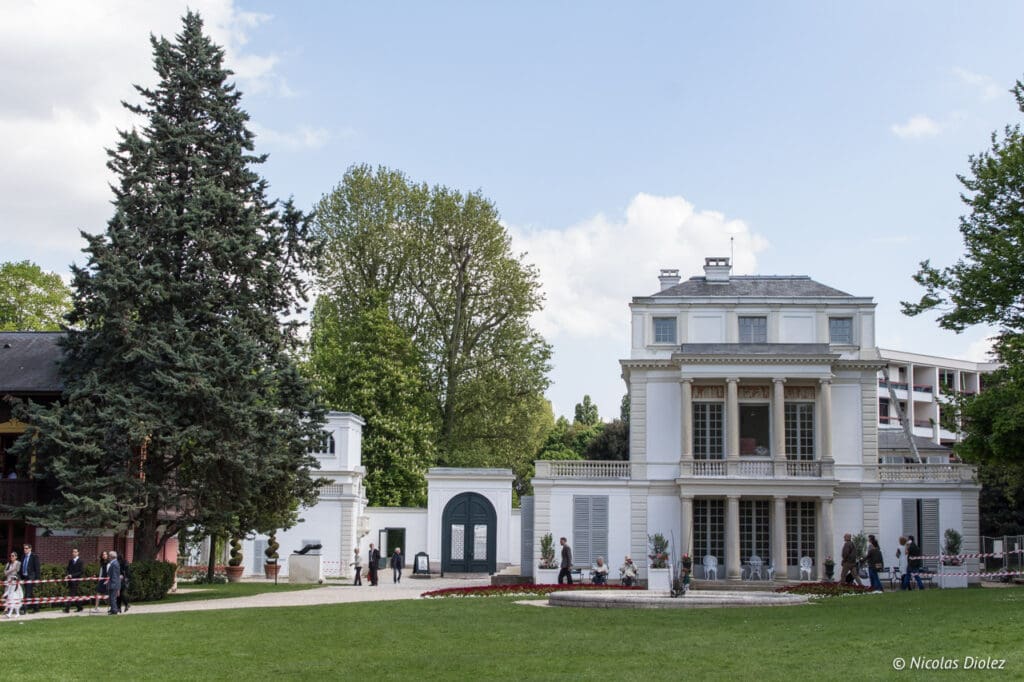
The Propriété Caillebotte is the former summer residence of the Caillebotte family and the Impressionist painter Gustave Caillebotte. The site, which today belongs to the town of Yerres, is open to the public for free and offers a walk in an 11-hectare park that perfectly conveys the atmosphere of vacation retreats outside of Paris in the 19th century.


While walking in the park, don’t miss taking a short tour of the Asian kiosk, the small chapel, and the ice house, which was used at the time to store food supplies.


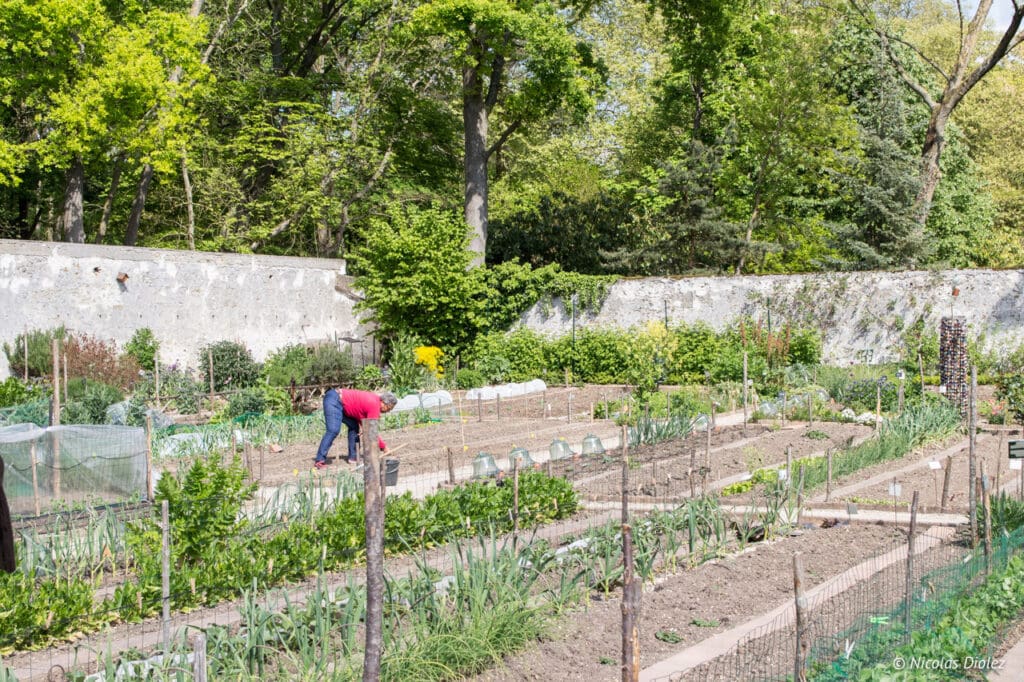
Moreover, at the back of the garden, I highly recommend that you push open the doors of the Kitchen Garden, maintained with love by the “Potager Caillebotte” association, which is open to the public at specific times (see at the end of the paragraph).


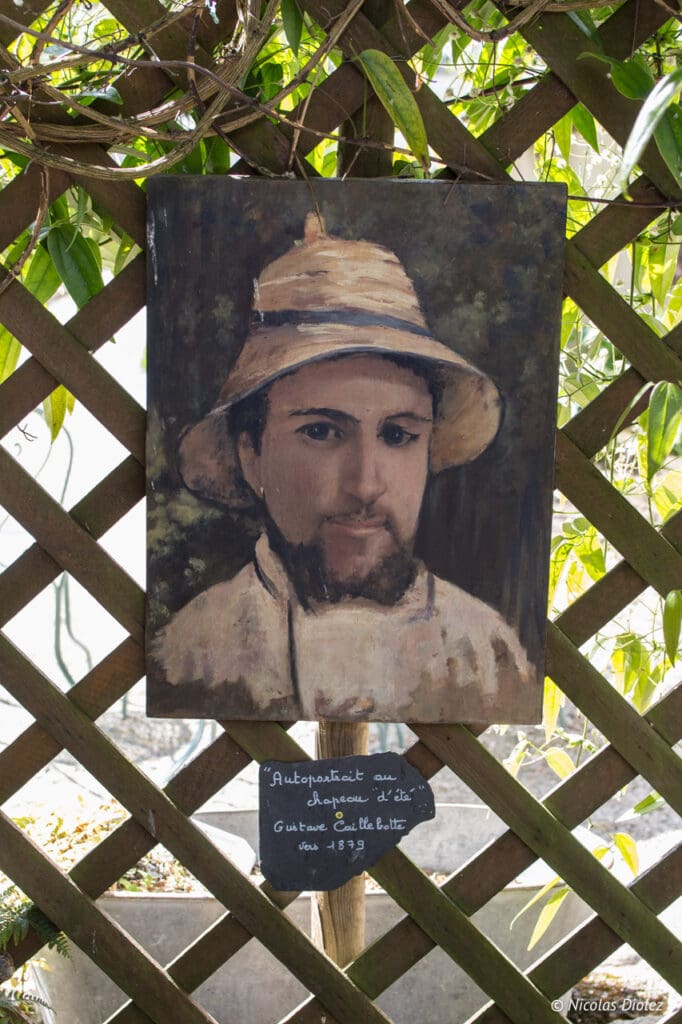


The Casin, the main residence of the artist and his family, will just be re-opening during this month of June, and we will be able to discover the refurbishment of this 19th-century house, just as the painter knew it.
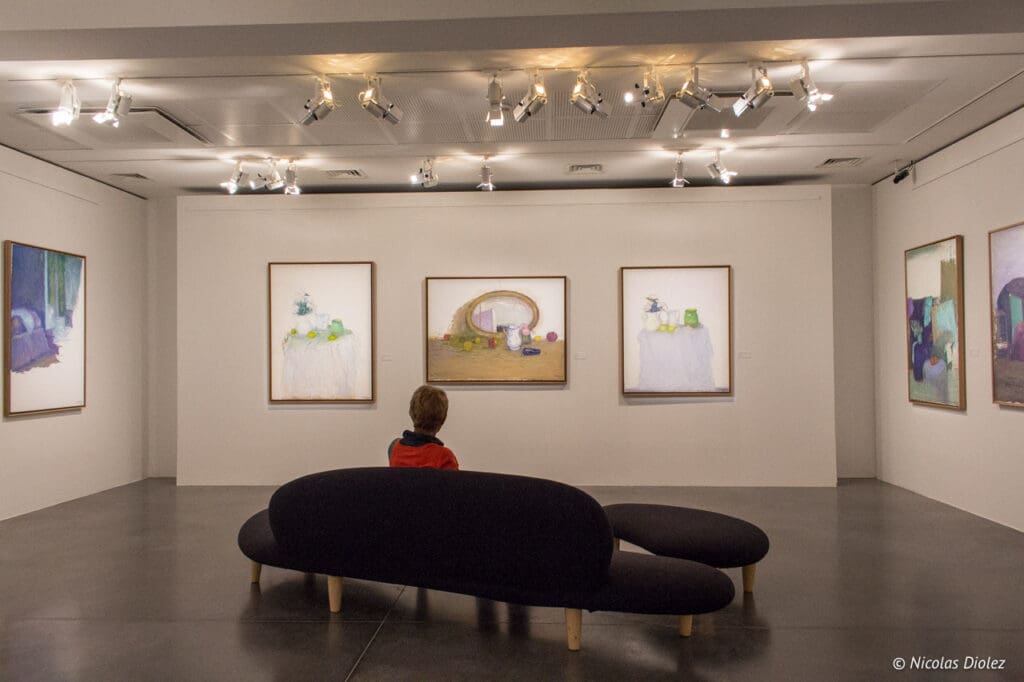
Another attraction of the site is the exhibition on Jacques Truphémus, a Lyonnais artist who is too little known (even I didn’t know him as a Lyonnaise, what a shame!) and which the Ferme Ornée of the Propriété Caillebotte is highlighting until July 23, 2017 (rates 5 € / 3 €).
I had actually already visited this beautiful place in 2014 if you remember (if not, I won’t hold it against you, it was a little while ago now)…
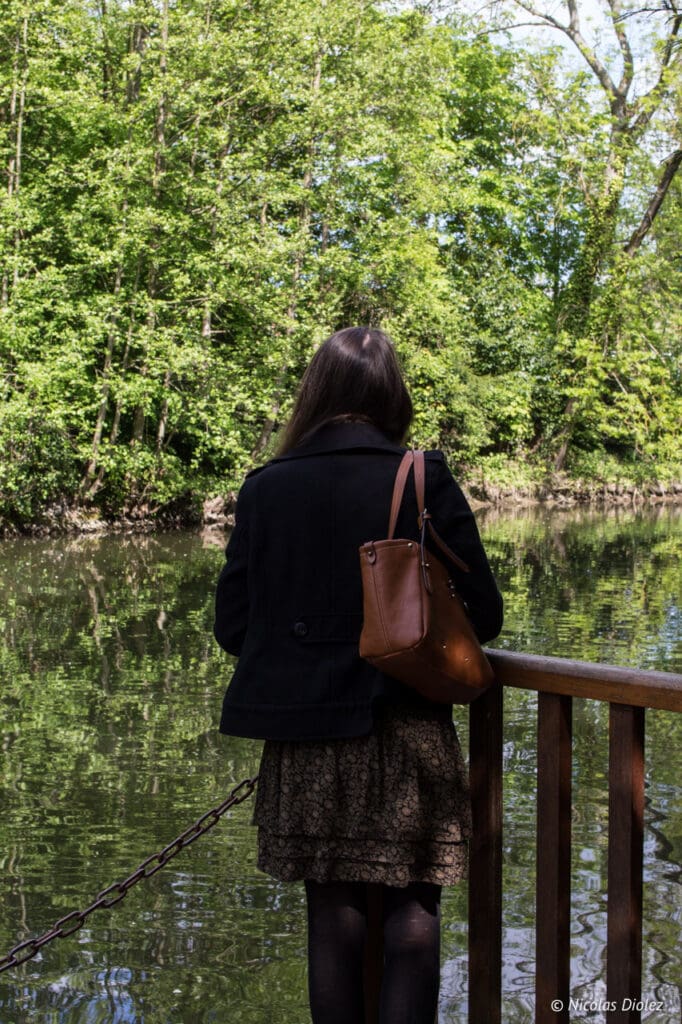
The little extra: the possibility of renting rowboats and canoes for the summer season (from May 20 to Sunday, September 17, 2017 in the evening)


Propriété Caillebotte

The Park is open with free entry every day

The Kitchen Garden is open until October from Tuesday to Friday from 2 PM to 6 PM / Saturday from
10:30 AM to 12:30 PM and from 2 PM to 6 PM / Sunday and public holidays from 10 AM to 12 PM and from 2 PM to 6:30 PM
_
Holy, carte blanche to Prune Nourry at the Musée Guimet
(by Valérie Collet)
Prune Nourry is quite a woman and quite a good artist. I have been following her for some time; her will is iron and her actions are extraordinary. Touched by the mistreatment inflicted on women, particularly in Asia, she initiated a project in 2010 to denounce sex selection in certain regions of India and China, where baby girls are gladly disposed of at birth because boys are preferred!
She thus created the Terra Cotta Daughters, a set of life-size statues of young girls made according to ancestral Chinese methods, the same ones used to make the famous buried army of Emperor Qin Shi Huangdi, in Xi’an, in 210 BC. For these hundred terracotta figures expressing worry or sadness, Prune Nourry worked for long months in collaboration with Chinese artisans.


In 2015, she buried this “army” of little girls in an unknown place in China, during a major performance called “Earth Ceremony”. Then, in 2030, this monumental work will be unearthed. In the meantime, you can discover the original sculptures at the museum and their reproductions in reduced size and in porcelain.
To better understand the artist’s work, interesting short films are also presented. You have to take the time to watch them; you will notably see Prune’s performances in public spaces, in India or China. For example, those strange sculptures with cow heads and female bodies that she walks in the streets to sensitize people and observe their reactions.


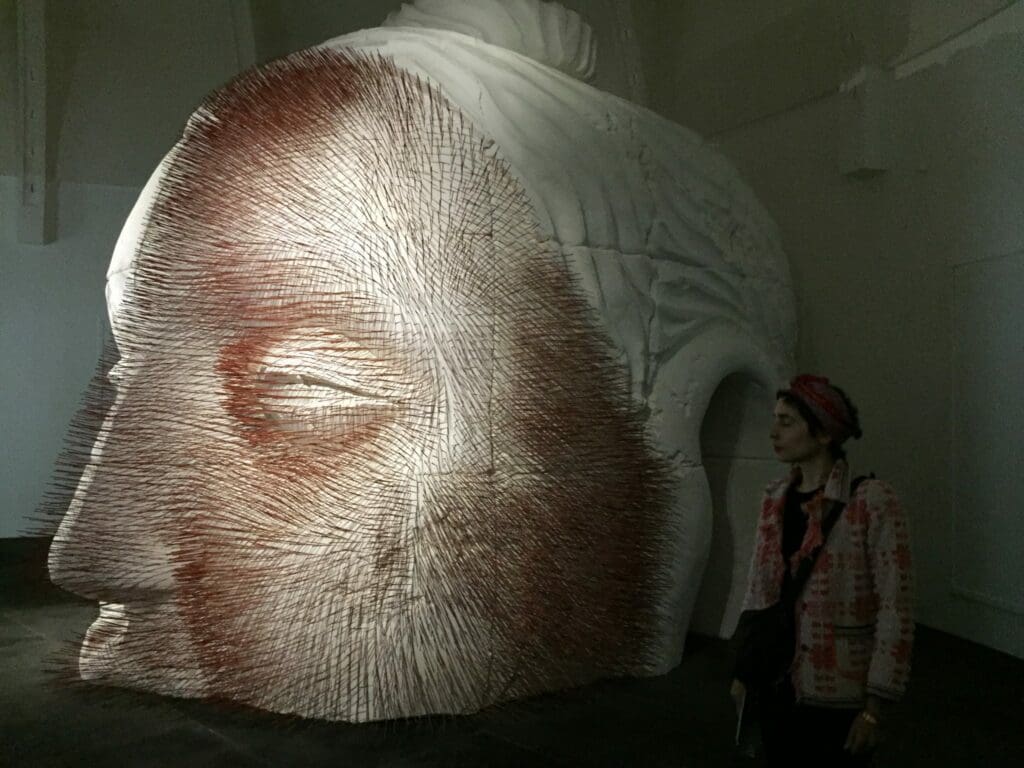
The artist also installed the dismembered body of a giant Buddha across all the floors of the museum. Buddha is a common point to all of Asia.
The idea? To point a finger at this threatened heritage and our humanity in search of meaning. Feet, hands, shoulders, head… all these elements, of a spectacular size and where thousands of little pieces of wood have been planted, make a fine effect. They invite you to explore and review the permanent collections, which are truly splendid, with a fresh eye!



Tips:
- The first Sunday of the month, free access to the permanent collections and temporary exhibitions
- Combined ticket with one of the upcoming temporary exhibitions (“Porcelain, masterpieces of the Ise collection” and “Japanese landscapes from Hokusai to Hasui”, from June 21 to September 4, 2017) / price: 9.50 € or 7 € at reduced price, ticket valid for a second visit within the 14 days following its purchase date
Carte Blanche to Prune Nourry Exhibition
until September 18, 2017

Musée national des arts asiatiques Guimet
6 place d'Iena, 75116 Paris

Full price: 7.50 € / reduced price: 5.50 €
_
The Atelier Brancusi
(by Valérie Collet)
You have probably passed it dozens of times without noticing it and that is its entire charm! Discreet and intimate, this studio, which was originally in Montparnasse, is a haven of calm and silence in the middle of urban turmoil. An atmosphere so serene reigns there that many visitors linger in the afternoon, especially to draw.


The Romanian sculptor bequeathed it to the State a year before dying, in 1956, with his works, his sketches, his furniture, and his tools. The only condition he imposed was that it be reconstructed in its entirety, which was done and admirably respected thanks to the talent of architect Renzo Piano.
Thus, four spaces follow one another, showing in turn the rooms where the sculptor exhibited his works, the reserves where he piled them up, and his corner for living (and working), an incredible clutter where kitchen utensils mingle with tools and the forge.


 For Brancusi, his studio was one with his sculptures, whose placement was meticulously chosen. You walk all around this art space, and wherever you are, viewpoints follow one another, each richer than the last.
The Oiselet, the Sleeping Muse, the Kiss Column, and many other works with poetic names subtly coexist; their shapes and materials echo each other, they seem to wink at each other, conversing peacefully… An image of harmony amplified by the light falling from the large glass ceilings.


 You can finish the visit with a short stop in the tiny garden, facing Beaubourg. A rare and well-hidden spot!

Atelier Brancusi
Entrance on the piazza of the Centre Pompidou (Rambuteau street side)

Open every day except Tuesdays and May 1st, from 2 PM to 6 PM
Tip: free entry for everyone
_
Photo credits: Nicolas Diolez and Valérie Collet