I am originally from Lyon, and yet I know the Beaujolais region all too poorly (they always say the shoemaker’s children go barefoot). So, I was thrilled to be able to discover this wine region during the 2nd edition of the Bienvenue en Beaujonomie festival, which was held in the Beaujolais area between July 2nd and 4th, 2021 (the first edition took place in 2019).
This wine-and-bistro festival, supported by Inter Beaujolais, offers the chance to sit down at a winemaker’s table for a meal prepared by a chef (or the winemaker themselves if they are a culinary talent). The idea is to share a warm and welcoming meal (which it certainly was) with guests from near and far (we mainly met locals from Lyon for this 2nd edition along with my favorite photographer) around delicious dishes and Beaujolais wines. In addition to the meals, each property organizes its own activities (walks in the vineyards, wine tasting workshops, concerts, exhibitions…). The Beaujolais appellations also host events in iconic locations: musical picnics, wine trails, producer markets, and more.
On the program for this event: beautiful communal tables, tastings, and discoveries at over 50 estates and wineries in the Beaujolais, activities in the vineyards, and meals facing the vines, under arbors or in the heart of the cellars (which was especially the case during this 2nd edition due to the very rainy weather, but that didn’t stop us from having a wonderful time).


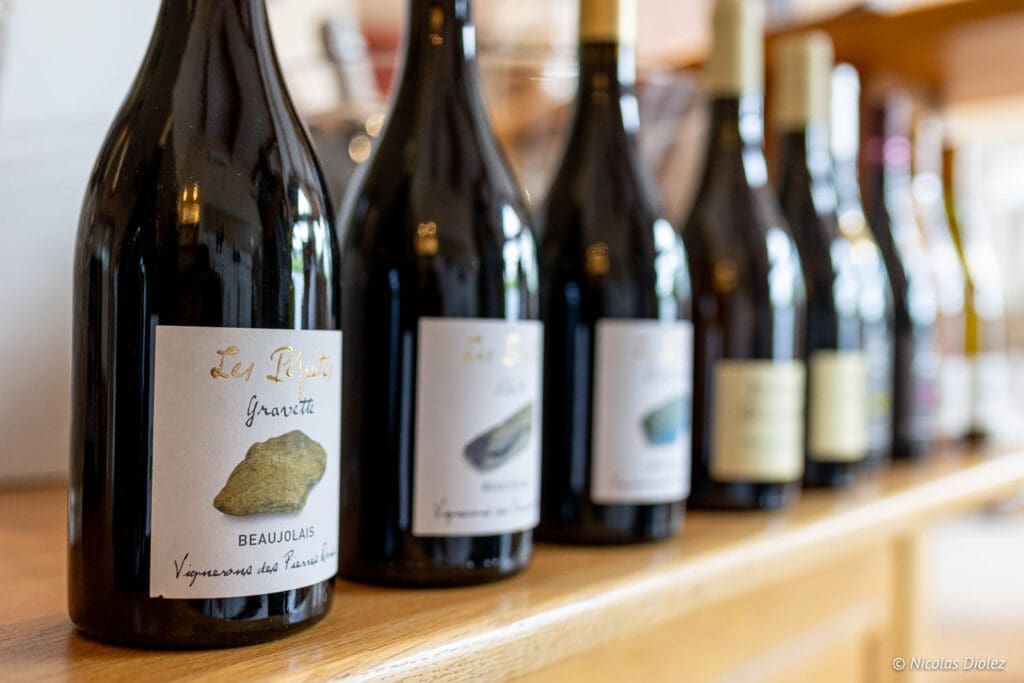


Table of Contents
Beaujolais Wines
First, here is a brief introduction to the Beaujolais appellation, which covers a territory of 1,550 km² (55 kilometers long from north to south) with 116 municipalities and 229,000 inhabitants. This appellation takes its name from the city of Beaujeu, the seat of a local lordship of the same name in the Middle Ages and the historical capital of the vineyard. The appellation also extends across 2 departments (and therefore also across 2 regions: Auvergne-Rhône-Alpes and Bourgogne-Franche-Comté): Saône-et-Loire and the Rhône. 39 villages are traversed by the Beaujolais Wine Route (which is about 140 km long) and stretches from Lyon to Burgundy, from the foothills of the Massif Central to the banks of the Saône.
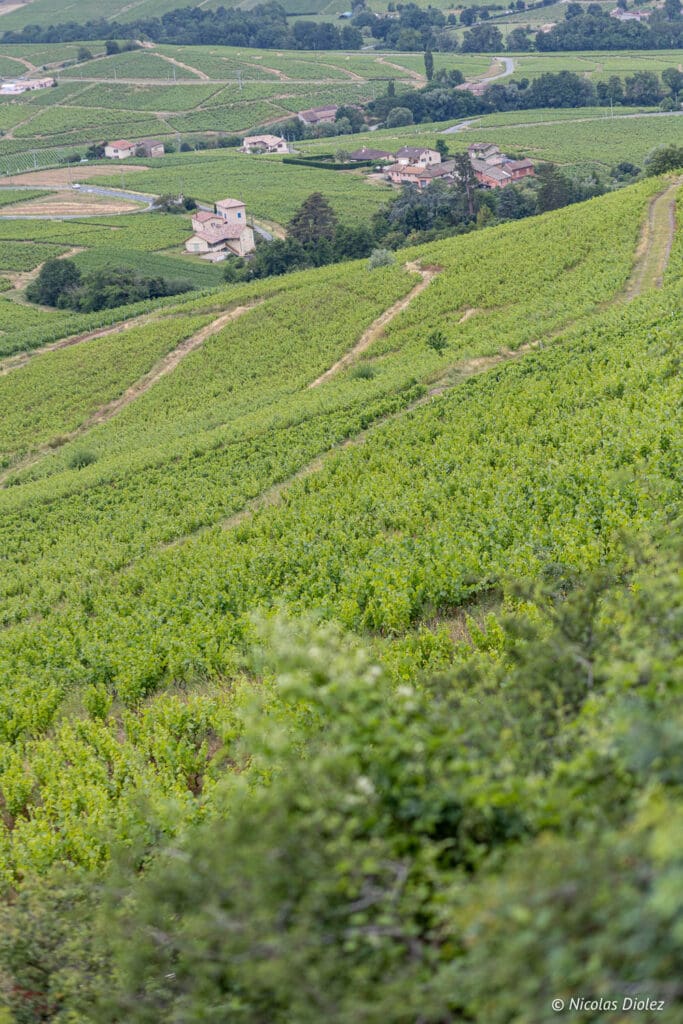
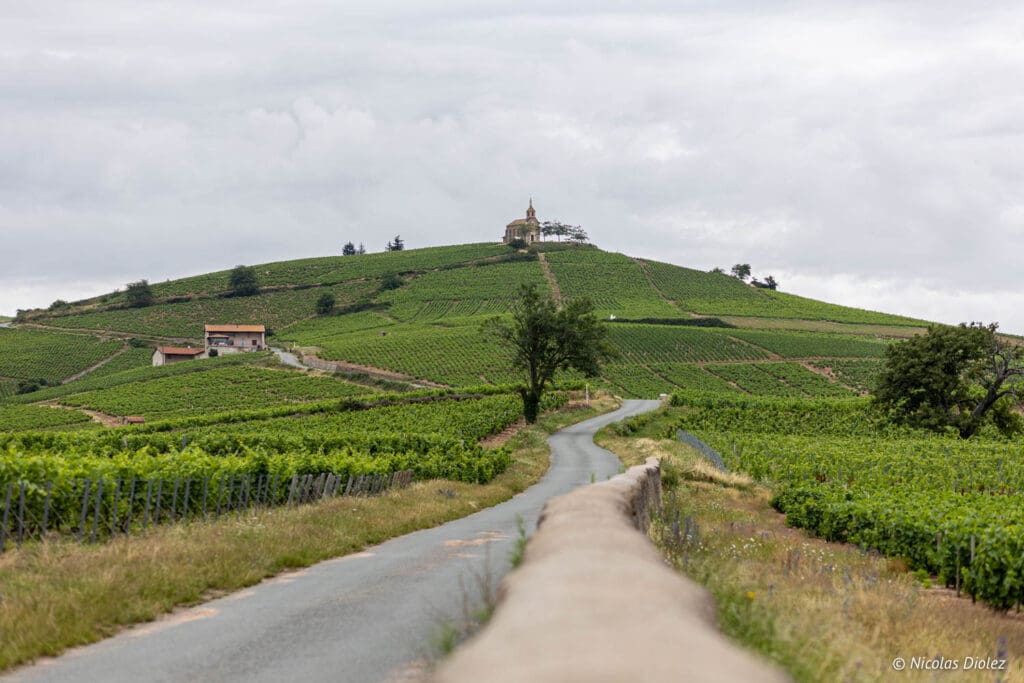
In terms of scenery, you cannot miss the vineyards, which are omnipresent! There are also rolling landscapes that reminded me of Tuscany, and rightly so, because people here often refer to the region as the Little Tuscany of Beaujolais. However, the landscapes differ quite a bit between the south and the north of the Beaujolais region.


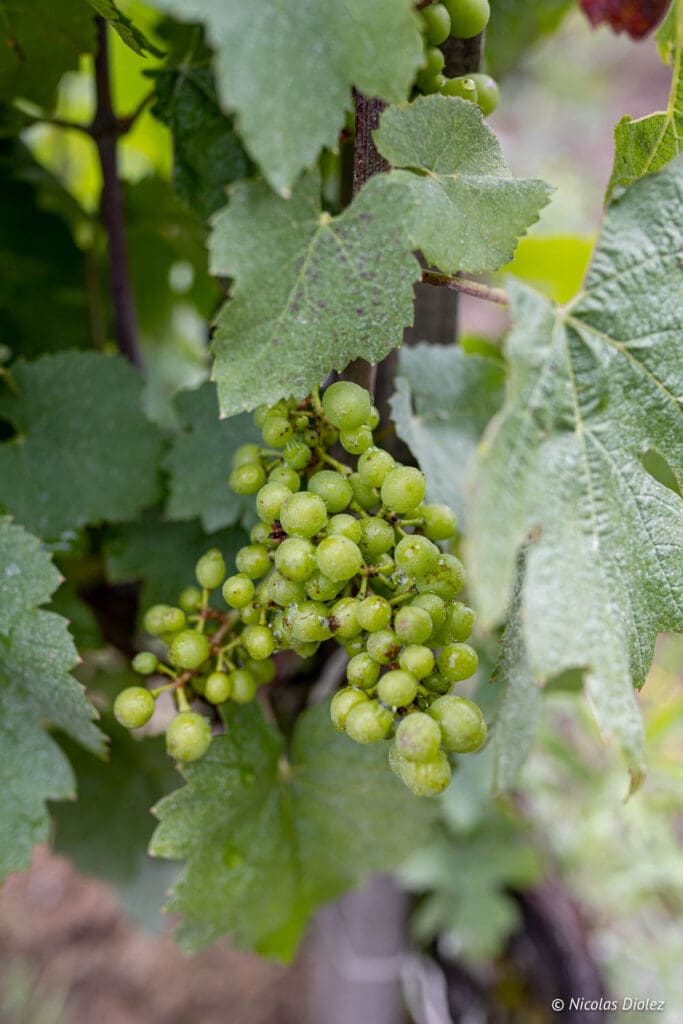
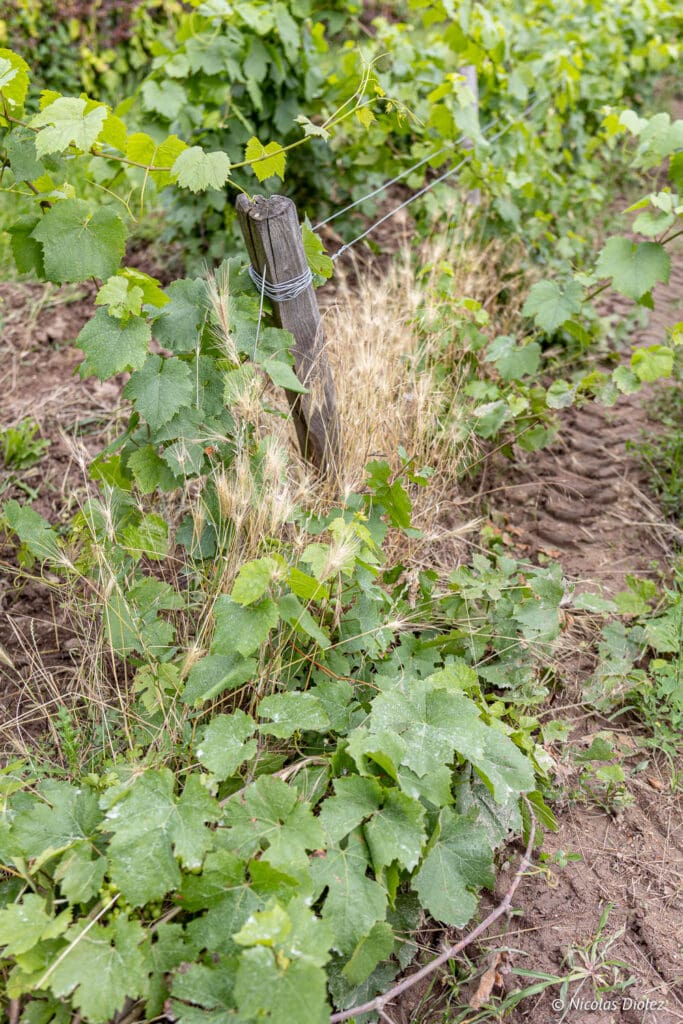


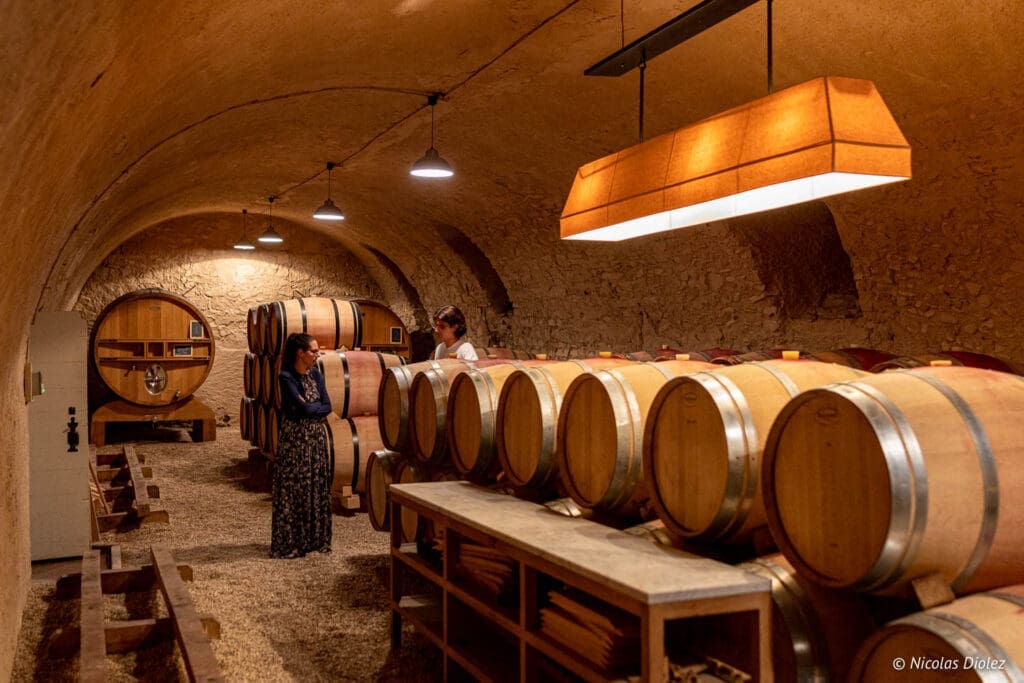
There are 2 main grape varieties: Gamay Noir with white juice (for red and rosé wines) and Chardonnay (for white wines). As in Burgundy, wine production in the Beaujolais region is primarily “single-varietal” and 95% is red wine. In the heart of Beaujolais, there are 12 different appellations, mainly red, but also a small production of white and rosé in Beaujolais-Villages. The traditional container for Beaujolais, which is used much less frequently today, is the oak foudre (large vat).
The 12 regional appellations (AOC) are as follows:
- 2 regional appellations: Beaujolais and Beaujolais-Villages
- 10 Crus: Brouilly, Côte de Brouilly, Régnié, Morgon, Chiroubles, Fleurie, Moulin-à-Vent, Chénas, Juliénas, Saint-Amour
The appeal of Beaujolais wines lies in their very good quality-to-price ratio, and we truly tasted some gems. I must say that, on the whole, we were really blown away by the wines of Beaujolais! By their diversity and their quality. And as we were able to observe, you can feel that many things are currently evolving in the Beaujolais region, and that is a great thing!


_
Les Vignerons des Pierres Dorées
In the heart of the Pierres Dorées territory (located in the southern Beaujolais), the Vignerons des Pierres Dorées winery is found in Saint-Vérand. The vines and winemakers of this cooperative cover the southwestern part of the Beaujolais, from the Tarare hills to those of Oingt, thus offering a beautiful diversity of Beaujolais terroirs. The name and the very characteristic color of the stones in this region, the famous “golden stones” (pierres dorées), come from a local limestone called Gravette.
The winery has existed for 10 years (founded in 2011) and is the result of merging several local winemakers and villages by combining 3 former independent wineries. It very recently overhauled the names of its products and labels. What is interesting is that the wines offered by the Vignerons des Pierres Dorées often have a connection to the history of the Beaujolais or the uniqueness of its soil (in line with the Geopark studies I mention further on in the article).
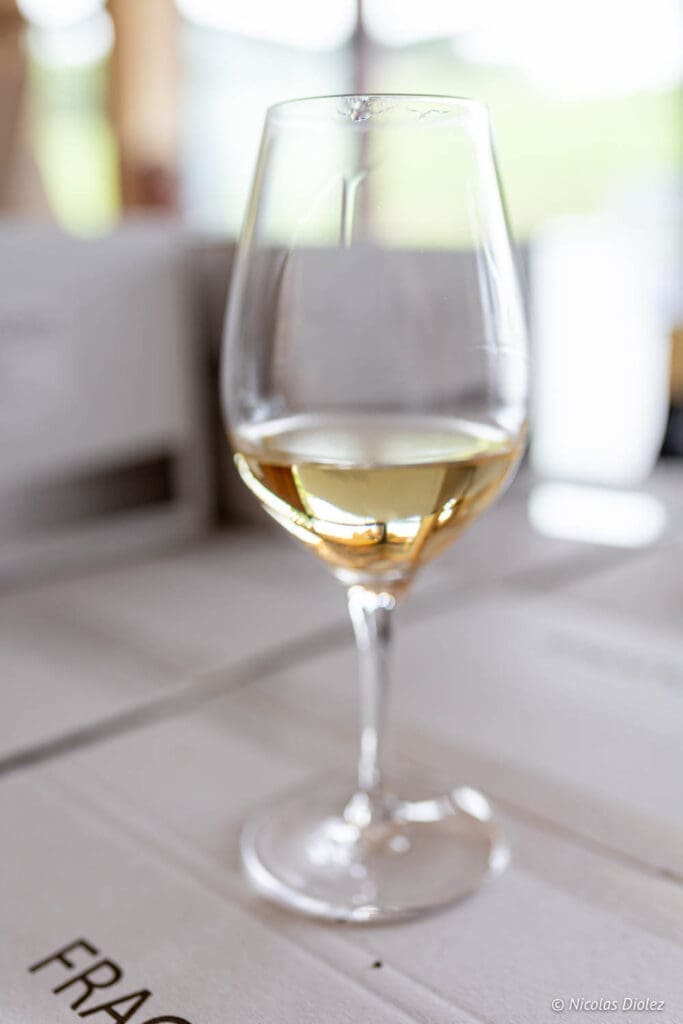
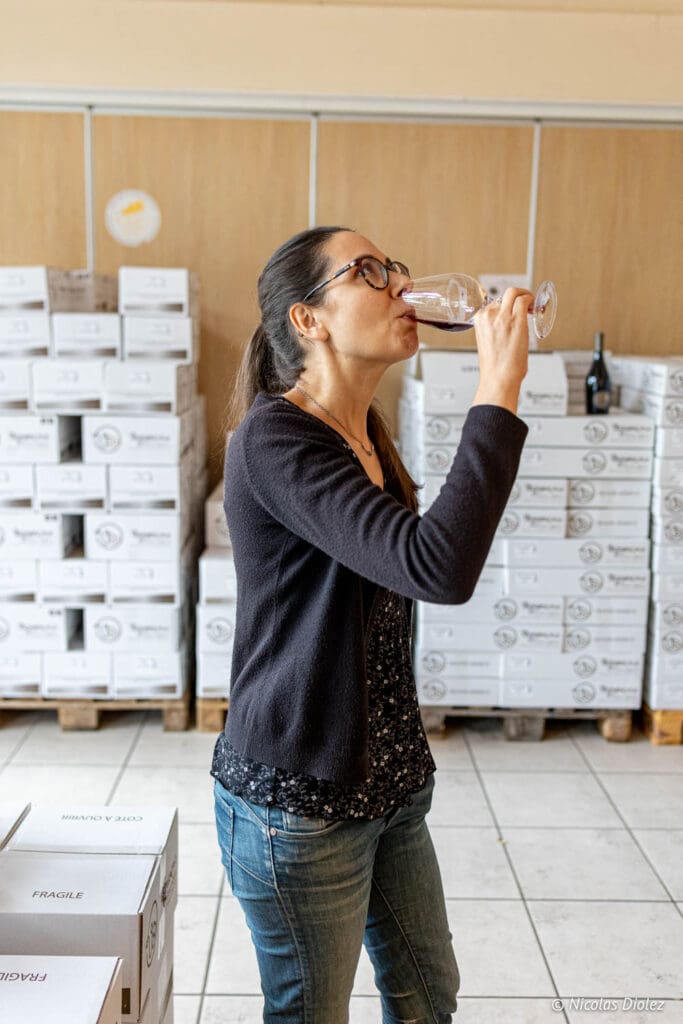
Still today, 90% of the harvest remains manual in this cooperative. Indeed, the winemakers believe that this is better for Gamay, which is a sensitive grape variety. During our visit, we tasted the winery’s parcel-specific wines: the “Pépites” (Nuggets). If you are in the area, I also recommend visiting the beautiful medieval village of Oingt.



Cave Vignerons des Pierres Dorées
Chais de Saint-Vérand, Le Bady
69620 Saint-Vérand
_
Terre des Brouilly
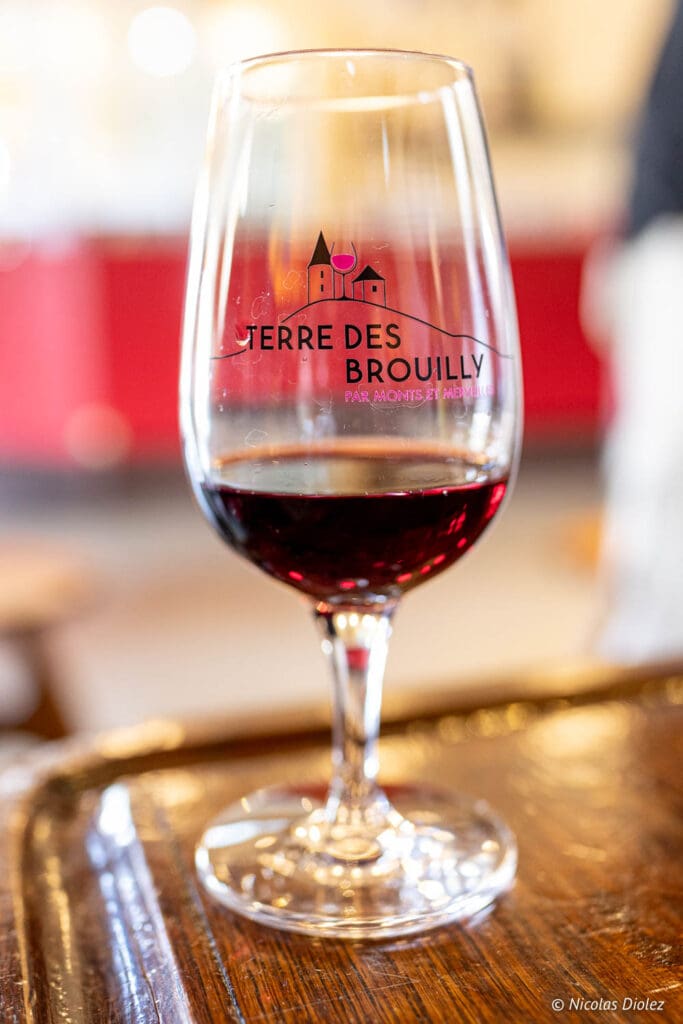
Brouilly is the southernmost but also the most extensive of the Beaujolais Crus. The appellation wraps around Mont Brouilly and rises toward granitic hills. The Côte de Brouilly Cru, meanwhile, is located only on the slopes of Mont Brouilly. The Terre des Brouilly community brings together winemakers from the Brouilly and Côte de Brouilly Crus.
During our visit, we were able to enjoy the festive atmosphere created by the “L’Harmonie de Quincié” brass band, and we also did a small wine tasting at the wine bar run by the winemakers of Terre des Brouilly at the Espace des Brouilly. This shop and wine bar was created in 1956 to offer direct sales of Brouilly and Côte de Brouilly Crus. If you are in the area, I highly recommend a stop there to discover this appellation!



Espace des Brouilly
Parc Émile Morandi – 69220 Saint-Lager
Open daily from 10:00 AM to 12:30 PM and 2:30 PM to 7:00 PM
The UNESCO Global Geopark Label Beaujolais
This “UNESCO Global Geopark” label has only existed for 15 years and it brings together a network of about 170 Geoparks worldwide (in 44 countries, including 81 Geoparks in Europe and 7 in France). Its objective is to establish links between a site and a specific geology.
For a site to be recognized under this label, it must possess a territory with remarkable geology that is part of a process of protection, awareness, and promotion of this heritage, with a focus on sustainable tourism development. In this context, the Geopark also encourages initiatives by the inhabitants of this territory. The Beaujolais Geopark was under study since 2012 and obtained its labeling in 2018. This status is, moreover, re-evaluated every 4 years.
In Beaujolais, this remarkable geology is hidden in the soil and is not necessarily visible at first glance. However, one can retrace 500 million years of Earth’s history through the geology of Beaujolais, which concentrates rocks originating from a volcanic archipelago, a mountain range, a desert plain, and even a tropical sea!


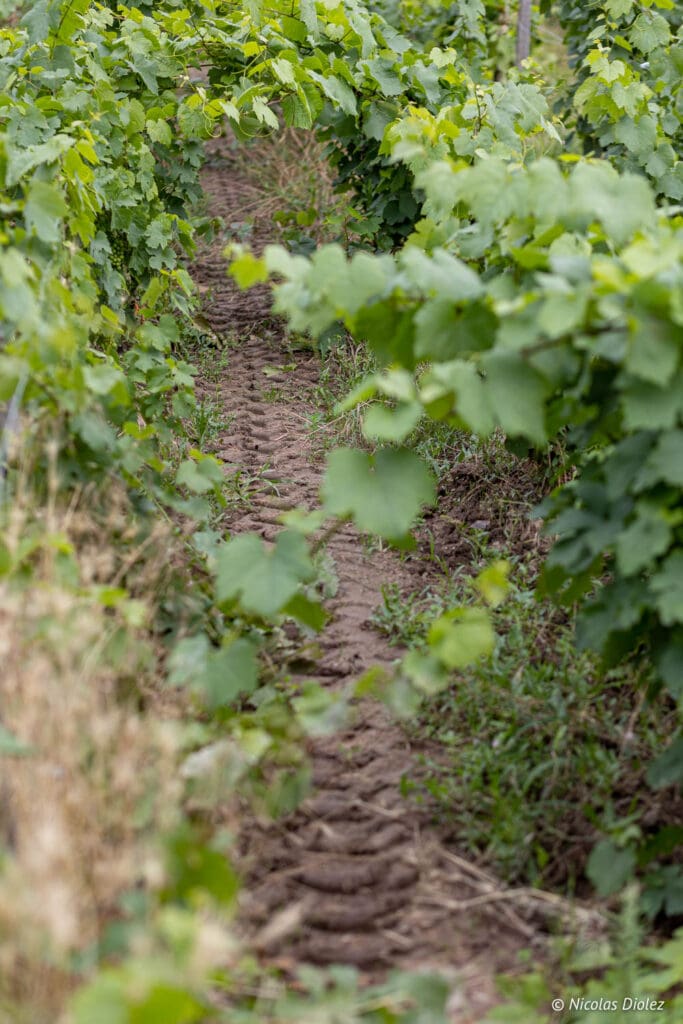



Thanks to this rich history, the Beaujolais subsoil benefits from an exceptional variety of rocks (represented here by 3 large families of rocks), which in turn gives rise to very characteristic wine terroirs. This gives us the opportunity to “taste” this geology in the wine produced in the Beaujolais. This geological mapping of the Beaujolais vineyard allows for the highlighting of soils in the form of parcel-specific wines (cuvées parcellaires) and also confirms that it is one of the French vineyards with the greatest diversity of soils. The Geopark is also based on a scientific foundation and has allowed for the identification and inventory of the site’s geo-heritage.
Thanks to this label, the Geopark organizes geo-events every year between April and December on the site: commented walks, conferences, exhibitions, orientation races, workshops, tastings, shows… And it also participates in the training of geo-guides in the territory.
Some remarkable sites to visit in the Beaujolais
Below, I list some must-see spots of the vineyard that I recommend you discover during a short car ride (as they are not necessarily close to each other):
- The Pierres Dorées: village of Oingt, Theizé…
- Mont Brouilly: with a height of 484 meters, you will have a beautiful view of the surroundings and the Beaujolais vineyard (the Mount dominates the vines of the Brouilly and Côte de Brouilly appellations). The mountain is composed of extremely hard blue rock, one of the oldest in the territory. 2 belvederes also allow you to appreciate the contrasts of the landscape.
- The Terrasse de Chiroubles.
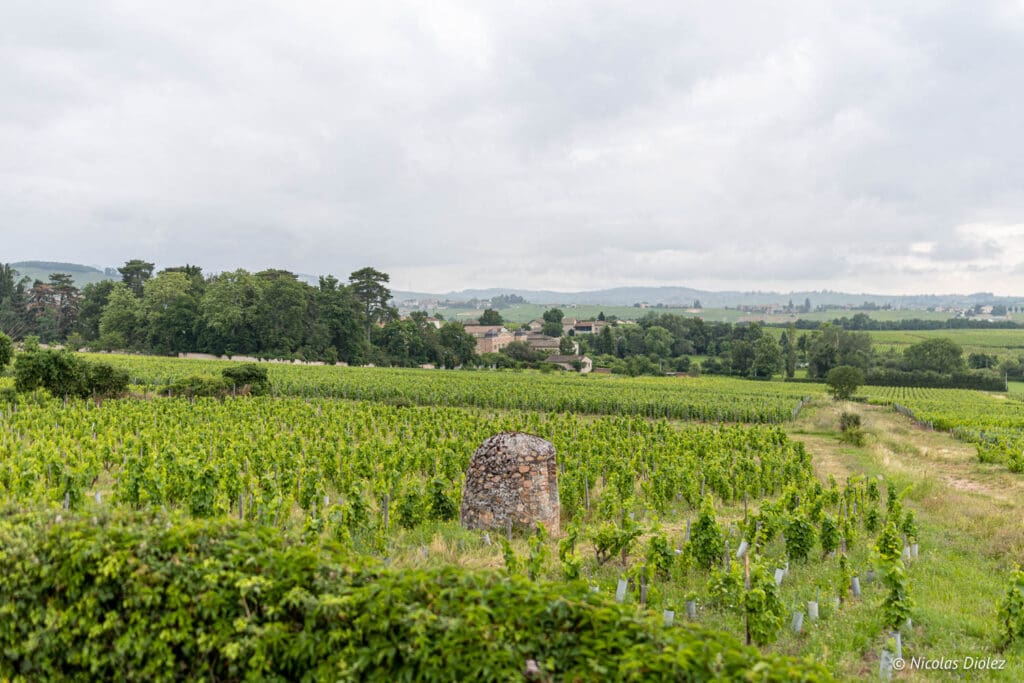
- The Régnié with the Tour Bourdon (cairn of 4807 mm composed of large blocks brought down from the mountain of Avenas / difficult to find with GPS, so I advise you to ask the locals, without whom we would never have found it) and church with two bell towers.
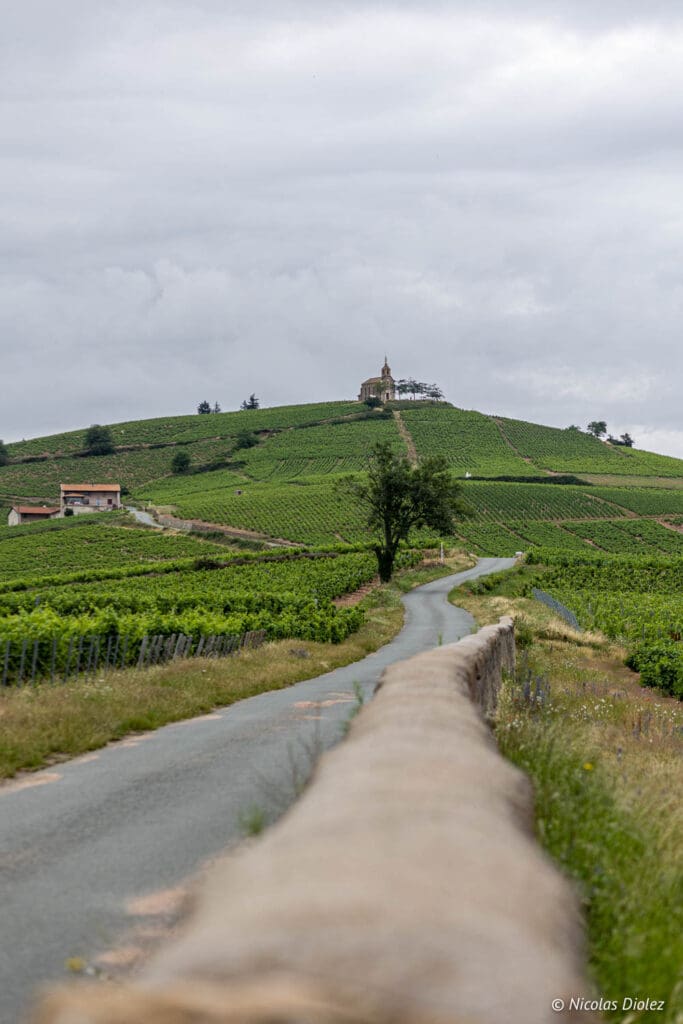
- The Chapelle de la Madone which overlooks Fleurie and dates from 1870.
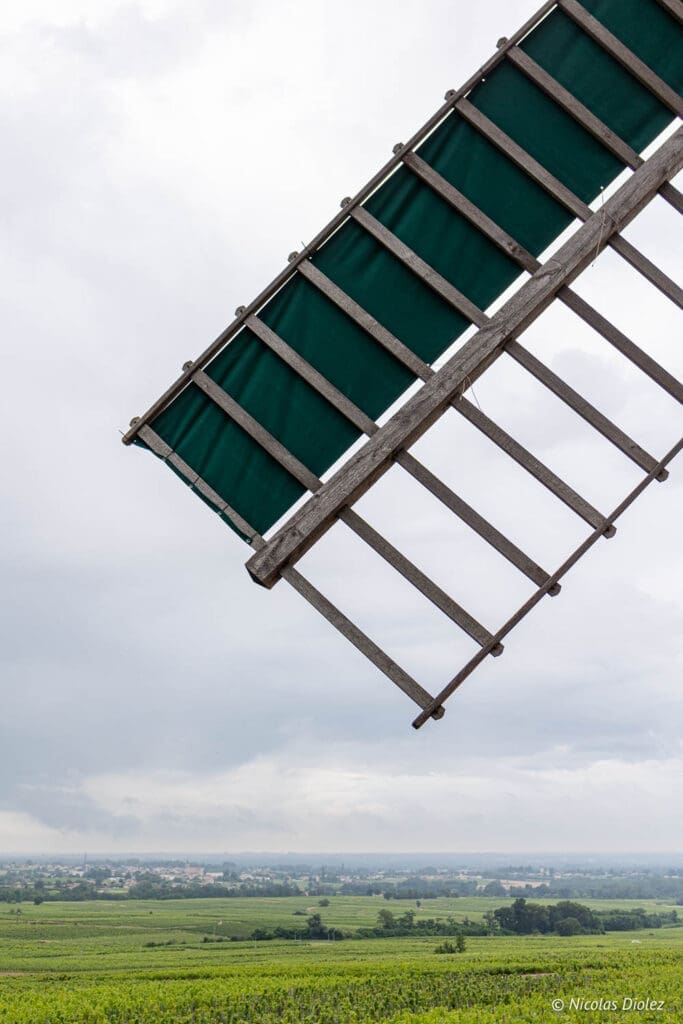
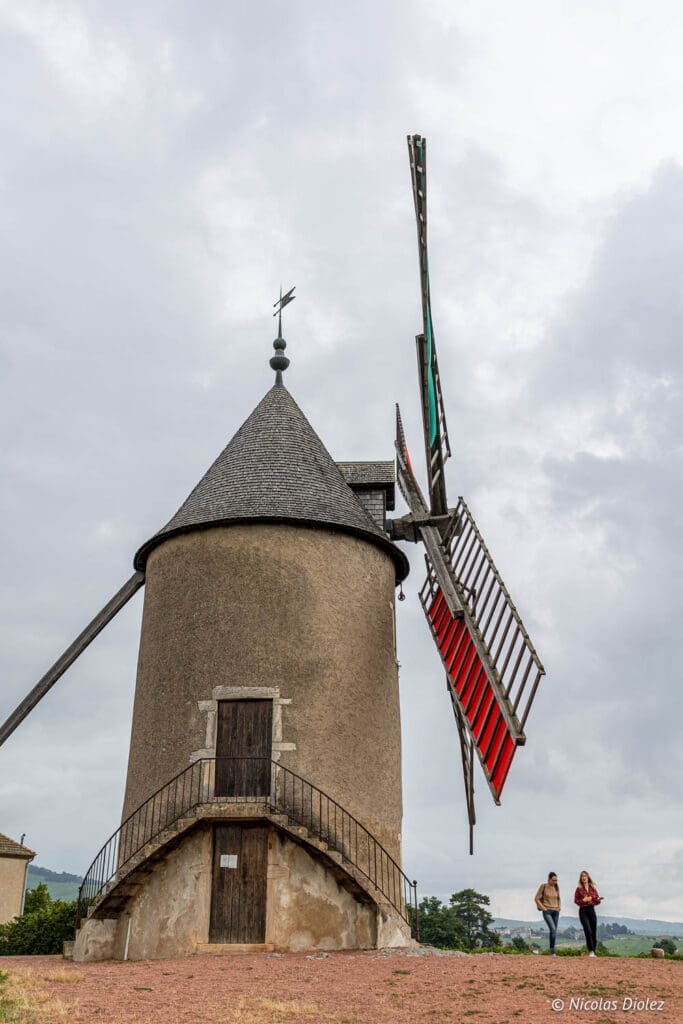
- The Moulin de Romanèche-Thorins.





My meals at the winemakers’ during the 2021 edition of Bienvenue en Beaujonomie
During this 2021 edition, we participated in several meals at Beaujolais wineries over the weekend, which I talk about in more detail below. But if I had to summarize all these experiences in one word, I would say without hesitation “conviviality“, because that was truly the common thread of these various moments, all of which were extremely pleasant!


_
Lunch at Domaine Les Capréoles
This estate, created in 2014 by Cédric, now has 7 hectares of vines under organic and biodynamic agriculture, including 6.5 hectares in AOC Régnié production. The plots are spread across the towns of Régnié-Durette and Lantignié. Here, they make quality wines produced with indigenous yeasts and vinified with respect for the different terroirs, using a minimum of sulfur, which is worth noting! On-site, there are also old winemaking buildings dating from around 1750, proof that wine production on this location is not recent.
During this winemaker’s lunch, we tasted an excellent truffle meal prepared by Cédric and his wife. After a small appetizer and a presentation of the estate, we had lunch in a warm atmosphere in the heart of the estate’s cellar.
On the program for this truffle-focused meal: truffled egg cocotte; fresh pasta with truffle butter; selection of cheeses; fresh egg custard from the estate’s chickens + pairings with the estate’s wines, of course!
Good to know: the estate organizes truffle tasting meals all year round (about 7 to 8 per year are organized) by reservation.

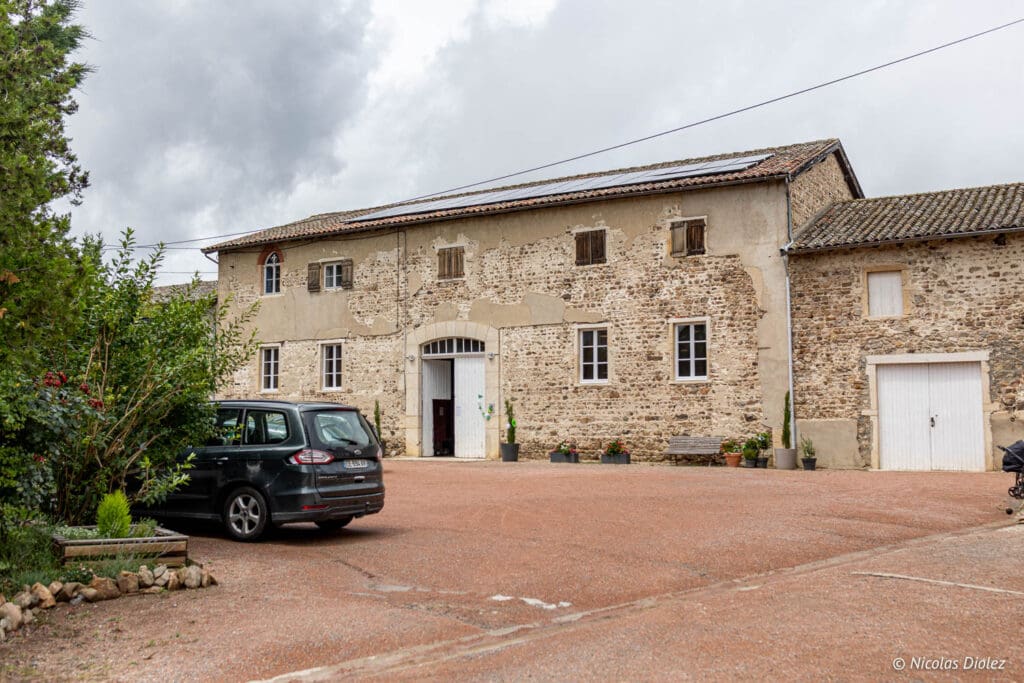


Domaine Les Capréoles
108 Impasse du Muguet, 69430 Régnié-Durette
Open daily by appointmentMeal price: €55 per person
_
Winemaker’s picnic in Saint-Amour Bellevue
Saint-Amour is the northernmost appellation of the Beaujolais crus, located in the eponymous municipality and entirely in Saône-et-Loire. The small town takes its name from a Roman soldier converted to Christianity, Amor, who founded a monastery here. We ultimately enjoyed this picnic meal (offered by À la belle étoile during the Producer Market in the Town Hall square of Saint-Amour) in the cellars of the Saint-Amour winemakers instead of the vineyards, due to the bad weather that weekend. The meal (very hearty) had been prepared with local producer products by chef Cyril Laugier of the Auberge du Paradis.
Picnic menu: Bresse poultry sandwich from Ferme Bonardière with fresh cheese from the Le Carruge eco-farm; L’Amie du Coeur bread; Le Jardin d’Augustin salad; refined butter from the Chevenet creamery; Saint-Amour wine (Domaine des Pins; Domaine Hamet-Spay; Domaine de la Pirolette) + 1/2 bottle of Saint-Amour wine, a Saint-Amour map, and 2 glasses we were able to keep as a souvenir.


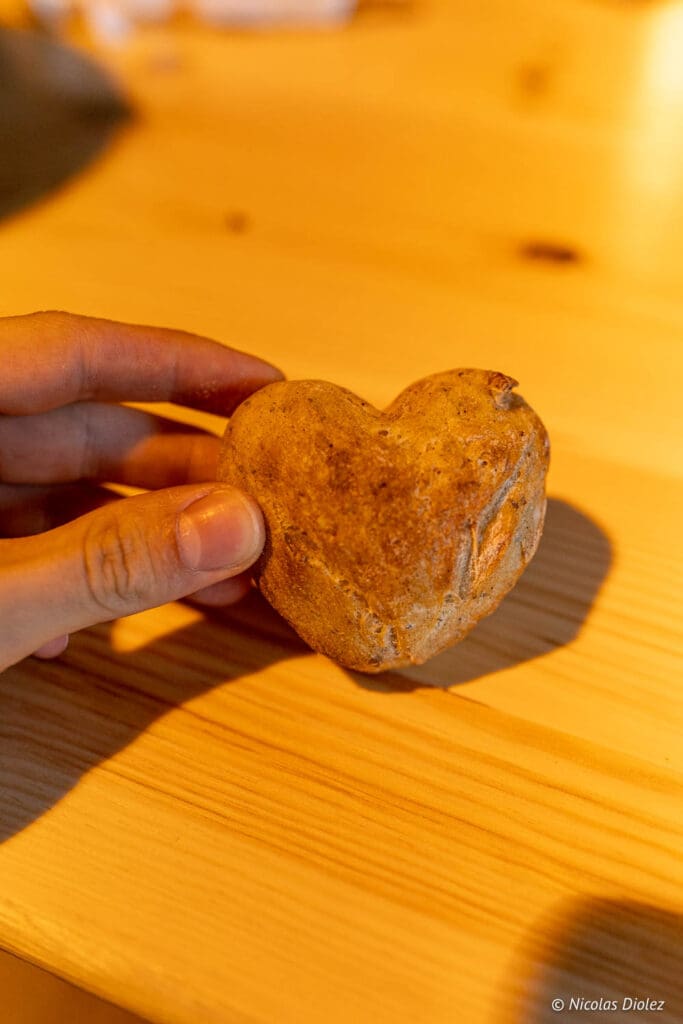


Picnic in Saint-Amour
Picnic price: €40 per person
_
Dinner at Château de Poncié
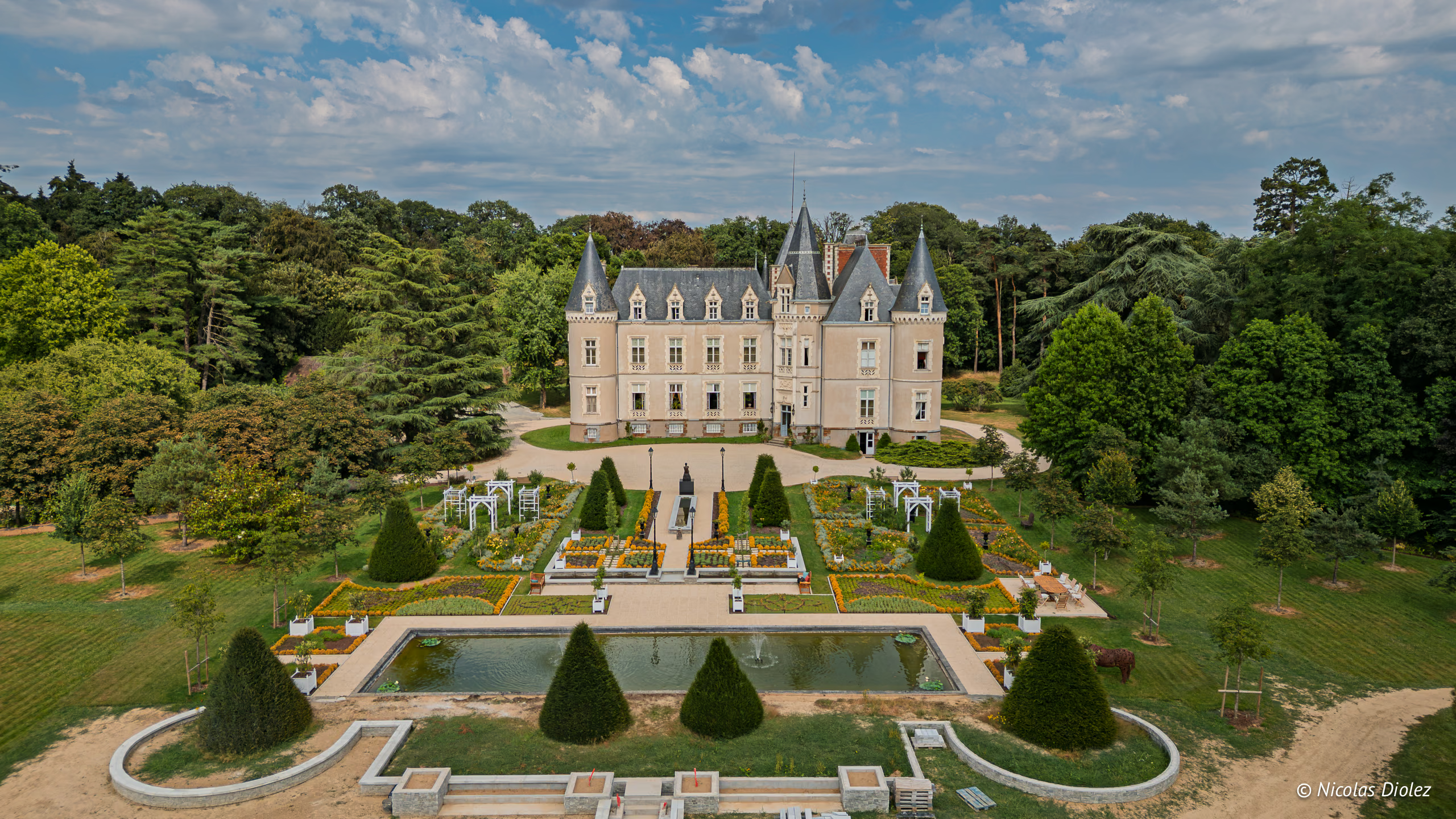
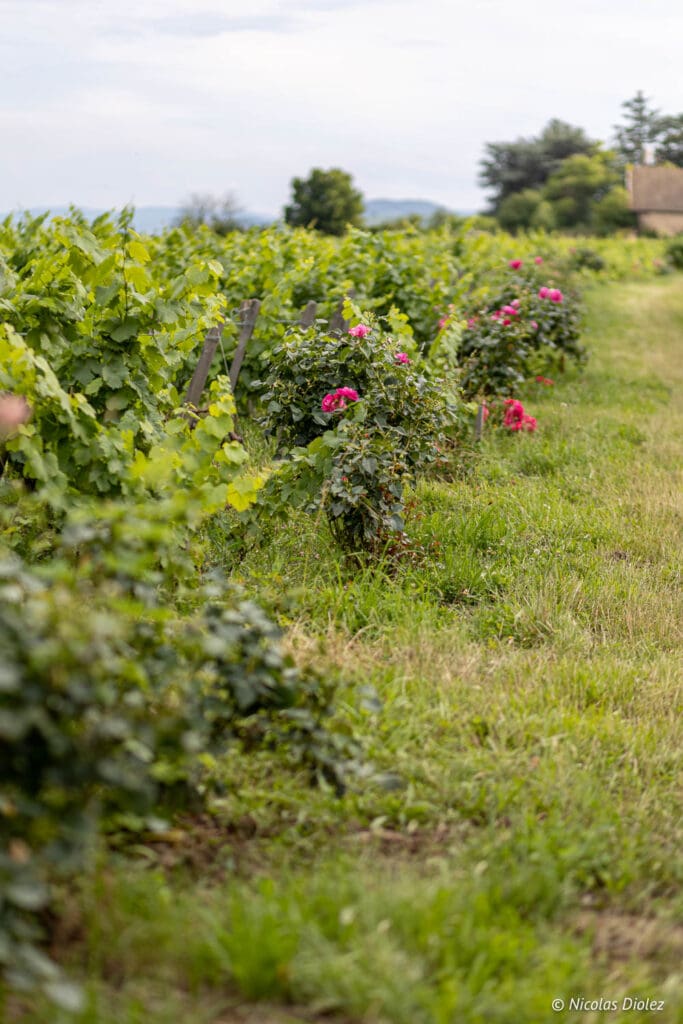
The history of Château de Poncié dates back to the 10th century when the estate, already renowned for its wines, was gifted to the Cluny Abbey. Today, the estate extends around an 18th-century château, over 100 hectares of meadows, woods, and crops, 35 hectares of which are planted with grass-covered vines. The current owners have made preserving the ecosystem and the balance of biodiversity one of their priorities with a fallow land system. They are, therefore, obviously committed to organic practices, but they also use sheep for eco-grazing, have beehives (with honey sold at the estate), and participate in the vegetation and reforestation of their plots.


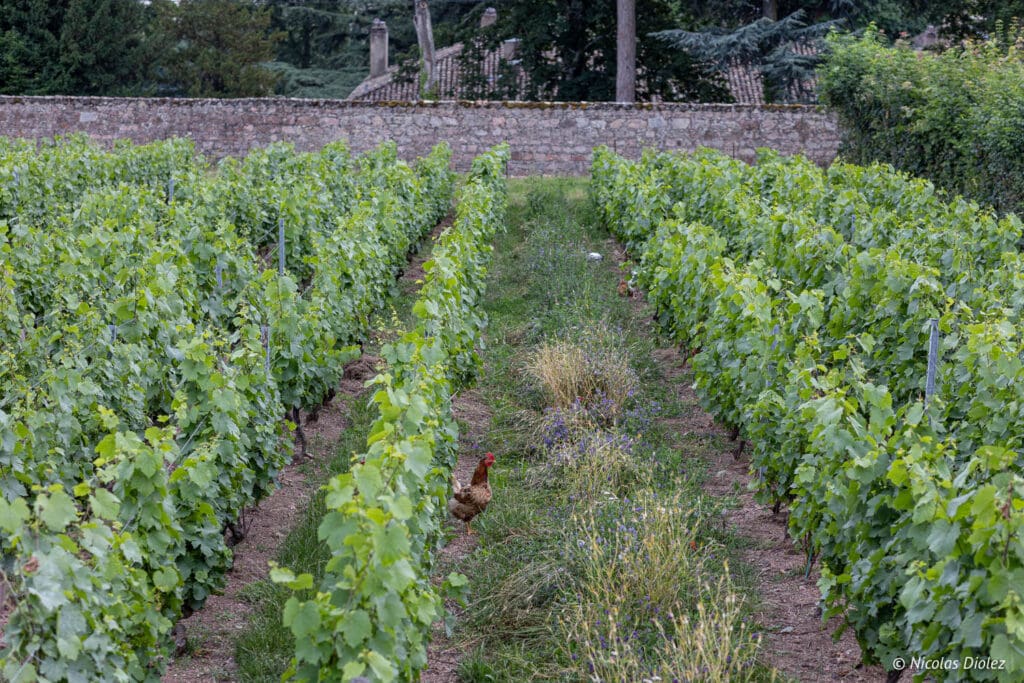
Regarding the vines, they have a lot of Gamay, which is the major red grape variety of Beaujolais, and the estate produces Cru Fleurie, which extends only over the eponymous municipality and owes its name to a Roman legionnaire. Since the soil of their plots is granitic, it needs an input of organic matter, which is done by the winemakers using grape marc and local cow manure (it takes about 1,000 tons per year for the whole estate!).
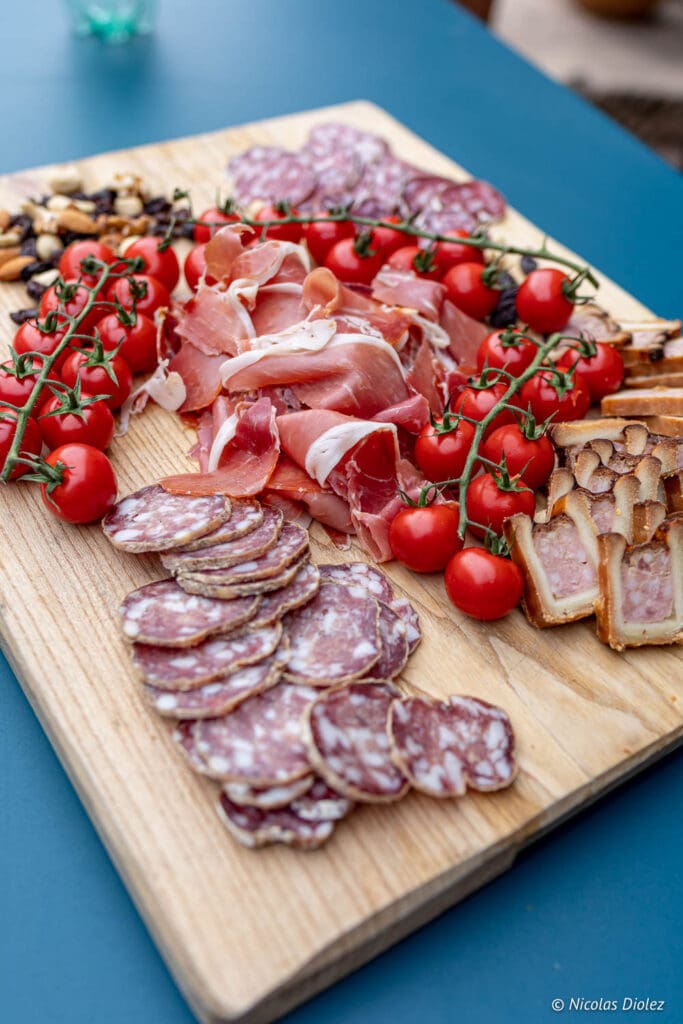
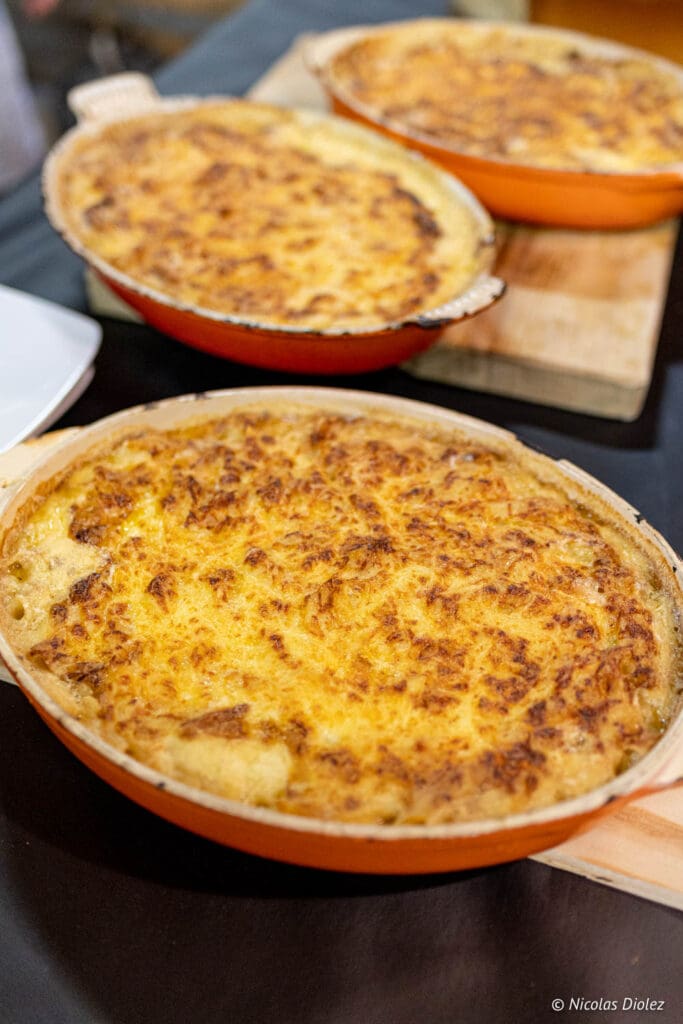
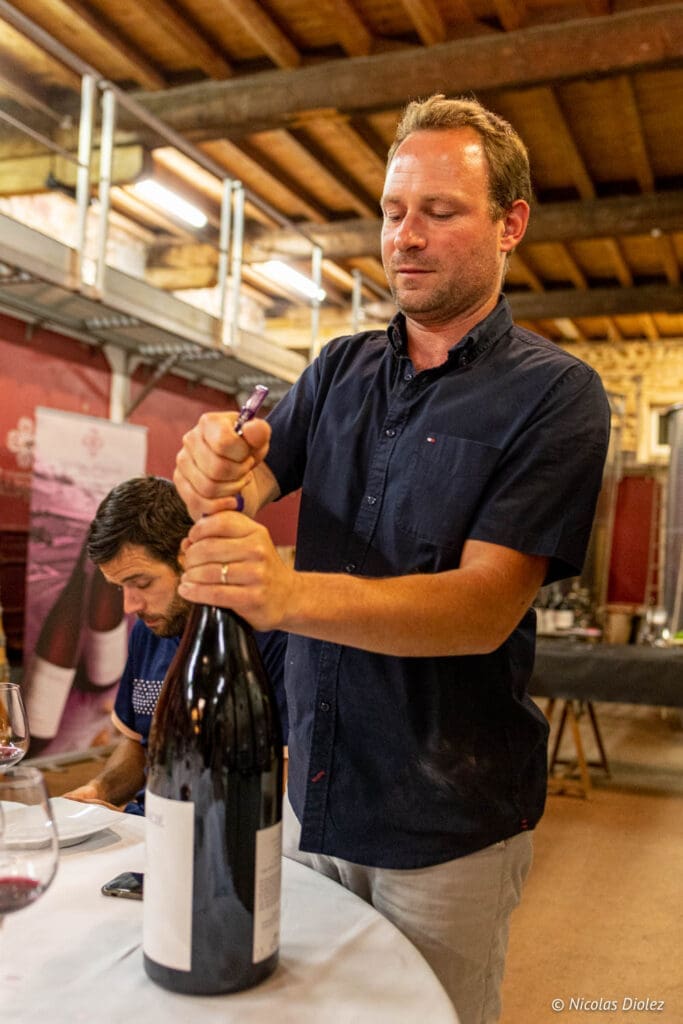
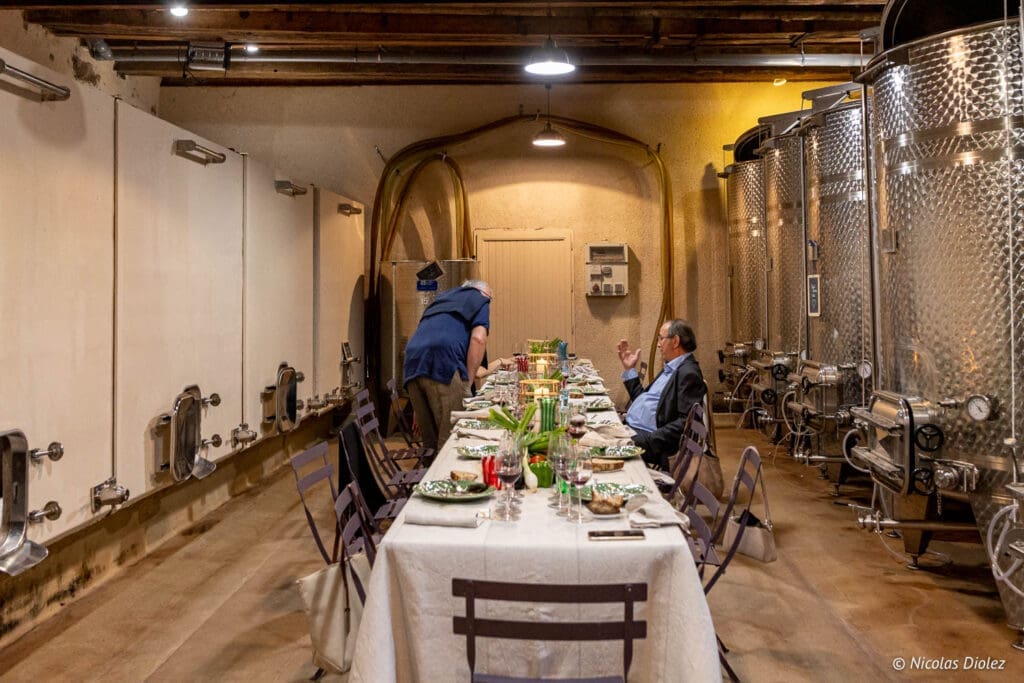
We began our evening at Château de Poncié with a visit to the vineyard with the owners, and we then moved on to a dinner in the vat room, prepared by local chef Aurélien Merot of the Auberge du Cep, a new Michelin-starred restaurant in 2021.





Château de Poncié
1087 Route de Poncié, 69820 Fleurie
Shop open all year, Tuesday to Saturday
Visits and tastings organized by reservation all year round (Stopover visit for €5 / Discovery visit for €20 / Exploration visit for €46)
Pro tip: free access to the site (circuits and walks around the Château)Meal price: €70 per person
_
Dinner at Château des Bachelards
Château des Bachelards, located in Fleurie, is a 12-hectare wine estate that has been practicing organic agriculture since 2007 and also employs biodynamic methods. This ancient vineyard was planted here by the monks of Cluny around the year 1100. The owners’ desire is to have living soil by practicing polyculture, but also to have lower yields to produce higher quality wines.
The estate produces wines across 3 crus: Fleurie, Saint-Amour, and Moulin-à-Vent. It also produces an exceptional cuvée of Fleurie, Le Clos, a parcel that spans only 1.8 hectares and results in an incredible wine, worthy of a great Burgundy! In any case, my favorite photographer and I were totally seduced by the wines of Château des Bachelards, which we found truly excellent.



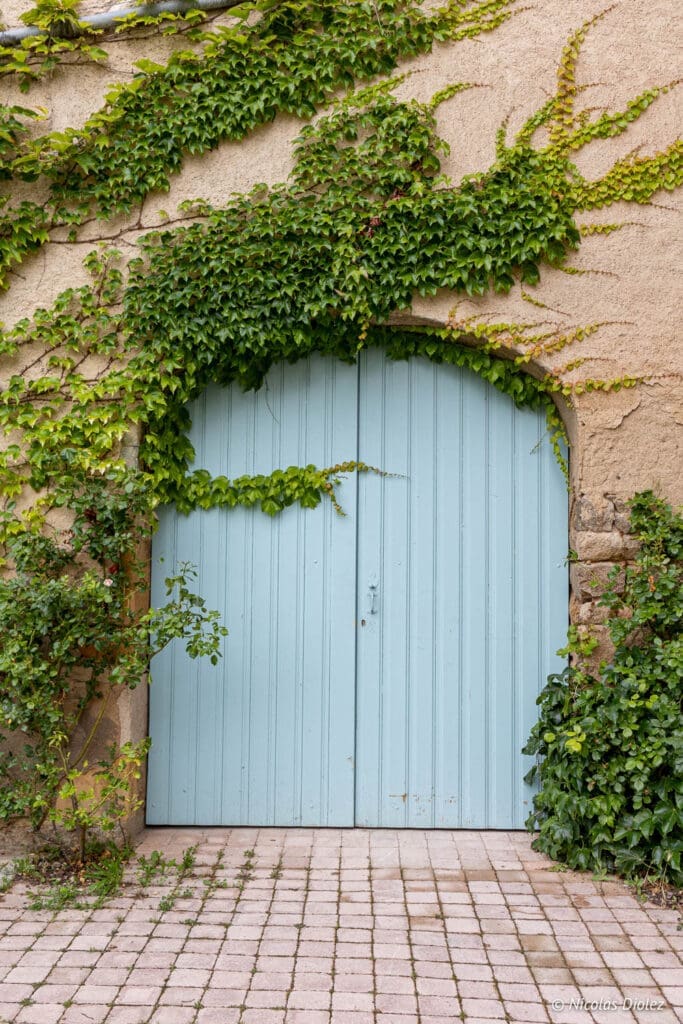


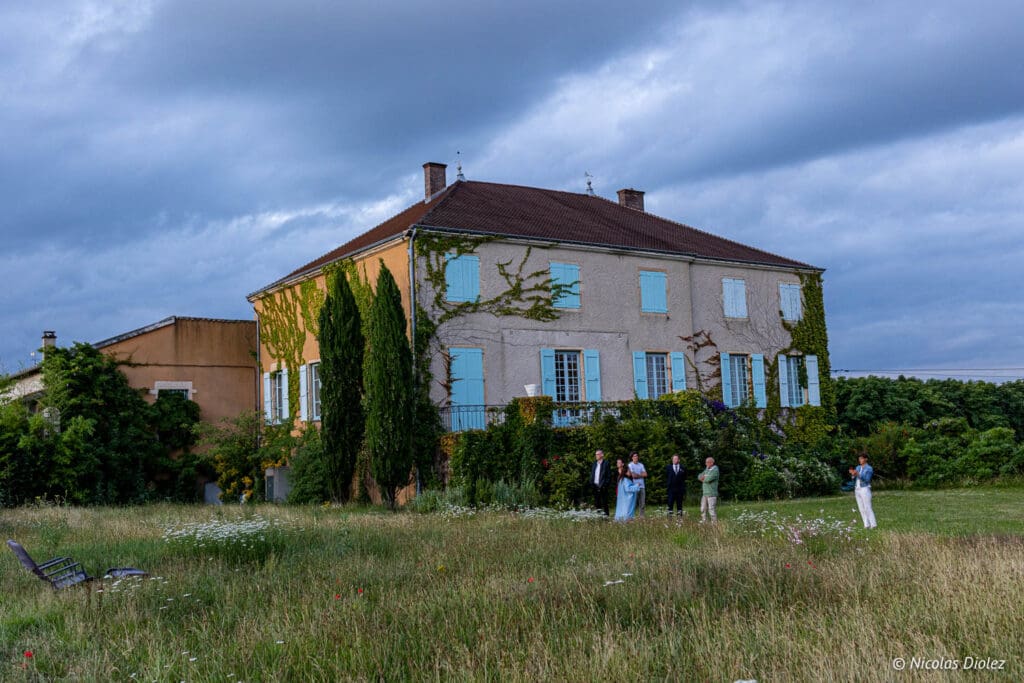
For this exceptional evening, we were received with great fanfare by the Comtesse de Vazeilles and we spent an incredible evening, both in terms of taste and the wild atmosphere of this unusual dinner. The meal served at Château des Bachelards was developed with the Saisons restaurant of the Institut Paul Bocuse (1 star in the Michelin Guide) and its chef Davy Tissot. The menu was designed jointly by chef Nour Milan, pastry chef Arnaud Montrobert, and head sommelier Gaëtan Bouvier, Best Sommelier of France 2016 and Master of Port 2019.
The high-flying menu: floral langoustines with Venus herb; monkfish drunk on Cassis; chocolate bark.



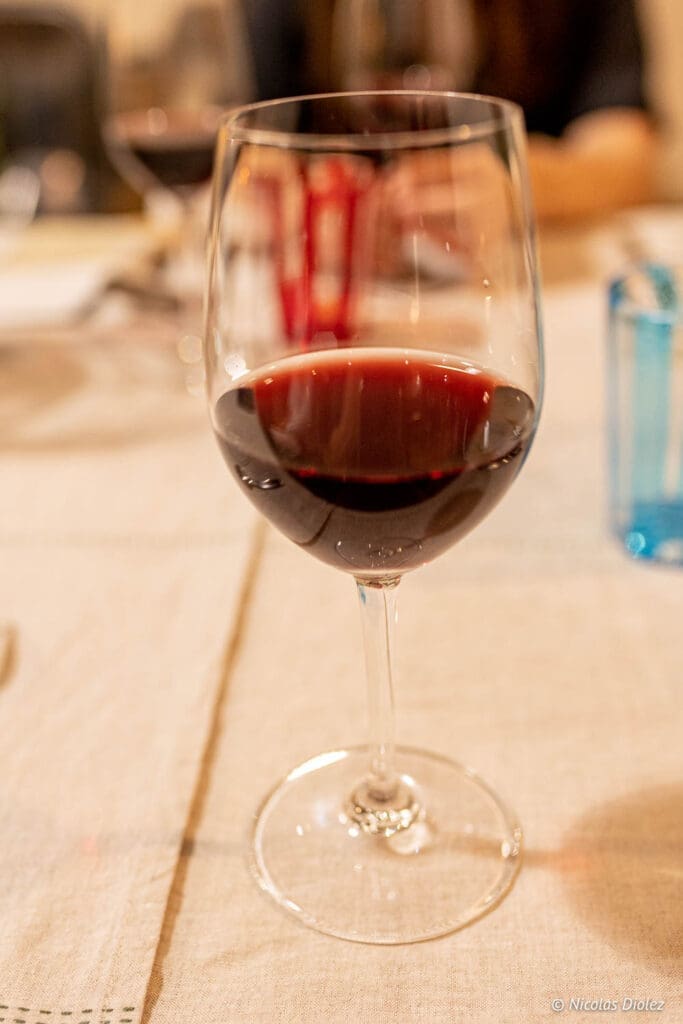


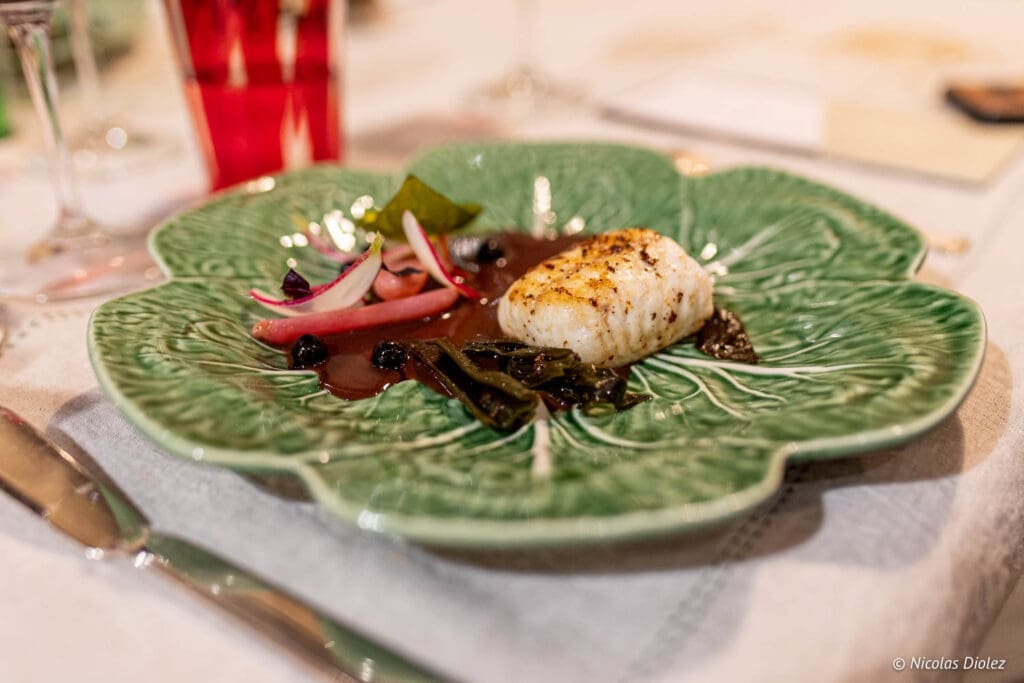


Château des Bachelards
Les Bachelards, 69820 FleurieMeal price: €134 per person
Where to stay in a bed and breakfast in Beaujolais? Château Saint-Vincent
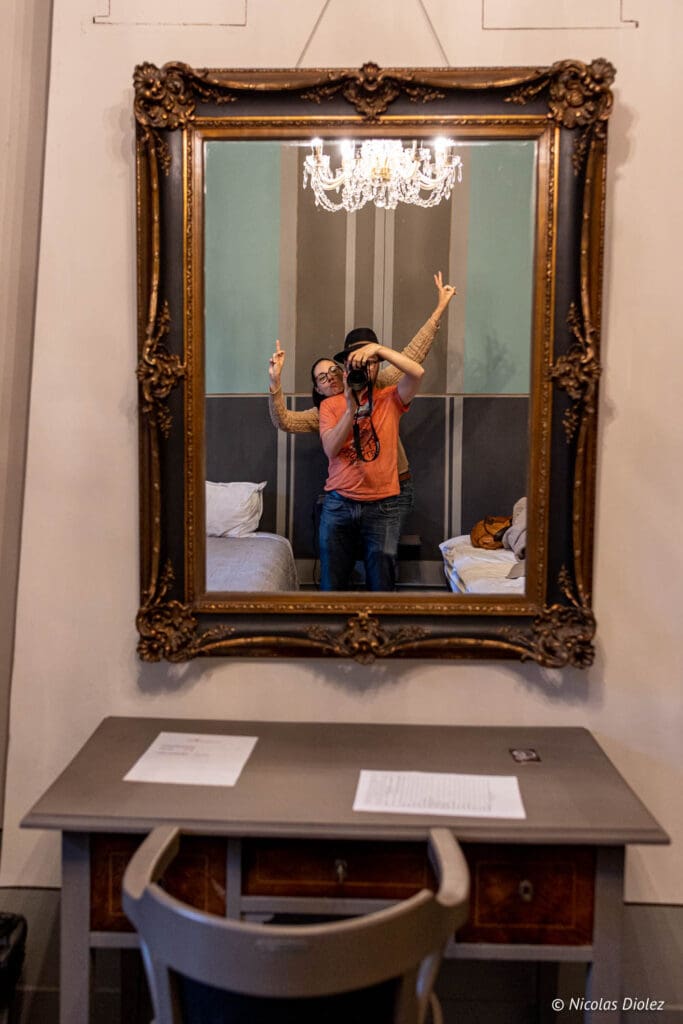
This charming and somewhat upscale bed and breakfast is found in the village of Régnié-Durette. It is located on the edge of a very busy road, but I must say that I was blown away by the soundproofing in the room because, once the windows are closed, you absolutely cannot hear the cars (and you know how sensitive I am to this kind of detail). The establishment offers 5 rooms and a cottage, as well as a very pretty terrace by the pool, in the shade of olive trees.
The place is decorated with great taste and the common areas are particularly well maintained. A very good point also for the breakfast, which is of high quality. In short, a lovely address to stay in the area if you are coming to do a bit of wine tourism in the Beaujolais.
The little extra: the owners are also winemakers and produce a few bottles of wine (red and white) for their personal consumption and for the pleasure of their guests!


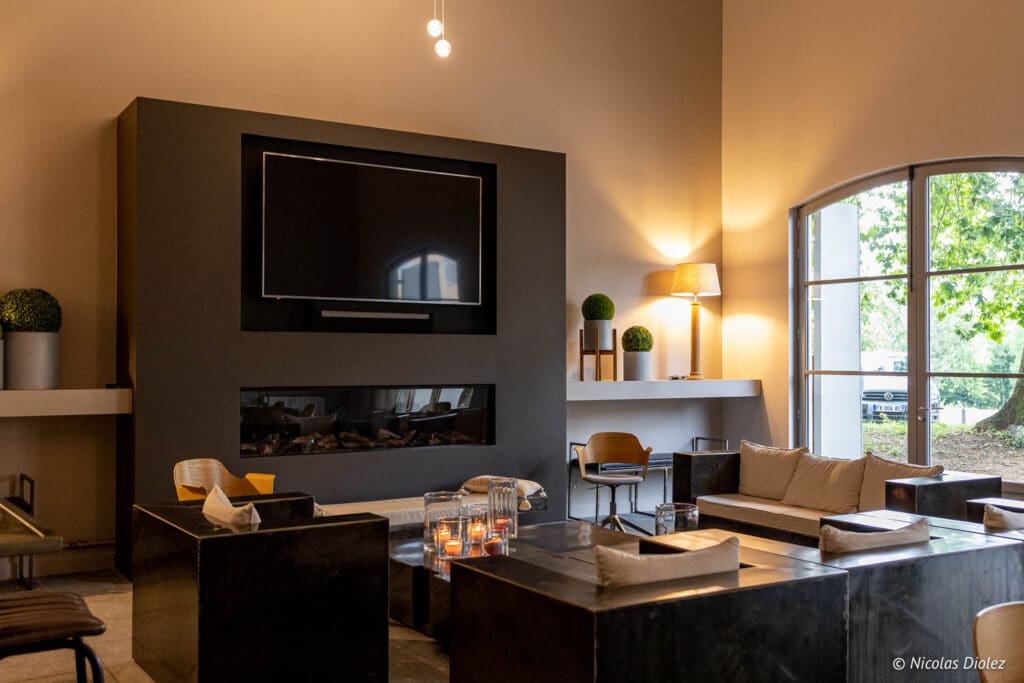
Château Saint-Vincent
Impasse du Pigeonnier, 69430 Régnié-Durette
Tel : +33 (0)6 10 15 32 13Rate for our Morgon room: from €160 for 2 people / other rooms from €140
_
Thank you to Laura and Inter Beaujolais for this wonderful welcome centered around wine tourism and the Bienvenue en Beaujonomie event. And I’m already looking forward to next year for a new edition!
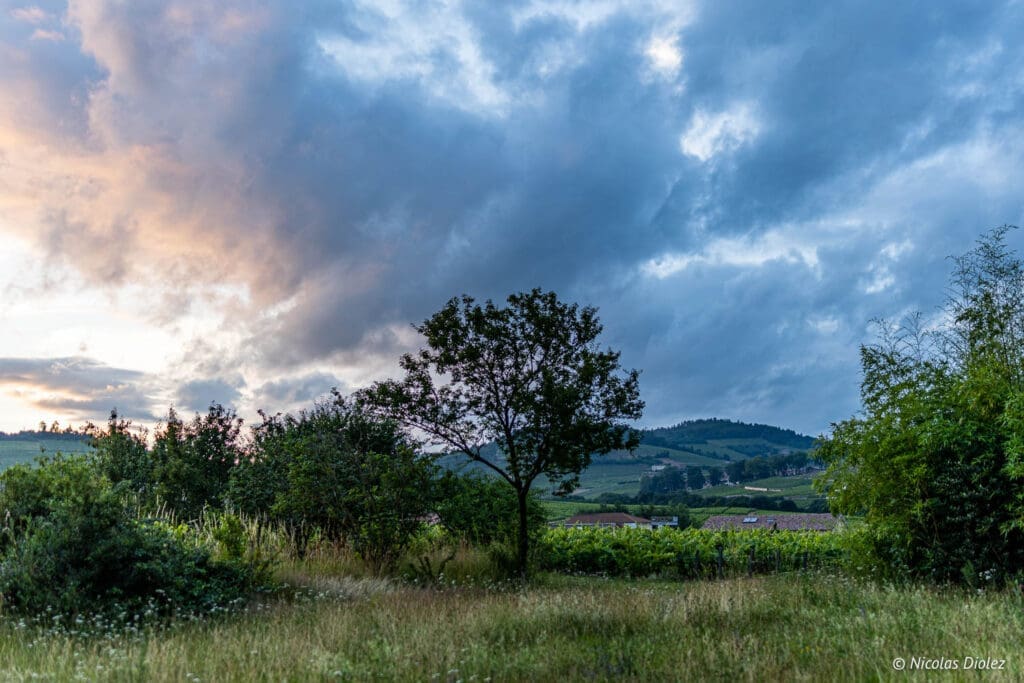


I hope that with all this, I have made you want to discover Beaujolais and its wines through wine tourism, and if you, too, have your own favorite addresses and tips for this destination, feel free to share them in the comments!
Photos are not royalty-free, photographer’s authorization is mandatory before any use