When the thermometer hits near zero (or thereabouts…), why not treat yourself to an exhibition in Paris, in the Ile-de-France region, or out in the provinces?
Here is my little selection for the moment on this theme, the second in this new section of the blog.
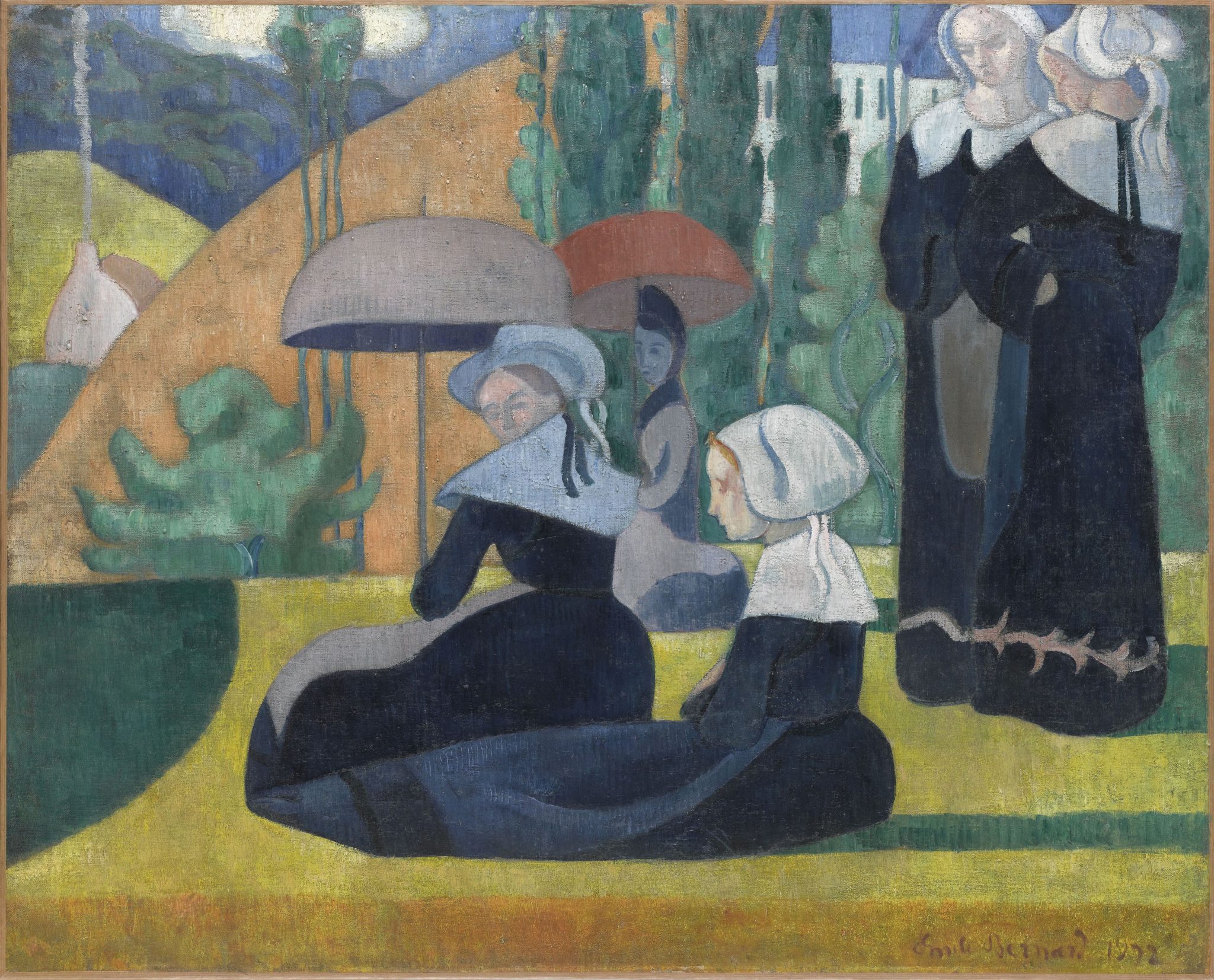
Émile Bernard at the Musée de l’Orangerie
This exhibition is the first to showcase the long career of this little-known artist (1868-1941). A multi-faceted artist, he never stopped reinventing himself throughout his life by trying his hand at various styles. His early works were inspired by Japanese prints, which were very trendy at the time.

Around 1886, he joined Gauguin in Pont-Aven. The works from this period reveal an obvious kinship.
From 1893, Émile Bernard traveled to Italy, Greece, and Turkey, before finally settling in Cairo. The change in style is radical.

Upon his return to France in 1904, he visited Cézanne, his great role model, with whom he stayed for a month. The inspiration is unmistakable.

The exhibition also presents self-portraits, showing the different states of this artist who constantly reinvented himself.
The Tip: the museum is free every first Sunday of the month for those under 26 (EU residents), job seekers, and social welfare recipients.

 Émile Bernard at the Orangerie
September 17, 2014 – January 5, 2015 / every day except Tuesday from 9 a.m. to 6 p.m.
Jardin des Tuileries
75001 Paris / metro Concorde (lines 1, 8, and 12) / Prices: €9 / €6.50
_
Japan through the seasons at the Musée Cernuschi
Run to see this sublime exhibition of 60 paintings on paper and silk at the Musée Cernuschi! Through depictions of plants, animals, and landscapes across the seasons, we discover the Japanese people’s special sensitivity towards nature.
The works, from the 18th and 19th centuries, come from a private collection, that of Robert and Betsy Feinberg, a couple of American enthusiasts. They are mainly kakemono, vertical scrolls hung on silk.
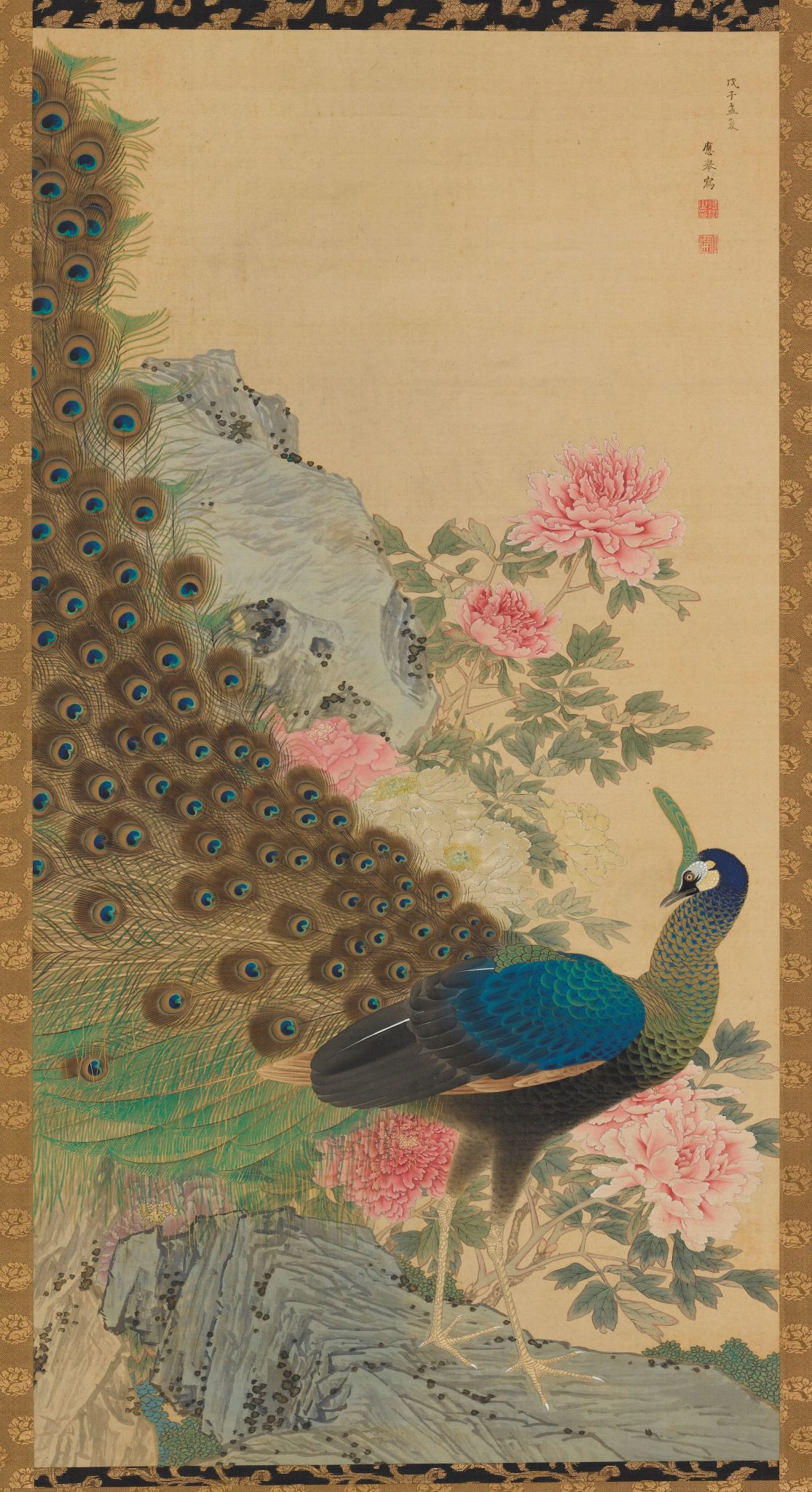
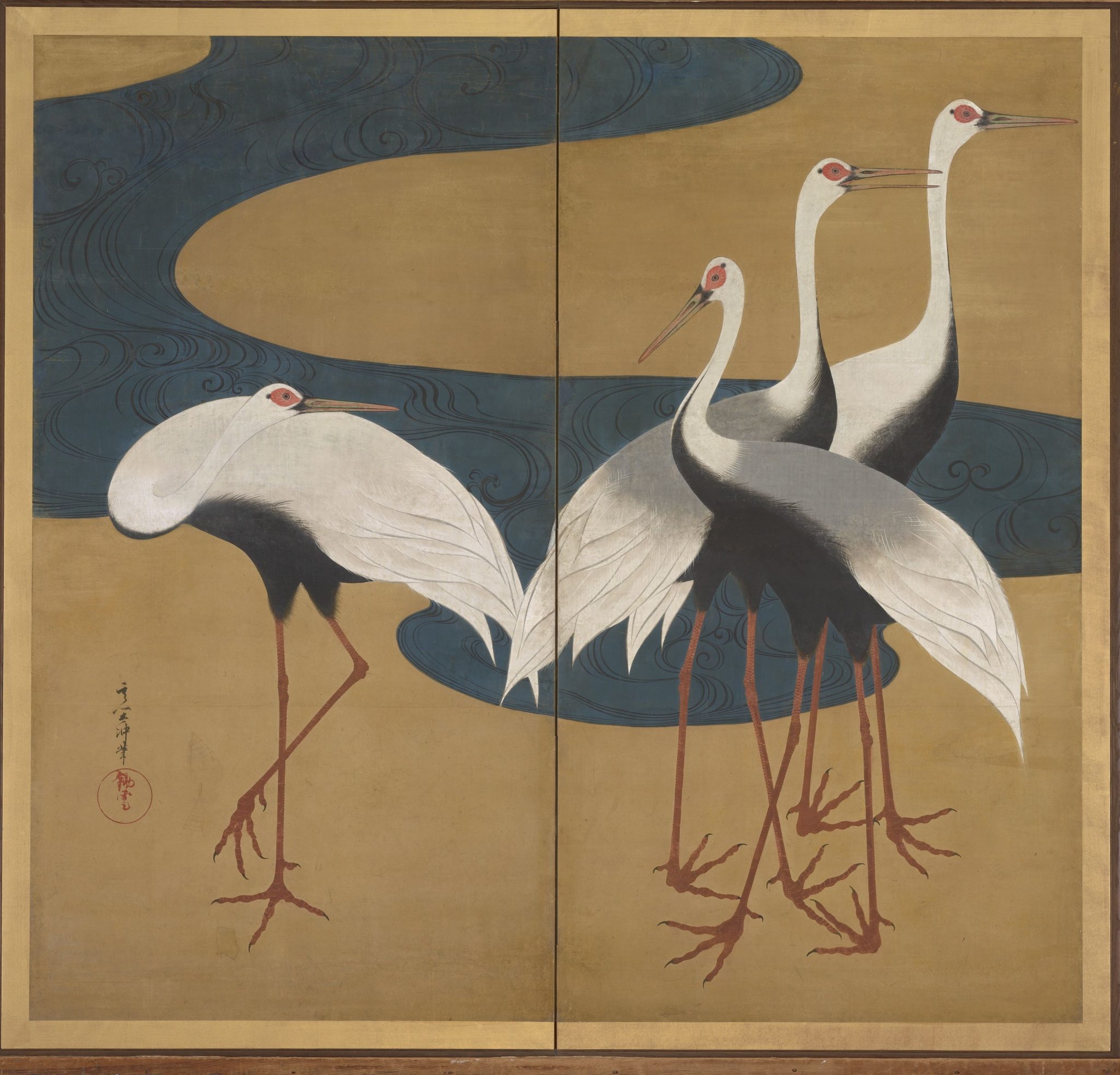
The exhibition also presents folding screens, often enhanced with gold leaf. With its off-center motifs, the composition below is particularly original.

We discover naturalistic yet stylized works, like the cranes that adorn a pair of screens. In Japanese culture, natural representations are not merely decorative motifs, but correspond to a specific symbolism. The crane, for example, symbolizes longevity.
These paintings reveal the breathtaking technique of Japanese artists, especially shading. Many colors, including striking reds and pinks, but also black and white, with incredible ink works.

The exhibition isn’t very large, but it’s just as worth the detour as the Hokusai one at the Grand Palais. It would be a shame not to go and discover these masterpieces.
Note: a mini-format book by Emma Giuliani titled “Four Seasons in Japan” presents some of the works from the exhibition in the form of a little story. A gift idea for children… and adults! Price: €18.50.
The Tip: the museum’s permanent collections are always free! The exhibition itself is free for those under 18 and for social welfare recipients.
Table of Contents
Japan through the seasons
Until January 11, 2015
Musée Cernuschi
7 avenue Vélasquez – 75008 Paris
Prices: €8 / €6
_
3 exhibitions to discover in Nantes

Mademoiselle Bon Plan went on a trip to Nantes in November to discover three free exhibitions in this beautiful city.
Presenting the Unrepresentable at the Hab Galerie
This is an off-site exhibition from the Nantes Museum of Fine Arts. Jean-Jacques Lebel invited Danielle Schirman and Alain Fleischer to join him around a theme dear to him, that of unrepresentability, expressed in a wide variety of forms around two main themes: the violence of war and the taboo of sexuality.
The exhibition opens with the Grand tableau antifasciste collectif, an oil painting from 1960 that Jean-Jacques Lebel helped create, which denounced the abuses of French soldiers in Algeria. Representing the unrepresentable here refers to the artist’s commitment, choosing to see and show what those in power seek to hide. At the time, the work was even impounded by the Milan prefecture.


More than fifty years later, Jean-Jacques Lebel forces us to face other barbarities, those of Abu Ghraib, with his installation The Labyrinth, scenes of the American occupation in Baghdad. The artist decides to show everything, in large-format photos that the eye cannot avoid.
With his installation The Gaze of the Dead, Alain Fleischer revisits the First World War. Unfixed prints of soldiers’ faces float in basins in a room bathed in red, sepulchral light. These aligned portraits, cropped on the eyes, stare at the visitor. Paradox: photography saves soldiers from oblivion, but only momentarily, because these portraits are doomed to degrade. I admit, this was the work that touched me the most.

The exhibition also addresses the representation of sexuality, still a taboo. With her jubilant Theater for the Hand, Danielle Schirman pays tribute to Sade and the libertines in a pop-up book whose manipulation was filmed. A hand operates tabs that undress aristocratic society and reveal it in licentious positions.
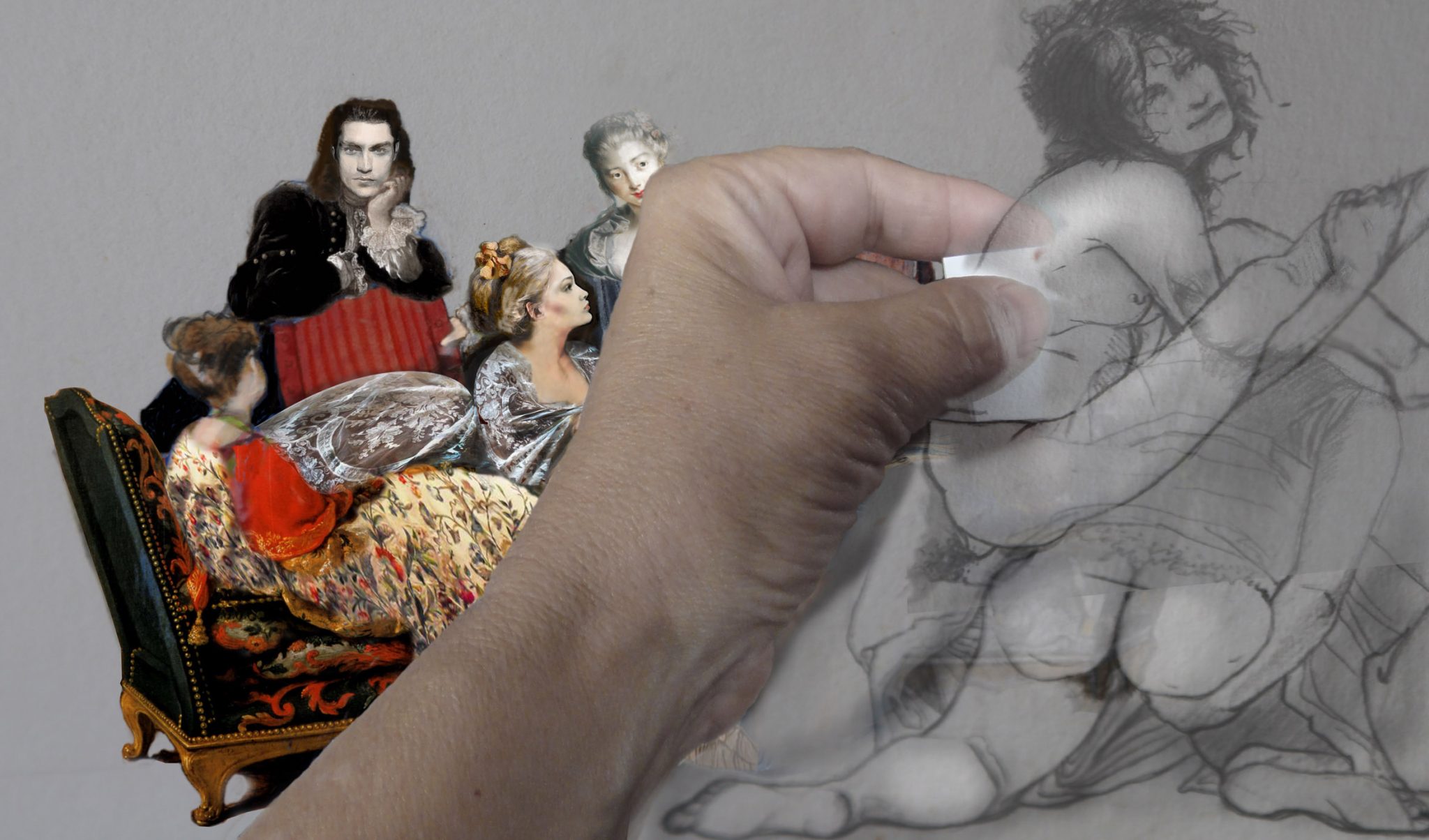
Through The Avatars of Venus, Jean-Jacques Lebel invites us on a stroll through time and history around a question: is there a common denominator to all representations of women? Thanks to morphing technology, the eye passes with delight from the Venus of prehistory to the masterpieces of painting, not to mention pornographic images.
 Presenting the unrepresentable is also showing what is meant to be, a floating object in the field of possibilities, like Men in Sheets, by Alain Fleischer, shadows cast by moving sheets that reveal strangely always masculine faces.

This exhibition, from which the visitor does not emerge unscathed, addresses one of the major challenges of art: the responsibility of the artist, who chooses what and how to show, and that of the visitor, who must not look away.
Exhibition Presenting the Unrepresentable
November 29, 2014 – February 22, 2015
Hab Galerie, Hanger à Bananes
Nantes
Free admission
_
Phantasmagoria by David de Tscharner at the Frac des Pays de la Loire
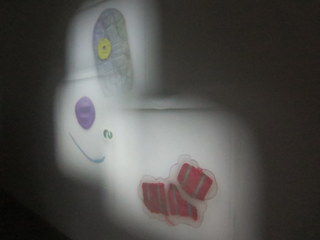
The Swiss artist has gleaned small objects, scraps of consumption, which he placed in magic lanterns. These boxes project them through a lens onto the walls, changing their scale.
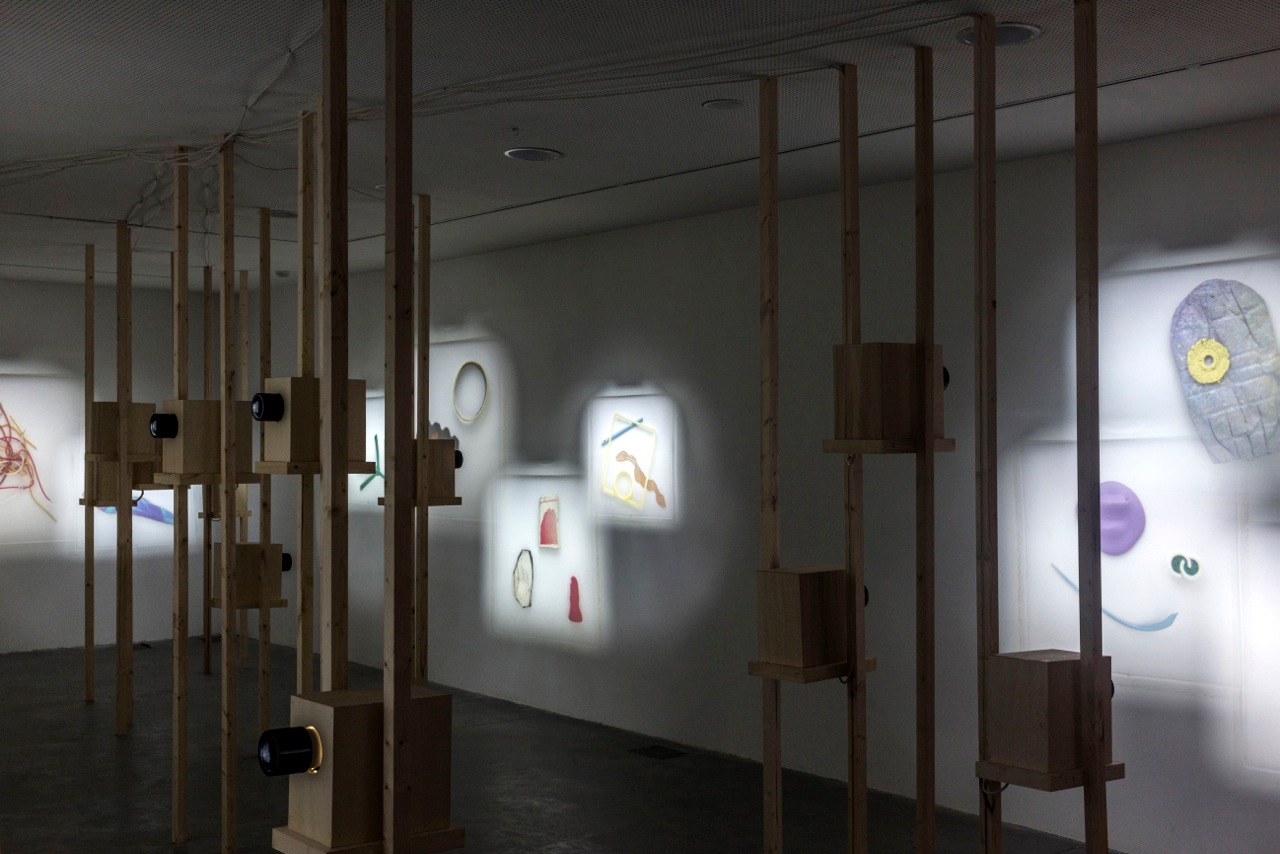
The process evokes objects of study, organic, amoebas scrutinized under a microscope. Like a cave of the Anthropocene, the room plunges the visitor into a dreamlike and colorful world. David de Tscharner rehabilitates these castaways and gives them back a soul, thereby taking on the mission of every artist: to reveal what exists but remains sometimes invisible.

Exhibition Phantasmagoria
by David
de Tscharner
October 29, 2014 – January 4, 2015 / free admission
FRAC des Pays de la Loire
44 470 Carquefou
_
Celemania, 28th International Workshops of the Frac Des Pays de la Loire
The Regional Contemporary Art Fund of the Pays de la Loire hosted six Mexican artists in residence this year, whose work is presented in this exhibition.

I was touched by Bricks II, by Jorge Satorre. The artist asked those around him what mattered most to them and thus produced terracotta sculptures presented on a table, in the manner of archaeological objects freshly unearthed, a sort of “mental alphabet” of his loved ones.

Exhibition Celemania, 28th International Workshops of the Frac
November 27, 2014 – February 1, 2015
Free admission
FRAC des Pays de la Loire
44 470 Carquefou
_
Hans Op de Beeck at Chamarande
The Domaine départemental de Chamarande houses an artistic and cultural center with a cutting-edge program. This winter, it welcomes the Belgian visual artist Hans Op de Beeck and his Personnages, human-sized sculptures placed in the rooms of the castle. Some of his Personnages let themselves be observed, eyes half-closed, as if immersed in a moment of introspection.
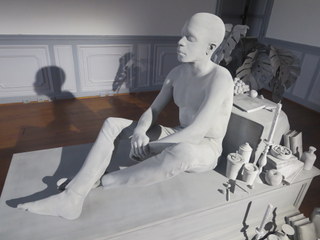 The visitor also becomes a voyeur, as with this languid beauty.
 The five Personnages are arranged on a pedestal, a reminder of classical sculpture, but covered in pants and surrounded by everyday contemporary objects such as mobile phones and cigarette butts. The gray plaster work gives a peach-skin look to the skin, very realistic. It also recalls the figures of Pompeii, frozen for eternity.
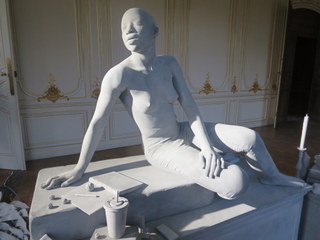 Anonymous figures, the Personnages let us write their story.

Note: The site is free, accessible by RER within 200 meters, open 365 days a year, and nestled in the largest public garden in Essonne (98 hectares).
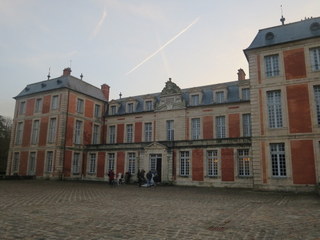 The cultural actions of the Domaine de Chamarande are numerous.
I spotted:
– the Shared Meetings: Sunday, February 8, meeting-debate with Hans Op de Beeck and a Buddhist monk.
– contemporary art conferences
– the Wednesday Workshops for children: every first Wednesday of the month.
Personnages
Hans Op de Beeck
November 23, 2014 – March 29, 2015
Château de Chamarande
Wednesday, Thursday and Friday, 2 p.m.-5 p.m./
Saturday, Sunday and holidays, 1 p.m.-5 p.m.
_
FASHION MIX at the Museum of the History of Immigration
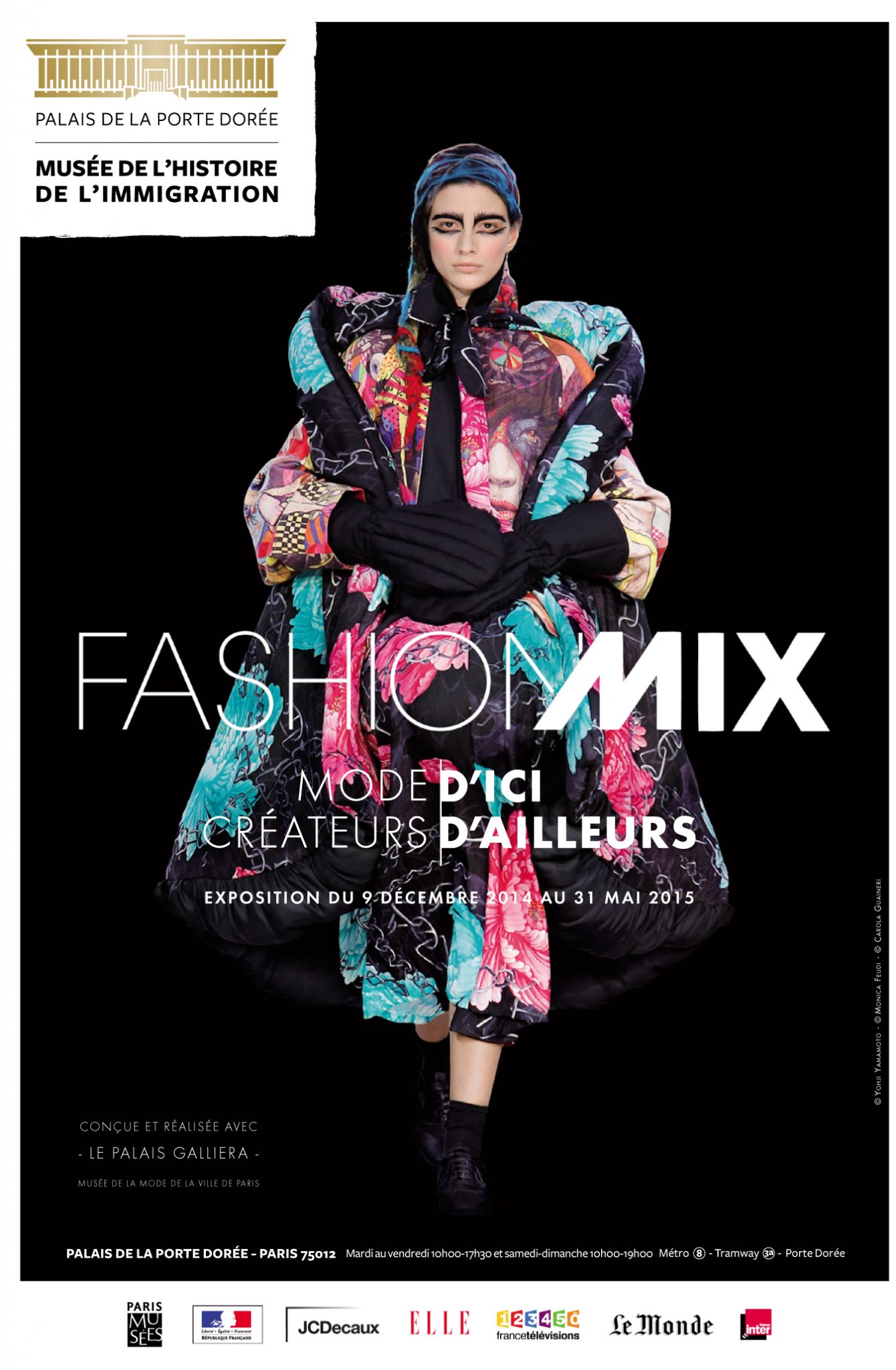 The Palais Galliera, the Fashion Museum, and the Museum of the History of Immigration have partnered for a wonderful exhibition.
The theme: The contribution of designers from elsewhere to French haute couture and ready-to-wear.
The exhibition showcases about a hundred iconic pieces preserved mainly at the Palais Galliera, presented chronologically.
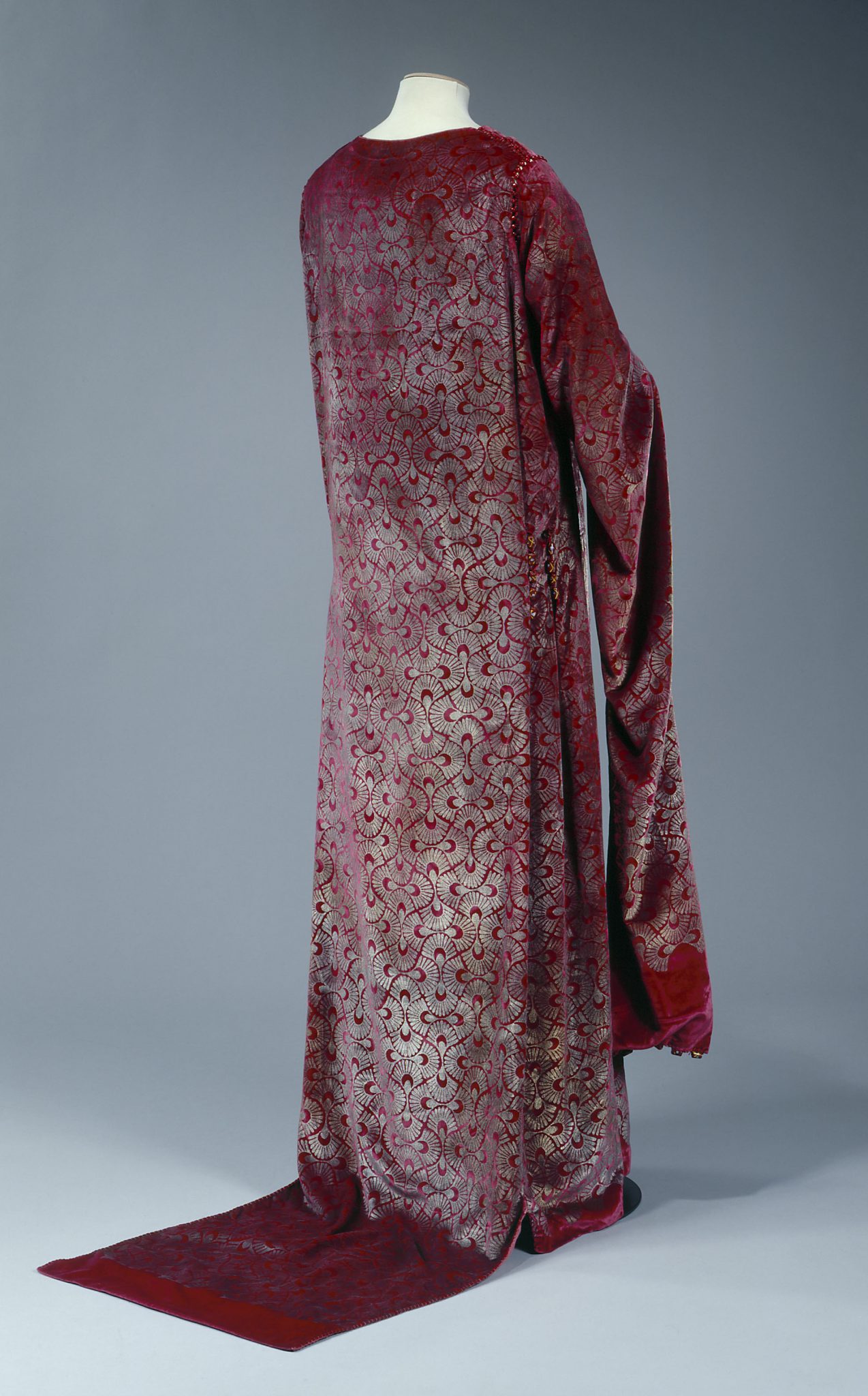
At the turn of the 20th century, Mario Fortuny, a Spanish designer and Venetian by adoption, carried out various experiments on printed fabrics. And it is in Paris that his inventions had to be patented. I love his velvet dress!
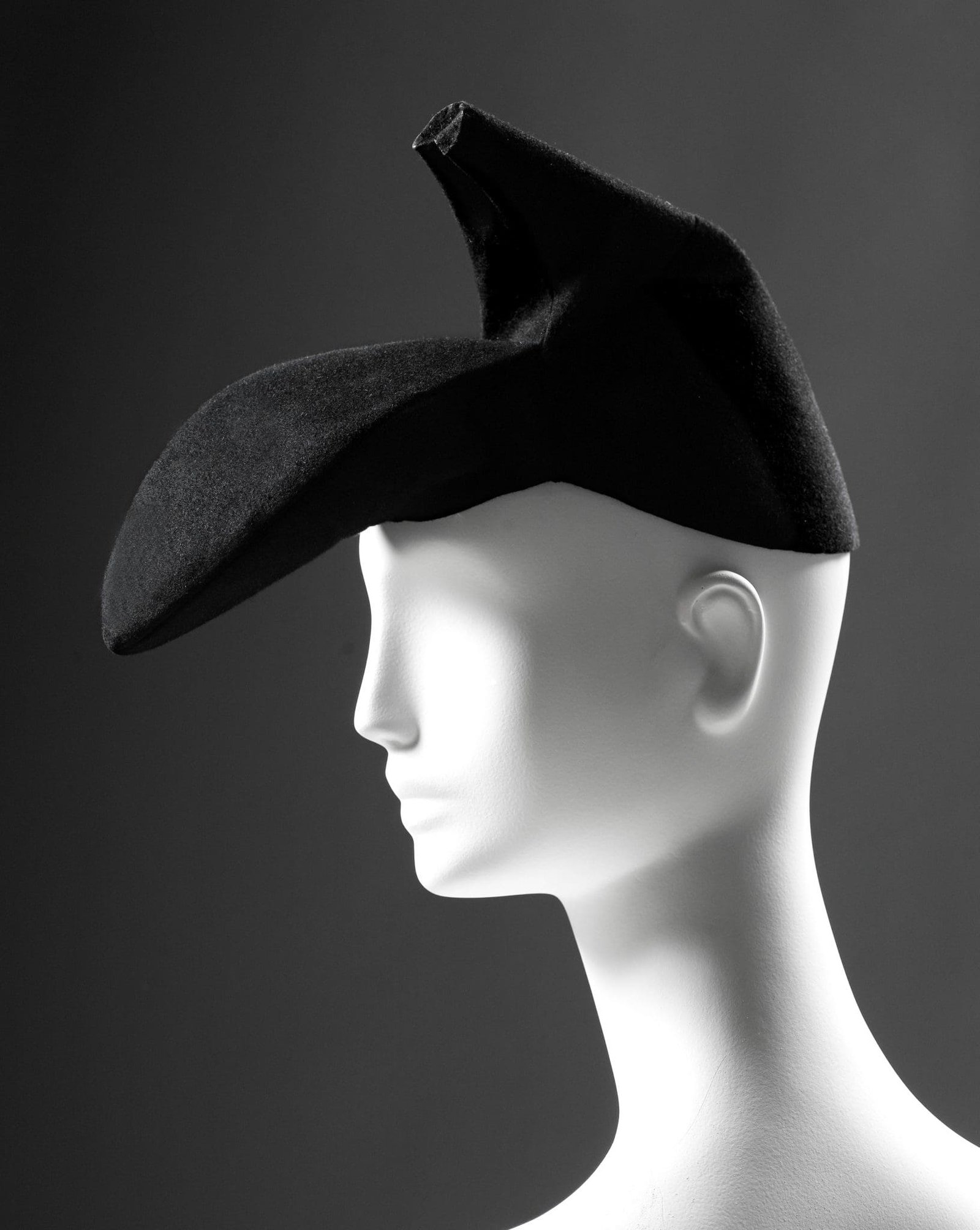
 Elsa Schiaparelli, an Italian couturier naturalized French, mischievously shook up the fashion of the 30s and 40s. Close to the surrealists, she created, among other things, shoe-hats.
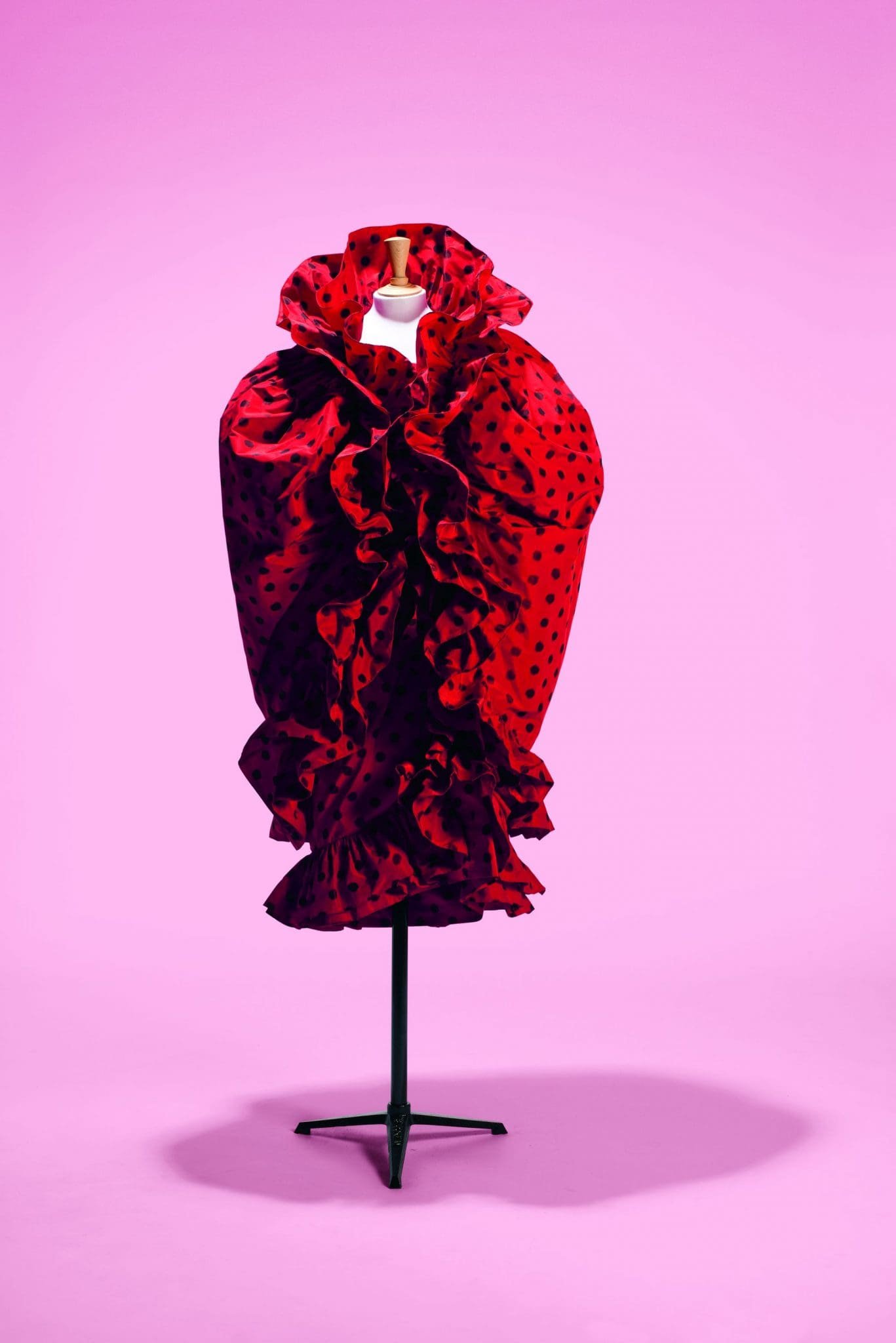
The Spanish Civil War of 1936 caused the arrival of Spanish refugees. Among them: Balenciaga.
In 1947, Catherine de Karolyi fled communist Hungary for France. In 1967, she was hired by the house of Hermès. We owe her the famous “H buckle.”
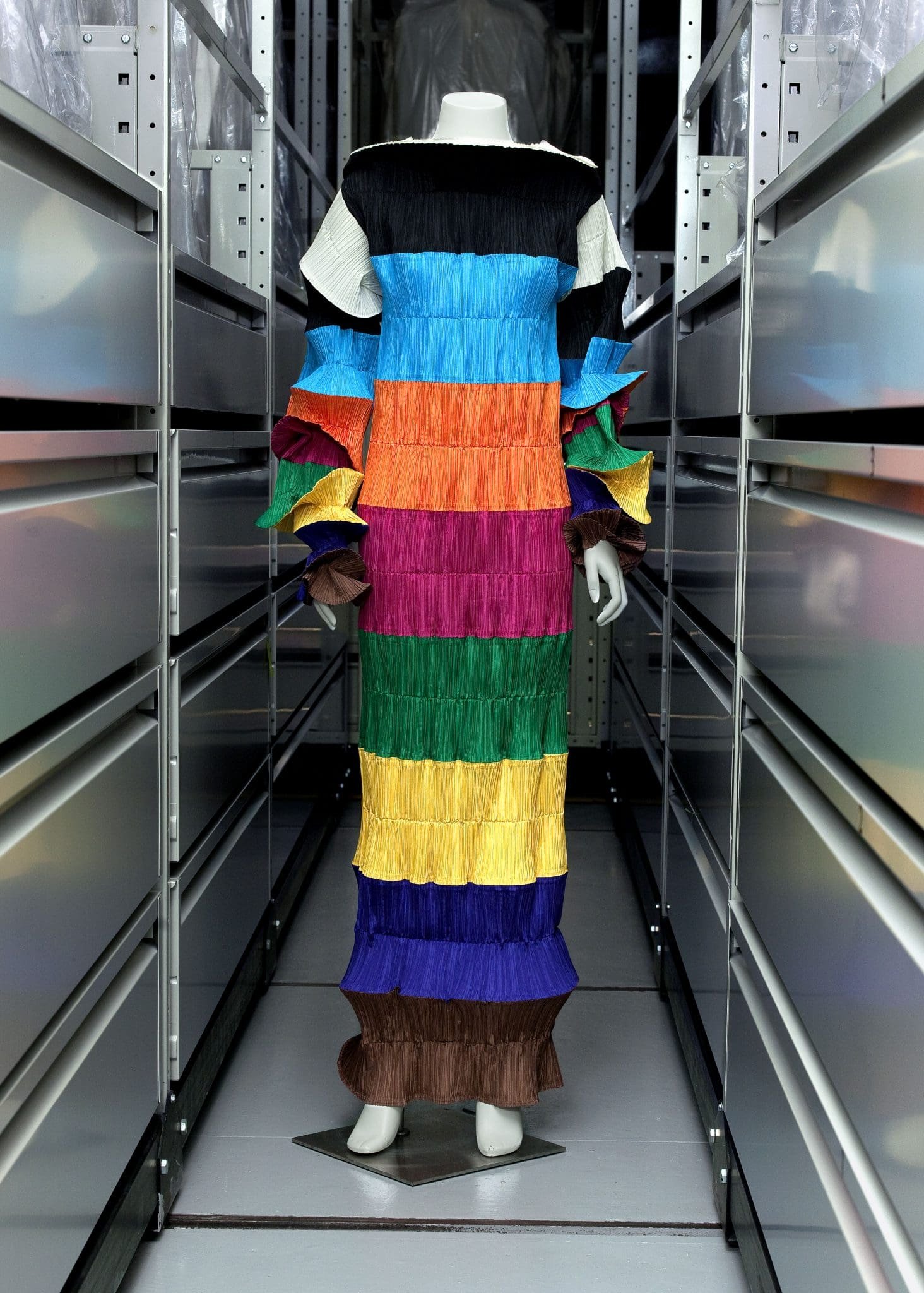
At the end of the 1970s and the beginning of the 1980s, there was a revolution with the arrival of Japanese designers, notably Issey Miyake.
And did you know that Kenzo designed his first collection with fabrics bought at the Halle Saint-Pierre, in the 18th Parisian arrondissement?
If Paris remains one of the fashion capitals, it is undoubtedly because the City of Light is the only one to welcome so many foreign designers.
The Tip: admission is free for those under 26 and for everyone on the first Sunday of the month.
FASHION MIX at the Museum of the History of Immigration
December 9, 2014 – June 28, 2015
Palais de la Porte dorée
price: €6
293, avenue Daumesnil – 75012 Paris
article written by Sandrine and Melle Bon Plan