It’s awards season! The time of year when we look towards the red carpets to admire our idols and prepare our list of upcoming must-sees. Mademoiselle Bon Plan is also for film buffs!
On the US side, 3 Billboards is well on its way to snagging the golden statuette; here at home, 120 BPM (Beats Per Minute) will likely reinforce its status as the industry favorite. But we hope to perhaps see Albert Dupontel crowned for his enchanting See You Up There! Place your bets!

In the meantime, we headed into the darkened theaters to see heroes—or more precisely, antiheroes, outcasts, endearing losers, isolated monsters, and beings rejected by the common man. This is our special Heroes unlike any other selection!
_
Number 1: The fish-man and the beauty
Table of Contents
The Shape of Water by Guillermo Del Toro

Elisa is mute. Her world is simple, made of the small things of everyday life. She repeats the same gestures, marveling at musicals with her equally lonely neighbor. A modest cleaning lady in a government laboratory working on top-secret projects, her life suddenly takes a turn with the arrival of a marine creature…
He is fabulous, this Del Toro. Astonishing. A child in the body of a big man with the looks of a Geek. A passionate cinephile, much like Tarantino, who devours fiction to the point of building a world of his own.

Right from the start, The Shape of Water amazes with the beauty of its introduction, which is very Burton-esque. A woman is asleep; she looks happy submerged under calm and reassuring waters. A voice tells her story…
Once upon a time, two outcast beings whom fate brought together. A modern fairy tale brimming with empathy that plays on the opposition of two worlds: the lonely beings and those who hunt and ignore them. Mute since her earliest childhood, Elisa leads a simple existence.
A fragile heroine, in the purest tradition of Del Toro’s cinema, she is destined for an exceptional path, propelled into the heart of extraordinary events that will shatter the tranquility of her routine.
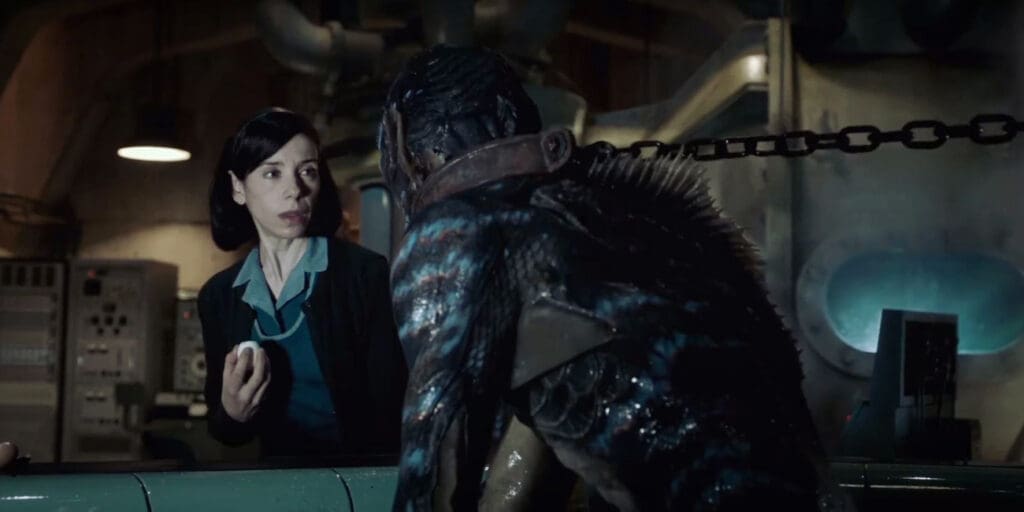
Sally Hawkins is fabulous in her sincerity and sensitivity. Elisa is a little sparrow you want to hold in your hands, for fear that she might break (Elisa, in reference to the character played by Audrey Hepburn in My Fair Lady?).
The British actress lends her character grace and whimsy. In many ways, Elisa has hints of Charlie Chaplin’s The Tramp—a vagabond struggling against a society that rejects him, seeking happiness with other left-behind souls. Del Toro makes her a being who can only communicate through gestures or music. A silent film character who will find meaning in her existence through a marine creature that is wild, at least at first glance.
The genius of Del Toro is turning his “monsters” into creatures of enchanting, mysterious, frightening, attractive, and yet familiar beauty. Tim Burton has also made the “creature” his muse and a sort of alter ego. A being much more “human” than many men.
While Burton has moved away over the years from his status as a leader of the oppressed, Del Toro becomes its worthy representative and moves us more than ever. His cinema, pulled straight from great B-movie classics, comic books, or other cult pop-culture objects, finds its climax here in emotion. We haven’t been hit this hard since the poignant Pan’s Labyrinth.
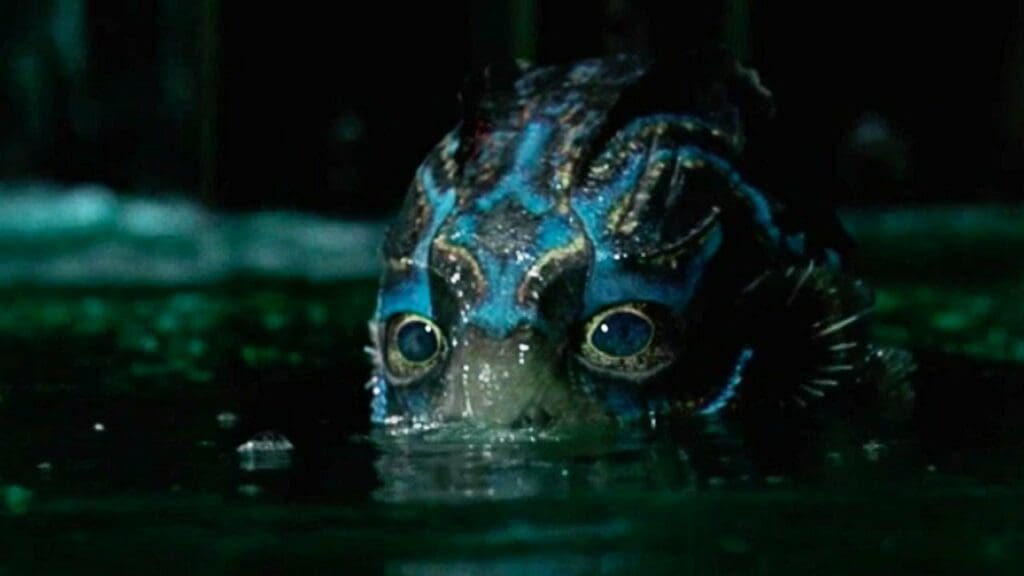
Aesthetically, the film immerses us in a color palette that recalls the films of Jean-Pierre Jeunet (in light of the recent controversy, which would label Del Toro a bad student who copied his classmate).
Admittedly, the fantasy is expressed here through this sepia light, where we encounter a kind of parallel universe made of gold, darkness, greenish tones, and blue. It’s an aged postcard setting that one might have found in an old aunt’s drawer. A tune worn by time, but one that gains value in more contemporary considerations. And even if the analogy may seem obvious, Del Toro’s cinema has the unique ability, through narration and intention, to make you forget the reference.
Here, everything works like a perfect score: the ambitious, ruthless, and career-driven man (fabulous Michael Shannon) facing the fragile beings who will “bother” him until the very end. The harmony of the senses, the art of communicating through gazes, touch, and empathy. The colors, the music, the textures, these shapes that water takes when in contact with air to suggest the multiple possibilities of human relationships. It is beautiful, subtle, sincere.
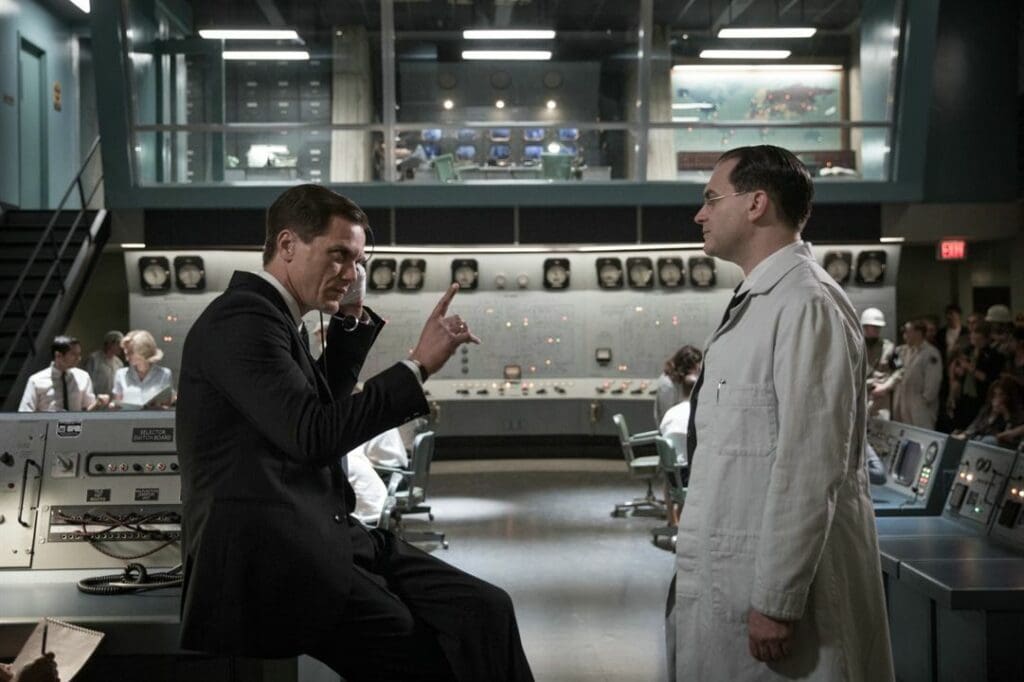
A bird and a fish can fall in love, but where could they live? It is a true love story with a capital L, the kind we would love to see more of in the darkened theaters. It is cinema, real cinema—the kind that takes us elsewhere, that makes the name of the film appear in big letters on a glowing marquee. One feels a certain nostalgia in Del Toro.
Is it a coincidence that the heroine lives above an old cinema in crisis? A coincidence if water seeps into an almost empty theater showing an old biblical movie? Certainly not. Guillermo del Toro points the finger at the urgent need to give the seventh art a new breath of life and a soul. An industry that is “taking on water” because it no longer really knows how to reach its audience. And yet, with The Shape of Water, Del Toro resurrects a genre and certain sensations.
As beautiful as its sparkling creature, the film manages to bring a way of filmmaking back to life. We would love to see Del Toro walk away with the Best Picture statuette, because fantasy cinema hasn’t had this recognition since The Return of the King by Peter Jackson. Fingers crossed…
The Shape of Water
By Guillermo del Toro
With Sally Hawkins, Michael Shannon, Richard Jenkins
2h03 min
Released February 21, 2018
_
2- Failed actors or the art of making bad films
The Disaster Artist by James Franco
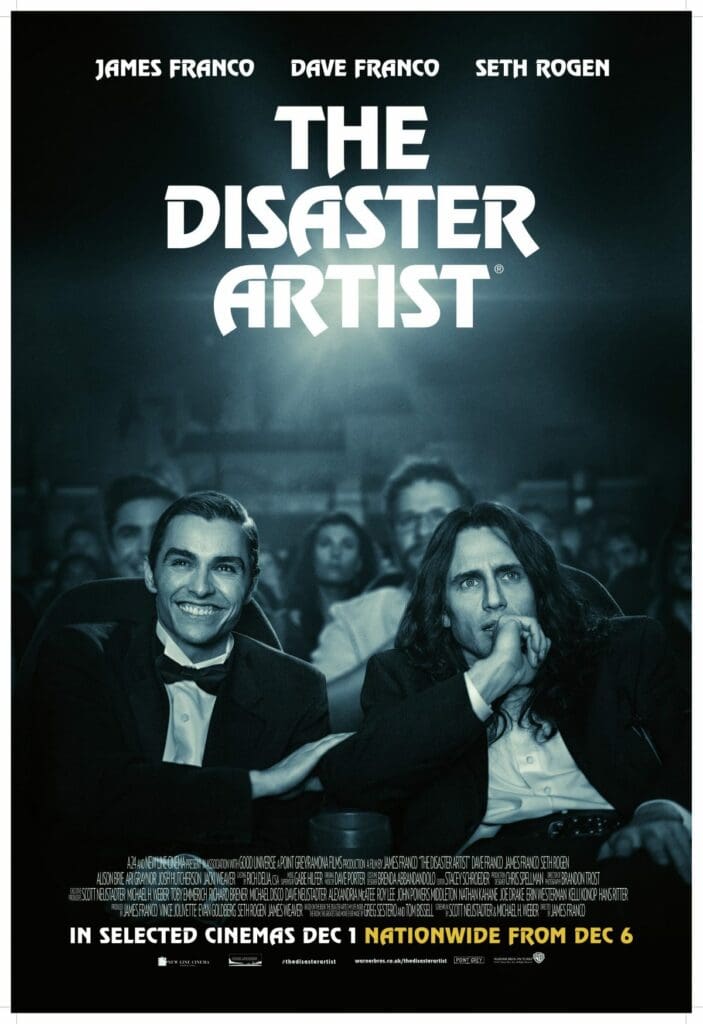
Do the biggest losers make the greatest films? That’s what one might think about The Disaster Artist, directed by the Swiss Army knife James Franco. Decidedly, the actor, visual artist, writer, and now director, can do it all.
The actor, who is far from his first directing effort (yes, really), embarks on a family adventure, having chosen his younger brother, actor Dave Franco, as his acting partner. But who is this Disaster Artist?

His name is Tommy Wiseau. Not a fictional character. But a very real, eccentric actor/director/producer who made what is now considered one of the worst films ever made: The Room, released in 2003 to general indifference. Made with a budget of 6 million dollars (we never found out where that money came from), the film grossed 1,800 dollars!
In short, a grade-A flop, but one that has become a cult classic screened in rooms full of spectators laughing at such ingenious absurdity. A contradiction in terms, but the greatest cinema legends aren’t necessarily the ones you think.
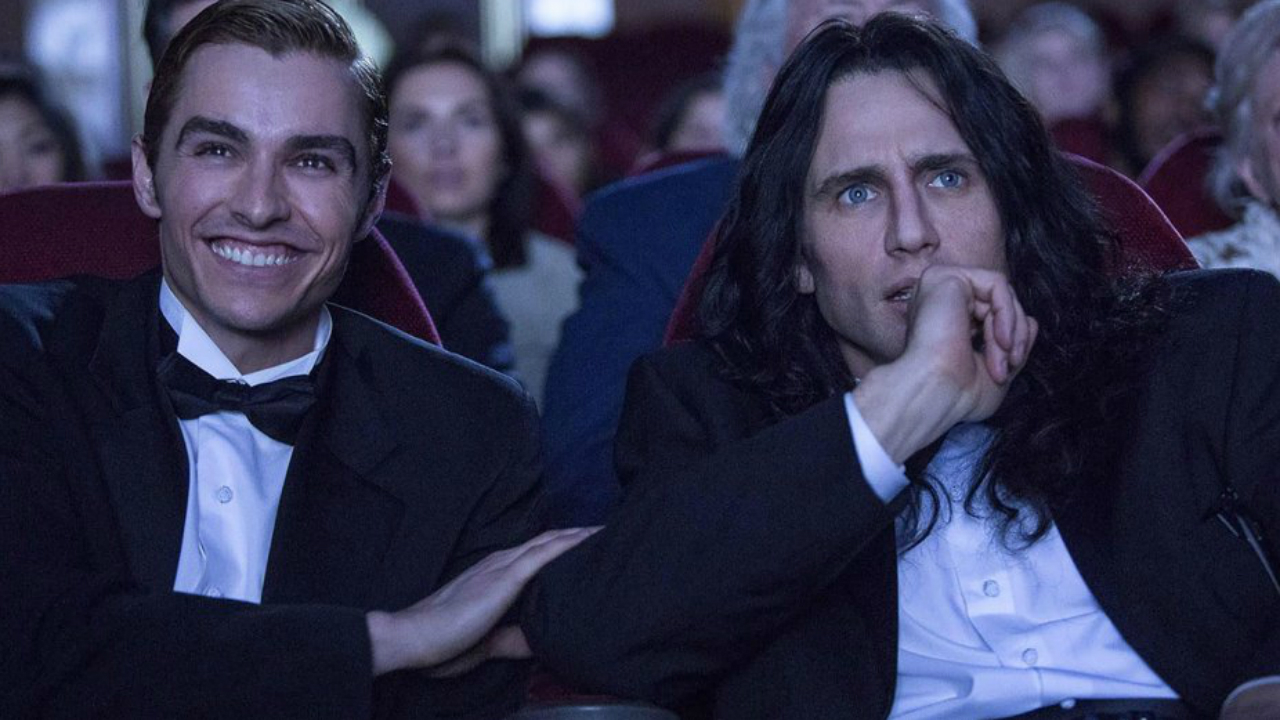
James Franco has looked with empathy at the unusual journey of Tommy Wiseau. Based on the story by actor Greg Sestero, his partner in life and on screen, the director delivers a fascinating tale, without judgment, but with benevolence, respecting—without falling into the absurd—the mysterious figure of a misunderstood artist. It’s the story of a disaster, of a nightmarish shoot, of fiction within fiction, as the subject seems almost surreal.
James Franco dissects the behind-the-scenes of a failure. That of a man who believed firmly in his talent, trapped in the Hollywood illusion, which tramples and devours sweet dreamers who came to try their luck. He also plays the role of this marginalized character, free of all constraints, who rushes headlong—without listening to a single criticism—into his narcissistic delusions.
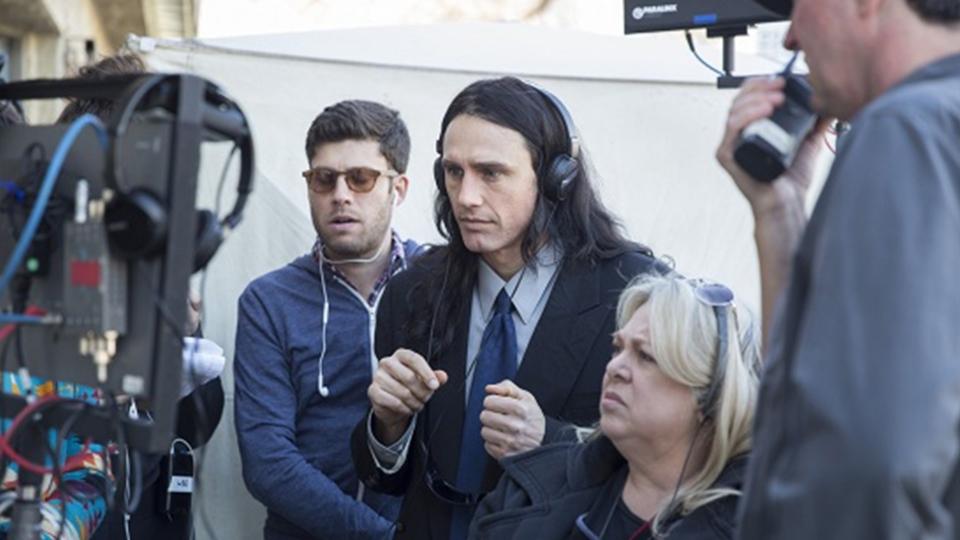
With his improbable look and walk, Wiseau looks more like a member of the band Kiss than a Shakespearean actor. James Franco, formidable in the skin of this modern-day Ed Wood, embodies with precision and loyalty this excess tinged with fragility, which amuses as much as it moves. We laugh a lot, like the real audience of The Room, but we also pity the sight of an actor who thought he was making a personal masterpiece.
With references like Alfred Hitchcock or James Dean, Wiseau/Franco advances into the fray believing he can equal his idols. And that is what the film is about. The naivety of believing that anything is possible, to the point of blindness. The sometimes destructive power of the ego. It is also a story of friendship, almost fraternal. And it’s not for nothing that James Franco entrusted the role of Greg Sestero to his younger brother, the engaging Dave Franco. You almost have to be from the same family to endure and support so many escapades and poorly measured ambitions.
It is the story of two dreamers who, for lack of pleasing others, support each other and push the other to believe until the very end. The gaze, initially complicit, becomes hard, full of hate, to end in respect and gratitude.
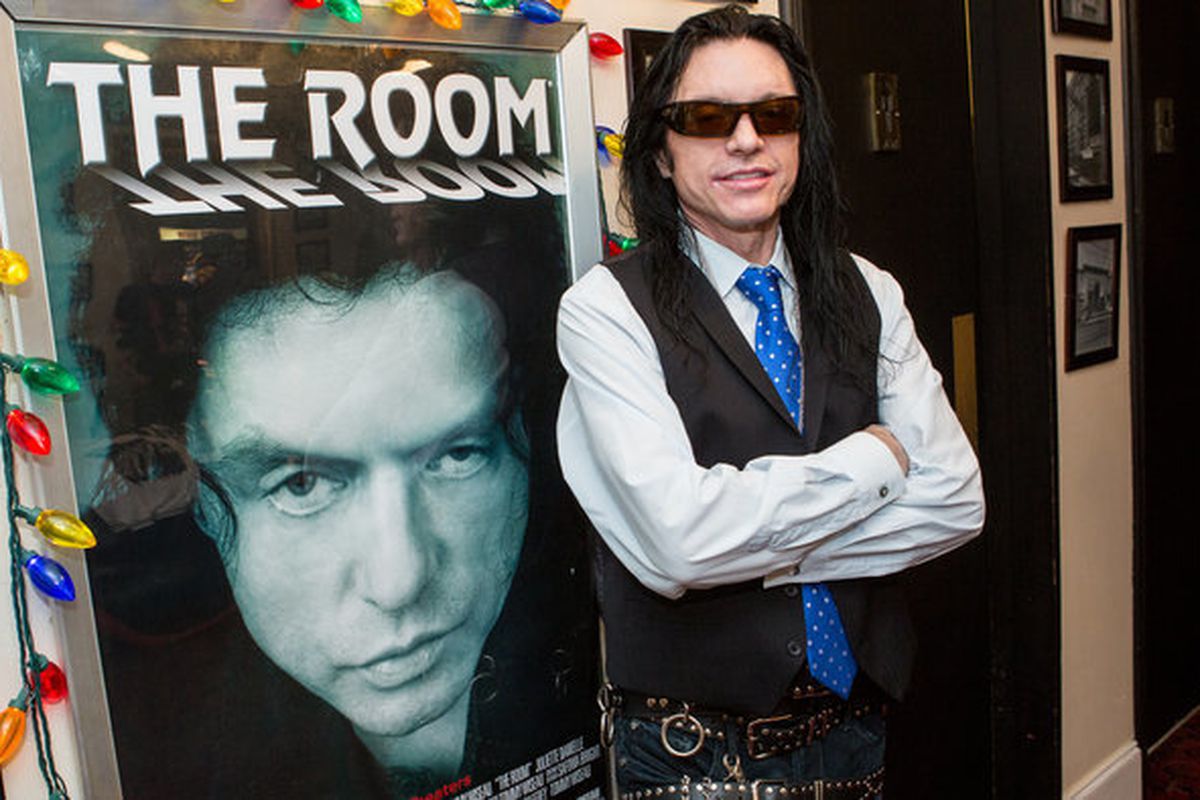
James Franco focuses on the fragility of the artist in the midst of creation. His directing, all in modesty, searches for the flaws while becoming aware of his own. To direct is to give a little of oneself. James Franco reveals a form of admiration for this sometimes detestable being and holds up a mirror to the audience: who are we to judge what is bad or not? Would we do better?
In the end, doesn’t so much tenacity, however naive it may be, deserve to be saluted? The work, having become a cult classic, finds its ultimate recognition in this sincere and very successful film. Having walked away with the Golden Globe for Best Actor, James Franco could make Wiseau’s dream come true by stepping onto the stage of the Kodak Theater on March 4th to receive the Oscar.
We also love and rejoice in finding delicious little cameos by Mélanie Griffith, Sharon Stone, Zac Efron, or even Bryan Cranston as himself.
Note that Le Grand Rex is organizing two exceptional evenings on February 15 and 16 with the screening of The Room in the presence of Tommy Wiseau and Greg Sestero. A good catch-up session before savoring The Disaster Artist, in theaters March 7th!
The Disaster Artist
By James Franco
With James Franco, Dave Franco, Seth Rogen, Zac Efron, Alison Brie.
1h44 min
In theaters March 7, 2018
_
3-The Heroic Impostor
Return of the Hero by Laurent Tirard
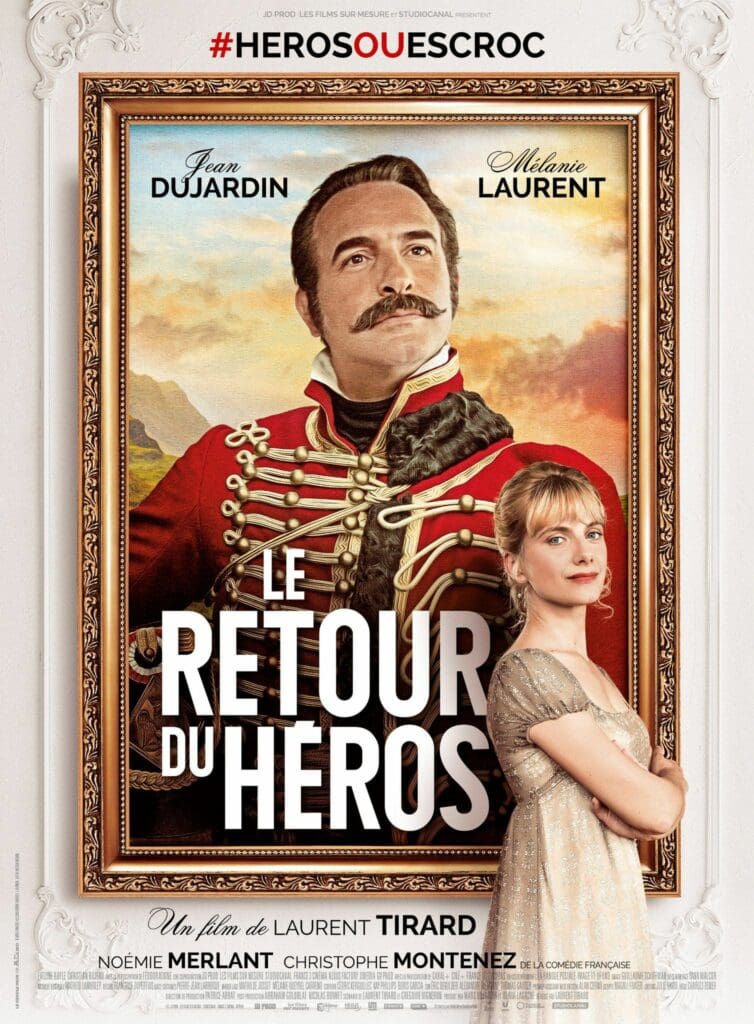
Why not opt for a funny and cheerful French romantic comedy for Valentine’s Day? Avoid rushing as a couple to the insipid and ridiculous Fifty Shades Freed and treat your better half to an evening with Jean Dujardin and Mélanie Laurent.
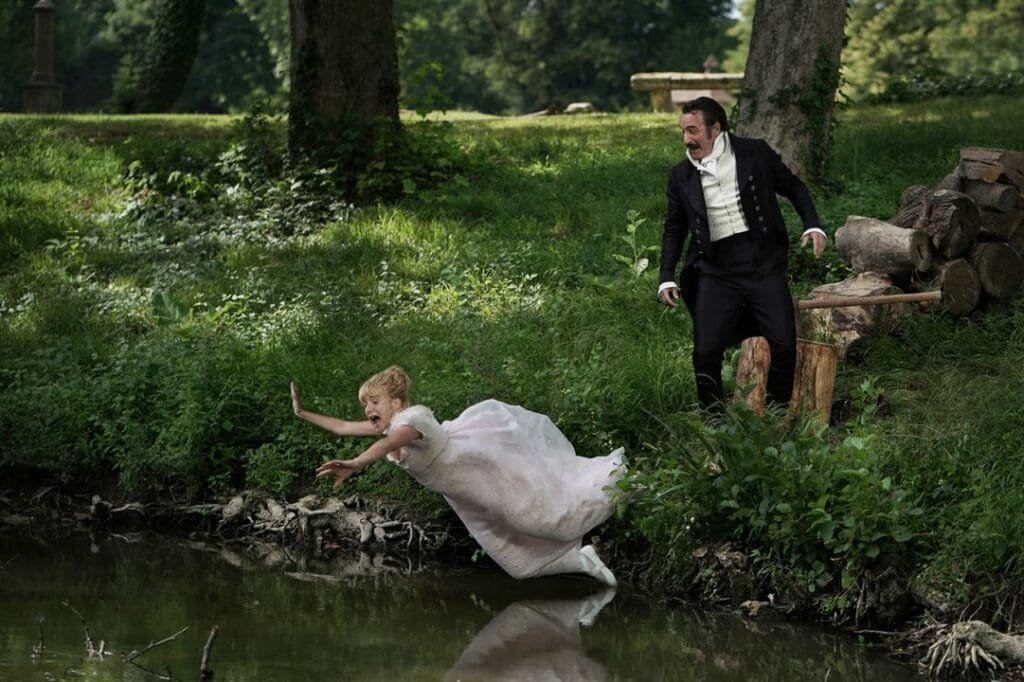
Elisabeth (Mélanie Laurent) is intelligent and discreet. She cultivates her singlehood with assurance and observes the romantic eccentricities of her little sister (Noémie Merlant), who is engaged to the dark Captain Neuville (Jean Dujardin). A silver-tongued manipulator, the Captain promises the moon and stars to the beautiful ingenue before leaving for war and eventually disappearing into thin air.
Totally desperate, Pauline falls ill and can no longer find the strength to hold on to life. Determined not to let her sister die of a broken heart, Elisabeth begins writing a series of letters, pretending to be Captain Neuville. She invents for him a life worthy of the greatest heroes and an illustrious death… When Captain Neuville reappears years later, Elisabeth finds herself in a delicate position…
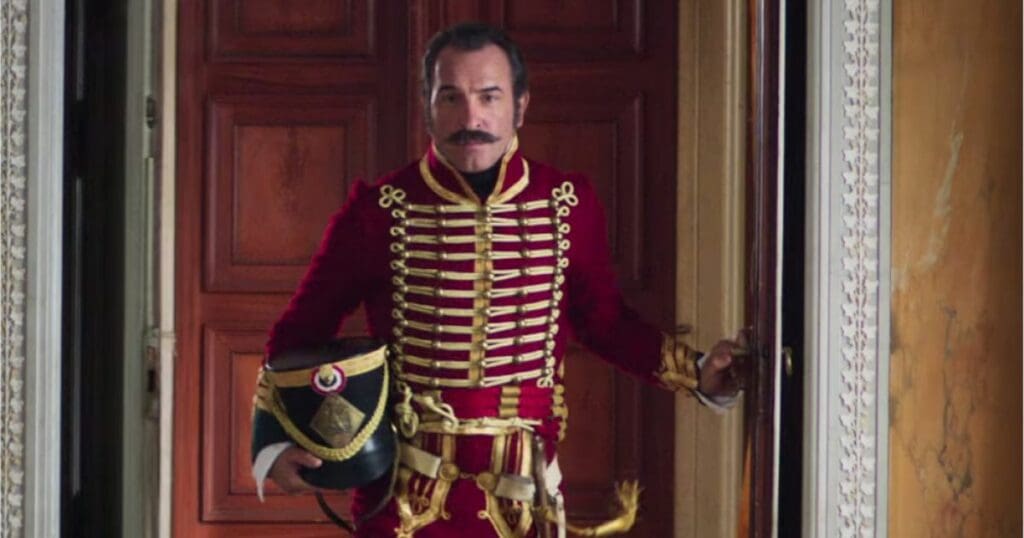
Laurent Tirard (Up for Love, Little Nicholas, Asterix and Obelix: God Save Britannia) has fun staging a real battle of the sexes in the Napoleonic era. War is raging outside, but also in the hearts and hallways of the Beaugrand family home.
Return of the Hero is the story of a gigantic imposture that goes wrong, much to our delight. The film won’t revolutionize the genre, but we are seduced by the verbal sparring and dirty tricks of the Dujardin/Laurent duo. The casting, while obvious for Jean Dujardin—accustomed to characters of losers with big hearts—was less so on paper for Mélanie Laurent.
And yet, comedy suits her well and even makes her quite likable. Plunged into a theatricality reminiscent of George Feydeau, the audience is surprised by the evolving pace of events, which reaches heights of hilarity.
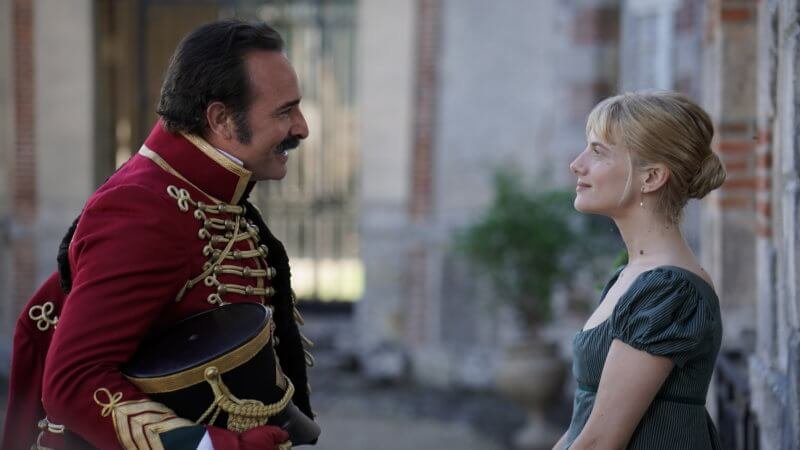
One might have feared heavy, juvenile, and clichéd humor, and yet the mechanics work wonderfully, flirting several times with real emotion. Jean Dujardin has fun and delights us with his ridiculously emphatic and improbable stories, which a laughable audience of naivety attends.
Mélanie Laurent, as the behind-the-scenes director, must deal with the romantic impulses of her pen, which led her to witness with despair the antics of this Sunday hero, greedy and cowardly. It is delicious and as refreshing as Tea Time on a sunny day in an English garden.
Because one cannot help but make the analogy with the world of novelist Jane Austen. The depiction of manners, the plots, and the character of the protagonists remind us in many ways of the adventures of Elizabeth Bennet in Pride and Prejudice, of which the heroine played by Mélanie Laurent is a certain tribute. Independent, cultured, determined not to let just anyone put a ring on her finger, the Elisabeth of Laurent Tirard is a modern woman: a fighter and confident in herself.
It is a feminist film in petticoats and lace, showing enterprising women who are not afraid and who own their convictions, their goals, and even their libido. We let ourselves be carried away by so much charm until the somewhat conventional denouement, which is far from ridiculous… To be enjoyed after a nice meal for two!
Return of the Hero
By Laurent Tirard
With Jean Dujardin, Mélanie Laurent, Noémie Merlant
1h30 min
In theaters February 14