Inaugurated in 2006, the Quai Branly – Jacques Chirac Museum, known as the museum of Arts and Civilizations of Africa, Asia, Oceania, and the Americas, is the cultural project of former president Jacques Chirac, and the building housing the museum and its reserves was designed by Jean Nouvel. I visit the Quai Branly Museum regularly, especially to see an exhibition, but also often to discover a show. Indeed, as you certainly know, in addition to being an exhibition space, the museum of primary arts offers a great number of activities on its site and even houses a gourmet restaurant with a stunning view of the Eiffel Tower!
_
Performances at the Claude Lévi-Strauss Theater
Among the many activities offered by the institution, it provides its public with a wonderful range of concerts, theatrical performances, puppet shows, and other folkloric and cultural plays originating from the populations featured by the museum or related to the current exhibitions.
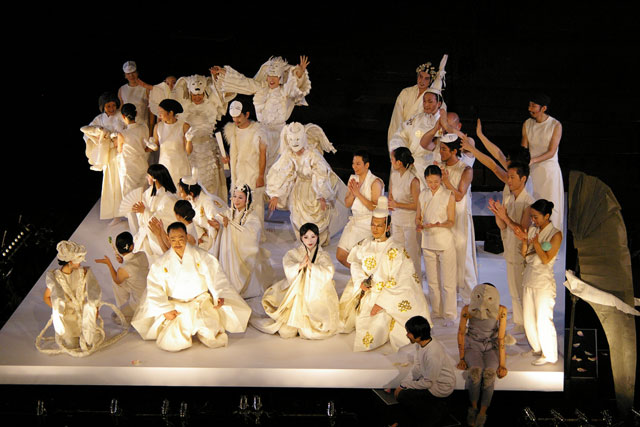
For example, in 2013, the Claude Lévi-Strauss Theater presented a contemporary Mahabharata created by Japanese director Satoshi Miyagi, which revisits the codes of kabuki. This show was created in 2003 at the Tokyo National Museum: a single storyteller recites the text for the 25 actors on stage, retracing one of the episodes of this mythical Indian epic, the story of King Nala. With sumptuous masks, paper costumes in the tradition of the Heian period (9th-12th centuries), and percussion from all over (gamelan, djembe…), this Japanese Mahabharata is a total theater experience whose performers’ energy, epic scope, visual beauty, and extraordinary vitality offer truly universal theater.


_
The Collections Plateau at the Quai Branly Museum
But the Quai Branly Museum also features temporary exhibitions and the collections plateau that I invite you to discover today. The museum permanently houses a collection rich in 300,000 works and objects from Africa (89,000), Asia (72,000), Oceania (33,000), and the Americas (106,000), of which 3,400 are exhibited on the collections plateau. Since the museum opened in June 2006, museographic changes have been made to the collections plateau.
Regularly, the display cases and spaces on the plateau are transformed, whether for preventive conservation needs (certain textiles or light-sensitive materials cannot be displayed for more than 6 months…), scientific consultation of works (as part of university research work…), loans of works (to other national or international cultural and scientific institutions), or simply to better showcase the museum’s collections (new Abomey space in the Africa section…). Approximately 500 changes of works are carried out each year within the 414 display cases on the plateau.